
I Spent 5 Days in the Past 100 Years; What Is Lost Now?
New imagination with amazing realities

Sometimes I wonder whether modern life truly made us happier or simply made us busier.
A few nights ago, I imagined something strange. What if I suddenly woke up one hundred years in the past and spent five days living there? No smartphones. No internet. No endless notifications. No social media arguments. Just people, nature, conversations, and a slower world.
At first, I thought such a life would feel boring. But the more I imagined those five days, the more I realized something important. Humanity may have gained technology, but it also lost many beautiful things along the way.
The first thing I noticed was silence. Not the uncomfortable silence people fear today, but peaceful silence. Streets were quieter. Homes were calmer. People were not constantly staring at screens. Children were running outside instead of scrolling endlessly. Families sat together after dinner and actually talked to one another.
Conversations felt real. Today, many people chat through phones for hours but barely speak deeply when sitting together. Back then, physical conversations had value. When someone visited your home, it meant something. Guests were welcomed warmly. Tea was shared slowly. Stories lasted for hours. Laughter sounded genuine because nobody was distracted by notifications or checking who liked their latest post.
Even friendships felt stronger. People remembered birthdays without phone reminders. Neighbors knew each other well. If someone became sick, others visited personally instead of only sending a short message online. Human connection was alive in a way that feels rare today.
During those imaginary five days, I also noticed how simple entertainment used to be.
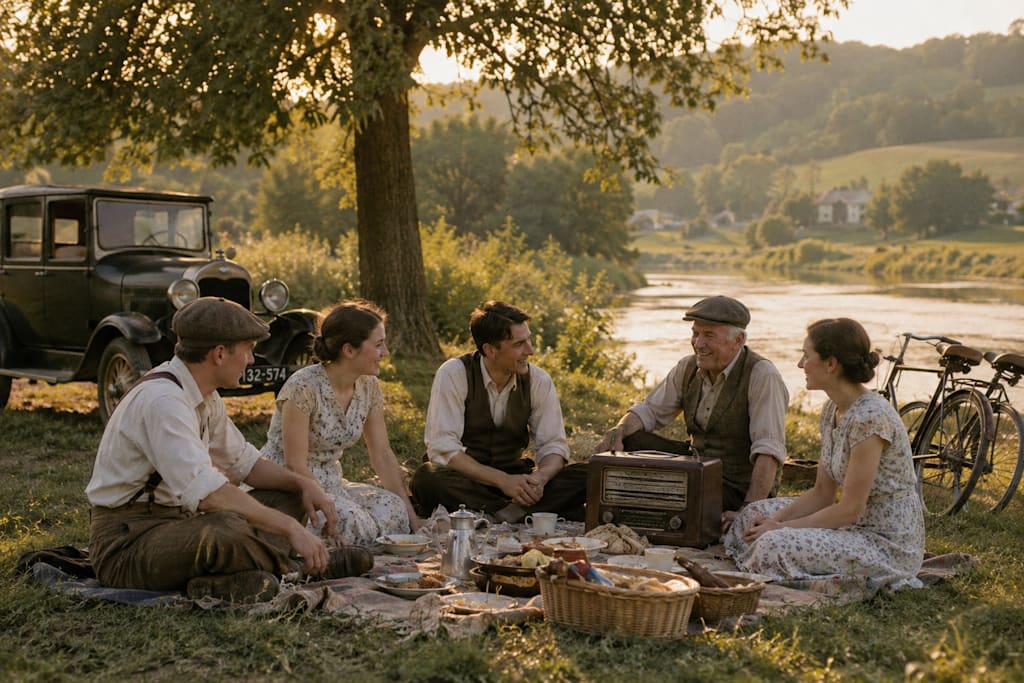
Families gathered around a small radio to hear news or listen to music together. Children played outside until sunset. Friends organized simple picnics near rivers, trees, or open fields. Nobody cared about taking perfect photos for social media because memories lived inside hearts, not inside phone galleries.
A simple meal tasted special because people appreciated the moment itself. Today, many people travel to beautiful places only to spend most of their time recording videos instead of truly enjoying the experience. The modern world taught us how to capture moments, but maybe it also taught us how to miss them.
Another thing that surprised me was honesty. People one hundred years ago were not perfect. Crime still existed. Human beings always had weaknesses. But fraud between ordinary people was much lower than today.
Why? Because reputation mattered deeply.
A dishonest person could lose the trust of an entire community. Families protected their names carefully. Shopkeepers often knew their customers personally. Agreements were based on handshakes and honor. People feared shame and social disappointment more strongly than many do now.
Today, technology gives scammers endless opportunities. Fake identities, fake promises, online fraud, manipulated images, and digital deception have become common. Sometimes people lie easily because they hide behind screens.
But one hundred years ago, people faced each other directly. Human interaction created accountability.
There was also less comparison. Modern society constantly pushes people to compare their lives with others. Social media shows edited lifestyles, expensive vacations, luxury cars, perfect bodies, and fake happiness. Many people feel poor, lonely, or unsuccessful because they compare their real life to someone else’s carefully edited online image.
But in the past, life was simpler. People focused more on survival, family, community, faith, work, and relationships. Happiness often came from small things. A family dinner. Rain after drought. A successful harvest. Meeting an old friend. Sitting under the night sky.
People had fewer possessions but sometimes more peace.
One of the biggest differences was time itself.
Today, everything moves fast. Fast food. Fast internet. Fast communication. Fast entertainment. Even patience feels outdated. People become frustrated if a video takes five seconds to load.
But one hundred years ago, life moved slowly. Letters took days or weeks to arrive. People walked longer distances. Even evenings felt longer. That slower pace may have reduced stress in ways modern society no longer understands.
People slept earlier. They spent more time outdoors. Human beings lived closer to nature instead of screens and artificial lights.
Modern technology brought incredible advantages, of course. Medicine improved. Communication became easier. Education expanded globally. We can learn almost anything instantly through the internet. Millions of lives have been saved through scientific progress.
But despite all these advancements, something emotional feels missing today.
Loneliness is increasing even though people are constantly connected online. Anxiety and depression are discussed more than ever. Many people feel mentally exhausted. Attention spans are shrinking. Families often sit in the same room while each person looks at a separate screen.
We became connected digitally but disconnected emotionally.
One hundred years ago, life was harder physically but perhaps easier mentally. Today, life is easier physically but heavier psychologically.
During my imaginary final day in the past, I sat outside at night looking at the stars. No phone vibrations interrupted the moment. No endless news updates created stress. No social media arguments polluted the mind.
Just silence, cold air, and human presence. I realized modern people may have forgotten how to simply exist peacefully.
The past was not a perfect world. Poverty existed. Medical care was limited. Many struggles were severe. Nobody should romanticize every part of history.
But maybe there are lessons hidden inside that simpler life.
Maybe humanity lost patience.
Maybe we lost deep conversations.
Maybe we lost community.
Maybe we lost honesty.
Maybe we lost appreciation for ordinary moments.
And perhaps the greatest thing we lost was genuine human closeness. Today, many people know thousands of online followers but barely know their own neighbors. We communicate constantly yet understand each other less. We consume endless entertainment yet feel increasingly empty.
Technology connected the world, but sometimes it quietly disconnected the human heart. If I truly spent five days one hundred years in the past, I think the hardest part would not be surviving there.
The hardest part would be returning to the present and realizing how much humanity left behind while rushing toward the future.
About the Creator
Keramatullah Wardak
I write practical, science-backed content on health, productivity, and self-improvement. Passionate about helping you eat smarter, think clearer, and live better—one article at a time.
Enjoyed the story? Support the Creator.
Subscribe for free to receive all their stories in your feed.
Comments
There are no comments for this story
Be the first to respond and start the conversation.