
From Shaker to Glass: The Unexpected Life Lessons Bartending Teaches You
How years spent behind the bar can sharpen your instincts, build your resilience, and change the way you see people
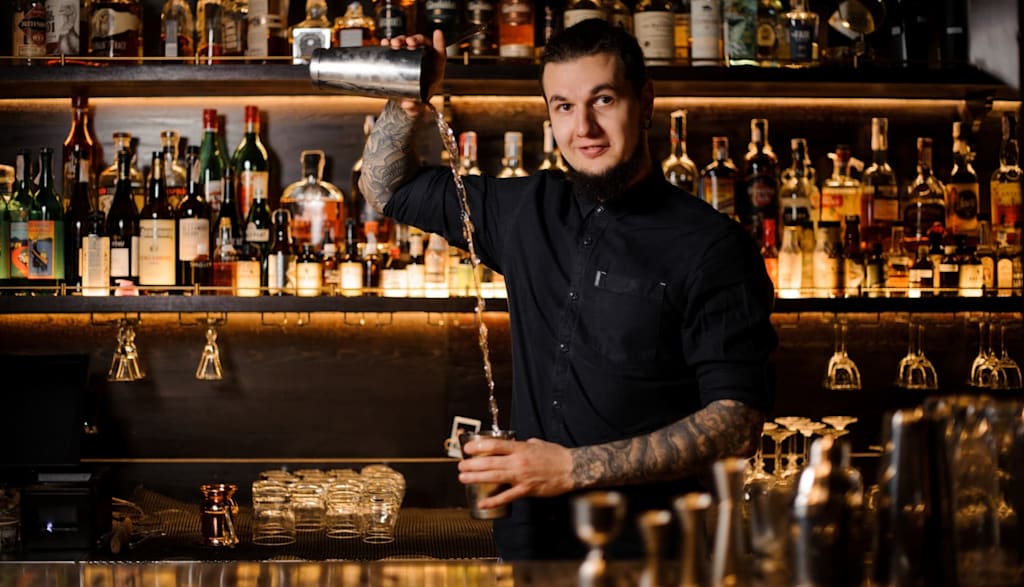
There's a particular kind of education that no university offers. It doesn't come with a degree, a graduation ceremony, or a framed certificate to hang on the wall. It comes at 11 PM on a Saturday, when the bar is three deep, the ice machine has just given up, and every single person in the room needs something from you right now. It comes in the form of a difficult regular, a botched order, a shift that humbles you completely, and the quiet realization, somewhere around 2 AM when you're finally wiping down the counters, that you're better for all of it.
Bartending teaches things that are genuinely hard to learn anywhere else. People who spend real time behind a bar tend to carry themselves differently, more patient, more perceptive, more comfortable in chaos. Here's why.
You Learn to Read People Quickly
Within the first thirty seconds of someone sitting down at a bar, an experienced bartender has already gathered an enormous amount of information. Body language. Eye contact. The way someone holds their phone or scans the room. Whether they want to talk or disappear into their drink. Whether they're celebrating something or quietly working something out.
This isn't intuition in any mystical sense. It's pattern recognition built over thousands of interactions. Bartenders develop a finely tuned antenna for human behavior simply because their job requires it. Get it wrong and the shift gets harder. Get it right and everything flows.
That skill doesn't stay behind the bar. People who've spent years reading rooms and adjusting in real time tend to bring that same awareness into their personal and professional lives. They notice things others miss. They adapt faster. They're rarely caught off guard by a shift in mood or atmosphere, because they've navigated that kind of change hundreds of times before.
Pressure Becomes Familiar
The Friday night rush is one of the most genuinely stressful environments most bartenders will ever work in. Orders stacking up, tickets running long, something spilling at exactly the wrong moment, a guest growing impatient. It's a pressure cooker, and there's nowhere to hide.
But here's what happens after you've survived enough of those shifts: pressure stops feeling like a threat and starts feeling like a condition. Something to work within rather than something to escape. Experienced bartenders develop a kind of calm efficiency under stress that becomes one of their most transferable qualities. They've learned that panic is expensive, it costs time, accuracy, and composure, and they've trained themselves out of it.
This is why so many former bartenders thrive in high-pressure professional environments. Event management. Emergency services. Hospitality leadership. Any context where things move fast and decisions matter, they tend to land on their feet.
Failure Is Immediate and Instructive
In most professions, feedback is delayed. A report gets reviewed weeks later. A decision plays out over months. Bartending is different. The feedback is instant. A drink goes out wrong and you know within thirty seconds. A guest feels ignored and their body language tells you immediately. A batch of cocktails is over-diluted and the next pour confirms it.
That immediacy is uncomfortable at first. There's nowhere to hide a mistake behind a process or bureaucracy. But over time, it becomes one of the most valuable aspects of the job. Bartenders learn to course-correct in real time, to take feedback without defensiveness, and to see a mistake as information rather than indictment.
That relationship with failure, honest, quick, and constructive, is something most people spend entire careers trying to develop. Behind the bar, it becomes second nature.
You Discover What Hospitality Actually Means
Most people think hospitality is about being friendly. Bartenders learn that it goes much deeper than that.
Real hospitality is anticipatory. It's refilling a water glass before the guest notices it's empty. It's remembering that someone takes their Old Fashioned with rye, not bourbon, and having it ready before they ask. It's sensing that a regular is having a rough night and adjusting your energy accordingly, more warmth, less chatter, a generous pour.
True hospitality is an act of sustained attention. It requires setting aside your own mood, your own tiredness, your own frustrations, and showing up fully present for the person in front of you. Night after night, shift after shift, that practice quietly reshapes the way you treat people everywhere, not just at work.
Humility Gets Built In
No matter how skilled a bartender becomes, the bar will find a way to humble them. A classic recipe they've made five hundred times suddenly falls flat. A new guest sends back a drink they were confident about. A shift falls apart for reasons entirely outside their control. The bar does not care about your reputation or your experience. It simply responds to what you do in the moment.
That enforced humility is genuinely good for people. It keeps skills sharp because complacency gets punished quickly. It builds empathy, because a bartender who has had bad nights understands what it feels like to need patience from someone else. And it creates a certain grounded-ness, a resistance to ego, that tends to make bartenders some of the most likeable and straightforward people in any room.
The Community Behind the Bar
One final thing that bartending gives you, and perhaps the most lasting: community. The bond between people who have worked difficult shifts together, who have covered each other during rushes and talked to each other through bad nights, is genuinely strong. The hospitality industry has a culture of loyalty and camaraderie that is hard to find elsewhere.
People who've worked behind a bar rarely forget it. Not because of the drinks they made or the tips they earned, but because of what the work asked of them and what it gave back in return.
If you've ever considered stepping behind a bar, even just for a season, it might be worth knowing: you'll leave with more than a skill set. You'll leave with a different way of seeing the world and the people in it.
About the Creator
Enjoyed the story? Support the Creator.
Subscribe for free to receive all their stories in your feed.
Comments
There are no comments for this story
Be the first to respond and start the conversation.