
America Doesn’t Need More Perfect Success Stories. It Needs More Honest Survival Stories.
The most important rebuilding often happens before anyone is watching. We celebrate the comeback. We rarely talk about the years it took to get there.

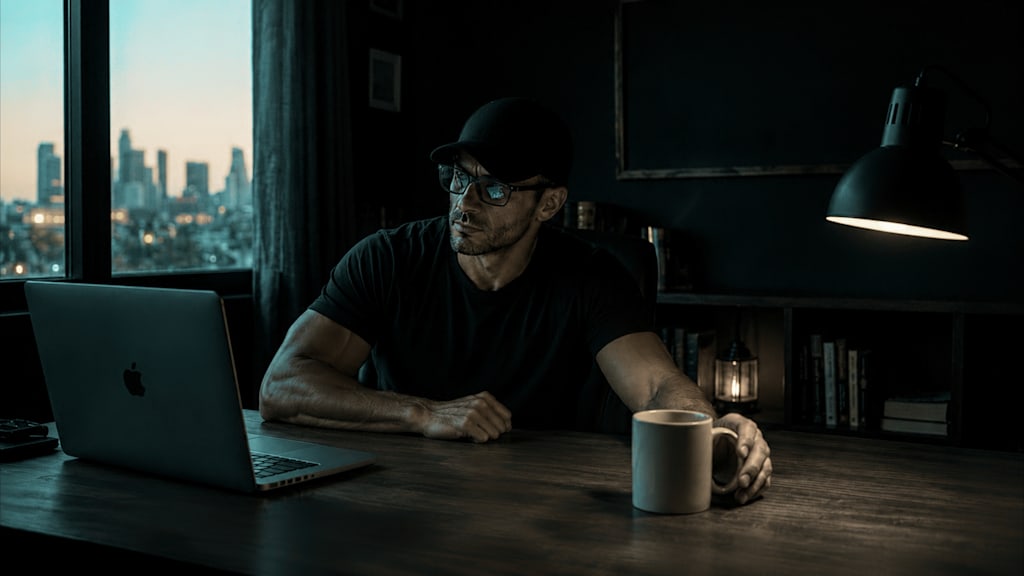
We celebrate comebacks once they look clean. But most rebuilding happens long before anyone is watching.
In 2016, I was told I might not walk normally again.
I remember the sentence more than I remember the room. Maybe that is how fear works. It does not always preserve the whole scene. Sometimes it keeps one line and repeats it for years.
I had come to America with the kind of dream immigrants are almost embarrassed to admit out loud. I wanted to act. I wanted to write. I wanted to make films. I wanted to become someone my younger self would recognize but not believe.
Then life stopped me.
A hospital bed is a strange place to meet yourself. There is no audience there. No music. No flattering angle. Just pain, fluorescent light, and the private humiliation of needing help with things you used to do without thinking.
People often talk about survival as if it is cinematic. As if there is a clean before and after. As if the hero gets hurt, finds strength, rises with a soundtrack, and the lesson arrives on time.
That was not my experience.
Survival was quiet. Ugly sometimes. Boring often. It was not a speech. It was learning how to stand. Then learning how to walk. Then learning how to believe that walking was not the whole point.
For a while, I thought the goal was simply to return to who I had been before the injury. I wanted my old body back, my old confidence back, my old timeline back. But the more I tried to go back, the more I understood something I did not want to understand: the old version of me was gone.
That sounds tragic, but it was not only tragic. It was also clarifying.
We live in a culture that loves comeback stories, but mostly after they have become presentable. We love the final photograph, the clean headline, the polished version of pain. We are less comfortable with the years in between, when a person is not yet inspirational, not yet successful, not yet easy to explain.
That middle part is where most rebuilding actually happens.
No one claps for the first step you take when nobody sees it. No one writes about the day you choose not to give up because you are too tired to make a dramatic decision. No one knows when you are practicing courage in ordinary ways: getting out of bed, answering one email, taking one walk, trying again after another small failure.
But those moments matter. They are not the waiting room before life resumes. They are life.
After my injury, I became obsessed with the idea of authorship. Not success. Not fame. Authorship.
Who gets to write the meaning of what happened to us?
Doctors can describe damage. They can estimate recovery. They can warn us about limits. Sometimes they are right. Sometimes they are wrong. But even when they are medically right, they do not get to decide the final meaning of a life.
That part is ours.
I do not say this in a motivational-poster way. I do not believe pain automatically makes people stronger. Sometimes pain just hurts. Sometimes it takes things and never apologizes. Sometimes it leaves a person angry, ashamed, or different in ways they never chose.
But I do believe this: if we are lucky enough to survive, we eventually face a second battle. Not the battle to live. The battle to decide what survival will mean.
For me, that battle became creative.
I started writing not because I had everything figured out, but because I did not. Writing gave shape to things I could not explain. Acting gave me a place to put emotions that had no polite home. Filmmaking became more than a career I wanted. It became a way of refusing to let one chapter become the whole book.
Years later, that search for meaning would begin shaping my creative life. Writing, filmmaking, and storytelling became ways of exploring questions that started long before any audience existed. On the surface, those pursuits may look like careers or creative ambitions. For me, they were something simpler: a language for a struggle I had already been having in private for years.
The phrase I use now is simple:
#I beat FATE.
I know how that sounds. Big. Dramatic. Maybe even arrogant.
But to me, it does not mean I defeated life or controlled everything that happened. I did not. None of us do.
It means I refused to let the worst thing that happened to me become the author of the rest of my story.
There is a difference.
In America, we are surrounded by stories of reinvention. We praise people who “make it,” who overcome, who transform. But we often skip over the uncomfortable truth that reinvention is not always glamorous. Sometimes it is grief wearing work clothes. Sometimes it is a person rebuilding in silence while the world assumes nothing important is happening.
I think we need more room for that kind of story.
Not every survivor becomes famous. Not every comeback becomes a headline. Not every broken person turns their pain into a company, a film, a movement, or a public identity. And they should not have to. The value of survival is not measured by how impressive it looks later.
But every survivor deserves the right to be more than what happened to them.
That is the part I care about.
A hospital bed can become many things. A place of fear. A place of loss. A place where time splits into before and after. For me, it also became the place where a question began following me:
If life can change the script without asking me, can I change it back?
I am still answering that question.
Not perfectly. Not always bravely. Some days I am still tired. Some days the old fear returns in smaller forms. But I am no longer trying to become the man I was before 2016. I am building the man who came after.
That is what people often misunderstand about survival. It is not always about returning.
Sometimes it is about becoming someone new enough to carry what happened — and still move forward.
In 2016, I was told I might not walk normally again.
In 2026, I am not just standing.
I am writing.
I am building.
And I am still deciding what the ending means.
⸻
About the Author
Lyon Gaber is an Egyptian-American director, writer, and actor based in Los Angeles. He is the founder of Lyonheart Studios and creator of the Lyonheart Universe.
About the Creator
Lyon Gaber
Director | Writer | Actor
Creator of #IBeatFATE
Website: www.LyonheartStudios.net
About Lyon Gaber: https://www.lyonheartstudios.net/#about-lyon-gaber
IMDb: https://imdb.me/lyongaber
IG: @L7onheart
Enjoyed the story? Support the Creator.
Subscribe for free to receive all their stories in your feed.
Comments
There are no comments for this story
Be the first to respond and start the conversation.