
US-Iran War 2026: Truth Behind the Conflict
Inside the Rising Tensions, Failed Talks, and Global Impact

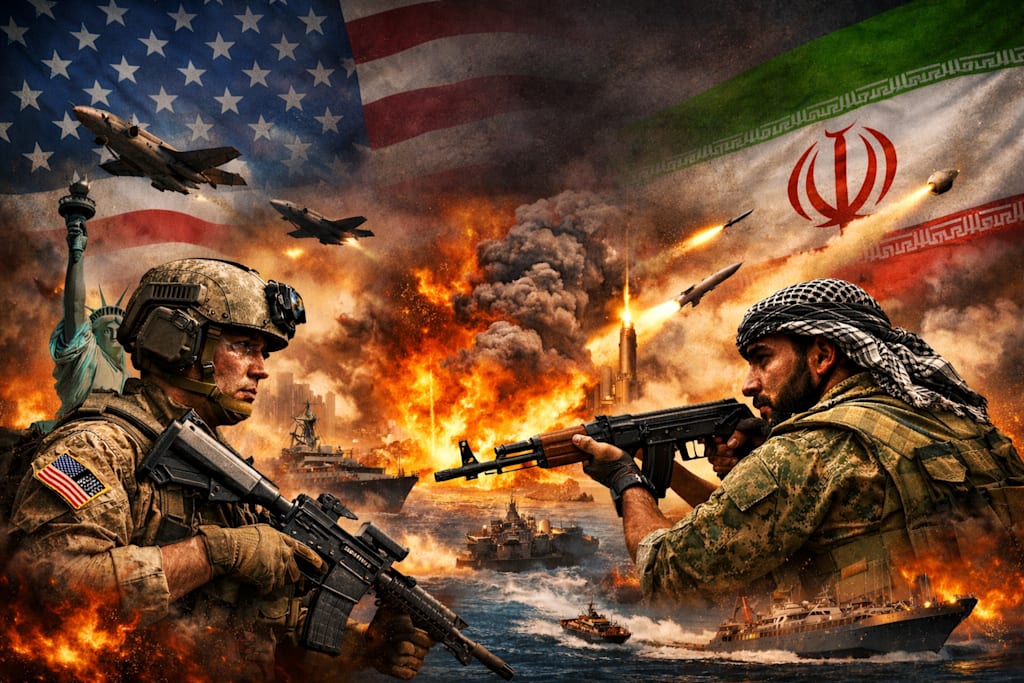
The growing tensions between United States and Iran have once again captured global attention in 2026. While the situation has not yet turned into a full-scale war, the rising conflict has created fear, uncertainty, and serious concern across the world. To understand the truth behind this conflict, it is important to look at its roots, recent developments, and possible future outcomes.
The tension between the United States and Iran has become one of the most serious global concerns in 2026. While the situation has not fully turned into a declared war, recent developments have raised fears across the world. Understanding this conflict requires looking at its history, causes, and the events that have recently increased tensions.
The relationship between these two countries has been difficult for many years. One of the main issues is Iran’s nuclear program. The United States believes that Iran could develop nuclear weapons, which could threaten global security. Iran, however, has always stated that its nuclear program is for peaceful purposes such as energy production. This disagreement has led to economic sanctions, diplomatic pressure, and repeated fail. One of the main reasons behind this conflict is Iran’s nuclear program. The United States and its allies have long suspected that Iran aims to develop nuclear weapons, while Iran insists that its program is only for peaceful purposes. This disagreement has led to sanctions, diplomatic pressure, and repeated breakdowns in negotiations.
Another major factor is political influence in the Middle East. Both countries have different goals in the region. The United States supports several allies, including Israel and Gulf countries, while Iran supports groups and governments that oppose U.S. influence. This has created indirect conflicts in countries like Syria, Iraq, and Yemen, where both sides have backed opposing forces.
In 2026, tensions increased sharply after a series of military incidents. Reports suggest that there were attacks on military bases, naval clashes in important waterways, and cyber operations targeting critical infrastructure. One key area of concern is the Strait of Hormuz, a narrow but extremely important route for global oil transportation. Any conflict in this region can disrupt oil supply and affect the global economy.
Diplomatic efforts have also faced serious challenges. Several rounds of talks aimed at reducing tensions have failed. Both sides accuse each other of not being honest or cooperative. The United States demands stricter limits on Iran’s nuclear activities, while Iran demands the removal of economic sanctions. This deadlock has made it difficult to find a peaceful solution.
The impact of this conflict is not limited to these two countries. The entire world is feeling the pressure. Oil prices have become unstable, affecting economies globally. Many countries are worried about being dragged into a larger war. International organizations have called for calm, urging both sides to avoid actions that could lead to further escalation.
Military strength is another important aspect of this situation. The United States has one of the most powerful military forces in the world, with advanced technology and global reach. Iran, while not as powerful in traditional terms, has strong regional influence and capabilities such as missile systems and strategic alliances. This balance creates a risky situation where even small incidents can quickly grow into larger conflicts.
Media and public opinion also play a role in shaping the conflict. News coverage, social media, and political speeches often increase tension by spreading fear or strong messages. In some cases, misinformation can make the situation worse by creating confusion or panic among people.
Despite the rising tension, there is still hope for peace. History has shown that even the most serious conflicts can be resolved through dialogue and compromise. Many experts believe that both countries understand the high cost of war and may eventually return to negotiations. A peaceful solution would require trust, patience, and willingness from both sides.
In conclusion, the conflict between the United States and Iran in 2026 is complex and deeply rooted in history, politics, and regional power struggles. While the situation remains dangerous, it is not beyond control. The world continues to watch closely, hoping that leaders will choose diplomacy over war. The truth behind this conflict is not just about two nations, but about global stability and the future of international peace.
About the Creator
aadam khan
I am publishing different stories
Enjoyed the story? Support the Creator.
Subscribe for free to receive all their stories in your feed.
Comments
There are no comments for this story
Be the first to respond and start the conversation.