
They Lied to You: The Forgotten Name of Africa and the Glorious Empires They Tried to Erase from History
From the ancient land called Alkebulan - “Mother of Mankind” - to the mighty civilizations of Nubia, Carthage, Numidia, and the scholarly brilliance of the Moors, this is the rich, powerful story of Africa that was deliberately hidden from us.

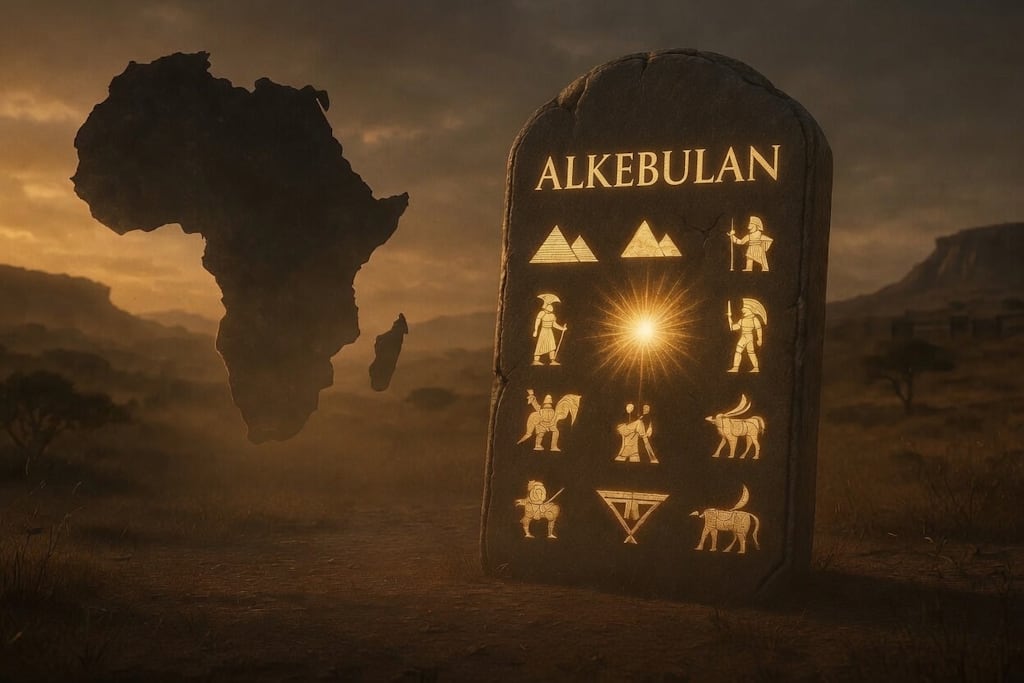
Have you ever stopped and wondered why we call an entire continent “Africa”? It seems like such a simple, obvious name - one we’ve all grown up hearing since childhood. But what if I told you that name is relatively new, imposed from the outside, and that for thousands of years this vast, ancient land had its own powerful identity and a name that carried deep meaning?
Picture this: You’re standing on the red earth of what we now call North Africa, thousands of years ago. The sun beats down on bustling cities, grand libraries, powerful armies, and scholars debating philosophy long before Europe woke up from the Dark Ages. This wasn’t some “dark continent” waiting to be discovered. This was Alkebulan - often translated as “Mother of Mankind” or “Garden of Eden.” A name that spoke of origins, of life itself, of humanity’s cradle.
You know, stories like this always stir something deep inside me. A mix of fascination and, honestly, a little anger. Not the hot kind of anger, but that quiet, reflective frustration at how much history gets rewritten, simplified, or outright erased to fit certain narratives. Today, we’re diving deep into this forgotten story - the real names, the incredible civilizations, and why any of this still matters so much.
The Name That Came Before “Africa”
The word “Africa” itself has roots in Roman times. When the Romans conquered the region around Carthage (modern-day Tunisia), they called it “Africa” after the Afri people who lived there. Over time, through European exploration, colonialism, and map-making, that name was stretched across the entire massive continent.
But long before any Roman set foot there, the people of the land had their own names. One of the most resonant is Alkebulan. Some sources trace it to ancient Ethiopian or Kemetic (Egyptian) languages, meaning “Mother of Mankind” or “the place where humanity began.” Other traditional names existed too - like “Afru-ika” in some interpretations meaning “Motherland,” or various local names for different regions.
It makes you pause, doesn’t it? Names carry power. They shape how we see things. Calling this continent “Africa” - a name given by outsiders - subtly frames it as something foreign, something to be explored and claimed. Alkebulan feels different. It feels like home. Like origin. Like the beginning of us all.
The Powerhouses of Ancient Alkebulan
Let’s travel back in time and meet some of the civilizations that made this land legendary.
First, the Numidians. These were fierce Berber warriors and horsemen from what is now Algeria. Under leaders like King Massinissa, they built a sophisticated kingdom known for incredible cavalry tactics. They didn’t just fight Rome - they sometimes allied with them, sometimes challenged them. Their horsemanship was so respected that they played crucial roles in major wars, including the Punic Wars.
Then there’s Carthage - one of the greatest powers of the ancient Mediterranean. Founded by Phoenicians but deeply African in its character, Carthage became a commercial and naval superpower. The legendary general Hannibal Barca - yes, the one who crossed the Alps with elephants - came from here. For a time, Carthage rivaled Rome itself. Their defeat in the Third Punic War was so total that the Romans supposedly sowed the fields with salt so nothing would grow. But the spirit of that civilization lived on.
Further south, the Kingdom of Nubia, also known as Kush, was extraordinary. Located in what is now Sudan, they built more pyramids than Egypt. Their kings ruled as pharaohs during the 25th Dynasty, controlling a vast empire. They were master archers, traders, and builders. The grandeur of their civilization still echoes in the ruins today.
And we can’t forget the Moors. During the Islamic Golden Age, Moorish scholars, scientists, and rulers from North and West Africa brought immense knowledge to Europe. They preserved and expanded Greek and Roman learning while making their own breakthroughs in mathematics, astronomy, medicine, and architecture. Cities like Timbuktu became centers of learning with universities that attracted students from across the Muslim world. The University of Sankore was legendary - a place where books were more valuable than gold.
The Intellectual and Cultural Legacy
What strikes me most when reflecting on these histories is how advanced and interconnected these societies were. Trade routes crisscrossed the continent. Ideas flowed from the Nile Valley to the Sahel to the Maghreb. Metallurgy, agriculture, astronomy, and governance systems flourished long before many parts of Europe had writing systems.
Yet somewhere along the way - through centuries of conquest, the transatlantic slave trade, colonialism, and deliberate narrative control - much of this was downplayed or ignored in mainstream education. Textbooks often started African history with European arrival, as if nothing meaningful existed before. That’s not just incomplete. It’s a distortion that affects how generations see an entire continent and its people.
I remember learning about ancient Egypt as somehow separate from “Africa” in school. As if the Sahara was some kind of impenetrable wall instead of a highway of trade and ideas. It’s these little lies by omission that add up over time.
Why This History Matters Today
In our modern world, where identity, pride, and historical truth are hotly debated, reclaiming names like Alkebulan isn’t just about semantics. It’s about perspective. It’s about understanding that humanity’s story began in Africa - something genetic and archaeological evidence strongly supports. It’s about recognizing the incredible resilience and brilliance of civilizations that rose, fell, adapted, and influenced the world in ways we’re only beginning to fully appreciate.
Of course, history is complex. No civilization was perfect. There were wars, slavery within Africa, and political struggles just like everywhere else. But the richness, the depth, the contributions - those deserve to be celebrated and taught properly.
So here’s my honest take: We should all be hungry for the full, unfiltered story of human history - not sanitized versions that serve old power structures. Learning about Alkebulan, Nubia, Carthage, the Moors, and the countless other kingdoms (Mali, Ghana, Songhai, Great Zimbabwe, etc.) fills me with wonder and a deeper sense of connection. It reminds us that greatness isn’t tied to any one group or era. It emerges wherever humans are given the chance to thrive.
The next time someone talks about “African history,” I hope you remember this. It didn’t start with colonialism. It started long before - in the land the ancients called Alkebulan, the Mother of Mankind.
What do you think? Does knowing the older names and stories change how you see the continent and its place in world history? Or is it just another chapter in the endless debate about whose version of the past we should believe? Either way, one thing feels clear: the more we dig into the real past, the more fascinating - and human - it becomes.
And honestly? That search for truth is one of the most worthwhile journeys we can take.
About the Creator
KWAO LEARNER WINFRED
History is my passion. Ever since I was a child, I've been fascinated by the stories of the past. I eagerly soaked up tales of ancient civilizations, heroic adventures.
https://waynefredlearner47.wixsite.com/my-site-3
Enjoyed the story? Support the Creator.
Subscribe for free to receive all their stories in your feed.
Comments
There are no comments for this story
Be the first to respond and start the conversation.