World History
Alexander the Great: Power, Glory, and Mystery
Mysteries of Alexander the Great Questions Still Unanswered About History's Most Puzzling Conqueror Alexander the Great ranks as one of history's top military leaders. At age 30, he built a huge empire from Greece to India. His fame hides deep puzzles. Parts of his life, deeds, and death still baffle experts today. This piece looks at his top mysteries. It sorts myth from fact and notes open questions. Alexander's Claim to Godly Birth A key early puzzle is Alexander's idea that a god fathered him. He was born to King Philip II of Macedon. Later, he said he came from Zeus-Ammon, a god from Greece and Egypt. In Egypt, priests at the Siwa Oracle called him a god's son. After that, he acted like a god-king. He pushed for worship and divine praise. Did he use this to rule new lands? Or did he really think he was divine? Experts argue if it was smart politics or true faith. His Amazing War Skills Alexander won every big battle. He beat foes even when outmatched. His success stays a puzzle. He read battlefields well. He guessed enemy plans. He won deep loyalty. Some say he felt war by instinct. Others credit tricks from his dad, Philip II. Still, his fast wins on a huge scale defy full grasp. Tech back then was basic. The Fire at Persepolis A big riddle came when Alexander burned Persepolis. That was Persia's main city. Old tales give mixed causes. Some blame revenge for Persian raids on Greece. Others point to a wild party. A few call it a sign to kill Persian power. Alexander seemed sorry later. Was it a bold plan? A rash error? Or tricks by his men? No one knows for sure. Alexander's Close Ties His private life holds riddles. He shared a tight bond with Hephaestion. They grew up together. Hephaestion led troops too. Old writers note their strong feelings. Some think they were lovers. Others see it as old Greek hero friendships. When Hephaestion died, Alexander grieved hard. It shocked folks. It hints at their link's true depth. How He Died In 323 BCE, Alexander died at 32. He ruled at his peak. His death cause tops history's riddles. Options include poison from rivals, malaria, typhoid, too much drink, or old wounds. No proof picks one. Old tales clash. Experts split on it. His Body Stayed Fresh A weird fact: his body did not rot for days after death. Some saw this as god proof. Today, rare illnesses or weather might explain it. Yet no idea fits all tales. It fueled views of him as superhuman. His Missing Grave His tomb stays lost despite his glory. After death, they put his body in a gold coffin. It went to Egypt. Roman rulers like Julius Caesar saw it for ages. Then it vanished. Quakes, fights, and city shifts hid it. Finding it tops diggers' wishes. Why He Quit in India He took huge lands but halted east in India. His troops would go no more.
By Say the truth 9 months ago in History
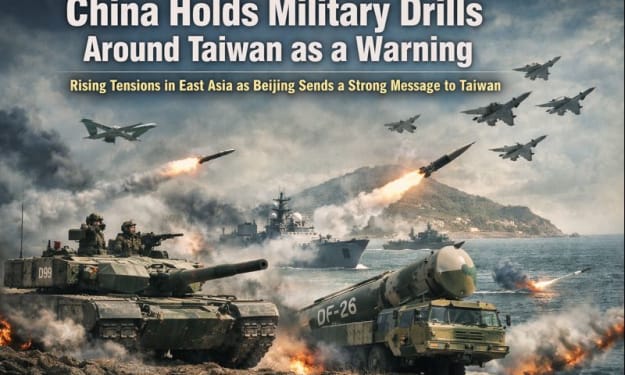
China Holds Military Drills Around Taiwan as a Warning. AI-Generated.
China has started large military drills around Taiwan. These drills are a strong warning to what China calls “separatist forces.” China uses this term to describe people and leaders in Taiwan who support independence. The drills have raised tension in the region and attracted global attention.
By dua fatima9 months ago in History
She Was Born Into a Legend
Oona Chaplin (Varang) When you carry the blood of Charlie Chaplin, the world expects greatness before you even speak your first line.But the real question is this:Did Oona Chaplin succeed because of her surname — or because of her talent?The answer becomes clear the moment you see her on screen as Varang.Oona Chaplin (Varang): A Story of Legacy, Choice, and PowerOona Chaplin is not just another name in the film industry. She is an actress who consciously stepped out of a legendary shadow to create her own identity. While many recognize her today for her commanding presence as Varang, her journey is built on discipline, risk, and artistic integrity.Born Into Cinema HistoryOona Castilla Chaplin was born on June 4, 1986, in Madrid, Spain. She grew up surrounded by cinema, storytelling, and performance. Her grandfather was Charlie Chaplin, one of the most influential figures in film history, and her mother, Geraldine Chaplin, was a respected actress in her own right.From an early age, Oona understood that legacy can open doors — but it cannot keep them open.Choosing Training Over PrivilegeInstead of relying on her famous name, Oona chose the harder path. She trained professionally at the Royal Academy of Dramatic Art (RADA) in London — one of the world’s most demanding acting institutions.This decision shaped her acting style: restrained, emotionally controlled, and deeply believable.Building a Career, Not Chasing FameOona Chaplin’s early career was defined by careful choices. She accepted roles that challenged her rather than ones that promised instant popularity. Working across European and international productions, she developed a reputation as an actress who valued substance over attention.Game of Thrones: The World Takes NoticeHer breakthrough came with Game of Thrones, where she portrayed Talisa Maegyr. The role introduced her to a global audience and proved her ability to bring warmth, intelligence, and emotional depth to a complex character.This performance marked her transition from “promising actress” to international recognition.Varang: The Rise of a Powerful PersonaVarang represents a turning point in Oona Chaplin’s career. This role demanded authority, mystery, and controlled intensity — and she delivered all three with precision.As Varang, Oona doesn’t rely on loud expressions or exaggerated emotion. Her power lies in silence, posture, and presence. The character redefined how audiences perceive her: not just as a dramatic actress, but as a commanding force on screen.A Quiet Life Behind the CameraUnlike many celebrities, Oona Chaplin avoids constant media exposure. She maintains a private lifestyle, focusing on her craft rather than publicity. This distance from noise has helped her preserve a sense of authenticity — something increasingly rare in the entertainment industry.Why Oona Chaplin Stands ApartWhat makes Oona Chaplin different is not her lineage, but her restraint.She doesn’t chase attention.She doesn’t overexpose herself.She lets her work speak.Her performances reflect control, maturity, and inner strength — qualities that cannot be inherited.ConclusionOona Chaplin’s story is proof that legacy may give you a starting point, but only talent and discipline give you direction.With roles like Varang, she has firmly established herself as an actress who commands attention without demanding it.She was born into a legend —but she chose to become one on her own terms.Closing LineOona Chaplin has proven that legacy is only a starting point — true success comes to those who carve their own path with talent, hard work, and courage. With her role as Varang, she has firmly secured her place as a shining star in the world of cinema.
By Behind The Fame9 months ago in History
Who Are the Nomads in Morocco?
When people imagine Morocco, they often think of bustling souks, blue cities, or golden desert dunes. Fewer people think about the nomads the men, women, and families who have lived for generations by moving rather than settling, following seasons instead of borders.
By Ariel Cohen9 months ago in History
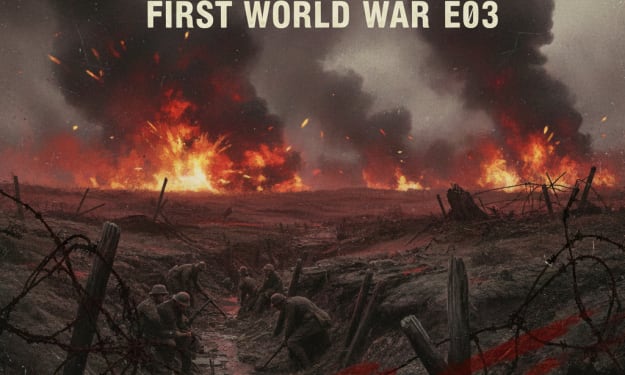
First world war E03,The Battle of Verdun
Introduction The Battle of Verdun stands as one of the most brutal and symbolic conflicts of the First World War. Fought between Germany and France from February to December 1916, this battle became the longest engagement of the war, lasting 302 days. Verdun was not just a military confrontation; it was a test of endurance, national pride, and human survival. Germany’s attempt to break French resistance ultimately failed, but the human cost was staggering.
By Muhammad waqas9 months ago in History
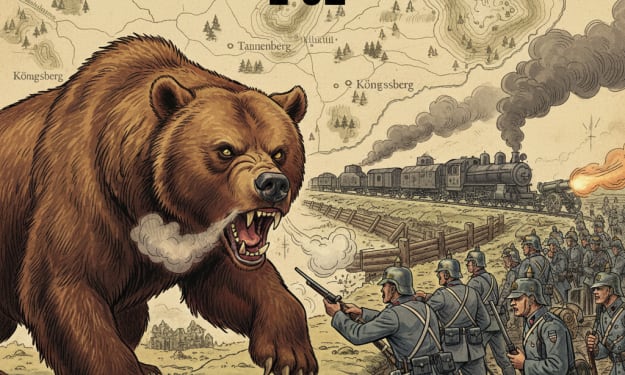
First world war E02,the Eastern Front and Gallipoli
Introduction While World War I is often remembered for trench warfare on the Western Front, some of the most dramatic and decisive events unfolded far from Paris and the English Channel. On the Eastern Front and at Gallipoli, Germany and the Ottoman Empire faced overwhelming enemies but achieved astonishing victories. From the crushing defeat of Russia at the Battle of Tannenberg to the Ottoman resistance against Britain and France at Gallipoli, these campaigns reshaped the balance of power in the First World War.
By Muhammad waqas9 months ago in History
First World War E01 Why Did WWI Start?
In July 1914, Europe stood at the edge of what its rulers believed would be a short and routine conflict. The German and Russian Empires prepared for war with optimism, assuming victory would come within weeks. German Emperor Kaiser Wilhelm II famously told his soldiers they would return home before the leaves fell from the trees. Russian commanders shared similar confidence.
By Muhammad waqas9 months ago in History