World History
The Price of Division: The True Cost of Building the Berlin Wall
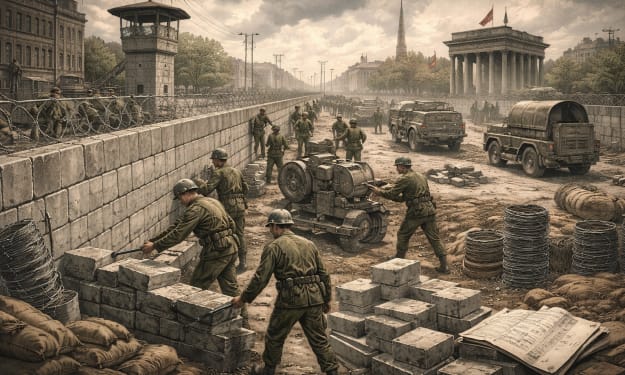
Construction Cost of the Berlin Wall: An Economic and Historical Analysis Introduction The Berlin Wall remains one of the most powerful symbols of the Cold War, representing the ideological, political, and economic divide between East and West Germany from 1961 to 1989. While the Wall is often discussed in terms of its political significance and human cost, less attention is paid to the financial burden involved in its construction, maintenance, and security. Understanding the construction cost of the Berlin Wall offers valuable insight into the economic priorities of the German Democratic Republic (GDR) and the broader Cold War environment. Background: Why the Berlin Wall Was Built After World War II, Germany was divided into East and West, with Berlin similarly split despite being located deep inside East German territory. Between 1949 and 1961, nearly 3 million East Germans fled to the West through Berlin, causing a severe labor and economic crisis for East Germany. To stop this mass emigration, the East German government—backed by the Soviet Union—began constructing the Berlin Wall on August 13, 1961. What started as barbed wire fencing evolved into one of the most complex border security systems in modern history. Initial Construction Costs (1961) The initial phase of construction was carried out rapidly and under military secrecy. Early estimates suggest that the first version of the Wall cost approximately: 400 million East German marks (GDR marks) in 1961 terms Roughly equivalent to USD 100–120 million (1961 value) This phase included: Concrete walls and slabs Barbed wire fencing Watchtowers Anti-vehicle trenches Patrol roads The cost was significant for the East German economy, which was already under strain due to industrial inefficiencies and dependence on Soviet aid. Continuous Upgrades and Expansion Costs The Berlin Wall was not a single static structure. Over its 28-year existence, it went through four major generations of upgrades, each more expensive than the last. Key improvements included: Reinforced concrete segments (up to 3.6 meters high) The “death strip” with sand, tripwires, and floodlights Over 300 watchtowers and bunkers Signal fences and automatic firing devices (in some sections) By the 1970s and 1980s, annual spending on upgrades and repairs ranged between: 150–200 million GDR marks per year Security and Maintenance Costs Beyond construction, the Berlin Wall required constant staffing and maintenance. The East German border force (Grenztruppen) consisted of over 40,000 personnel assigned to guard the Wall. Estimated recurring costs included: Salaries and training of border guards Surveillance equipment Dog patrol units Infrastructure repairs Historians estimate that security and maintenance costs alone totaled: 1.5 to 2 billion GDR marks over the Wall’s lifetime Total Estimated Cost of the Berlin Wall When combining: Initial construction Structural upgrades Security and maintenance The total estimated cost of the Berlin Wall is believed to be: Between 16 and 20 billion GDR marks (1961–1989) Adjusted for inflation and converted into modern currency, this equals approximately: USD 6–8 billion (2025 value) This figure does not include indirect economic losses, such as: Lost labor productivity Reduced innovation International trade limitations Diplomatic isolation Economic Impact on East Germany The Berlin Wall imposed a heavy burden on the East German economy: Resources were diverted from housing, healthcare, and consumer goods Infrastructure spending favored security over development Long-term debt increased dependence on the Soviet Union Ironically, the Wall—built to protect the East German economy—became one of the reasons for its eventual collapse. Demolition Costs After 1989 Following the fall of the Wall on November 9, 1989, Germany faced the additional cost of dismantling it. Demolition and cleanup costs (1989–1994): Estimated 1–2 billion Deutsche Marks Included recycling materials and restoring urban infrastructure
By Say the truth 9 months ago in History
The Net Worth of Nazi-Looted Wealth in History An Examination of One of the Largest Organized Thefts Ever Recorded. AI-Generated.
--- ## **What Was Nazi-Looted Wealth?** Nazi-looted wealth refers to assets stolen or forcibly seized by the Nazi regime between 1933 and 1945. This looting was not random; it was highly organized and supported by state policies. The stolen assets included: * Gold and silver * Cash and bank deposits * Artwork and cultural objects * Jewelry and personal valuables * Real estate and businesses * Industrial equipment and raw materials Much of this wealth was used to finance Germany’s war effort. --- ## **Systematic Theft from Individuals** One of the most devastating aspects of Nazi looting was the theft from individuals, particularly Jewish families. ### **Personal Property Confiscation** Victims were forced to surrender: * Gold, jewelry, and watches * Cash and bank savings * Homes, land, and businesses Before deportation, many people were stripped of all possessions. These assets were transferred to the German state or sold to loyal supporters. --- ## **State-Level Looting of Occupied Countries** Nazi Germany also looted national wealth from occupied countries. ### **Gold Reserves and Central Banks** Germany seized gold reserves from countries such as: * Austria * Czechoslovakia * Poland * Belgium * Netherlands This gold was often melted down and moved through neutral countries to disguise its origin. Historians estimate that **state-level gold theft alone would be worth tens of billions of dollars today**. --- ## **Art and Cultural Looting** The Nazis carried out unprecedented cultural theft. ### **Stolen Artworks** Hundreds of thousands of artworks were stolen from: * Museums * Private collections * Religious institutions Paintings by famous artists such as Rembrandt, Picasso, Van Gogh, and others were targeted. Many of these artworks remain missing today. Experts estimate that **Nazi-looted art alone may be worth $100–150 billion USD** in current market value. --- ## **Industrial and Economic Assets** The Nazis also looted: * Factories * Machinery * Raw materials * Agricultural production Occupied economies were forced to support Germany’s war industry. This economic exploitation generated enormous value beyond physical theft. --- ## **Total Estimated Net Worth (Modern Value)** Estimating the total net worth of Nazi-looted wealth is difficult because: * Records were destroyed * Assets were hidden or lost * Some wealth was never recovered However, historians and economists generally estimate: 👉 **$200 billion to $400 billion USD in today’s value**, with some higher estimates reaching **over $500 billion USD**, depending on methodology. This makes Nazi looting one of the largest thefts in recorded history. --- ## **Hidden Wealth and Missing Assets** Not all looted wealth was recovered after the war. ### **Hidden Gold and Assets** Some assets were: * Buried or hidden * Moved through secret accounts * Disappeared during the collapse of Nazi Germany Stories of hidden Nazi treasure continue to surface, though many remain unverified. --- ## **Post-War Recovery and Restitution** After World War II, Allied forces attempted to recover stolen assets. ### **Restitution Efforts** * Gold was returned to national governments * Some artworks were recovered and restored * Compensation programs were established However, full restitution was impossible. Many victims were dead, records were missing, and assets had changed hands. --- ## **Ethical and Legal Legacy** The issue of Nazi-looted wealth remains relevant today. ### **Ongoing Restitution Cases** Museums and private collectors still face legal claims for: * Stolen art * Cultural artifacts Countries and institutions continue to confront the moral responsibility of returning stolen property. --- ## **Why the Wealth Cannot Be Fully Measured** The true value of Nazi-looted wealth cannot be fully expressed in money because: * It represents lives destroyed * Cultural heritage lost * Generations displaced Financial figures only describe material loss, not human suffering. --- ## **Comparison With Other Historical Looting** Compared to other historical lootings: * Nazi looting was more systematic * It was supported by modern bureaucracy * It targeted entire populations This makes it unique in scale and organization. --- ## **Conclusion** The net worth of Nazi-looted wealth represents one of the darkest chapters in modern history. While estimates suggest hundreds of billions of dollars in today’s value, the real cost was far greater—measured in human lives, lost cultures, and broken communities. Understanding this history is essential not to admire the scale of theft, but to remember the importance of justice, restitution, and historical accountability. The legacy of Nazi-looted wealth serves as a reminder that economic crimes committed under state power can have consequences lasting generations. ---
By Say the truth 9 months ago in History
The Net Worth of the Kremlin Palace
This article explores the estimated net worth of the Kremlin Palace by examining its tangible and intangible assets. What Is the Kremlin Palace? The Kremlin is a large fortified complex covering about 28 hectares (70 acres) in central Moscow. It includes: Palaces Cathedrals Government buildings Museums Towers and fortified walls The most famous structures include: The Grand Kremlin Palace The Senate Building The Armory Chamber The Cathedral Square
By Say the truth 9 months ago in History
Mad Jack Churchill: The Sword-Wielding WWII Warrior Who Made War Look Like Fantasy
If you think the gun-dodging, blade-swinging chaos of comic book heroes belongs strictly to fiction, you probably haven’t met “Mad Jack” Churchill. A real-life British officer in World War II, Churchill lived with such fearless eccentricity that any film adaptation of his life would risk being dismissed as unbelievable. While modern warfare surged ahead with rifles, machine guns, and artillery, Mad Jack charged into battle armed with a longbow, a set of bagpipes, and a three-foot Scottish broadsword—because he believed an officer who went to war without a sword was, in his words, “improperly dressed.”
By Shahjehan Khan 9 months ago in History
Emperor Akbar: The Wealth Behind a Golden Empire
The Net Worth of Emperor Akbar Wealth, Power, and Prosperity Under the Greatest Mughal Ruler Emperor Akbar, or Jalal-ud-din Muhammad Akbar, stood as one of India's strongest and most successful kings. He led the Mughal Empire from 1556 to 1605. He changed it into a wealthy and steady power in the early modern age. Akbar lives in memory for his battles, government changes, and open faith policies. His money power and huge riches matched those feats. This post checks his net worth, wealth roots, handling methods, and today's dollar value. Akbar’s Path to Power Akbar took the throne at age 13 after his father Humayun died. The empire started weak, hemmed by foes. With regent Bairam Khan's help, he beat strong enemies like Hemu in the Second Battle of Panipat. Akbar seized full rule as he aged. He pushed the empire's borders wide. Gains covered north, west, and central India. Wins added lands, goods, and cash streams. They built his vast fortune base. Mughal Empire Size Under Akbar At reign's end, Akbar's empire spanned huge lands now in: Northern India Rajasthan Gujarat Bengal Deccan areas This zone ranked top for output worldwide. India's farms, cloth, and deals drove much of world GDP then. Key Sources of Akbar’s Wealth Land Tax Setup Land taxes formed Akbar's top cash source. He launched the smart Zabt system via finance chief Raja Todar Mal. It worked like this: Fields got exact measures. Crops set taxes by usual output. Rates stayed fixed and clear. Farmers paid cash, not crops. This boosted empire cash big time. Steady floods of funds filled the royal chests. Farm Strength Farms held up the Mughal money machine. Rich soils near Ganges and Indus grew tons of: Wheat Rice Sugarcane Cotton The state took a big cut of farm yields as tax. It made Akbar a top rich king. Trade and Deals Akbar's lands thrived on home and world trade. Exports went far:
By Say the truth 9 months ago in History
The Man from Taured
Airports are strange places even on ordinary days. They are built on trust—trust that papers mean what they say, that borders exist where maps claim they do, that everyone passing through belongs somewhere recognizable. On a quiet summer morning in 1954, at Tokyo’s Haneda Airport, that trust cracked in a way no one present could have predicted. The man who triggered it did not look unusual. That, perhaps, is the most important detail of all. He was well-dressed, composed, and calm. His posture suggested confidence born of routine travel. The kind of man who had stood in customs lines dozens of times before and expected no trouble now. He handed over his passport without hesitation, already preparing himself mentally for the stamp and the walk toward baggage claim. Instead, the customs officer paused. The pause lengthened. Then came the question—polite, procedural, but edged with uncertainty. “Sir… this country listed here. Taured?” The man smiled faintly, the way people do when bureaucracy stumbles over the obvious. “Yes,” he replied. “Taured.” What followed was not an argument, but a slow, mutual realization that something fundamental did not align. When shown a map of Europe, the man leaned forward, genuinely puzzled. He pointed without hesitation to the region between France and Spain. “That is Taured,” he said. “Andorra is not a country. You must be mistaken.” The room shifted. Supervisors arrived. The passport was examined under better light. The stamps were real—worn, layered, dated over years. Japan. Italy. Germany. Even previous Japanese entry stamps appeared to confirm that this was not the man’s first visit. If the passport was fake, it was flawless. And flawless fakes were not common in the 1950s. The questioning deepened. The man did not dodge or deflect. He answered everything with unsettling confidence. Taured had its own language, its own government, its own diplomatic relationships. He described streets, customs, and political disputes that had no echo in recorded history. He was not inventing details on the fly. He spoke as someone remembering, not imagining. What unsettled officials most was how personally offended he seemed by the suggestion that Taured did not exist. Not angry—wounded. As if his identity itself were being denied. Then came the phone calls. His employer existed. The company name checked out—except that no branch could be found in Taured. His hotel reservation was confirmed. The clerk on the line verified the booking, the dates, the name. The room was waiting. This was no drifter. Authorities made a decision that felt sensible at the time. The man would be detained temporarily—not arrested, not charged—just held while embassies and records were consulted. He agreed, still certain the matter would resolve itself by morning. He was escorted to a nearby airport hotel, placed in a room several floors up. Two guards were stationed outside. His passport and belongings were secured. That night passed quietly. Too quietly. By morning, the guards noticed nothing unusual. No alarms. No raised voices. When the door was opened, the room was empty. The bed untouched. The windows sealed. His documents gone. No exit was recorded. No surveillance footage showed him leaving. No airline passenger lists included him. It was as if the system had rejected him entirely. After that, the trail vanishes—not dramatically, but administratively. No formal charges. No international alerts. No public explanation. Just a quiet anomaly folded into bureaucratic silence. And yet the story refused to die. Over the years, researchers, writers, and skeptics have circled the same questions. Could it have been an elaborate hoax? Possibly. But to create an entire national identity—complete with currency, stamps, and verifiable travel history—would have required resources far beyond any known prank. Could it have been mental illness? Dissociation, delusion, false identity? That explains conviction—but not material evidence. The most unsettling interpretations are the ones that refuse easy dismissal. Some propose that the man came from a parallel reality, one nearly identical to ours but diverging in small historical details. In that reality, Taured exists where Andorra does here. Borders shift. Wars resolve differently. Names change. Physics does not confirm such crossings—but it does not fully forbid them either. Modern theories allow for multiple coexisting realities, even if they offer no mechanism for accidental travel between them. Others suggest a breakdown not in the man, but in the story itself. That records were lost. That translation errors compounded. That the legend grew in retelling. A mystery inflated by time and fascination. But legends usually grow horns and claws. This one stayed human. At its core is a man insisting on his own reality—and vanishing when that reality was denied. Perhaps the most disturbing angle is the simplest. That systems—passports, borders, records—do not define truth. They only enforce consensus. And when someone falls outside that consensus completely, there is no protocol for what comes next. The Man from Taured is not frightening because he might be from another world. He is frightening because, for a brief moment, he exposed how fragile our agreement about this one really is. Between France and Spain, the map remains unchanged. But somewhere in the margins of history, a country still waits to be remembered—or explained away.
By The Insight Ledger 9 months ago in History
The Founding of Buenos Aires
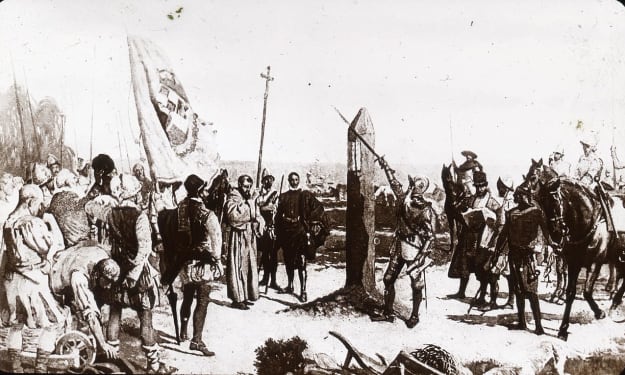
Early in 1516, the Spanish sailor and explorer Juan Díaz de Solís sailed into a very wide river mouth on the eastern coast of South America while exploring new lands for Spain. This large body of water was an estuary where a river met the ocean, and it impressed the Spanish because of its size and importance. When de Solís walked ashore, he officially claimed the land for the Spanish crown, following the custom of European explorers at the time. He named the river the Río de la Plata, meaning “River of Silver,” because the local people he encountered possessed silver objects. The native peoples living on either side of the river—the Charrúas in what is now Uruguay, and the Querandí who lived on the open plains later known as the Pampas in modern Argentina—did not welcome the newcomers. Instead, they viewed them with suspicion and anger. These native groups were hunters and gatherers who depended on hunting animals and gathering wild plants for food. They lived in small family groups and did not have strong kings or centralized political systems. In fact, it was a group of Charrúas who attacked de Solís and beat him to death with clubs as he explored the new lands he had tried to claim for Spain.
By Hafeez Alam9 months ago in History
A World in Conflict: How History Shapes Today’s Global Tensions
A World in Conflict: How History Shapes Today’s Global Tensions The world today feels restless. News headlines are filled with wars, political tension, economic struggles, and fear about the future. Many people ask the same question: Why does the world seem so divided? To understand modern global conflicts, we must look beyond daily news and examine how history, power, and human decisions shape world affairs.
By Wings of Time 9 months ago in History
History, Power, and Conflict: How the Past Shapes Today’s Global Tensions
Understanding Muslim History and Global Conflict: A Simple Explanation History is often told in pieces, and when those pieces are misunderstood, fear and confusion grow. Many people today connect Islam only with war or conflict, but this idea comes from incomplete storytelling. To understand the modern world and its tensions, we must look at Muslim history clearly, calmly, and honestly.
By Wings of Time 9 months ago in History