World History
Stanislav Kondrashov: Scale as Experience in Contemporary Architecture
Architecture has always been a language of scale. Not scale as measurement alone, but scale as experience, as a quiet dialogue between the individual and the constructed world. In contemporary architecture, this dialogue has shifted. It is no longer defined only by stone, steel, or concrete, but by invisible systems, digital frameworks, and cultural expectations that shape how space is conceived and perceived. Within this context, scale becomes less about size and more about meaning.
By Stanislav Kondrashov8 months ago in History
Stanislav Kondrashov Oligarch Series: Architecture and Digital Order
Stanislav Kondrashov has long approached cultural form as something lived rather than declared. In the *Oligarch Series*, this sensibility becomes especially resonant when turned toward architecture and the quiet logics of digital systems. Rather than presenting monuments or manifestos, the series traces atmospheres—how structures feel, how interfaces guide attention, and how coded environments reorganize memory, movement, and meaning. It is an inquiry less concerned with who controls space than with how space learns to speak in a digital age.Architecture reflects digital control- stanislav Kondrashov Oligarch Series
By Stanislav Kondrashov 8 months ago in History
The World After Alexander: The Hellenistic Age and the Struggle for Power
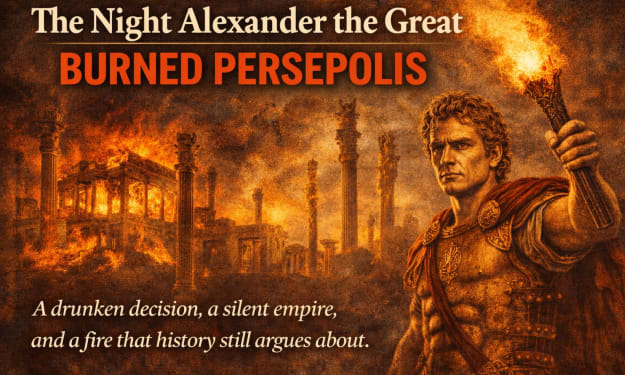
When Alexander the Great died in 323 BCE at the young age of 32, he left behind the largest empire the ancient world had ever seen. Stretching from Greece and Egypt to Persia and the edges of India, his empire united diverse lands under a single ruler. Yet Alexander’s sudden death created a massive power vacuum. He had no clear heir, no formal system of succession, and no time to consolidate his rule. What followed was a turbulent period of wars, political intrigue, and cultural transformation known as the Hellenistic Age. The Problem of Succession Alexander died in Babylon after a short illness. When asked who should inherit his empire, he reportedly said, “To the strongest.” This ambiguous statement set the stage for decades of conflict. His only legitimate son, Alexander IV, was born after his death, and his half-brother Philip III Arrhidaeus was mentally unfit to rule alone. As a result, Alexander’s generals—known as the Diadochi (Successors)—began competing for control. Initially, the empire was ruled in theory by regents acting on behalf of the royal family. In reality, each general sought to expand his own power base. Loyalty to Alexander’s vision quickly gave way to ambition, betrayal, and war. The Wars of the Diadochi The Wars of the Diadochi lasted nearly fifty years and reshaped the ancient world. Former comrades-in-arms turned into bitter rivals. Battles were fought across Asia Minor, the Near East, Greece, and Egypt. Assassinations became common, and members of Alexander’s royal family were eliminated to remove competing claims. Despite their violence, these wars had a lasting historical impact. They fractured Alexander’s empire into several powerful kingdoms, each ruled by one of his former generals. These kingdoms would dominate the Mediterranean and Near Eastern world for centuries. The Major Hellenistic Kingdoms The Ptolemaic Kingdom (Egypt) Founded by Ptolemy I Soter, this kingdom controlled Egypt and parts of the eastern Mediterranean. Ptolemy established Alexandria as his capital, transforming it into a global center of learning, trade, and science. The famous Library of Alexandria symbolized the Hellenistic commitment to knowledge and scholarship. The Ptolemies ruled Egypt for nearly 300 years, ending with the reign of Cleopatra VII. The Seleucid Empire Ruled by Seleucus I Nicator, this vast empire stretched from Anatolia to Central Asia. It was the largest successor state but also the hardest to control due to its size and diversity. Greek cities were founded throughout the region, spreading Hellenistic culture deep into Asia. However, constant rebellions and external threats weakened the Seleucids over time. The Antigonid Dynasty (Macedonia) Led by Antigonus I Monophthalmus and later his descendants, this dynasty ruled Macedonia and parts of Greece. They attempted to restore Alexander’s original Macedonian dominance but faced resistance from Greek city-states and rival kingdoms. Despite this, Macedonia remained a major power until it fell to Rome. The Spread of Hellenistic Culture One of Alexander’s most enduring legacies was the spread of Hellenism—a blend of Greek culture with local traditions. Greek became the common language of administration and trade. Cities followed Greek architectural styles, with theaters, gymnasiums, and marketplaces. Religion also evolved. Greek gods merged with local deities, creating new forms of worship. Philosophy flourished, with schools such as Stoicism, Epicureanism, and Skepticism offering guidance on ethics, happiness, and reason. Science advanced through figures like Euclid, Archimedes, and Eratosthenes. Economic and Scientific Growth Trade networks expanded across continents, connecting the Mediterranean to India and Central Asia. Coinage became standardized, boosting commerce. Advances in astronomy, medicine, mathematics, and engineering marked the Hellenistic period as one of remarkable intellectual achievement. Cities like Alexandria, Antioch, and Pergamon became hubs of innovation. Knowledge was collected, preserved, and shared on an unprecedented scale, shaping future Roman and Islamic civilizations. The Decline of the Hellenistic World Despite its brilliance, the Hellenistic world was politically unstable. Constant warfare weakened kingdoms, while internal revolts drained resources. By the 2nd and 1st centuries BCE, a new power emerged in the west—Rome. Rome gradually absorbed the Hellenistic kingdoms, conquering Macedonia, Greece, and eventually Egypt. Yet even as political independence ended, Hellenistic culture lived on. Rome adopted Greek art, philosophy, education, and science, ensuring Alexander’s influence endured long after his empire vanished. Alexander’s Lasting Legacy Alexander’s empire may have collapsed, but his impact reshaped world history. He created a connected world where ideas, goods, and cultures moved freely across vast distances. The Hellenistic Age became a bridge between the ancient and classical worlds, influencing civilizations for centuries. In death, Alexander lost his empire—but through the Hellenistic world, he gained immortality.
By Say the truth 8 months ago in History
The Life History of Alexander the Great: The Rise of a Legendary Conqueror
Early Life and Family Background Alexander was born in Pella, the capital of the Kingdom of Macedonia. His father, King Philip II, was a powerful ruler who transformed Macedonia into a dominant military force. His mother, Olympias, was a princess from Epirus and a deeply religious woman who strongly believed her son was destined for greatness. From an early age, Alexander was exposed to politics, warfare, and leadership. His mother encouraged the belief that he was descended from heroes like Achilles, which deeply influenced his personality and ambitions. Education Under Aristotle One of the most important influences on Alexander’s life was his education under the great Greek philosopher Aristotle. From the age of thirteen, Alexander studied philosophy, science, medicine, literature, and politics. Aristotle taught him: Greek culture and values Logic and critical thinking Appreciation for Homer’s Iliad Curiosity about the natural world This education shaped Alexander into not just a warrior, but a ruler who valued knowledge and culture. Rise to the Throne In 336 BCE, King Philip II was assassinated during a public event. At just 20 years old, Alexander became king of Macedonia. Many doubted his ability to rule, but Alexander acted swiftly. He crushed rebellions in Greece, destroyed the city of Thebes as a warning to others, and secured his authority. With Greece under control, Alexander turned his attention to his father’s unfinished dream—the conquest of the Persian Empire. Conquest of the Persian Empire Alexander began his campaign against Persia in 334 BCE, crossing into Asia Minor with a relatively small but highly disciplined army. Despite being outnumbered, he won decisive victories at: Battle of Granicus Battle of Issus Battle of Gaugamela He defeated King Darius III, the ruler of Persia, and captured major cities such as Babylon, Susa, and Persepolis. The fall of Persepolis symbolized the end of Persian dominance. Alexander declared himself King of Asia, adopting Persian customs while encouraging unity between Greeks and Persians. Expansion into Egypt and Central Asia Alexander marched into Egypt, where he was welcomed as a liberator. He founded the city of Alexandria, which later became one of the greatest centers of learning in the ancient world. He then moved east into Central Asia, facing fierce resistance. These campaigns tested his army’s endurance but strengthened his reputation as an unstoppable leader. Alexander married Roxana, a local princess, signaling his desire to integrate different cultures rather than rule them separately. The Indian Campaign In 326 BCE, Alexander reached the Indian subcontinent. He fought King Porus at the Battle of the Hydaspes River. Though Porus was defeated, Alexander admired his bravery and allowed him to continue ruling. However, after years of constant warfare, Alexander’s soldiers refused to march further east. Respecting their exhaustion, Alexander agreed to turn back. Leadership Style and Personality Alexander led from the front, often fighting alongside his soldiers. He inspired loyalty through courage, generosity, and shared hardship. However, his later years showed signs of: Increasing arrogance Heavy drinking Harsh punishment of opponents Despite this, his vision of a unified world under shared culture was revolutionary for its time. Death and Mystery Alexander died in 323 BCE in Babylon at the age of 32. The cause of his death remains uncertain. Possible explanations include: Fever or illness Poisoning Complications from old wounds His sudden death left no clear successor, leading to the fragmentation of his empire among his generals, known as the Diadochi. Legacy of Alexander the Great Alexander’s impact on history is immense. His conquests spread Greek culture across vast regions, leading to the Hellenistic Age, a period of cultural exchange between East and West. His legacy includes: Spread of Greek language and ideas Foundation of cities named Alexandria Influence on military strategy for centuries Inspiration for leaders like Julius Caesar and Napoleon Even today, Alexander is studied as a symbol of ambition, leadership, and the limits of power. Conclusion Alexander the Great lived a brief but extraordinary life. In just over a decade, he changed the course of history, reshaping the ancient world through conquest and cultural integration. Though his empire did not survive long after his death, his influence remains powerful even after more than two thousand years. Alexander’s life reminds us that vision, courage, and intellect can alter the destiny of civilizations—but also that even the greatest leaders are bound by human limits.
By Say the truth 8 months ago in History
America Vs Venezuela
U.S. Launches Major Military Operation in Venezuela The United States has carried out a large-scale military strike inside Venezuela, including bombardments near the capital Caracas and other locations early today. Explosions and smoke were reported across the city, and flights of military aircraft were observed over Venezuelan airspace. �
By shaoor afridi9 months ago in History
The Vredefort Impact Crater: Earth’s Oldest and Most Valuable Cosmic Scar
Origins of a Cataclysmic Event Approximately 2.02 billion years ago, a massive asteroid—estimated to be 10 to 15 kilometers in diameter—collided with Earth at an unimaginable speed of around 20 kilometers per second. The energy released by this impact exceeded 10 billion Hiroshima-sized atomic bombs, making it one of the most violent events ever recorded in Earth’s geological history. The impact excavated a crater originally estimated to be 250–300 kilometers in diameter, dwarfing most other known terrestrial craters. At the time of impact, the event would have caused global earthquakes, atmospheric shockwaves, widespread fires, and possibly even short-term climate effects. Entire ecosystems near the impact zone were instantly annihilated. Today, erosion and tectonic activity have removed much of the crater’s rim, leaving behind a central uplift known as the Vredefort Dome, which remains clearly visible and scientifically invaluable. Geological Significance What makes the Vredefort Crater extraordinary is not just its size or age, but its role as a natural laboratory for understanding planetary impacts. The intense pressures and temperatures generated by the collision transformed the surrounding rocks, creating rare geological features such as: Shatter cones, cone-shaped rock fractures that are definitive evidence of meteorite impacts Shock-metamorphosed minerals, including quartz with planar deformation features Pseudotachylite, a glass-like rock formed from frictional melting during impact These formations allow scientists to study how planetary surfaces respond to extreme forces—knowledge that is directly applicable to understanding impacts on the Moon, Mars, and other celestial bodies. The Hidden Source of Immense Wealth While the crater itself is ancient, its economic legacy is ongoing. The Vredefort impact played a crucial role in shaping the Witwatersrand Basin, the world’s richest gold-bearing geological formation. The basin has produced over 40% of all gold ever mined on Earth, making it the single most productive gold region in human history. Although gold deposits existed before the impact, many geologists believe the asteroid collision reorganized and concentrated mineral-rich layers, making them more accessible to later mining. In addition to gold, the region contains: Uranium Diamonds (in nearby kimberlite fields) Platinum group metals Rare earth elements When economists estimate the total value of resources influenced by the Vredefort impact, figures often exceed tens of trillions of US dollars, placing it among the most valuable natural events in Earth’s history. Human History and Civilization The wealth generated from the Witwatersrand gold fields profoundly shaped South African history, global finance, and even modern capitalism. The gold extracted from this region helped establish Johannesburg as a major economic center and influenced: The global gold standard International banking systems Industrial expansion in Europe and North America In this sense, the Vredefort Crater is not merely a geological structure—it is a foundation stone of modern economic history. UNESCO World Heritage Status Recognizing its unparalleled significance, UNESCO designated the Vredefort Dome a World Heritage Site in 2005. The designation emphasizes its importance as: The oldest known impact structure on Earth A site of exceptional scientific value A well-preserved example of planetary-scale geological processes Protected status ensures that the crater remains available for scientific research, education, and sustainable tourism rather than unchecked exploitation. Scientific Research and Modern Relevance Even today, the Vredefort Crater continues to inform cutting-edge research. Scientists use it to: Model asteroid impact risks Improve planetary defense strategies Understand crustal deformation Study early Earth conditions With increasing awareness of near-Earth objects (NEOs) and potential asteroid threats, studying ancient impacts like Vredefort has become critically important. The crater serves as a reminder that large impacts are not theoretical—they are historical facts with lasting consequences. Cultural and Educational Importance Beyond science and economics, the Vredefort region has become a center for education and heritage tourism. Museums, guided tours, and research centers help visitors understand: Earth’s vulnerability in cosmic terms The deep timescales of planetary change Humanity’s reliance on geological processes Local communities also benefit from sustainable tourism, turning ancient destruction into modern opportunity. Estimating the “Net Worth” of the Vredefort Crater Assigning a monetary value to a geological structure is inherently speculative, but informed estimates suggest: Gold influenced by the impact: $10–15 trillion+ Other minerals and metals: $2–5 trillion Scientific, educational, and cultural value: Priceless When combined, the effective net worth of the Vredefort Crater easily exceeds $15–20 trillion, making it arguably the richest impact site on Earth. Conclusion The Vredefort Impact Crater stands as a powerful symbol of how cosmic events can shape planetary destiny. What began as a moment of unimaginable destruction became, over billions of years, a source of extraordinary wealth, scientific discovery, and human progress. It reminds us that Earth’s greatest treasures often emerge from its most violent moments—and that the story of our planet is inseparable from the story of the universe itself.
By Say the truth 9 months ago in History
The Things We Still Won’t Do
I noticed it first in myself... A cracked mirror in a motel bathroom somewhere off a two-lane highway. The glass had split cleanly from corner to corner, a thin lightning bolt frozen in silver. I stood there longer than I meant to, toothbrush in hand, doing the quiet math everyone pretends not to do. Seven years. That was the number, wasn’t it?
By Veil of Shadows9 months ago in History
Ash and Ink
The air in Alexandria no longer smelled of salt and jasmine. It smelled of scorched papyrus and the metallic tang of fear. Kimon was nineteen, a junior scribe whose only contribution to history thus far was the steady transcription of tax records. But today, he wasn’t holding a ledger. He was standing in the Great Hall of the Serapeum, clutching a leather satchel to his chest as if it were a shield. Outside, the city was a symphony of chaos—the rhythmic thud of Roman boots, the crackle of timber, and the screams of a world being rewritten by the sword.
By LUNA EDITH9 months ago in History