World History
If America Walks Away from NATO, the World Will Feel the Shock
If America Walks Away from NATO, the World Will Feel the Shock For more than seventy years, NATO has stood as a symbol of collective security and shared responsibility. It was never a perfect alliance, but it worked because it was built on a simple idea: when nations stand together, wars are less likely to happen. Today, however, that foundation is being shaken—not by foreign enemies, but by growing voices inside the United States questioning whether NATO is still worth it.
By Wings of Time 8 months ago in History
Can the United States Leave NATO?
Can the United States Leave NATO? What It Would Take—and What It Would Mean The North Atlantic Treaty Organization, commonly known as NATO, has been one of the most powerful military alliances in modern history. Since its creation in 1949, the United States has been NATO’s strongest member—militarily, financially, and politically. But in recent years, debates have grown louder about whether the U.S. should remain in the alliance. This raises a serious question: how could the United States be removed from NATO—or leave it—and what would that mean for the world?
By Wings of Time 8 months ago in History
Frozen Ground
Silence meant the guns were cooling. It meant men were waiting. It meant something was about to break. We were dug in along a frozen stretch of road near the Imjin River, the kind of place that didn’t look important until history decided otherwise. The cold wasn’t just uncomfortable—it was personal. It crept into your boots, your bones, your thoughts. At night, I dreamed of heat: radiators, kitchens, the smell of coffee. I woke up with frost on my helmet.
By Gaofeng Wang8 months ago in History
The Hard Ways Trump Could Try to Take Greenland. AI-Generated.
When Donald Trump was president of the United States, he shocked the world by saying he wanted to buy Greenland. Many people laughed, but others took the idea seriously. Greenland is a huge island in the Arctic. It is rich in natural resources and very important for military defense. Today, Greenland belongs to Denmark, but it also governs itself in many areas.
By sehzeen fatima8 months ago in History
Statue of Liberty: America’s Timeless Symbol of Freedom
The Statue of Liberty is one of the most iconic landmarks in the United States and a powerful symbol of freedom, democracy, and hope. Located on Liberty Island in New York Harbor, the statue has welcomed millions of immigrants and visitors since the late nineteenth century. Officially titled Liberty Enlightening the World, it represents the ideals upon which the United States was founded and continues to inspire people across the globe.
By Mukhtiar Ahmad8 months ago in History
The Net Worth of the Chola Palaces: Wealth, Power, and Imperial Grandeur
While the Cholas are world-famous for monumental temples like the Brihadeeswarar Temple, their royal palaces were equally significant symbols of wealth, authority, and global influence. Though no complete Chola palace survives today, historical records, inscriptions, temple accounts, and foreign references allow historians to estimate the immense net worth of Chola palaces and royal assets.
By Say the truth 8 months ago in History
The Palaces of the Pandya Dynasty: Architecture, Artifacts, and Unique Specialties
The Pandya dynasty was one of the most ancient and powerful dynasties of South India, ruling large parts of present-day Tamil Nadu for more than a thousand years. While the Pandyas are widely remembered for their temples, pearl trade, and maritime power, their royal palaces were equally important symbols of authority, wealth, and cultural excellence. Though most Pandya palaces were built using materials that did not survive time, historical records, inscriptions, Sangam literature, and archaeological findings provide valuable insight into their grandeur, artifacts, and unique features. Location and Structure of Pandya Palaces The main capital of the Pandyas was Madurai, one of the oldest continuously inhabited cities in the world. The Pandya royal palace was located near the sacred Meenakshi Amman Temple, forming the political and administrative heart of the kingdom. Unlike later stone palaces, Pandya palaces were constructed using: Brick Timber Granite foundations Lime plaster Carved wooden pillars These materials suited the tropical climate and allowed flexible architectural designs. The palace complex consisted of multiple halls, courtyards, gardens, audience chambers, and residential quarters, often surrounded by fortified walls. Architectural Specialties of Pandya Palaces 1. Mandapa-style Audience Halls Pandya kings held court in large mandapas (pillared halls) supported by sculpted pillars. These halls were used for: Royal assemblies Judicial proceedings Diplomatic meetings Cultural performances The pillars were decorated with floral motifs, mythical animals, and divine symbols, reflecting early Dravidian architectural traditions. 2. Water Management and Palace Tanks Pandya palaces included water tanks, fountains, and canals, symbolizing prosperity and purity. These water bodies helped regulate temperature and served ritual purposes. 3. Defensive Design The palace complex was well-guarded with: Watchtowers Thick walls Controlled entry gates This ensured protection from invasions and internal rebellions. Artifacts Found from the Pandya Period Though the physical palace structures have mostly disappeared, many Pandya artifacts survive in museums and archaeological sites, giving insight into palace life. 1. Royal Seals and Emblems The Pandya emblem was the fish (Meen), symbolizing fertility and maritime strength. Artifacts bearing the twin fish emblem include: Copper plates Stone inscriptions Coins These were used in royal decrees and administrative records. 2. Gold and Silver Coins Pandya kings issued coins made of: Gold Silver Copper These coins often displayed: Fish symbols Royal titles Tamil inscriptions Coins found in Sri Lanka, Southeast Asia, and Roman territories prove the dynasty’s international trade connections. 3. Jewelry and Ornaments Royal Pandya jewelry was renowned for its craftsmanship. Artifacts include: Gold necklaces Pearl ornaments Gem-studded crowns Armlets and anklets Pearls from the Gulf of Mannar were especially prized and used extensively in palace adornments. 4. Weapons and Military Artifacts Palace arsenals contained: Swords Spears Shields Bows These weapons were often decorated with gold inlays and engravings, indicating both function and status. 5. Palm-leaf Manuscripts Pandya palaces housed libraries containing palm-leaf manuscripts, including: Sangam poetry Administrative records Medical and astronomical texts These manuscripts highlight the dynasty’s patronage of Tamil literature and learning. Cultural and Artistic Importance Pandya palaces were not merely residences; they were centers of culture, education, and diplomacy. Poets of the Sangam period were invited to royal courts Music and dance performances were conducted in palace halls Scholars from distant regions were patronized This cultural environment helped preserve and promote classical Tamil civilization. Religious and Ritual Significance Pandya kings were strong supporters of Shaivism and Vaishnavism. Palace rituals included: Daily temple offerings Royal yajnas Festival processions The palace and temple functioned as complementary institutions, reinforcing divine legitimacy of kingship. Foreign Visitors and Trade Influence Foreign traders from: Rome Arabia China Southeast Asia Visited Pandya ports and sometimes royal courts. Diplomatic gifts and luxury goods were stored in palace treasuries, including: Roman amphorae Chinese silk Precious metals This made Pandya palaces cosmopolitan centers of ancient globalization. Decline and Disappearance of Pandya Palaces The decline of Pandya power due to: Chola invasions Delhi Sultanate campaigns Natural decay Led to the destruction of palace structures. Many materials were reused in later constructions. However, the spirit of Pandya architecture survives in temples, inscriptions, and cultural memory. Conclusion The palaces of the Pandya dynasty were magnificent symbols of political authority, economic wealth, artistic excellence, and cultural brilliance. Though time has erased much of their physical presence, the surviving artifacts and literary records reveal a sophisticated royal life deeply connected to trade, religion, and learning. The Pandya palaces stand as reminders that South India once hosted powerful courts rivaling the greatest ancient civilizations of the world. Their legacy continues to influence Tamil culture, architecture, and identity even today.
By Say the truth 8 months ago in History
The Pandyas and Their Foreign Trade Net Worth: A Forgotten Maritime Superpower
At their peak, the Pandyas controlled powerful maritime networks that connected India with Rome, Southeast Asia, China, Arabia, and Africa. Their economic influence, built largely on overseas trade, made them one of the richest dynasties of the ancient world. This article explores the foreign trading system of the Pandya dynasty, the sources of their wealth, global connections, and an estimated modern net worth of their trade-based economy. Origins of Pandya Maritime Trade The Pandya dynasty flourished primarily between 600 BCE and 1300 CE, with its capital at Madurai. Unlike many inland kingdoms, the Pandyas had direct access to the sea, especially through ports along the Gulf of Mannar and the Coromandel Coast. Key ports under Pandya control included: Korkai (famous pearl port) Thoothukudi (Tuticorin) Puhar Kayal Muziris (shared influence) These ports became bustling centers of international commerce, attracting traders from across the ancient world. Major Foreign Trade Partners 1. Roman Empire The Pandya kingdom had direct trade links with Rome, especially between the 1st century BCE and 3rd century CE. Evidence includes: Roman gold coins found in Tamil Nadu Mentions in Roman texts like Periplus of the Erythraean Sea Roman embassies sent to Pandya courts Rome imported: Pearls Spices Fine cotton textiles Precious stones In return, the Pandyas received vast quantities of Roman gold, silver, wine, and luxury goods. 2. Southeast Asia Pandya traders maintained strong links with: Sri Lanka Indonesia Malaysia Thailand Tamil merchant guilds like Ayyavole and Manigramam operated overseas, facilitating trade in spices, textiles, ivory, and gemstones. 3. China Chinese records mention Tamil kingdoms, including the Pandyas, as exporters of: Pearls Spices Aromatic woods High-quality textiles Chinese porcelain and silk reached Pandya ports in exchange. 4. Arab World and Africa Arab traders were frequent visitors to Pandya ports. Trade with Arabia and East Africa included: Frankincense Horses Dates Gold Tamil merchants later played a key role in Indian Ocean trade even before Islamic expansion. Pearl Trade: The Foundation of Pandya Wealth The pearl fisheries of the Gulf of Mannar were the single greatest source of Pandya wealth. These pearls were considered the finest in the world. Pearl diving was state-controlled Pearls were taxed and auctioned Roman emperors and queens prized Pandya pearls Pliny the Elder wrote that Rome was draining gold into India, largely because of pearls and luxury goods from Tamil kingdoms. Trade Administration and Revenue The Pandyas had a sophisticated trade system: Customs duties at ports Royal monopolies on pearls and precious goods Protection for merchant ships Diplomatic treaties with foreign traders Tamil inscriptions mention trade taxes, merchant guilds, warehouses, and ports, indicating a highly organized economy. Estimating the Pandya Foreign Trade Net Worth While exact figures are impossible, historians use: Roman gold outflow records Archaeological coin finds Volume of pearl trade Scale of ports and merchant guilds Conservative Modern Estimates: Annual trade value: $20–30 billion (modern equivalent) Over centuries of dominance: $1–3 trillion USD Some scholars argue that at peak periods, the Pandya economy rivaled major Mediterranean states. Comparison with Other Ancient Trading Powers Empire Primary Trade Wealth Roman Empire Agriculture, taxation Han China Silk, state monopolies Pandya Dynasty Pearls, spices, maritime trade Srivijaya Sea-route control The Pandyas were unique because their wealth was export-driven, not land-tax based. Cultural Impact of Trade Wealth Foreign trade wealth funded: Massive temples (Meenakshi Amman Temple) Patronage of Tamil literature (Sangam age) Urban growth in Madurai and port cities Diplomatic missions abroad Coins, sculptures, and inscriptions all reflect a cosmopolitan and wealthy society. Decline of Pandya Trade Power The Pandya trade network declined due to: Chola naval dominance Shifts in global trade routes Islamic control of Indian Ocean trade Political instability Yet their influence on Indian Ocean commerce lasted for over 1,000 years. Conclusion The Pandya dynasty was not merely a regional Tamil power but a global trading empire whose foreign trade generated extraordinary wealth. Their control of pearl fisheries, strategic ports, and international merchant networks made them one of the richest dynasties of the ancient world. With an estimated foreign trade net worth of up to $3 trillion in modern terms, the Pandyas stand among history’s great economic powers—often overlooked, but undeniably influential. Their legacy reminds us that long before modern globalization, Tamil merchants and Pandya kings were already shaping the world economy.
By Say the truth 8 months ago in History
The Golden Peacock in History: Symbol of Power, Beauty, and Immortality. AI-Generated.
The Peacock as a Sacred Symbol The peacock has long been regarded as a sacred animal. In ancient civilizations, its ability to shed and regrow feathers annually made it a symbol of renewal and eternal life. Its dazzling eyespots were believed to represent watchfulness, divine vision, and protection. In India, the peacock is deeply embedded in religious and cultural traditions. It is the national bird and is associated with gods such as Lord Kartikeya (Murugan), whose mount is a peacock, and Lord Krishna, who adorns a peacock feather on his crown. In these contexts, the peacock symbolizes victory over evil, beauty balanced with wisdom, and spiritual awakening. Gold, meanwhile, has always represented the sun, purity, and divine wealth. When peacocks were crafted or described in gold, they symbolized not just beauty but god-like authority and cosmic power. The Golden Peacock in Ancient India In ancient Indian art and temple architecture, golden peacock motifs frequently appeared in sculptures, coins, jewelry, and royal insignia. Mauryan and Gupta-era artisans used peacock imagery to reflect imperial strength and prosperity. Some ancient texts describe golden peacocks decorating royal courts, fountains, and palaces. These were not always literal animals but golden sculptures, mechanical automata, or symbolic representations meant to impress visitors and foreign ambassadors. Indian alchemy and mythology sometimes linked peacocks with transformation, believing the bird could consume poison and transform it into beauty—an idea that paralleled the alchemical pursuit of turning base metals into gold. The Peacock Throne: A Golden Legacy The most famous historical connection between gold and peacocks is the Peacock Throne of the Mughal Empire, built during the reign of Emperor Shah Jahan in the 17th century. This throne was an unmatched masterpiece: Constructed from solid gold Inlaid with diamonds, rubies, emeralds, and pearls Topped with two life-sized golden peacocks facing each other, their tails spread and encrusted with jewels The Peacock Throne symbolized the Mughal emperor’s claim as the Shadow of God on Earth. The golden peacocks represented royal vigilance, immortality, and divine legitimacy. At its peak, the throne was estimated to be worth billions in modern currency, making it one of the most expensive artifacts ever created. Though the throne was later looted and destroyed by Nader Shah of Persia, its legend cemented the golden peacock as an eternal image of unmatched royal wealth. The Golden Peacock in Persian and Islamic Art Persian art also embraced peacock symbolism, particularly in palace decorations, manuscripts, and textiles. In Islamic mysticism, the peacock often symbolized the soul’s journey toward divine truth. Golden peacock designs were woven into carpets, palace walls, and metalwork, especially during the Safavid period. These representations were less about literal birds and more about spiritual beauty, paradise, and divine symmetry. European Fascination with the Golden Peacock When European travelers and ambassadors encountered Asian empires, stories of golden peacocks fascinated them. Medieval European manuscripts sometimes depicted exotic golden peacocks as creatures of paradise or guardians of hidden treasure. In Renaissance art, the peacock became a symbol of immortality and resurrection, especially in Christian symbolism. While gold peacocks were rarer in Europe, they appeared in royal jewelry, crowns, and ceremonial objects, often inspired by Eastern craftsmanship. The Golden Peacock in Myth and Legend Beyond historical artifacts, the golden peacock exists in mythological imagination. Folktales from South Asia describe: Golden peacocks guarding sacred temples Birds whose feathers granted wisdom or eternal life Celestial peacocks living in heavenly realms These myths reinforced the idea that the golden peacock was not merely decorative but a bridge between the mortal and divine worlds. Symbolism and Meaning The Golden Peacock represents a powerful fusion of meanings: Beauty without vanity Wealth without corruption Power balanced with vigilance Immortality through transformation It stands as a reminder that true grandeur lies not just in riches but in harmony, wisdom, and balance. Legacy of the Golden Peacock Although no original golden peacock artifacts survive intact today, their legacy lives on in: Museum reconstructions Literature and art National symbols Modern luxury and royal iconography From ancient temples to imperial thrones, the golden peacock remains one of history’s most enduring and mesmerizing symbols—a timeless emblem of splendor shaped by imagination, faith, and power.
By Say the truth 8 months ago in History
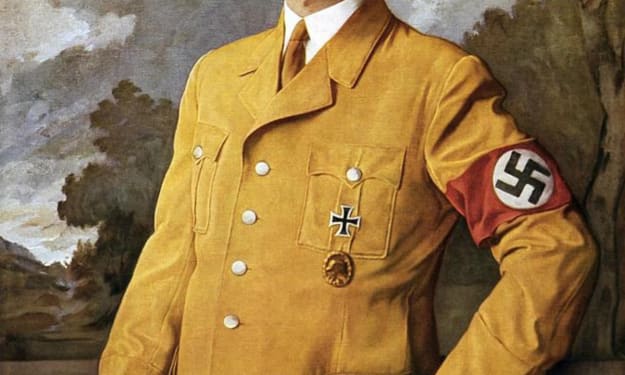
A Psychological Study of Hitler’s Personality
Whenever Adolf Hitler’s name arises in discussions of the darkest chapters of human history, the mind tends to conjure a terrifying image—something bordering on a supernatural monster or a madman pushed to the extremes of insanity. Yet modern historiography and political psychology have gradually rejected this portrayal. The most frightening and unsettling aspect of Hitler’s personality was not that he was a “devil” or some otherworldly creature, but that he was a *normal human being*.
By Taimur Kazmi8 months ago in History
The Forbidden City, China – The Richest Palace in History
No other palace—ancient or modern—matches its scale, longevity, and accumulated wealth. Origins and Construction The Forbidden City was constructed between 1406 and 1420 during the reign of the Ming Dynasty’s Yongle Emperor. Over one million workers, including artisans, craftsmen, and laborers, were involved in its construction. Materials were sourced from across China—rare woods from the south, marble from nearby quarries, and precious metals from imperial mines. Covering approximately 180 acres, the palace complex contains over 980 surviving buildings and nearly 9,000 rooms, making it the largest palace complex ever built. The name “Forbidden City” comes from the fact that no one could enter or leave without the emperor’s permission. It was believed the emperor was the “Son of Heaven,” and the palace was the earthly center of the universe. A Palace of Absolute Wealth The wealth of the Forbidden City did not come merely from its buildings. It represented the combined riches of the Chinese Empire, which for long periods was the world’s largest economy. Sources of Its Immense Wealth Imperial Treasury The palace stored enormous quantities of: Gold and silver ingots Jade artifacts Precious gemstones Imperial seals Silk, porcelain, and lacquerware Tribute System Surrounding kingdoms sent tribute—gold, animals, rare goods, and jewels—to the emperor, all stored within the Forbidden City. Taxation of a Vast Population For centuries, China had hundreds of millions of people paying taxes in grain, silver, and labor. Much of this wealth flowed directly to the imperial court. State Ownership Unlike modern monarchies, the emperor personally controlled land, resources, mines, and industries. There was no separation between state wealth and royal wealth. Architectural Riches The palace itself is an architectural treasure beyond valuation. Roofs covered in yellow glazed tiles, a color reserved exclusively for the emperor Columns and beams painted with gold-infused lacquer Floors made of rare stone designed to drain rainwater symbolically representing dragons Massive halls like the Hall of Supreme Harmony, used for coronations and imperial ceremonies Every structure followed strict cosmological and philosophical rules based on Confucianism, Daoism, and Feng Shui, reinforcing the emperor’s divine authority. Priceless Art and Cultural Wealth The Forbidden City housed one of the largest art collections in the world, including: Over 1.8 million cultural artifacts Ancient paintings and calligraphy Ceremonial weapons Rare books and manuscripts Ritual objects used in imperial ceremonies Many of these items are priceless and irreplaceable. Today, they form the core collection of the Palace Museum, one of the most valuable museums on Earth. Estimated Net Worth While it is impossible to calculate an exact value, historians and economists have made estimates based on: Land value Architectural scale Stored treasures Art collections Historical economic dominance Estimated Value: 💰 Over $70 trillion USD This makes the Forbidden City richer than any palace, billionaire, or modern royal estate in history. To put this into perspective, its estimated value exceeds the combined wealth of many modern nations. Why No Palace Can Compare Several factors make the Forbidden City unique: It served 24 emperors across Ming and Qing dynasties It remained continuously occupied as the seat of power for nearly 500 years China’s economy dominated global trade for centuries Wealth accumulated without modern spending limitations Cultural and symbolic value adds immeasurable worth Modern palaces are residences. The Forbidden City was the center of an empire. Survival Through Time Despite wars, invasions, dynastic collapse, and revolution, the Forbidden City survived largely intact. During the fall of the Qing Dynasty in 1911, many treasures were moved for protection, preserving them from destruction. Today, the palace is a UNESCO World Heritage Site and one of the most visited historical sites in the world, attracting millions of visitors annually. Conclusion The Forbidden City is not just the richest palace in history—it is a symbol of humanity’s ability to concentrate power, culture, art, and wealth into a single monumental space. Its estimated net worth of over $70 trillion reflects centuries of imperial dominance, economic control, and artistic achievement. No modern palace, corporation, or individual fortune comes close. The Forbidden City remains unmatched—a timeless reminder of an era when emperors ruled empires, and palaces held the wealth of the world.
By Say the truth 8 months ago in History