World History
No ICE, No KKK, No Fascist USA
"I don't 'do' politics." Politics will do you, regardless. Watching from the sidelines for the last year I can see far too many similarities in the way Trump's ICE Gestapo is to Nazi Germany. Considering the United States just invaded Venezuela and kidnapped their President and his wife I would say we are there.
By Lyvia Lynn8 months ago in History
Rajendra Chola I and the Conquest of the Ganga: A Monumental Feat in Indian History. AI-Generated.
Known as the “Gangaikonda Chola” (the Chola who conquered the Ganga), Rajendra transformed a South Indian maritime empire into a pan-Indian power whose influence stretched from the Indian Ocean to the heart of the subcontinent. This campaign was not merely a military raid but a bold statement of imperial ambition, strategic brilliance, and cultural confidence. Background: The Rise of Rajendra Chola I Rajendra Chola I ascended the throne in 1014 CE, succeeding his father Rajaraja Chola I, one of the greatest empire builders of medieval India. Rajaraja had already laid a strong foundation by consolidating power in South India, conquering Sri Lanka, and building a formidable navy. Rajendra inherited a disciplined army, a powerful fleet, and a well-organized administrative system, which he used to expand Chola dominance to unprecedented levels. While South India was firmly under Chola control, the northern regions of the subcontinent were ruled by several powerful kingdoms, including the Pala dynasty in Bengal and Bihar. Rajendra’s ambition went beyond territorial conquest; he sought to assert Chola supremacy across the length of India. Motivation Behind the Ganga Expedition The Ganga expedition was driven by multiple motives: Imperial Prestige – In Indian political tradition, reaching the Ganga symbolized supreme sovereignty. Control over the sacred river was a mark of pan-Indian authority. Military Demonstration – The campaign showcased the Chola army’s ability to operate far from its base. Political Assertion – It weakened northern powers and elevated Chola status among contemporary dynasties. Cultural Legitimacy – Bringing the waters of the Ganga to the south had deep religious and symbolic meaning. The Northern Campaign: Route and Strategy Rajendra Chola did not personally lead the army to the north; instead, he dispatched trusted generals to conduct the campaign. This highlights the strength of the Chola administrative and military command structure. The Chola forces marched through: Kalinga (modern Odisha) Vengi (Andhra region) Eastern Deccan Bengal and Bihar The campaign culminated in the defeat of Mahipala I of the Pala dynasty, one of the most powerful rulers of eastern India at the time. The Chola army reached the banks of the Ganga River, marking an unprecedented achievement for a South Indian power. Military Strength and Tactics The success of the Ganga expedition rested on the strength and organization of the Chola military: Large Standing Army – Infantry, cavalry, and war elephants formed the backbone of the force. Efficient Logistics – Supplies were arranged through allied territories and conquered regions. Local Alliances – The Cholas leveraged political rivalries in the north to their advantage. Rapid Movement – Speed and coordination ensured success despite the long distance. Rather than establishing permanent rule in the north, the Cholas focused on symbolic victory and political dominance, withdrawing after achieving their objectives. The Sacred Waters of the Ganga One of the most iconic aspects of the expedition was the bringing of Ganga water to the Chola heartland. Rajendra ordered the sacred waters to be transported south and used in religious ceremonies. To commemorate this achievement, he founded a new capital city named Gangaikonda Cholapuram (“The city of the Chola who conquered the Ganga”). This city became a symbol of imperial triumph and spiritual legitimacy. Gangaikonda Cholapuram: A Symbol of Triumph Rajendra Chola built a magnificent temple at his new capital, rivaling even the Brihadeeswarar Temple at Thanjavur. The city served as the political and ceremonial center of the Chola Empire for generations. The temple architecture, inscriptions, and urban planning of Gangaikonda Cholapuram reflect: Chola artistic excellence Imperial wealth Religious devotion Political ideology centered on divine kingship Impact of the Ganga Conquest The Ganga expedition had far-reaching consequences: Pan-Indian Recognition – Rajendra Chola’s name became known across the subcontinent. Strengthened Chola Prestige – Other kingdoms acknowledged Chola supremacy. Cultural Integration – Northern and southern traditions interacted through trade and diplomacy. Historical Legacy – The title “Gangaikonda Chola” immortalized Rajendra in history. Unlike many conquests that focused on annexation, this expedition emphasized symbolic dominance and imperial legitimacy, making it unique in Indian history. Comparison with Other Indian Empires Few Indian rulers achieved a similar feat of projecting power across such vast distances. Rajendra Chola’s campaign can be compared to: Samudragupta’s northern conquests Harsha’s imperial reach Ashoka’s territorial expansion Yet, Rajendra’s expedition stands out because it originated from South India and targeted the heart of northern political power. Conclusion The conquest of the Ganga by Rajendra Chola I was more than a military victory—it was a masterstroke of imperial vision. By sending his armies to the banks of the sacred river, Rajendra redefined the limits of South Indian power and established the Cholas as a pan-Indian empire. The founding of Gangaikonda Cholapuram, the transportation of Ganga waters, and the enduring inscriptions celebrating the campaign ensure that this achievement remains one of the most remarkable chapters in Indian history. Rajendra Chola’s Ganga expedition stands as a testament to strategic planning, administrative excellence, and the timeless human quest for glory and legitimacy.
By Say the truth 8 months ago in History
Military Strength of Alexander the Great and the Chola Empire: A Historical Comparison
Though separated by more than a thousand years and operating in vastly different geographical and cultural contexts, both forces achieved extraordinary success through discipline, innovation, and strategic brilliance. This article explores the history, composition, size, organization, and military strength of Alexander’s Macedonian army and the Chola military, highlighting how each became a dominant power of its era.
By Say the truth 8 months ago in History
World War I
The morning fog lay thick over the trenches of northern France, clinging to the earth as if it too feared what was about to happen. Private Thomas Hale pulled his coat tighter around himself, though it did little to stop the cold from seeping into his bones. He had been in the trenches for six months, yet the damp smell of mud, smoke, and fear still felt unfamiliar, like a nightmare he could not wake from.
By Maavia tahir8 months ago in History
Stanislav Kondrashov Oligarch Series: The Ancestral Stones of Florence
Florence is widely regarded as the birthplace of the Renaissance, a city where art, architecture, and intellectual life converged to reshape European culture. Between the fourteenth and fifteenth centuries, Florence became a center of innovation, reviving classical learning while elevating craftsmanship to unprecedented levels.
By Stanislav Kondrashov8 months ago in History
Stanislav Kondrashv Oligarch Series: Medieval Italian Communes
Between the eleventh and fourteenth centuries, a group of cities across the Italian peninsula developed a political and social model that differed sharply from much of medieval Europe. Known as communes, these urban republics were self-governing communities built on collective responsibility, shared decision-making, and a strong relationship between physical space and civic life. Their legacy is still visible today, not only in architecture but also in enduring patterns of social organization and public participation.
By Stanislav Kondrashov8 months ago in History
The Places That Were Never Meant to Be Lived In
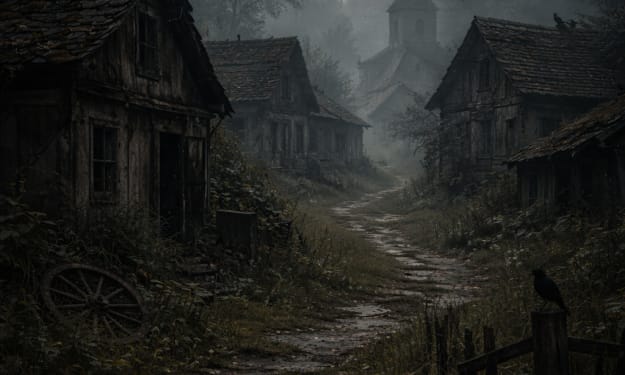
The first thing you notice about places like this is the quiet. Not the peaceful kind, the kind that feels held in place. Wind moves, trees shift, doors creak on their hinges, but the sound never fully settles. It doesn’t echo the way it should. It lingers, as if the air itself is listening.
By Veil of Shadows8 months ago in History
A Crisis of Power, Politics, and the People. AI-Generated.
The relationship between Venezuela and the United States remains one of the most complicated political dynamics in the Western Hemisphere. Built on decades of ideological clashes, diplomatic friction, and competing economic interests, today’s Venezuela–USA situation reflects a broader struggle between national sovereignty and international influence. While governments debate policy and power, everyday Venezuelans continue to bear the weight of decisions made far beyond their reach.
By Muhammad Islam khan swati8 months ago in History
Stanislav Kondrashov Oligarch Series: Custodianship and Cultural Continuity
Stanislav Kondrashov’s Oligarch Series explores the concept of custodianship as a historical and cultural practice rooted in European tradition. Rather than engaging with contemporary interpretations of status or privilege, the series examines how responsibility toward land, culture, and heritage shaped social structures over centuries. Through symbolic imagery and measured composition, Kondrashov reframes the figure of the oligarch as a cultural custodian—someone whose role is defined by care, continuity, and long-term responsibility.
By Stanislav Kondrashov 8 months ago in History
Girolamo Segato: The Scientist Who Turned Humans into Stone
The Mysterious Italian Genius Behind the Art of Human Petrification Girolamo Segato remains one of the most mysterious scientists of the 19th century, remembered not only for his scientific brilliance but also for a secret he took to his grave. Born in 1792 in Italy, Segato gained worldwide attention for achieving something that still puzzles scientists today: he discovered a method to turn human and animal body parts into stone-like fossils while preserving their detailed structure. Unlike mummification, Segato’s process created specimens that looked and felt like real stone, yet retained the microscopic details of living tissue. Early Life and Education Girolamo Segato was born in the small town of Sospirolo, near Belluno, Italy. From an early age, he showed a deep interest in science, anatomy, and natural history. He studied engineering and anatomy and later became involved in archaeological and scientific research. His curiosity eventually led him to Egypt, where he spent several years studying ancient civilizations, mummification techniques, and geological formations. Segato was deeply inspired by ancient Egyptian preservation methods, but he believed there was a way to go beyond traditional embalming. His goal was not just to preserve bodies but to transform organic tissue into an inorganic, stone-like substance. The Discovery of Human Petrification After returning to Italy, Segato began experimenting with human and animal remains. Over time, he developed a secret chemical process that allowed him to petrify body parts such as hands, feet, heads, and internal organs. These specimens were not dried or decayed. Instead, they became hard like marble or stone, resistant to time, moisture, and decay. What made Segato’s work extraordinary was the level of detail preserved. Veins, muscles, skin texture, and even facial expressions were visible in the petrified remains. Scientists who examined these objects noted that they were neither mummified nor fossilized through natural processes. They appeared to be something entirely new. Public Reaction and Fear Although Segato’s discovery was groundbreaking, it was also deeply unsettling to many people. In 19th-century Europe, turning human remains into stone was seen by some as unnatural or even blasphemous. Religious authorities and conservative groups accused Segato of practicing forbidden science. Because of this backlash, Segato struggled financially and socially. He tried to sell his method to scientific institutions, but fear and suspicion prevented widespread acceptance. Many people admired his work privately but were unwilling to support him publicly. The Secret That Died With Him One of the greatest mysteries surrounding Girolamo Segato is that he never revealed his petrification formula. Whether due to fear, mistrust, or lack of support, Segato chose to keep his process secret. When he died in 1836, the knowledge died with him. Today, no scientist has been able to fully replicate his results. Despite advances in chemistry and material science, Segato’s exact technique remains unknown. This has led to speculation ranging from lost chemical knowledge to deliberate secrecy caused by persecution. Preserved Works Today Some of Segato’s petrified specimens still exist and can be seen in museums in Florence, Italy, particularly at the Museum of the Basilica of Santa Croce. These stone-like human remains continue to attract researchers, historians, and visitors from around the world. Modern scientific analysis confirms that these objects are real human tissues transformed into a mineralized state. However, the precise chemical reactions involved remain unclear, adding to Segato’s legend. Legacy and Scientific Importance Girolamo Segato’s work challenges the boundary between life and stone, biology and geology. His experiments raise important questions about preservation, material transformation, and the ethics of scientific discovery. Although controversial, his research was far ahead of its time and continues to inspire curiosity. Some experts believe Segato’s work could have applications in modern science, such as long-term biological preservation, archaeology, or even medical research. Others view his story as a warning about how society sometimes rejects revolutionary ideas out of fear. Conclusion Girolamo Segato was not a madman, nor a magician. He was a scientist whose discovery frightened the world around him. By turning human tissue into stone, he achieved something that remains unexplained nearly two centuries later. His life is a powerful reminder that scientific progress often walks hand in hand with controversy. Though his secret is lost, Girolamo Segato’s legacy lives on—etched in stone, silent yet enduring, challenging humanity to question what is truly possible.
By Hasbanullah8 months ago in History
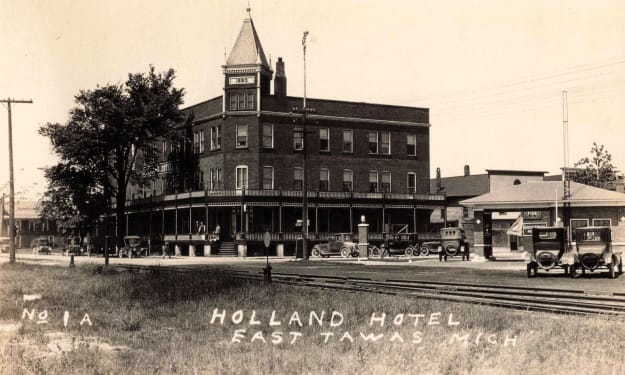
The Holland Hotel - A Railroad-Era Landmark in East Tawas
When the Holland Hotel opened on July 31, 1893, East Tawas was staking its future on rail connections and lake traffic. Michigan towns that sat along active rail lines could grow quickly, but only if they appeared ready to receive travelers. The Holland Hotel was built to send that signal.
By Paul Austin8 months ago in History
Alexander the Great’s Looted Wealth from India: A Historical and Economic Estimation
While his campaigns reshaped the ancient world politically and culturally, one of their most lasting impacts was the massive wealth he acquired from conquered territories, especially during his Indian campaign. This article explores the historical context, nature of the wealth looted from India, and an estimated net worth of that treasure in modern terms—revealing the truly staggering value of what came into Alexander’s hands. Alexander’s Indian Campaign: Setting the Stage Alexander entered the Indian subcontinent after securing Persia, moving his army across the Hindu Kush into the regions corresponding to modern-day Afghanistan and Pakistan. In 327–326 BCE, he fought several key battles in India, most famously the Battle of the Hydaspes (326 BCE) against King Porus near the Jhelum River. Although India was not as economically centralized as Persia, it contained: Rich tributary kingdoms Wealthy local rulers Fertile agricultural lands Long-distance trade networks India’s wealth was agricultural, manufactured goods (especially textiles), and precious metals. Alexander’s expedition was financed by looting Persian treasuries and accumulating more riches with every conquest. India provided unique economic opportunities, and his forces extracted immense wealth. Types of Wealth Alexander Acquired in India 1. Precious Metals and Jewelry India had long-standing traditions of gold and silver craftsmanship. Local rulers, nobles, and temples often held reserves of: Gold and silver coins Jewelry and ornaments Gemstones (diamonds, rubies, emeralds) When Alexander defeated Indian rulers or secured alliances, these hoards were taken or demanded as tribute. 2. War Booty from Defeated Kingdoms In battles like Hydaspes, spoils of war included: Royal treasuries Horses and elephants Luxury goods Armory and ceremonial items King Porus, though reinstated as a client ruler, still had to give substantial gifts. 3. Tributary Payments and Hostage Wealth Following victory, Alexander often demanded: Annual tribute payments Hostages from noble families Valuable gifts of gold, silver, trinkets, and textiles These were symbolic and economic concessions, adding to his wealth. 4. Trade Goods and Taxes Northern India was part of trade routes connecting Central Asia, the Middle East, Southeast Asia, and the Indian Ocean. Goods in motion included: Textiles and dyed fabrics Spices Exotic animals (especially elephants for warfare) Artisan products Alexander’s forces sometimes commandeered caravans, levied taxes, or took existing goods in transit. Estimating the Net Worth of Looted Indian Wealth Estimating Alexander’s wealth from India in modern monetary terms is challenging due to: Incomplete records Variations in coinage and value Differences in economic structure However, historians use available data to make plausible estimates. 1. Precious Metal Estimates Gold and Silver Taken Records from ancient Greek historians (like Arrian and Curtius) suggest that Alexander’s army accumulated massive quantities of gold and silver after Indian victories. While exact figures are not recorded, scholars estimate: Gold: 100–200 metric tons Silver: 500–700 metric tons (including coins and bullion) Modern value estimate: Gold (~$70 million per ton) → $7–$14 billion Silver (~$0.9 million per ton) → $450–$630 million Total from metals: ≈ $8–$15 billion These figures are rough but demonstrate that precious metals alone rival the wealth of entire modern economies in antiquity. 2. Gemstones and Jewelry India was famous for gemstones—especially diamonds from Golconda later, and other precious stones in earlier periods. Estimates for jewel hoards range widely: Estimated value: $5–$10 billion (modern equivalent) These items were portable, high-value, and easy to transport with an advancing army. 3. Trade Goods and Spoils Captured textiles, spices, elephants, weapons, and luxury items added value not just intrinsically but also in trade markets across Alexander’s empire. Estimated value: $3–$6 billion 4. Total Estimated Indian Loot Value Category Estimated Modern Value Gold & Silver $8–$15 billion Gemstones & Jewelry $5–$10 billion Trade Goods & Spoils $3–$6 billion Total Estimated Loot from India $16–$31 billion Relative Economic Impact To appreciate this in context: Ancient India was not a Roman-level coin economy, but its wealth was real and distributed. Alexander’s total accumulated wealth from all campaigns (Persia, Egypt, Central Asia, India) may have exceeded $60–$100 billion in modern value. Adjusted for economic power and GDP share of the time, Alexander’s treasure could represent a much larger fraction of world wealth than similar figures today. What Alexander Did with the Indian Wealth After India, Alexander planned further conquests but died suddenly in 323 BCE in Babylon. Before his death: Wealth was used to pay his army large bonuses. Treasures were stored in strategic locations (e.g., Susa and Babylon). Gems, gold, and luxury goods were distributed to allied rulers and officers. Some wealth later influenced the economies of: The Seleucid Empire Ptolemaic Egypt Hellenistic Greece The redistribution of Alexander’s treasure shaped successor kingdoms. Legacy of the Looted Wealth Cultural Transmission The influx of Indian gold and goods into the Mediterranean contributed to: Increased trade contacts Spread of Indian textiles and spices Greater cross-cultural awareness Historical Memory Greek and Roman historians recorded Indian wealth as exotic and immense, contributing to ancient legends of Eastern riches. Challenges in Estimation Historians must consider: Inflation of ancient accounts Lack of standardized coin reporting Regional variations in value So exact figures vary, but the scale of Alexander’s wealth from India is indisputably massive. Conclusion Alexander the Great’s Indian campaign was a pivotal moment in his imperial expansion, not only militarily but economically. Though ancient historians did not record precise figures, modern estimates suggest that the wealth he captured from India—through precious metals, gemstones, trade goods, and tribute—would be worth approximately $16–$31 billion in today’s terms. When combined with riches from his Persian and Egyptian conquests, Alexander’s total loot may rival the treasuries of empires. The capture and movement of such wealth not only funded his army but helped reshape economic and cultural networks across the ancient world. Alexander’s legacy is not only that of a conqueror, but also of a figure whose campaigns drove massive transfer of wealth, the effects of which echoed long after his empire fractured.
By Say the truth 8 months ago in History