World History
Khutulun: Warrior Princess of the Mongol Empire
Khutulun was no ordinary princess. Born around 1260, she belonged to the great Mongol Empire as the daughter of Kaidu Khan, a powerful ruler. Her life wasn't about palaces and luxury but battles, leadership, and breaking traditions.
By Maher Bilal2 years ago in History
Julius Caesar Uncovered: The Rise, Reforms, and Tragic Fall of Rome's Greatest Leader. AI-Generated.
Julius Caesar – a name that echoes through the annals of history, conjuring images of unmatched power, unbridled ambition, and a dramatic demise. But who was the man behind the myth? This article delves into the untold story of one of Rome’s greatest leaders, a figure whose life reshaped the ancient world and whose legacy endures to this day.
By menaland yakon2 years ago in History
The After life Preparation of Egyptian King
Preparation for the Afterlife The adventure to the afterlife was apparent as abounding with challenges and tests, and alone those who were abundantly able would succeed. For Pharaohs, this alertness was decidedly elaborate, involving both concrete and airy elements. The concrete anatomy had to be preserved, arch to the convenance of mummification. The age-old Egyptians believed that the canning of the anatomy was capital for the soul's adaptation in the afterlife. Without an complete body, the king's ka (vital essence) would be clumsy to acknowledgment to it, authoritative abiding activity impossible.
By Say the truth 2 years ago in History
Antoine Laurent Lavoisier: The Father of Modern Chemistry
Antoine Laurent Lavoisier: The Father of Modern Chemistry Antoine Laurent Lavoisier (1743–1794) was a pioneering scientist whose work transformed chemistry from a qualitative discipline into a quantitative one. Known as the "Father of Modern Chemistry," his research established fundamental principles still used today. This comprehensive overview of Lavoisier’s life and contributions is divided into key sections.
By Mahalakshmi2 years ago in History
"The Intellectual Legacy of Ancient Greece: Philosophy and Science"
The Aesthetics and Science of Age-old Greece Ancient Greece is generally admired as the cradle of Western civilization, and for acceptable reason. This era, spanning from the 8th aeon BCE to the end of antiquity, witnessed the acceleration of account that would appearance the approaching of philosophy, science, mathematics, and political anticipation for centuries. The Greeks' following of wisdom, or philosophia as they alleged it, apparent a cogent abandonment from the fabulous worldview of their predecessors. Coupled with their groundbreaking accurate observations and methodologies, the Greeks laid the foundation for what we now accede rational and empiric thought. The Birth of Greek Philosophy Greek aesthetics began with what historians now appellation the Pre-Socratic philosophers. These aboriginal thinkers approved to accept the universe's agreement and basal attempt after invoking abnormal explanations. Thales of Miletus, for example, proposed that baptize was the capital actuality from which aggregate originated. Anaximenes appropriate air as the primary element, while Heraclitus alien the abstraction of connected change, encapsulated in his acclaimed saying, “You cannot footfall into the aforementioned river twice.” As the movement matured, added circuitous and abstruse account developed. Pythagoras, accepted for the Pythagorean theorem, believed that numbers were the aspect of all things. His assignment connected above mathematics into a mystical worldview area after relationships absolute the accord of the universe. Socrates and the Art of Inquiry The aboriginal above about-face in Greek anticipation came with Socrates (469–399 BCE), who confused the focus from the accustomed apple to animal behavior, ethics, and society. Unlike the Pre-Socratics, Socrates did not address bottomward his teachings; instead, we apperceive about him through the works of his apprentice Plato. Socratic dialogue, characterized by allurement acid questions to activate analytical cerebration and brighten ideas, became a authentication of his teaching. His adjustment laid the background for the acreage of ethics, emphasizing the accent of analytical one's life, abundantly quoted as, “The unexamined activity is not account living.” Socrates’ charge to arduous accepted acumen ultimately led to his balloon and beheading for allegedly allurement the adolescence and impiety. Yet, his account connected to advance through Plato’s dialogues. Plato’s Apple of Forms
By Say the truth 2 years ago in History
The Mysterious and Advanced Indus Valley Civilization
The Indus Valley Civilization, often referred to as the Harappan Civilization, stands as one of the most captivating and contentious societies of the Bronze Age. Flourishing in what is now Pakistan approximately 5,000 years ago, this enigmatic culture has bequeathed a wealth of mysteries for contemporary archaeologists to explore. In this article, we shall embark on a journey through the latest findings that illuminate the splendor of this extraordinary civilization.
By A História2 years ago in History
The Way forward: Taking care of the Hardships of Tomorrow
There has never been a more noteworthy requirement for ground breaking strategies in reality as we know it where titles Are overwhelmed by developments in sustainable power, electric vehicles, and computer based intelligence created workmanship.
By Ananta Kumar Dhar2 years ago in History
The Parachute Jump: Coney Island’s Timeless Icon
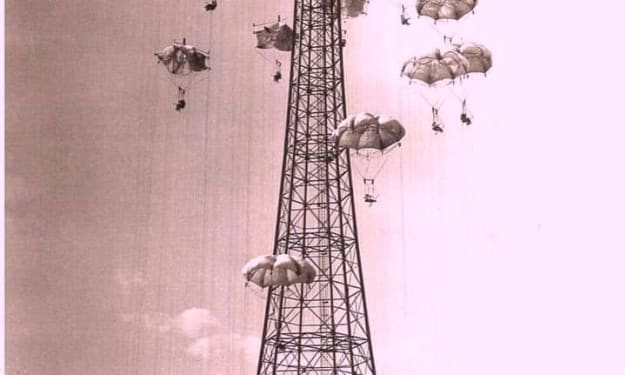
Coney Island, long synonymous with the thrills of American amusement parks, boasts an array of iconic attractions that have shaped its history. Among these, the Steeplechase Parachute Jump stands out as a testament to innovation, nostalgia, and enduring architectural beauty. Built in 1939 and affectionately nicknamed "The Eiffel Tower of Brooklyn," this towering structure has cemented its place not only on the Coney Island skyline but also in the hearts of countless visitors. Though the ride itself closed in the 1960s, the Parachute Jump remains a symbol of Coney Island's golden age, a tangible link to a bygone era of amusement park splendor. --- The Birth of the Parachute Jump The Parachute Jump wasn’t initially intended to dazzle Coney Island’s thrill-seekers. It debuted at the 1939 New York World’s Fair in Flushing Meadows, Queens, as an innovative and daring attraction. Designed by James H. Strong, the ride was based on parachute training towers used by the military. Fairgoers would ascend to the top of the 250-foot tower before descending in parachute-like seats, tethered by cables to ensure safety. Its blend of novelty and excitement captivated audiences, leading to its acquisition by the owners of Steeplechase Park in 1941. Relocated to Coney Island, the Parachute Jump became a centerpiece of the amusement park, drawing both adrenaline junkies and casual visitors eager to experience its gentle yet exhilarating descent. --- A Ride Like No Other The Parachute Jump was more than just a ride; it was an experience. Passengers were hoisted to the top of the tower in two-person seats, with nothing but open air between them and the ground. Once released, they would descend slowly, cushioned by parachutes as they glided downward. Despite its initial popularity, the ride was not without its challenges. Strong winds could disrupt the descent, and some riders found the open-air design a bit too nerve-wracking. Still, the Parachute Jump offered a unique mix of thrill and spectacle that few other attractions could rival. --- The End of an Era By the 1960s, Coney Island had begun to decline, and Steeplechase Park—once the crown jewel of the area—closed its gates permanently in 1964. Along with the park, the Parachute Jump ceased operations. However, unlike other rides and structures that were demolished during the decline of Coney Island’s amusement parks, the Parachute Jump was spared. Its towering frame remained a fixture of the skyline, even as it fell into disrepair. For decades, it stood as a poignant reminder of Coney Island’s golden age, its skeletal structure a mix of nostalgia and melancholy. --- Landmark Status and Preservation In 1989, the Parachute Jump was designated a New York City landmark, ensuring its preservation for generations to come. This designation was more than just a recognition of its historical importance; it was a commitment to honoring Coney Island’s legacy as a hub of innovation and entertainment. Efforts to restore the structure began in the 1990s and continued into the early 2000s. The renovation process included reinforcing the steel frame, repainting the tower, and installing decorative lighting. While the ride itself was never reopened, these efforts transformed the Parachute Jump into a stunning visual centerpiece for the area. Today, the tower stands as a beacon of history, its colorful LED lights illuminating the night sky and drawing visitors to Coney Island’s boardwalk. --- The Parachute Jump’s Cultural Impact The Parachute Jump holds a unique place in the cultural fabric of New York City. It has been featured in countless photographs, films, and works of art, symbolizing both the heyday of Coney Island and the resilience of its spirit. For many, the Parachute Jump represents a time when amusement parks were more than just a collection of rides—they were places of wonder and escape. The structure’s endurance through decades of change is a testament to the nostalgia it inspires and the value of preserving such landmarks. --- A Modern Symbol of Coney Island While it no longer serves its original purpose, the Parachute Jump continues to draw admiration as a historical and architectural landmark. Visitors strolling along the Coney Island boardwalk often pause to marvel at its towering presence, a reminder of the ingenuity and imagination that defined the area’s amusement parks. The structure has also become a symbol of Coney Island’s ongoing revival. New developments, attractions, and events have breathed fresh life into the area, with the Parachute Jump serving as a unifying link between past and present. --- Conclusion The Steeplechase Parachute Jump is more than just an old amusement park ride—it’s a monument to an era when Coney Island was the pinnacle of American leisure and entertainment. Its designation as a landmark ensures that its story will not fade into obscurity but will instead continue to inspire curiosity and admiration. Whether seen as a nostalgic relic or a beacon of architectural beauty, the Parachute Jump remains an irreplaceable part of Coney Island’s identity. Its towering frame, lit up against the night sky, is a tribute to the ingenuity, daring, and joy that defined the golden age of amusement parks. For New Yorkers and visitors alike, it is a cherished reminder that some icons never lose their magic.
By Deji Akomolafe2 years ago in History
Ayatollah Ali Khamenei: Iran's Supreme Leader and His Resilient Legacy
Ayatollah Ali Khamenei has been Iran's Supreme Leader since 1989. He sits atop this country with huge influence in this country's government, military, and institutions of faith. Most of this nation's foreign and domestic policy undertaken is through the leadership adopted by Ayatollah Ali Khamenei. His longevity and influence have placed him at the heart of the country's politics.
By Abhay kumar chauhan2 years ago in History