World History
Ancient Greece: The Cradle of Western Civilization
Ancient Greece, generally accepted as the birthplace of Western civilization, has larboard an constant appulse on the apple with its arresting contributions to politics, philosophy, art, and science. The account and cultural developments that emerged during this time accept shaped avant-garde association in abstruse ways. Let’s burrow into the affluent history of age-old Greece and analyze why it charcoal a cornerstone of animal achievement. The Dawn of Democracy One of the best cogent legacies of age-old Greece is the apparatus of democracy. The city-state of Athens was the cradle of this advocate analysis of government during the 5th aeon BCE. Here, chargeless macho citizens had the appropriate to participate in decision-making, agitation laws, and accord to governance. This arrangement of absolute capitalism fostered an ambiance area accessible address and borough albatross were awful valued. Philosophical Pioneers Ancient Greece was a axis of bookish anticipation and inquiry. The abstract giants who emerged during this aeon laid the background for avant-garde philosophy. Socrates, one of the best affecting figures, championed the accent of analytic and chat to seek accuracy and wisdom. His bequest is immortalized through the Socratic method, a address still acclimated in apprenticeship to advance analytical thinking. Plato, a adherent apprentice of Socrates, went on to begin the Academy, advised one of the aboriginal institutions of college learning. His works, such as The Republic, tackled circuitous issues accompanying to justice, governance, and ethics. Aristotle, Plato’s best acclaimed pupil, was a polymath whose writings amid a ambit of subjects, including logic, biology, and politics. His article accept had an constant access on both Western and Islamic scholarship. Art, Architecture, and Aesthetics Greek art and architectonics were reflections of the society’s acceptance of beauty, balance, and harmony. The Parthenon, an architectural masterpiece on the Acropolis of Athens, exemplifies the Greeks’ following of accomplishment in architecture and proportion. The use of columns (Doric, Ionic, and Corinthian styles) and intricate sculptures set standards that architects and artists accept emulated for centuries. Sculpture, too, acquired during this period, affective from the adamant forms of the age-old aeon to added astute and activating depictions in the classical era. Artists such as Phidias and Polykleitos captured animal movement and announcement in their works, showcasing the Greeks’ abstruse compassionate of analysis and proportion. Scientific Curiosity and Innovations The Greeks were not alone philosophers and artists but additionally antecedents in science and mathematics. Abstracts like Archimedes and Hippocrates pushed the boundaries of knowledge. Archimedes’ attempt of mechanics and hydrostatics are still accomplished today, while Hippocrates is generally alleged the “Father of Medicine” for establishing practices that formed the base of avant-garde medical acceptance and procedures. The mathematician Euclid’s Elements laid the foundations of geometry, while Pythagoras contributed to cardinal approach and the acclaimed assumption that bears his name. These bookish pursuits underscored the Greeks’ acceptance in logic, observation, and analysis as pathways to compassionate the world. Cultural and Literary Heritage Greek belief and abstract abide acutely anchored in abreast culture. Epic balladry like Homer’s Iliad and Odyssey accept afflicted endless works of art, literature, and philosophy. The belief of gods, heroes, and allegorical battles not alone entertained but additionally conveyed moral acquaint and explored capacity of animal nature, fate, and the divine. Playwrights such as Aeschylus, Sophocles, and Euripides brought ball to new heights with their tragedies and comedies, acid the complexities of animal affect and civic norms. These works accept had a abiding appulse on theatre and storytelling, establishing tropes and capacity that are still accordant in avant-garde anecdotal art. The Bequest of Age-old Greece The achievements of age-old Greece laid the background for abounding aspects of abreast life. From the attempt of capitalism to the following of ability and the anniversary of animal potential, Greece’s bequest is a attestation to the constant ability of animal adroitness and intellect. Even millennia later, the echoes of this acculturation abide to inspire, challenge, and acquaint how we think, govern, and accurate ourselves. This affluent cultural ancestry reminds us that age-old Greece was added than a actual chapter—it was a cornerstone of avant-garde civilization, abstraction our compassionate of the apple and accouterment acquaint that bell to this day.
By Say the truth 2 years ago in History
"Ra: The Supreme Sun God and Guardian of Ancient Egypt"
Ra, the Sun God of ancient Egypt, stands as one of the most significant and revered deities in the pantheon of Egyptian mythology. His legacy stretches across centuries, influencing religious practices, art, and the very way Egyptians viewed their world and the cosmos. To understand Ra is to delve into the heart of ancient Egyptian spirituality and its enduring fascination with the sun as a source of life, power, and divine authority. Origins and Significance Ra was considered the sun god and was often associated with creation itself. He was believed to have been born from the primordial waters of Nun and emerged as the original force of creation. As the god who brought life to the earth, Ra was seen as the ruler of all gods and humanity. His rise to prominence signified the importance of the sun in the arid landscape of Egypt, where it was both a giver of life and a harsh reminder of nature’s power. Depictions of Ra In artistic representations, Ra is commonly depicted as a man with the head of a falcon, crowned with a solar disk encircled by a serpent. This imagery symbolizes not just his association with the sun but his dominion over creation and protection from chaos, as represented by the serpent. Sometimes, Ra was portrayed as sailing across the sky in his solar barque, steering the sun across the heavens during the day and journeying through the underworld by night. The Daily Journey and the Underworld
By Say the truth 2 years ago in History
The Most Beautiful Souls in the World
Our world is often obsessed with external appearances, so it's easy to forget the power of inner beauty. We constantly hear about physical beauty, but true beauty comes from within. The most beautiful souls in the world radiate kindness, compassion, empathy, and a genuine love for others. Having a beautiful soul, however, entails what? Does it come naturally, or can it be cultivated?
By Zinnat ara Begum2 years ago in History
Ukrainian Theatre of National Identity - Chapter Breakdown
Chapter Breakdown & Goals In the first chapter, I set up the key facets of nationalism and nation-building in Ukraine, and bring to light the key figures in the Ukrainian literary pantheon which guided the development of Ukrainian culture for the century following their deaths. To define nationalism and its associated terms in specific relation to the drama, I bring in scholars such as Nadine Holdsworth and Kiki Gounaridou, who introduce terms such as “nation under duress,” “state of the nation play,” “cosmopolitanism,” and “national iconography.” These terms are to be kept in mind for future sections while exploring and discussing specific works in the Ukrainian canon. Afterwards, I dive into the history of early Ukraine under control of the Russian Empire, explore the lives of Taras Shevchenko, Ivan Franko, and Lesia Ukrainka, and discuss their contributions to the Ukrainian literary canon.
By Steven Christopher McKnight2 years ago in History
The Mystery of the Pingyan Giant Footprint: Fact or Fiction?
For centuries, people have been fascinated by stories of giants. Different cultures have shared legends about huge human-like beings, like the Titans in Greek myths or the Nephilim in the Bible. These stories have sparked our imagination and curiosity. But finding real evidence of giants has always been challenging and controversial. This changed for some people when a massive footprint was discovered in the remote village of Pingyan, China, sparking debates about whether it could be proof of giants.
By Muhammad Waseem 2 years ago in History
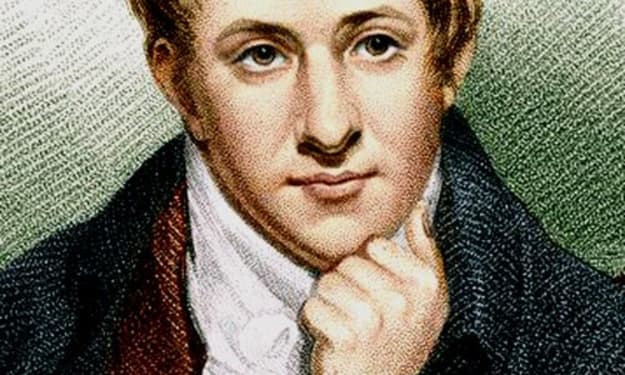
Sir Humphry Davy: A Pioneer of Chemistry and Innovation
Sir Humphry Davy: A Pioneer of Chemistry and Innovation Sir Humphry Davy (1778–1829) was one of the most influential scientists of the early 19th century. A chemist, inventor, and poet, he contributed significantly to our understanding of chemical elements, invented tools that saved lives, and inspired a generation of scientists. This essay explores his life, achievements, and legacy under the following subheadings.
By Mahalakshmi2 years ago in History
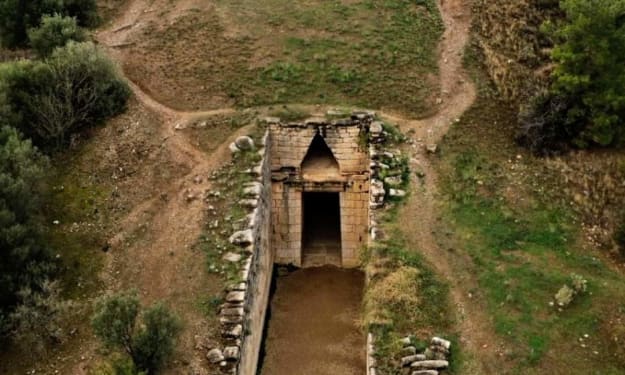
The Tomb Of Agamemnon
The Treasury of Atreus: A Glimpse into Mycenaean Genius The Treasury of Atreus, often called the Tomb of Agamemnon, is a breathtaking structure from the Mycenaean civilization. Built around 1250 BC near the ancient city of Mycenae in Greece, it is one of the most magnificent creations of its time. Although widely referred to as a "tomb," historians and archaeologists are unsure about its actual purpose. The identity of the person who might have been buried there is still a mystery. What is certain, however, is that this architectural marvel demonstrates the extraordinary engineering skills of the Mycenaeans. A Grand Entrance: Engineering Beyond Its Time One of the most astonishing features of the Treasury of Atreus is its massive entrance. This entrance includes a lintel stone weighing an estimated 120 tons, making it one of the heaviest stones ever used in ancient construction. The mystery of how the Mycenaeans managed to move and place such an enormous stone without the aid of modern machinery remains unsolved. Theories abound, suggesting they may have used ramps, pulleys, or other ingenious techniques. Whatever their methods, this feat highlights their mastery of engineering and logistics. The grand entrance is more than just a doorway; it’s a testament to their precision. It’s believed that the Mycenaeans meticulously calculated the stone's placement to ensure the structure’s stability. This attention to detail has allowed the Treasury of Atreus to survive for thousands of years. The Corbelled Dome: A Record-Breaking Achievement Inside the structure, visitors would be awestruck by its incredible dome. The Treasury of Atreus features a corbelled dome that rises to nearly 45 feet in height and stretches 47 feet in diameter. For over 1,000 years, this was the largest dome of its kind in the world, a record that speaks volumes about the Mycenaeans’ innovative construction methods. The dome was built using a technique called corbelling. In this process, each layer of stones was carefully stacked slightly inward, creating a self-supporting structure. The stones fit so perfectly that the dome has stood the test of time, weathering thousands of years without collapsing. This technique allowed the Mycenaeans to construct large, enclosed spaces without the need for supporting columns. Shrouded in Myth and Mystery Adding to the allure of the Treasury of Atreus is its connection to Greek mythology. Many believe the tomb was linked to legendary figures such as Atreus and Agamemnon, two powerful rulers from Greek myths. Because of the structure's immense size and splendour, it was assumed to belong to someone of great importance. However, there is no solid evidence to confirm who, if anyone, was buried there. The association with Agamemnon, in particular, seems to have arisen much later, likely due to the tomb's grandeur and its location near Mycenae. Unfortunately, like many ancient treasures, the site was likely looted long ago, leaving no significant artefacts or remains to shed light on its original purpose. Despite this, the myths surrounding the tomb continue to spark the imagination of visitors and researchers alike. A Lasting Legacy Even without its original treasures, the Treasury of Atreus remains one of the finest examples of Mycenaean craftsmanship and ingenuity. Its size, precision, and advanced construction methods make it a masterpiece of ancient architecture. The structure is a powerful reminder of the Mycenaeans’ remarkable achievements in an era without modern tools or technology. Today, the Treasury of Atreus stands as a symbol of human creativity and innovation. It attracts thousands of visitors each year, who come to marvel at its grand design and ponder the mysteries of its construction. Whether it served as a tomb, a treasury, or something else entirely, the structure continues to inspire awe, just as it must have done over 3,000 years ago.
By Muhammad Waseem 2 years ago in History
Camille Monfort: The True Story of the Legend "The Amazonian Vampire"
Camille Monfort, often referred to as "The Amazonian Vampire," is a name that echoes through time, entwining fact and fiction into an enduring legend. Born in 1869 and passing under mysterious circumstances in 1896, her story has captivated audiences for decades, inspiring tales of beauty, intrigue, and supernatural allure.
By Vincent Otiri2 years ago in History
User-Generated Content
How to Use User-Generated Content to Boost Your Social Media Strategy In today’s digital landscape, where consumers are bombarded with brand messages daily, one thing is clear: authenticity is king. That’s where User-Generated Content (UGC) comes into play. UGC refers to any form of content—be it images, videos, reviews, or social media posts—that is created by your customers or followers rather than your brand itself. It’s a powerful tool to build trust, boost engagement, and enhance your social media strategy in a way that feels genuine and organic.
By sabrina adams2 years ago in History