World History
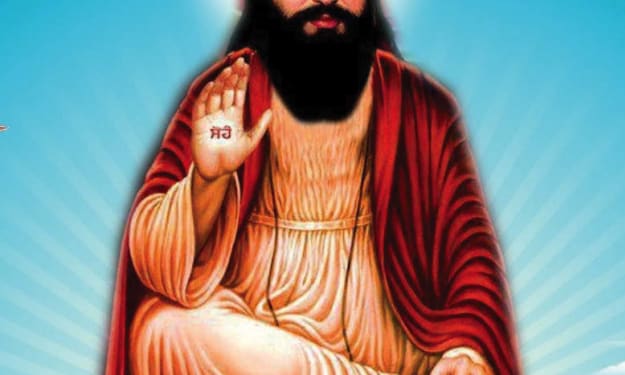
Guru Ravidas Ji’s Teachings on Equality
Guru Ravidas Ji’s teachings were centered on the belief that all humans are equal and that true devotion to God does not depend on one’s caste or social status. He emphasized that spiritual liberation is attainable by all, regardless of their birth. Some of his core messages on caste equality include:
By Paramjeet kaur2 years ago in History
The Redeemer
There was a time when Gabriel Roth was a man lost to the shadows. To most people, he was a memory—one of those stories you hear whispered in dark corners, a cautionary tale that the world seemed eager to forget. A man who had once stood tall, confident, and proud, only to fall into a spiral of selfishness and regret.
By Arean Ahamad2 years ago in History
The Deeper Secrets of the Hebrew Bible: Unveiling Hidden Mysteries
The Deeper Secrets of the Hebrew Bible: Unveiling Hidden Mysteries Introduction The Hebrew Bible, also known as the Tanakh, is one of the most profound and influential texts in human history. It has been studied for centuries by scholars, theologians, and mystics who seek to understand its divine wisdom. But beyond its historical and religious significance, the Hebrew Bible contains hidden messages, codes, and mystical teachings that reveal deeper spiritual truths. From the Kabbalistic interpretations to the Bible codes, the scriptures are filled with secrets that go beyond their literal meaning. Some of these hidden messages were passed down through oral traditions, while others were embedded in the text itself through numerical patterns and symbolic language. In this article, we will explore some of the deeper secrets of the Hebrew Bible, uncovering the mysteries that have fascinated scholars and seekers for centuries. The Concept of Hidden Wisdom in the Hebrew Bible Throughout the Hebrew Bible, there are indications that deeper wisdom is concealed within the text. Proverbs 25:2 states: "It is the glory of God to conceal a matter, but the glory of kings is to search out a matter." This suggests that divine wisdom is hidden and must be sought after. The ancient rabbis and Kabbalists believed that the Torah was written on multiple levels—literal, allegorical, and mystical. These levels of interpretation are known as PaRDeS, an acronym for: 1. Peshat – The simple, literal meaning. 2. Remez – The hinted or allegorical meaning. 3. Derash – The interpretative or midrashic meaning. 4. Sod – The hidden, mystical meaning. The Sod (secret) level of the Hebrew Bible is where the deeper mysteries reside. Many Jewish sages dedicated their lives to uncovering these secrets, believing they contained the keys to understanding the universe, the soul, and God's plan for creation. The Mystery of the Hebrew Letters and Gematria One of the most intriguing aspects of the Hebrew Bible is the mystical power of Hebrew letters. Unlike English, Hebrew is an alphanumeric language, meaning that every letter also has a numerical value. This system is known as Gematria, and it allows for numerical patterns and hidden messages to be found in the text. For example, the Hebrew word for "life" (Chai, חי) has a numerical value of 18 (8+10). This is why the number 18 is considered lucky in Jewish tradition. Similarly, the Tetragrammaton (YHWH, יהוה), the sacred name of God, has a numerical value of 26, which has deep Kabbalistic significance. One of the most famous uses of Gematria in biblical interpretation is the connection between Genesis 1:1 and John 1:1 in the New Testament. In Genesis 1:1, the first words of the Bible are "Bereshit Bara Elohim" (בראשית ברא אלהים), meaning "In the beginning, God created." The numerical value of these words has been linked to significant mathematical patterns that some believe reveal divine intelligence behind the text. Another example of hidden codes in the Hebrew Bible is found in the Torah Equidistant Letter Sequences (ELS). Some researchers claim that, by skipping a set number of letters in the Torah, secret messages about historical events and future prophecies can be uncovered. This is often referred to as the Bible Code, and though it remains controversial, it has fascinated scholars for decades. The Mystical Tree of Life and the Torah In Kabbalah, the Tree of Life (Etz Chaim) is a powerful symbol that represents the structure of divine reality. It consists of ten sefirot (divine attributes) and connects heaven and earth. Many Kabbalists believe that the Torah is encoded with the structure of the Tree of Life and that its teachings correspond to different levels of spiritual awakening. One of the most mysterious aspects of the Torah is the Sefer Yetzirah ("Book of Formation"), an ancient Kabbalistic text that describes how the Hebrew letters were used to create the universe. According to this text, the letters of the Hebrew alphabet are not just symbols but actual forces of creation. This idea aligns with the biblical verse: "And God said, ‘Let there be light,’ and there was light." (Genesis 1:3) This suggests that speech and language have creative power, a concept that is deeply embedded in Jewish mystical thought. The Prophetic Visions and Messianic Secrets The Hebrew Bible contains numerous prophecies that have fascinated both Jewish and Christian scholars. Many believe that these prophecies contain hidden messages about the Messianic Age and the future of humanity. For instance, in the Book of Daniel, there are visions of mysterious "beasts" and a timeline of events leading to the end of days. The Book of Isaiah also contains cryptic prophecies about the coming of a Messiah who will bring peace and justice to the world. Jewish mystics often interpret these prophecies through the lens of Kabbalah, suggesting that the Messiah will not just be a physical ruler but a spiritual force that will elevate human consciousness. Some even believe that the Messiah has already come in different forms throughout history, subtly guiding the world toward redemption. The Hidden Names of God The Hebrew Bible contains many names of God, each revealing different aspects of His nature. The most sacred and mysterious of these names is the Tetragrammaton (YHWH), which was considered too holy to be spoken aloud. However, Jewish mysticism teaches that there are 72 hidden names of God, known as the Shem HaMephorash. These names are said to hold immense power and are used in mystical practices for protection, healing, and divine connection. Some believe that Moses used one of these secret names to part the Red Sea, demonstrating the power hidden within the sacred Hebrew letters. Conclusion The Hebrew Bible is far more than just a religious text; it is a vast repository of divine wisdom, mystical codes, and hidden messages that continue to inspire seekers of truth. Whether through Gematria, Kabbalah, biblical prophecies, or the mystical power of Hebrew letters, the Bible reveals secrets that point to a deeper reality beyond the physical world. For those who seek to uncover these mysteries, the journey requires patience, study, and spiritual insight. As Proverbs 2:4-5 says: "If you seek her as silver, and search for her as for hidden treasures, then you will understand the fear of the Lord, and find the knowledge of God." The secrets of the Hebrew Bible are not just meant to be studied but to be lived—guiding individuals toward wisdom, transformation, and a deeper connection with the divine.
By Samson E. Gifted2 years ago in History
The Haunted Bhangarh Fort – India’s Most Mysterious Ruins
Ghosts in Indian History: Myths, Legends, and Haunted Realities India, a land of ancient civilizations, grand palaces, and deep spiritual traditions, has long been home to stories of the supernatural. From haunted forts to wandering spirits, ghosts and paranormal entities have played a significant role in Indian folklore and history. Many sites across the country are believed to be haunted, with legends passed down for generations. This article explores the history of ghosts in India, including famous haunted locations, ancient beliefs, and terrifying encounters recorded throughout history. 1. Ancient Beliefs in Ghosts and Spirits in India 1.1 Hinduism and the Concept of Ghosts In Hindu mythology, ghosts are known as "Bhoots", "Pretas", and "Pisachas", each with unique characteristics: Bhoots: Restless spirits of the dead, often appearing in human form but without a shadow. Pretas: Spirits trapped between life and death, suffering due to unfinished business or improper rituals. Pisachas: Evil spirits or demons believed to possess and torment living beings. Ancient Hindu texts like the Garuda Purana describe the fate of souls and the existence of ghosts based on karma and sins committed in life. 1.2 Buddhist and Jain Views on Ghosts In Buddhism, ghosts, or "Petas", exist in a lower realm and suffer due to their greed and attachments in their previous life. Jainism also speaks of spirits wandering as ghosts due to their karmic debts. For centuries, Indians have performed rituals like Pind Daan (offering food to the dead) to ensure that spirits find peace and do not turn into ghosts.
By Say the truth 2 years ago in History
The Pitch Dark Tale of Cinderella 2025
Introduction Fairytales have enchanted audiences for centuries, providing both children and adults with narratives of magic, tragedy, and eventual triumph. Among the pantheon of iconic stories, "Cinderella" stands out, traditionally told as a tale of rags to riches, kindness rewarded, and jealous malice punished. However, beneath its glittering surface lies a world fraught with darkness and psychological complexity. This essay delves into the shadowy undercurrents of the Cinderella story, exploring the origins of the traditional tale, the twisted dynamics within her family, the sinister nature of the royal ball, and ultimately, her path to redemption and freedom. Through this lens, we unearth the true depth of her narrative, revealing a dark and compelling story that goes beyond mere folklore.
By Michael Wilson2 years ago in History
To My Beloved Mary. Runner-Up in Love Letters Through Time Challenge.
My Dearest Mary, The Admiralty has seen fit to cut my shore leave, wrenching me away from your embrace and the warmth of your kisses. They have ordered me back to the madness some call the Battle of the Atlantic. I cannot say where our course leads, but I pray that fate grants us a reprieve from the North Atlantic’s gales and treacherous sea, if only for a moment. The North Sea is a harsh and unyielding mistress, and though I have braved her many times, nothing wounds me so profoundly as being apart from you, my dear Mary. As the North Sea winds strike home, think of me, my darling, and pray I sail into quieter waters.
By Bruce Curle `2 years ago in History
A 600 year old bra belonging to Humayun's mother discovered in excavation.
A 600 year old bra belonging to Humayun's mother discovered in excavation. Archaeologists have recently made a startling discovery during an excavation at a historical site linked to the Mughal Empire. Among various unearthed artifacts one item has particularly intrigued historians and researchers a 600 year old brassiere like garment that is believed to have belonged to a woman of high status from the Mughal era. Some experts suggest that it could have been worn by Maham Begum the mother of Emperor Humayun. This unexpected finding has opened up discussions on historical fashion the role of women in the Mughal court and the sophistication of undergarments in South Asian history. The excavation site where this garment was found has long been associated with the Mughal royal family. Researchers were originally looking for everyday items from the era such as pottery ornaments, and tools. However when they uncovered a delicate yet remarkably well preserved piece of clothing, they were taken aback. The garment resembles modern-day bras in structure but it also features intricate embroidery and fine craftsmanship indicative of Mughal era textiles. Experts are now closely examining the fabric stitching and design to determine its exact origin and confirm its historical significance.
By Adnan Rasheed2 years ago in History
The Majestic Pyramids of Teotihuacan – Sun and Moon
The Pyramid of the Sun and the Moon: The Age-old Wonders of Teotihuacan The Pyramid of the Sun and the Pyramid of the Moon are two of the best cogent structures in the age-old burghal of Teotihuacan, amid in modern-day Mexico. Congenital by the Teotihuacanos about 100-450 CE, these pyramids were not alone architectural marvels but additionally acutely angry to religion, astronomy, and political power. The Pyramids of Teotihuacan battling the abundant pyramids of Egypt in their grandeur, mystery, and actual significance. In this article, we will analyze their construction, significance, materials, cost, labor, and the constant bequest of these awe-inspiring structures. 1. The Pyramid of the Sun 1.1 Architecture and Architecture The Pyramid of the Sun is the better anatomy in Teotihuacan and one of the better pyramids in the world. It stands about 65.5 meters (216 feet) aerial and has a abject amplitude of 225 meters (738 feet). Built application agitable stone, clay, and rubble, again covered with adhesive and blithely corrective murals. The pyramid consists of bristles stepped platforms, possibly apery the bristles levels of the cosmos. It is accumbent with the sun’s position on important ample dates, such as the summer solstice. 1.2 Purpose and Significance The Pyramid of the Sun was acceptable a religious centermost committed to the sun god. It may accept been acclimated for sacrificial rituals, ceremonies, and ample observations. A adit arrangement below the pyramid suggests it may accept had airy and allegorical significance, possibly affiliated to the underworld. 2. The Pyramid of the Moon 2.1 Architecture and Architecture The Pyramid of the Moon is the second-largest anatomy in Teotihuacan. It is 43 meters (141 feet) aerial and has a abject of 130x156 meters. Built application stone, clay, and mortar, with staircases arch to a august belvedere at the top. The pyramid was broadcast assorted times, with new layers added to enlarge it. 2.2 Purpose and Significance Dedicated to the Abundant Goddess of Teotihuacan, associated with fertility, water, and the moon. Used for rituals, processions, and sacrifices, as apparent by the analysis of beastly and beastly remains. Positioned at the arctic end of the Avenue of the Dead, creating a angelic and august arbor for the city. 3. Estimated Bulk and Activity for Construction 3.1 Abstracts Used The pyramids were congenital application locally accessible materials, including: Volcanic bedrock (tezontle) – A failing yet able actual for construction. Limestone and adobe – Acclimated for bounden stones together. Stucco and pigments – To actualize bright murals and decorations. 3.2 Activity and Workforce Estimated 100,000 workers alternate in architecture the pyramids over several decades. Workers included engineers, laborers, artists, and priests who supervised construction. Unlike the Egyptian pyramids, Teotihuacan's pyramids were acceptable congenital by accomplished laborers and volunteers, not slaves. 3.3 Estimated Bulk in Today’s Value While it is difficult to appraisal the exact cost, avant-garde comparisons suggest: The absolute architecture would be account $1-2 billion in today's economy, because the bulk of labor, materials, and time spent. If congenital today application avant-garde machinery, the bulk could be decidedly lower due to abstruse advancements. 4. Ample and Religious Importance The pyramids were accumbent with angelic contest such as the solstices and equinoxes. Many advisers accept Teotihuacan was a centermost for astronomy, prophecy, and agenda systems. The pyramids played a role in rain and abundance rituals, capital for agriculture. 5. The Decline of Teotihuacan and the Abstruseness of the Pyramids Around 600-750 CE, Teotihuacan mysteriously beneath and was abandoned. Possible affidavit accommodate altitude change, centralized conflict, and alien invasions. The Aztecs rediscovered the burghal centuries after and called it Teotihuacan, acceptation “The Place Where Gods Were Created.” The Pyramids of the Sun and Moon abide well-preserved, alluring millions of visitors today. 6. Conclusion The Pyramids of the Sun and the Moon are amid the greatest architectural achievements of age-old Mesoamerica. They betoken the power, spirituality, and adeptness of the Teotihuacan civilization. Today, these iconic structures abide to absorb historians, archaeologists, and tourists, continuing as a attestation to the amplitude and abstruseness of pre-Columbian civilizations.
By Say the truth 2 years ago in History
The Seeds of Hope
Quite a long time ago, in a little town settled in a valley encompassed by tall mountains, there carried on with an unfortunate rancher named Arun. He had acquired a little plot of land from his dad, which, albeit wealthy in soil, was sufficiently not to take care of his family or support them through the cruel winters. His home was a modest cabin with a covered rooftop, and his ranch was sufficiently enormous to develop sufficient nourishment for the year, yet insufficient to get by past that.
By Maruf Rana2 years ago in History
The Enigmatic Nok Culture
The Nok Culture, an intriguing ancient civilization in West Africa, thrived from 1500 BCE to 500 CE in present-day Nigeria. Renowned for its intricate terracotta sculptures, the Nok people created a significant artistic and cultural heritage that continues to engage historians and archaeologists globally. This article delves into the origins, artistic accomplishments, and enduring impact of the Nok civilization.
By A História2 years ago in History