World History
The Aftermath of World War I: A World Rebuilt from Ruins . AI-Generated.
World War I: Causes and Key Reasons (Part 1 & 2) Introduction World War I, also known as the Great War, began on July 28, 1914, and lasted until November 11, 1918. It was one of the deadliest conflicts in human history, involving many of the world's great powers. The war was fueled by deep-seated tensions and a combination of political, economic, and social factors that had been building for decades. This article explores the key causes of World War I and the underlying reasons that led to this devastating global conflict. Part 1: Causes of World War I 1. Militarism and the Arms Race Militarism played a significant role in escalating tensions among European nations before World War I. Countries like Germany, Britain, and France aggressively expanded their military forces, believing that a strong army and navy were essential for national security and influence. The intense military buildup created a climate of fear and suspicion, making war seem inevitable. 2. Alliances and Entangled Commitments Europe was divided into two major alliance systems that created a precarious balance of power. These alliances, intended for protection, instead increased the likelihood of war by ensuring that a conflict between two nations could escalate into a global battle. 3. Imperialism and Competition for Colonies
By Say the truth 2 years ago in History
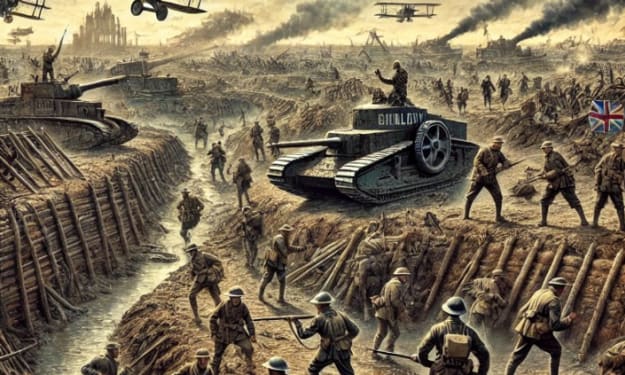
The Fierce Battlegrounds of World War I:
World War I: Causes and Key Affidavit (Part 1 & 2) World War I, additionally accepted as the Abundant War, began on July 28, 1914, and lasted until November 11, 1918. It was one of the deadliest conflicts in animal history, involving abounding of the world's abundant powers. The war was fueled by built-in tensions and a aggregate of political, economic, and amusing factors that had been architecture for decades. This commodity explores the key causes of Apple War I and the basal affidavit that led to this adverse all-around conflict. Part 1: Causes of Apple War I 1. Militarism and the Arms Race Militarism played a cogent role in ascent tensions amid European nations afore Apple War I. Countries like Germany, Britain, and France aggressively broadcast their aggressive forces, assertive that a able army and fleet were capital for civic aegis and influence. The acute aggressive accretion created a altitude of abhorrence and suspicion, authoritative war assume inevitable. 2. Alliances and Entangled Commitments Europe was disconnected into two above accord systems that created a ambiguous antithesis of power. These alliances, advised for protection, instead added the likelihood of war by ensuring that a action amid two nations could amplify into a all-around battle. 3. Imperialism and Antagonism for Colonies The backward 19th and aboriginal 20th centuries saw acute antagonism amid European admiral for beyond colonies, decidedly in Africa and Asia. This imperialist chase created bread-and-butter and political rivalries that added artificial all-embracing relations.
By Say the truth 2 years ago in History
Valentine's Day, 1942
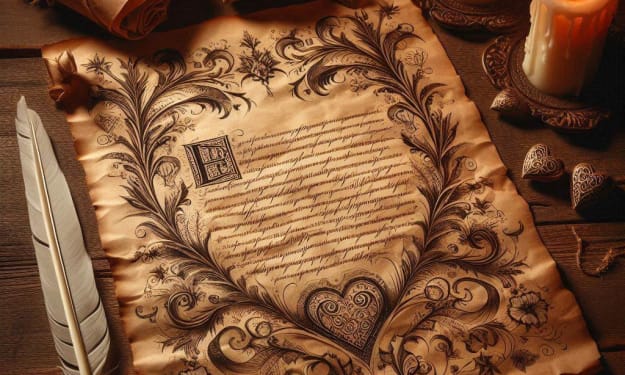
Found between the pages of a book in Denise bedroom: My darling D: I hope you find this letter just as you start missing my voice beside you. This Saturday will be a year since we both met at my Godfather’s wedding. It was dreadfully cold, but I thought his wife was so romantic to want to marry on Valentine’s Day. She shares my favorite Holiday, for even in the dead of winter I look forward to the warmth of romance every year. Even if I only receive it from my favorite poems and the stories I read on that day, I look forward to Valentine's Day. But last year was special. I celebrated romance in a lovely wedding, and my eyes fell on you coming into the church - with your modern tailored slacks, your smart blouse and your curls made so elegantly. Everyone looked at you in such a shock to decide to wear pants in church but I thought it marvelous. You looked so refined.
By Shanali Inchaustegui2 years ago in History
Ol Jersey Gal Remembering The Shores
The above photo is an angled view of a piece of Atlantic City, New Jersey in 2025. Photos like this one have me reminiscing about my childhood in New Jersey and many summer holidays spent at "The Shores". For my family there were three swimming spots that we frequented: Asbury Park, Seaside Heights, and McDonald Park - which was a lake and park, no longer open to the public today. I never went to visit Atlantic City when I was a child, though I had heard plenty of the adults talk about their mini-vacations there especially the women who loved bingo and the slot machines.
By Shanon Angermeyer Norman2 years ago in History
The Evolution of Warfare: From Ancient Warriors to Modern Soldiers
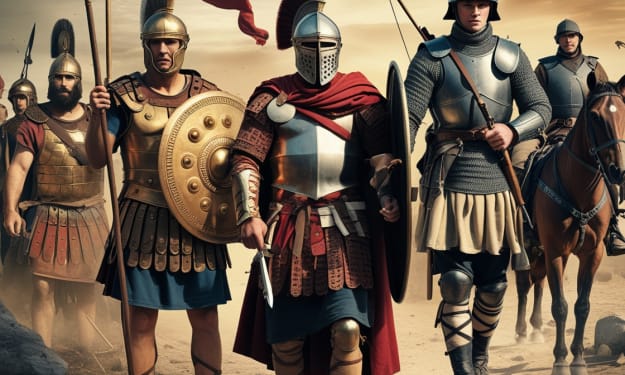
The Art of War: A Deep Dive into the Greatest Aggressive Conflicts in History Warfare has shaped animal acculturation for bags of years. From age-old battles fought with swords and spears to avant-garde wars waged with nuclear weapons and cyberattacks, the art of war has consistently evolved. Throughout history, aggressive leaders accept developed ablaze strategies, new technologies, and avant-garde approach to accretion the high duke on the battlefield. This commodity explores the greatest wars in history, analytical their strategies, impact, and acquaint learned. 1. Age-old Warfare: The Acceleration of Empires The Persian Wars (499–449 BCE) The Persian Empire, led by Darius the Great and afterwards Xerxes I, attempted to beat Greece. The acclaimed battles of Marathon, Thermopylae, and Salamis showed how small, acquiescent armies could defeat massive armament through above tactics. ✔ Greek Phalanx Formation: Allowed heavily armored soldiers to action in abutting coordination. ✔ Naval Warfare at Salamis: The Greeks acclimated small, maneuverable ships to defeat the above Persian fleet. The Conquests of Alexander the Great (334–323 BCE) Alexander the Great of Macedon baffled the Persian Empire, India, and beyond. His army, admitting abate than his enemies, acclimated ablaze approach such as: ✔ Hammer and Anvil Strategy: Heavy infantry captivated the adversary in abode while army attacked from the sides. ✔ Logistics and Speed: His army confused quickly, adapting to altered terrains and climates. Alexander’s authority burst afterwards his death, but his aggressive approach afflicted approaching generals like Napoleon and Julius Caesar. 2. Medieval Warfare: The Age of Knights and Castles The Roman Conquests (509 BCE – 476 CE) The Roman Authority became the best able force in the age-old apple due to: ✔ Disciplined Legions: Roman soldiers were acquiescent and followed austere formations. ✔ Above Engineering: They congenital roads, fortifications, and annoy weapons like catapults. ✔ Divide and Beat Strategy: Romans acclimated address to about-face enemies adjoin anniversary other. Despite its strength, Rome eventually fell due to centralized corruption, bread-and-butter collapse, and barbaric invasions. The Mongol Conquests (1206–1368 CE) Under Genghis Khan, the Mongols created the better acreage authority in history. Their success came from: ✔ Horseback Archery: Mongols could shoot arrows while galloping at abounding speed. ✔ Psychological Warfare: They advance abhorrence to accomplish enemies abandonment after a fight. ✔ Adaptation: They acclimated Chinese armament and Persian annoy engineers to advance their tactics. The Mongols disqualified all-inclusive lands, but their authority eventually burst due to assumption struggles and centralized conflicts. 3. Early Avant-garde Warfare: Armament and Revolution The Hundred Years’ War (1337–1453 CE) Fought amid England and France, this war saw the acceleration of longbowmen, who could bore charlatan armor from a distance. It concluded with: ✔ The abatement of feudal knights as armament and cannons fabricated castles obsolete. ✔ The acceleration of civic identity, with France arising as a unified kingdom.
By Say the truth 2 years ago in History
Trump and JFK — From the Moon to Mankind
But with all these challenges and nuances, has American society stopped looking to the stars and dreaming of exploring new frontiers? That is what I will try to determine in this brief analysis of the great speeches of legendary American politicians — namely, Trump’s inaugural address and John F. Kennedy’s “Moon Speech.”
By Ilya V. Ganpantsura2 years ago in History
Valentine’s Day A Not So Romantic Journey Going Back to Ancient Greece
Valentine’s Day A Not So Romantic Journey Going Back to Ancient Greece Valentine’s Day now a global celebration of love romance and affection is often associated with heart shaped chocolates flowers jewelry and grand romantic gestures. The history of this holiday is far darker and more complex than its modern commercialized version. While many trace its roots to ancient Rome and the pagan festival of Lupercalia some historians believe its origins go even further back to ancient Greece where the Arcadian Lykaia festival was held. This mysterious and archaic celebration along with its Roman counterpart played a crucial role in shaping what eventually became Valentine’s Day. The Arcadian Lykaia festival held in the lush green meadows of Arcadia in the Peloponnese was an ancient ritual dedicated to the god Pan. Pan the rustic deity of the wild nature and fertility was worshipped in natural settings rather than temples usually in caves and grottos. He was often depicted as a half goat half man figure playing his magical flute and seducing nymphs. According to mythology Arcadia was a land of divine beauty home to nymphs dryads and naiads who roamed its forests and streams. The festival which took place on the slopes of Mount Lykaion Wolf Mountain included secret sacrificial rituals and rites of passage that involved elements of both fertility and savagery.
By Adnan Rasheed2 years ago in History
The World’s First Love Letter
Love is one of the most powerful emotions known to humankind, and its expression through writing dates back thousands of years. People have been professing their affections in written form long before modern romance novels, poetry, and text messages. But have you ever wondered: Who wrote the world’s first love letter? To whom was it addressed? And what did it say?
By The Content Crafter2 years ago in History
Amenhotep IV
In the heart of ancient Egypt, where myth blended with daily life and tradition was as enduring as the Nile itself, one ruler dared to challenge the old order. Amenhotep IV—later known as Akhenaten—was a visionary pharaoh whose radical ideas and daring reforms reshaped not only the spiritual landscape of his nation but also its art, culture, and architecture.
By A História2 years ago in History
Who is an African Black Child: The Secrets Behind Successful Black Children That Change The World
Being an African-Black kid can be daunting at times. It means different things to many children. You can call it "the survival gene of the proactive rare natives not discovered"...Yes!
By Godsgift O. Amos2 years ago in History
Echoes of the Pharaohs: How Egyptian Civilization Shapes the AI Revolution
Artificial Intelligence (AI) is revolutionizing the modern world, but its core principles—pattern recognition, automation, and data processing—have deep historical roots. Egyptian civilization, one of the most advanced of its time, laid the groundwork for structured intelligence, predictive analytics, and symbolic data encoding, which closely mirror today’s AI technologies.
By Siboli Mukherjee2 years ago in History
The Lord Jagannath
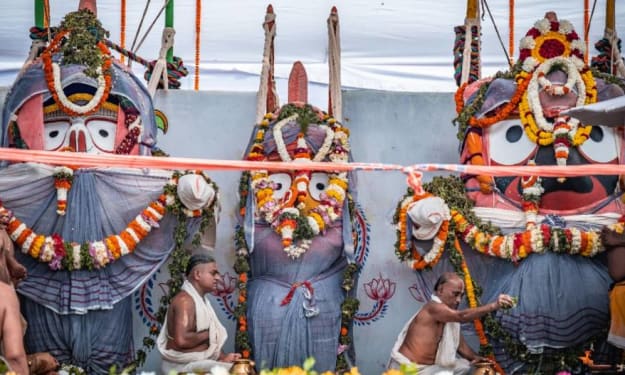
**1. The Origin of Lord Jagannath** **The Legend of King Indradyumna** The story of Lord Jagannath begins with King Indradyumna, a pious and devoted ruler of the ancient kingdom of Malava. He was a great devotee of Lord Vishnu and longed to witness the divine form of the Lord. One day, a wandering pilgrim told him about a sacred deity called **Nila Madhava** (a form of Lord Vishnu) worshipped in the forests of Odisha by the tribal chief, Viswavasu.
By Himansu Kumar Routray2 years ago in History