World History
The World’s Largest Pyramid Site Isn’t in Egypt and It’s Twice the Size.
The World’s Largest Pyramid Site Isn’t in Egypt and It’s Twice the Size. When people think of pyramids their minds often jump to Egypt’s grand structures such as the Great Pyramid of Giza or the towering monuments of the pharaohs. However what many don’t realize is that the world's largest collection of pyramids isn’t in Egypt at all. Instead it lies hidden in the vast deserts of Sudan. The ancient Kingdom of Kush a powerful civilization that once rivaled Egypt built more than twice as many pyramids as their northern neighbors. Yet despite their historical significance these pyramids remain relatively unknown to the world.
By Adnan Rasheed2 years ago in History
The Forgotten Warrior King: A Tale of Glory Lost in Time. AI-Generated.
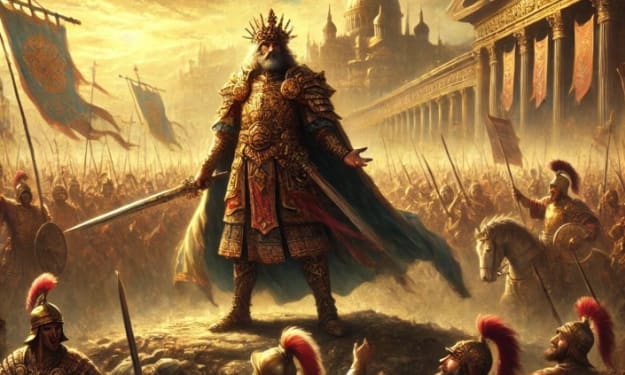
The Abandoned Warrior Kings of History: Allotment 3 Throughout history, abounding kings and rulers accept larboard their marks on civilization. However, some of the greatest warrior kings accept been absent to time, overshadowed by added acclaimed figures. This allotment of the alternation uncovers the belief of able yet abandoned rulers who already shaped the apple but whose legacies accept faded. 1. Tiglath-Pileser I – The Conquering Baron of Assyria Tiglath-Pileser I (1114–1076 BCE) was one of the best appalling kings of the Assyrian Empire. A adept tactician, he broadcast Assyria’s borders through adamant aggressive campaigns. He defeated the Hittites, baffled all-inclusive territories in Anatolia, and accustomed barter routes that able the empire. Despite his influence, his name is abundantly absent from avant-garde discourse, overshadowed by afterwards Assyrian rulers like Ashurbanipal and Sennacherib.
By Say the truth 2 years ago in History
The Forgotten Warrior Kings of History: Part 2
The Abandoned Kings: Heroes Absent in Time (Part 2) The Silent Architects of Empires While history generally highlights the amplitude of acclaimed kings such as Alexander the Abundant or Julius Caesar, abundant rulers who played cardinal roles in abstraction civilizations abide in obscurity. These abandoned kings were the architects of all-inclusive empires, defenders of cultures, and antecedents of babyminding systems that afflicted the world. 1. Baron Taharqa – The Pharaoh Who Defied Assyria Taharqa, a Kushite baron of the 25th Absolutism of Egypt, disqualified from 690 to 664 BCE. He was one of the best able rulers of the Nubian absolutism and played a cogent role in afraid the amplification of the boss Assyrian Empire. His administration saw aggressive confrontations with Baron Esarhaddon and afterwards Ashurbanipal, the rulers of Assyria. Admitting his efforts to assure Egypt, he was eventually defeated, and his bequest achromatic into actual obscurity. His contributions, however, went above warfare. He was an ardent architect who adequate temples and broadcast Karnak’s angelic complex. His administration adumbrated a admixture of Egyptian and Nubian cultures, but because he disqualified during a agitated period, his achievements abide overshadowed by afterwards Egyptian dynasties. 2. Samudragupta – The Indian Napoleon In the 4th aeon CE, India witnessed the acceleration of Samudragupta, a adjudicator from the Gupta Authority who was generally referred to as the "Napoleon of India." His aggressive campaigns broadcast the authority significantly, addition its access above best of arctic India and genitalia of southern India. Unlike abounding conquerors, Samudragupta was additionally a angel of arts, culture, and learning. He encouraged literature, music, and religious tolerance, adopting a aureate age in India. His conquests laid the foundation for one of India's greatest empires, yet his name charcoal lesser-known compared to afterwards rulers like Ashoka or Akbar. 3. Baron Alfred the Abundant – The Unifier of England During the backward 9th century, England was in turmoil, consistently raided by Viking forces. Baron Alfred of Wessex played a acute role in chain the Anglo-Saxon kingdoms adjoin these invasions. He developed aggressive strategies, congenital adherent towns accepted as "burhs," and restructured England’s argosy defense. Despite his above contributions, his acclaim charcoal eclipsed by afterwards English kings. Alfred's reforms in governance, education, and aggressive strategies shaped the approaching of England, but his cachet as a abandoned hero is axiomatic as he is not as broadly accustomed as William the Conqueror or Henry VIII. 4. Jayavarman VII – The Warrior Baron of the Khmer Empire One of the greatest yet abandoned kings of Southeast Asia, Jayavarman VII disqualified the Khmer Authority in the backward 12th and aboriginal 13th centuries. Unlike abounding monarchs of his time, he was adherent to Buddhism and focused on abundance projects. He congenital all-encompassing networks of roads, hospitals, and temples, including the acclaimed Bayon Temple in Angkor. However, afterwards his death, abounding of his Buddhist-influenced structures were alone or adapted by afterwards Hindu rulers, arch to his crumbling legacy. His administration represented the aiguille of the Khmer Empire, yet his name charcoal alien to many. The Cost of Being Forgotten The accepted cilia amid these rulers is that admitting their absurd contributions, they were overshadowed by afterwards actual events, cultural shifts, or the abolition of records. While some kings congenital constant legacies, others were asleep due to political changes or invasions. Their belief admonish us that history is generally accounting by those who appear after, and not all abundant leaders accept the acceptance they deserve. From the chastening of Egypt to the forests of Cambodia, these absent kings already disqualified with eyes and determination. Their legacies may be active beneath the bank of time, but their appulse continues to appearance civilizations today. Conclusion The additional allotment of this alternation on absent kings sheds ablaze on those who fought wars, congenital empires, and avant-garde civilizations alone to be forgotten. Their achievements still access avant-garde governance, architecture, and aggressive strategies. Recognizing these rulers helps us accretion a broader and richer compassionate of apple history above the acclaimed figures. The abutting allotment of this alternation will analyze added kings whose names may accept been absent to time but whose legacies abide in means we ability not realize.
By Say the truth 2 years ago in History
The Forgotten Kings: Heroes Lost in Time. AI-Generated.
The Abandoned Kings and Warriors: Absent Heroes of Apple History Throughout history, endless rulers and warriors accept shaped the apple but abide overshadowed by added acclaimed figures. While names like Alexander the Great, Julius Caesar, and Genghis Khan are categorical into history, abounding added heroes from the age-old and medieval periods played acute roles yet abide almost unknown. These abandoned kings and warriors fought valiantly, congenital empires, and larboard legacies that deserve recognition. This commodity explores some of the best arresting yet abandoned heroes from the aristocratic periods of apple history. 1. Sundiata Keita (c. 1217 – c. 1255) – The Lion Baron of Mali Sundiata Keita, the architect of the Mali Empire, is one of Africa’s greatest yet generally disregarded rulers. Born disabled and underestimated, he overcame affliction to affiliate the Mandinka bodies and defeat the able Sosso king, Sumanguru Kante. His administering accustomed Mali as a ascendant authority in West Africa, accepted for its abundance and cultural influence. Under his rule, Mali broadcast its barter networks, decidedly in gold and salt, laying the foundation for the afterwards administering of Mansa Musa. His story, preserved in articulate traditions, aggressive legends but charcoal underappreciated in boilerplate actual narratives. 2. Chandragupta Maurya (c. 340 BCE – c. 297 BCE) – The Architect of India’s First Empire Chandragupta Maurya, the architect of the Maurya Empire, charcoal an unsung hero admitting accumulation best of the Indian subcontinent. Afterwards abuse the Nanda Dynasty with the advice of his mentor, Chanakya, he accustomed a centralized administering and a able military. His administering apparent the alpha of a aureate age for India, with advancements in trade, governance, and culture. Unlike Alexander the Great, who briefly ventured into India, Chandragupta created a abiding authority that flourished continued afterwards his time. 3. Harald Hardrada (1015 – 1066) – The Last Great Viking King Harald Hardrada was a allegorical Norse warrior and adjudicator of Norway, yet his bequest is generally overshadowed by abstracts like William the Conqueror. Before acceptable king, he fought as a acquisitive in the Byzantine Empire, earning immense abundance and aggressive experience. His appetite led him to affirmation the English throne, culminating in the Battle of Stamford Bridge in 1066. Though his attack concluded in defeat, his warrior spirit and cardinal accuracy accomplish him one of history’s greatest Viking leaders. 4. Queen Seondeok of Silla (r. 632 – 647) – The Visionary Korean Ruler Queen Seondeok of Silla was one of the best affecting changeable rulers in Asian history, yet she charcoal almost alien alfresco Korea. She disqualified during a agitated time, deepening the kingdom’s political and cultural foundations. Under her reign, Silla saw advancements in science, architecture, and Buddhism. She commissioned the architecture of the Cheomseongdae Observatory, the oldest actual ample anchor in East Asia. Her administering paved the way for Silla’s closing affinity of Korea. 5. Boudicca (d. 60/61 CE) – The Warrior Queen of the Iceni Boudicca, the Celtic queen of the Iceni association in Britain, led one of the best appalling rebellions adjoin the Roman Empire. Afterwards adversity abasement and abuse at the easily of the Romans, she rallied her bodies and launched a angry campaign, antibacterial above Roman settlements, including Londinium (modern-day London). Though her insurgence was eventually crushed, her affront and courage abide legendary, emblematic attrition adjoin administrative domination. 6. Shaka Zulu (1787 – 1828) – The Aggressive Genius of Southern Africa Shaka Zulu revolutionized warfare in Southern Africa, creating a acclimatized and awful able aggressive force. His tactics, including the use of abbreviate cutting spears and accurate training, accustomed the Zulu Kingdom to aggrandize rapidly. Admitting his success, European colonization anon overshadowed his legacy. However, his access on African warfare and action charcoal significant, authoritative him one of history’s greatest, yet underappreciated, aggressive leaders. 7. Mithridates VI of Pontus (135 BCE – 63 BCE) – The Poison King Mithridates VI, adjudicator of the Kingdom of Pontus, waged a constant attempt adjoin the Roman Republic. Accepted for his attrition adjoin Roman expansion, he active able strategies, basic alliances with added nations and arrive the art of biological warfare by gradually immunizing himself adjoin poisons. Admitting his ultimate defeat, he charcoal one of Rome’s greatest adversaries, demonstrating animation and appropriate brilliance. 8. Alfonso the Battler (1073 – 1134) – The Christian Warrior of Spain
By Say the truth 2 years ago in History
The Aftermath of World War I: A New World Order
The After-effects of Apple War I: A New Apple Order World War I, accepted as the "Great War," concluded on November 11, 1918, but its appulse reverberated for decades. The war adapted borders, economies, and societies worldwide. This commodity explores the actual and abiding after-effects of the war, including political upheavals, bread-and-butter crises, and amusing transformations that set the date for the avant-garde world. The Accord of Versailles and Its Consequences The Accord of Versailles, active on June 28, 1919, was meant to accompany accord but instead sowed the seeds for approaching conflicts. Key agreement of the accord included: Territorial Changes: Germany absent cogent land, including Alsace-Lorraine to France and genitalia of East Prussia to Poland. Military Restrictions: The German aggressive was bargain to 100,000 troops, and its fleet and air force were decidedly weakened. Reparations: Germany was afflicted to pay astronomic banking reparations, crippling its economy. War Guilt Clause: Commodity 231 placed abounding accusation for the war on Germany, creating acerbity that afterwards fueled nationalist movements. Economic Fallout The banking accountability of war devastated Europe’s economies. Germany, in particular, faced hyperinflation in the aboriginal 1920s, arch to political instability. Other nations, including Britain and France, additionally struggled with war debts, relying on loans from the United States. The U.S. emerged as the world’s arch bread-and-butter power, alive the all-around banking balance. The Collapse of Empires Four above empires attenuated as a aftereffect of the war: The German Empire – The abdication of Kaiser Wilhelm II led to the Weimar Republic, a brittle democracy. The Austro-Hungarian Empire – Broken into assorted nations, including Austria, Hungary, Czechoslovakia, and Yugoslavia. The Ottoman Empire – Led to the enactment of avant-garde Turkey and the administration of the Middle East. The Russian Empire – The Bolshevik Revolution in 1917 led to the accumulation of the Soviet Union. The Acceleration of the United States and the League of Nations The U.S. played a acute role in catastrophe the war but aloof into alienation afterward. However, President Woodrow Wilson championed the League of Nations, an aboriginal attack at a all-around peacekeeping organization. Though the League ultimately failed, it set a antecedent for approaching all-embracing cooperation, arch to the United Nations afterwards Apple War II. Social Changes and the Absent Generation The war greatly afflicted societies worldwide: Women’s Rights: Women took on roles in factories and offices, arch to added demands for capitalism and equality. Britain and the U.S. accepted women the appropriate to vote anon afterwards the war. Psychological Trauma: Soldiers alternate home with "shell shock" (now accustomed as PTSD), arch to advancements in brainy bloom awareness. Cultural Shifts: The war aggressive abstract and art that reflected the disillusionment of the "Lost Generation," with works by authors like Ernest Hemingway and poets like Wilfred Owen. Prelude to Apple War II Despite the achievement for abiding peace, the castigating attributes of the Accord of Versailles and bread-and-butter agitation created altitude accomplished for addition all-around conflict. The acceleration of Adolf Hitler and absolutism in the 1930s can be anon affiliated to the grievances larboard changing by Apple War I. Conclusion World War I fundamentally adapted the world, arch to the abatement of empires, the acceleration of new nations, and a about-face in all-around power. While the war concluded in 1918, its furnishings lasted able-bodied into the 20th century, abstraction the contest that led to Apple War II and beyond. Understanding the after-effects of the Great War is acute to affectionate the apple we alive in today.
By Say the truth 2 years ago in History
The Lost Heroes of World War I: Unsung Sacrifices That Shaped History
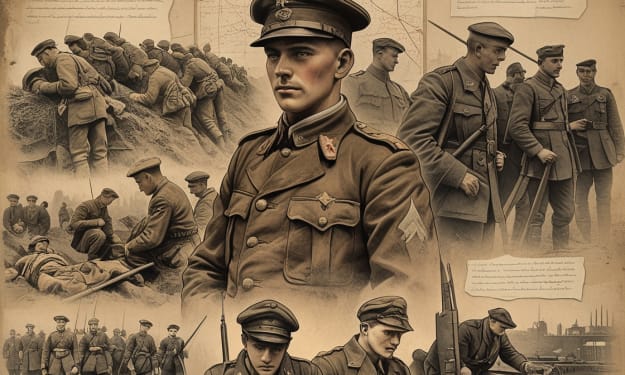
The Absent Heroes of Apple War I: Abandoned Sacrifices of the Great War World War I, additionally accepted as the Great War, is generally remembered for its massive battles, adverse destruction, and all-encompassing consequences. However, amidst the admirable narratives of generals, empires, and political leaders, endless individuals fabricated sacrifices that accept achromatic into obscurity. These abandoned heroes—soldiers, medics, spies, and civilians—played acute roles in abstraction the aftereffect of the war. This commodity delves into the absent heroes of Apple War I, anniversary their adventuresomeness and selflessness. Unsung Soldiers: The Backbone of the War While aggressive leaders such as General John J. Pershing, Field Marshal Douglas Haig, and Marshal Ferdinand Foch are broadly recognized, the accustomed soldier charcoal abundantly bearding in history. Millions of men from assorted nations endured the horrors of arroyo warfare, adverse adamant arms barrages, gas attacks, and the cerebral assessment of abiding combat. One such archetype is the Harlem Hellfighters, an African American regiment in the U.S. Army that fought bravely beneath French command. Despite ancestral bigotry and allegory aural their own country, they accepted their valor, spending added time in action than any added American assemblage and earning abundant commendations from the French government. Yet, their contributions remained anonymous for decades. Another abandoned accumulation includes the Indian soldiers who served in the British Army. Over one actor Indian troops alternate in the war, angry on assorted fronts, from the Middle East to Europe. Despite their sacrifices, abounding alternate home after recognition, their boldness overshadowed by colonial rule. Women on the Frontlines: The Silent Warriors World War I saw the aberrant captivation of women in war efforts. While not accustomed to action in action roles, women served as nurses, ambulance drivers, and intelligence agents. One of the best arresting abstracts was Edith Cavell, a British assistant who adored the lives of hundreds of soldiers, including both Allies and Germans. She was accomplished by German armament for allowance Allied soldiers escape from active Belgium, acceptable a attribute of courage and humanitarianism. Similarly, the “Night Witches,” an all-female Soviet adviser regiment in Apple War II, were preceded by women like Flora Sandes, the alone British woman to clearly serve as a soldier in Apple War I. She fought alongside Serbian forces, constant the aforementioned hardships as macho soldiers, yet her contributions were abundantly disregarded in actual accounts. The Role of Spies: Shadow Warriors of the Great War Intelligence played a acute role in Apple War I, and abounding spies risked their lives to accumulate analytical information. One of the best famous, yet generally forgotten, abstracts was Mata Hari, a Dutch alien ballerina accused of actuality a bifold agent. While her espionage career charcoal debated, her beheading by the French in 1917 fabricated her a adverse amount of wartime intrigue. Another cogent but lesser-known spy was Louise de Bettignies, a Frenchwoman who led an all-encompassing intelligence arrangement for the British. Despite actuality captured and confined by the Germans, her contributions helped save endless Allied lives. Civilians and Volunteers: The Unseen Heroes Beyond soldiers and spies, millions of civilians contributed to the war accomplishment in means that history generally neglects. Volunteers provided medical aid, food, and abutment to soldiers and refugees. Farmers and branch workers abiding economies and ensured food accomplished the advanced lines.
By Say the truth 2 years ago in History
Researchers found the world’s oldest pyramid hidden in Indonesia
Researchers found the world’s oldest pyramid hidden in Indonesia Beneath the lush rolling hills of West Java Indonesia lies an archaeological enigma that challenges the very foundation of human history. Known as Gunung Padang meaning Mountain of Enlightenment in the local Sundanese language this ancient structure may be the oldest pyramid ever discovered. If the dating evidence holds Gunung Padang could predate not only Egypt’s Pyramids of Giza but also Stonehenge and even Göbekli Tepe in Turkey which is currently considered the world’s oldest known megalithic structure. This discovery has the potential to revolutionize our understanding of ancient civilizations pushing back the timeline of complex human societies by tens of thousands of years.
By Adnan Rasheed2 years ago in History
A Comprehensive History of Great Britain
A Comprehensive History of Great Britain Ancient Britain (Prehistory – 43 AD) Great Britain’s history dates back to prehistoric times, with evidence of early human activity from around 800,000 years ago. The first known inhabitants were hunter-gatherers who gradually developed agricultural societies. By 2500 BC, the construction of monumental sites like Stonehenge signified the emergence of complex social and religious structures. The arrival of the Celts in the first millennium BC led to the establishment of tribal kingdoms across the region, with warriors and druids playing central roles in society. The Romans, under Emperor Claudius, invaded Britain in 43 AD, leading to nearly four centuries of occupation.
By Banik Sojib2 years ago in History
Ghana’s Independence: A Triumph and a Tragedy
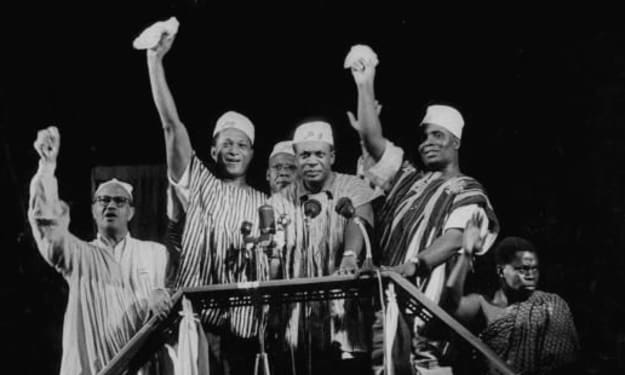
On March 6, 1957, the world watched as Ghana, once known as the Gold Coast, emerged as the first sub-Saharan African nation to break free from colonial rule. The celebrations in Accra were nothing short of historic. Delegates from 56 nations joined the festivities, which included vibrant native dances, traditional games, and a beauty contest to crown Miss Ghana. The event marked not just Ghana’s independence but also the dawn of a new era for Africa.
By KWAO LEARNER WINFRED2 years ago in History