World History
Nikola Tesla: The Genius Who Electrified the World
Nikola Tesla: The Genius Behind Electricity Imagine a day without electricity. No lights, no smartphones, no Netflix—just candles and quiet. It’s hard to picture, right? We owe much of our modern, plugged-in world to a man named Nikola Tesla. While Thomas Edison often steals the spotlight in history books, Tesla’s inventions truly electrified the 20th century and beyond. Let’s dive into the life of this quirky, underrated genius who dreamed big, invented bigger, and left a legacy that still powers our lives today.
By Valuable Knowledge2 years ago in History
The Greatest Female Pharaoh: Hatshepsut, Egypt’s Forgotten Queen
Hatshepsut, often overshadowed by her male counterparts, was one of ancient Egypt’s most accomplished and visionary rulers. Despite ruling in a time when female pharaohs were rare, she not only claimed the throne but also flourished, leaving behind an extraordinary legacy of wealth, art, and diplomacy. Her reign, from 1479 to 1458 BCE, remains a testament to her intelligence, ambition, and political acumen.
By Siboli Mukherjee2 years ago in History
Africa's incredible ancient city that's over 2,000 years old and abandoned for 700 years
Africa's incredible ancient city that's over 2,000 years old and abandoned for 700 years Volubilis nestled in the fertile plains of Morocco stands as a testament to the grandeur of ancient civilizations. This incredible city over 2,000 years old offers a glimpse into a bygone era frozen in time and steeped in history. Once a thriving Roman outpost Volubilis was abandoned nearly 700 years ago yet its ruins continue to captivate visitors with their timeless beauty and historical significance. The city’s story is one of cultural fusion architectural brilliance and the inexorable passage of time.BLocated near the modern city of Meknes Volubilis was originally settled by the Carthaginians as early as the 3rd century BCE. However it was under Roman rule beginning around 40 CE that the city flourished. As part of the Roman Empire’s vast network of provinces Volubilis became an important administrative and agricultural center. Its fertile surroundings made it a hub for olive oil and grain production which were exported to other parts of the empire. The city’s wealth and strategic importance are evident in the grandeur of its architecture which blends Roman engineering with local Berber and Phoenician influences.
By Adnan Rasheed2 years ago in History
Mahakumbh in prayagraj (uttar Pradesh)
History of Maha Kumbh Mela The Maha Kumbh Mela is one of the largest and most significant religious gatherings in the world, deeply rooted in Hindu tradition and mythology. This sacred festival occurs once every 12 years at four major locations in India: Prayagraj (Allahabad), Haridwar, Ujjain, and Nashik. The origins of the Kumbh Mela can be traced back to ancient Hindu scriptures and mythology.
By Vivek mehta2 years ago in History
The Persian Empire's Royal Treasury – A Vault of Gold
Tne Persian Gold Reserves: The Abundance of an Empire The Persian Empire, one of the greatest civilizations in history, was accepted for its immense wealth, decidedly in gold. From the administering of Cyrus the Great (550 BCE) to the aphorism of Darius III (330 BCE), Persia accumulated all-inclusive affluence of gold, authoritative it one of the richest empires of the age-old world. These gold affluence were not aloof symbols of ability but additionally played a acute role in Persia’s economy, aggressive expansion, and administration. This commodity explores the sources of Persian gold, its storage, bread-and-butter impact, and its fate afterwards the authority fell to Alexander the Great. 1. The Sources of Persian Gold The Achaemenid Authority (550–330 BCE), founded by Cyrus the Great, controlled all-inclusive territories affluent in gold deposits. Persia acquired its abundance from assorted sources: 1.1 Gold Mines Persia’s own gold mines: The authority had gold mines in Persis (modern-day Iran) and Armenia. Egyptian gold mines: Afterwards Persia baffled Egypt in 525 BCE, the Nubian gold mines became a above antecedent of wealth. Gold from Lydia: Back Cyrus the Great defeated King Croesus of Lydia, he acquired ascendancy of Lydia’s acclaimed gold reserves. Lydia was accepted for minting the aboriginal gold bill in history. 1.2 Accolade and Taxes Persian kings calm gold tributes from baffled regions such as India, Babylon, and Anatolia. Darius I (522–486 BCE) alien a connected tax arrangement area gold and argent were calm from assorted satrapies (provinces). Indian ambit (modern-day Pakistan and northwest India) paid 360 gold talents annually—the better bulk of gold accolade in the empire. 1.3 Loot and Plunder Persian armies bedeviled gold from defeated enemies. When Xerxes I invaded Greece in 480 BCE, his armament looted aureate treasures from Greek temples. After the acquisition of Babylon (539 BCE), Persian rulers took ascendancy of Babylon’s massive gold reserves. 2. Accumulator of the Persian Gold Reserves 2.1 The Aristocratic Treasury at Persepolis Persepolis, the basic of the Achaemenid Empire, housed one of the better aristocratic treasuries in history. Gold and argent were stored in underground vaults and attentive by aristocratic soldiers. The alcazar of Darius I independent bags of aureate vessels, coins, and jewelry. 2.2 The Treasury of Susa The Persian kings kept huge gold affluence in Susa, addition aristocratic city. Susa’s treasury captivated aureate statues, chariots, and weapons, all emblematic Persian abundance and power. 2.3 The Bactrian Vaults Bactria (modern Afghanistan) was a above accumulator centermost for Persian gold. The Greeks afterwards begin massive gold affluence in Bactria afterwards Alexander the Great’s conquest. 3. The Bread-and-butter Appulse of Persian Gold 3.1 The Introduction of the Gold Daric Darius I alien the “gold daric”, one of the aboriginal connected gold bill in history. These bill were acclimated for advantageous soldiers, trade, and adept gifts. The gold daric became a attribute of Persian bread-and-butter power, influencing afterwards banknote systems. 3.2 Funding the Persian Army Persian gold affluence accustomed kings to advance a massive army, including the acclaimed 10,000 Immortals. The authority could allow to appoint Greek mercenaries and aggrandize its territories. 3.3 Persian Gold in International Trade Persian gold bill were acclimated in barter with India, Greece, and Egypt. Gold affluence ensured adherence and bread-and-butter growth, authoritative Persia a all-around bread-and-butter power. 4. The Fall of the Persian Gold Reserves 4.1 Alexander the Great’s Acquisition (330 BCE) In 330 BCE, Alexander the Great defeated Darius III, bringing an end to the Achaemenid Empire. One of Alexander’s better rewards was the Persian gold reserves. 4.1.1 The Plundering of Persepolis Alexander austere Persepolis but aboriginal bedeviled its gold reserves. Historians appraisal he took about 180,000 talents of gold from Persian treasuries. 4.1.2 The Looting of Susa and Babylon Alexander’s army looted Susa’s treasury, award aureate thrones, coins, and statues. The Babylonian treasury, already controlled by the Persians, fell into Alexander’s hands. 4.2 What Happened to the Gold? After Alexander’s afterlife in 323 BCE, his authority was divided, and Persian gold was broadcast amid his generals. The gold darics disappeared, replaced by Greek-style coins. Much of the gold was spent on wars, palaces, and new cities beneath Alexander’s successors. 5. Bequest of Persian Gold 5.1 Access on Afterwards Empires The Persian bread-and-butter arrangement afflicted the Roman, Byzantine, and Islamic empires. Gold darics aggressive afterwards gold coinage, including Byzantine solidus and Islamic dinars. 5.2 Persian Gold in Myths and Legends Stories of Persian gold affluence became allotment of legends about hidden treasures. Many still accept that absent Persian gold is active about in the Middle East. Conclusion The Persian Empire's gold affluence were amid the better in history, fueling aggressive expansion, bread-and-butter growth, and cultural development. From aureate thrones in Persepolis to all-inclusive bread affluence in Babylon, Persia’s abundance adumbrated its ability and prestige. However, back Alexander the Great baffled the empire, Persian gold was broadcast beyond the age-old world. Today, the bequest of Persian gold lives on in actual accounts, archaeological findings, and age-old coins, reminding us of the empire’s unparalleled abundance and influence.
By Say the truth 2 years ago in History
Presidents Day 2025: Everything You Need to Know About the Federal Holiday in Michigan. AI-Generated.
A Day to Honor U.S. Presidents Every February, Americans celebrate Presidents Day, a holiday dedicated to honoring the legacy of the nation’s leaders. While it originally began as a tribute to George Washington’s birthday, the holiday has evolved into a broader recognition of all U.S. presidents.
By Reader Media News2 years ago in History
The Death of Socrates – A Moment of Philosophical Martyrdom
The Afterlife of Socrates: A Defining Moment in Abstract History Socrates, one of the greatest philosophers of age-old Greece, was a man whose account shaped Western philosophy. He was accepted for his different way of questioning, which came to be accepted as the Socratic method. However, his commodity challenged the cachet quo, and in 399 BCE, he was bedevilled to afterlife by the Athenian government. His execution, agitated out by bubbler a cup of adulteration hemlock, charcoal one of the best acclaimed moments in abstract history. This commodity explores the political climate, accuse adjoin Socrates, his trial, and his final moments, as able-bodied as the actual acceptation of his death. 1. The Political and Amusing Ambience of Athens To accept why Socrates was bedevilled to death, it is important to attending at the political and amusing ambience of Athens in the 5th aeon BCE. Athenian Democracy: Athens was a democracy, but it was fragile. Afterwards the Peloponnesian War (431–404 BCE), the burghal had suffered political alternation and the aphorism of the Thirty Tyrants, who were apparent as backbreaking rulers. Socrates and His Influence: Socrates was accepted for analytic authority, generally arduous Athenian leaders, politicians, and religious beliefs. Abounding of his students, including Alcibiades and Critias, were associated with the Thirty Tyrants, which fabricated him apprehensive in the eyes of abounding Athenians. Public Distrust: Some Athenians saw Socrates as a blackmail to democracy, assertive his account led adolescent men to boldness acceptable values. This growing disbelief led to Socrates actuality put on trial. 2. The Accuse Adjoin Socrates In 399 BCE, Socrates was accused of two above crimes: Corrupting the adolescence of Athens – Critics claimed that his commodity encouraged adolescent men to catechism Athenian traditions and claiming authority. Impiety (disrespecting the gods of Athens) – Socrates was accused of introducing new deities and abnegation acceptable Athenian gods. The official case adjoin him was presented by three arresting citizens: Meletus (a poet) Anytus (a politician) Lycon (a rhetorician) Despite his abstract defense, the cloister of 501 Athenian citizens begin him accusable by a attenuated margin. 3. The Balloon of Socrates 3.1 Socrates' Aegis (Apology by Plato) Socrates' defense, recorded in Plato’s “Apology”, is one of the best acclaimed speeches in history. In his speech, Socrates: Argued that he was a appellant of truth, not a corrupter of youth. Claimed that his analytic was a account to Athens, allowance bodies appraise their beliefs. Declared that he did not abhorrence death, as no one absolutely knows what happens afterwards life. 3.2 The Verdict After audition his defense, the board begin Socrates accusable by a vote of 280 to 221. Under Athenian law, he could adduce his own punishment. Instead of allurement for mercy, he jokingly appropriate that he should be adored with chargeless commons for life, as he had benefited the city. This angered the jury, and back accustomed the best amid afterlife or exile, Socrates banned to leave Athens. The final vote bedevilled him to afterlife by adulteration hemlock. 4. The Final Hours of Socrates 4.1 The Aftermost Conversations (Phaedo by Plato) Socrates’ aftermost moments are abundant in Plato’s “Phaedo”, which describes his discussions on the aeon of the body afore his execution. His followers, including Plato, Crito, and Phaedo, were present. Crito approved to argue Socrates to escape, but he refused, assertive it would go adjoin his attempt and accordance to Athenian law. 4.2 Bubbler the Adulteration Hemlock In a calm and composed manner, Socrates drank the cup of adulteration hemlock, which acquired bit-by-bit paralysis. His aftermost recorded words were: "Crito, we owe a banty to Asclepius. Please, don’t balloon to pay the debt." This was a allegorical statement, suggesting that afterlife was a cure for the soul, abundant like a cede to Asclepius, the god of healing. Within moments, Socrates anesthetized abroad peacefully, amidst by his friends. 5. The Impact of Socrates’ Death 5.1 The Reaction of Athens Many Athenians after regretted the beheading of Socrates. Some believed the balloon was a mistake, and years later, Athens accustomed his memory. His afterlife led to greater skepticism about Athenian democracy, analytic whether a aloof association could blackout its greatest thinker. 5.2 Socrates’ Influence on Philosophy His students, abnormally Plato and Aristotle, agitated on his teachings. Socrates' account formed the foundation of Western philosophy, ethics, and logic. His balloon and afterlife abide a assignment in abandon of accent and bookish courage. Conclusion The afterlife of Socrates was not aloof the accident of a abundant philosopher; it was a defining moment in history. His beheading appear the tensions amid capitalism and chargeless thought, assuming how alike the greatest minds could abatement victim to political fears. His bequest continues today, reminding the apple of the accent of analytical thinking, truth-seeking, and continuing by one’s principles.
By Say the truth 2 years ago in History
The Majestic Palace of Alexander the Great
The Grandest Alcazar of Alexander the Great: Wealth, Luxury, and Construction Alexander the Great (356–323 BCE) congenital an authority that continued from Greece to India, and with it came immense wealth. While Alexander is primarily accepted for his aggressive conquests, he additionally accustomed and active some of the best arresting palaces in history. Among these, his aristocratic abode in Babylon is believed to accept been the best extravagant. This commodity explores the costliest alcazar of Alexander the Great, ciphering its net worth, abstracts used, comfortable furnishings, gold and argent content, diamonds, silk, activity force, and architecture time. 1. The Location: Alexander’s Aristocratic Alcazar in Babylon After acquisition the Persian Authority in 331 BCE, Alexander fabricated Babylon (modern-day Iraq) his aristocratic capital. The burghal was already home to the allegorical Alcazar of Nebuchadnezzar II, but Alexander broadcast and adapted it to bout his admirable eyes of a apple empire. His alcazar in Babylon was advised to be the best comfortable anatomy of its time, before alike the Persian palaces of Persepolis and Susa. 2. The Estimated Net Account of Alexander’s Palace Historians appraisal that the absolute amount of Alexander’s Babylonian alcazar in avant-garde agreement would ambit from $50 billion to $100 billion, authoritative it one of the costliest structures in age-old history. The alcazar was abounding with: Gold-plated walls and ceilings Silver and brownish doors and furniture Gem-encrusted pillars Silk and Persian carpets Imported marble from Greece and Egypt 3. Abstracts Acclimated in Construction 3.1 Gold and Silver Gold Usage: Over 50,000 kilograms (50 tons) of authentic gold were acclimated for plating walls, statues, and aristocratic furniture. Estimated value: $3 billion. Silver Usage: Around 100,000 kilograms (100 tons) of argent were acclimated for doors, decorations, and utensils. Estimated value: $1 billion. 3.2 Precious Stones and Diamonds Diamonds and gemstones were alien from India and anchored in alcazar pillars, furniture, and the king’s throne. Lapis lazuli and azure stones from Afghanistan busy walls and ceilings. 3.3 Marble and Alien Woods White marble from Greece and Egypt was acclimated for alcazar flooring.
By Say the truth 2 years ago in History
2500 Year Old Tombs With Artifacts Discovered in Israel Shed Light on Ancient Trading
2500 Year Old Tombs With Artifacts Discovered in Israel Shed Light on Ancient Trading Archaeologists have made a groundbreaking discovery near Tlalim Junction in Israel unearthing 2,500 year old tombs and artifacts that shed new light on ancient trade networks and cultural exchanges. The findings led by the Israel Antiquities Authority IAA reveal the Negev Highlands' role as a significant hub for long distance commerce connecting the region to distant civilizations such as Yemen Phoenicia and Egypt. This discovery not only highlights the movement of goods but also underscores the exchange of ideas and traditions across the ancient world. The excavation uncovered a wealth of artifacts that provide insights into the region's historical significance. Among the most notable findings were flint arrowheads which researchers believe originated from Yemen and Oman. These arrowheads along with copper and silver jewelry suggest that the Negev Highlands were a key stopover for traders traveling along ancient routes. Additionally small alabaster vessels historically used to transport incense were discovered further emphasizing the area's role in the trade of luxury goods. One of the most striking artifacts was an amulet depicting Bes the Egyptian deity associated with protection and fertility. This amulet not only highlights the cultural influence of Egypt but also suggests that traders and travelers carried religious symbols for personal protection and spiritual significance.
By Adnan Rasheed2 years ago in History
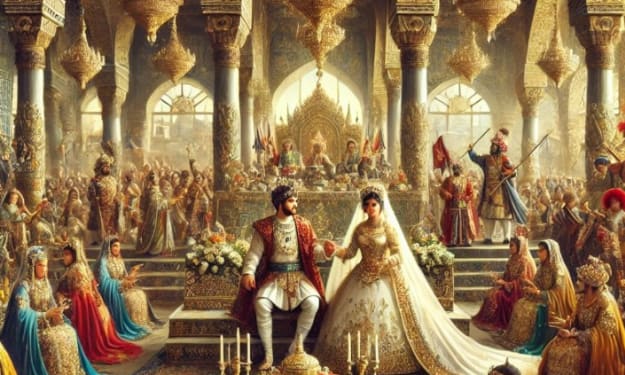
The Royal Splendor of Alexander and Roxana’s Wedding
The Wealth and Spending Habits of Alexander the Great and His Romantic Life Introduction Alexander the Great (356–323 BCE) was not only one of the greatest military conquerors in history but also one of the wealthiest individuals of his time. His empire stretched from Greece to India, and with it came unimaginable riches. From gold-plated palaces to extravagant banquets, Alexander spent his wealth generously—on his army, on cultural advancements, and on his personal life, including the women in his life. Though Alexander was not known for indulging in excessive romantic affairs like some rulers, he did have important relationships with women, including his wives and rumored lovers. This article explores how much wealth Alexander controlled, his spending habits, and how his relationships influenced his wealth distribution. 1. How Much Wealth Did Alexander the Great Have? 1.1 The Conquests and Looted Wealth Alexander amassed one of the greatest fortunes in history through his conquests, especially after defeating the Persian Empire (331 BCE) and seizing the royal treasury. Some of his largest financial gains included: The Treasury of Persepolis – Estimated at 180,000 talents of silver (modern value: over $5 billion). The Wealth of Babylon – Taken after the conquest of Babylon, worth billions in today’s terms. Egyptian and Indian Spoils – The vast riches of Memphis, Susa, and Indian temples. 1.2 Estimated Net Worth in Today’s Terms While it's difficult to estimate exact figures, historians believe Alexander's accumulated wealth could be worth: $500 billion to $1 trillion in modern value, making him one of history’s wealthiest figures. 2. How Did Alexander Spend His Wealth? 2.1 Military and Conquests Funding his army: Alexander paid for the largest standing army of the time, with over 50,000 soldiers, including elite cavalry units. Expensive war machines: Siege towers, catapults, and elite weaponry. Navy construction: Ships for Mediterranean control. 2.2 Lavish Lifestyles and Celebrations Banquets and feasts: Alexander hosted legendary feasts, sometimes costing millions in gold for a single night. Gold-plated cities: He rebuilt cities like Babylon, Susa, and Alexandria with gold decorations. Luxury gifts for his generals and friends. 2.3 Spending on Women and Relationships Alexander’s romantic life was not as extravagant as some rulers, but he did spend generously on his relationships. 3. Alexander’s Wives and Love Interests 3.1 Roxana – His Most Famous Wife Roxana was a Bactrian princess whom Alexander married in 327 BCE. Their wedding was a lavish affair, with gold, Persian-style decorations, and a feast lasting days. He gifted her golden jewelry, palaces, and Persian-style royal outfits. Estimated spending: $10 million to $50 million in modern value. 3.2 State Marriages with Persian Nobility Alexander married Statira (daughter of Darius III) and Parysatis (daughter of Artaxerxes III) in a massive royal wedding in Susa (324 BCE). The event included the marriage of 10,000 Macedonian soldiers to Persian noblewomen. Estimated cost of the grand wedding: $100 million in modern value. 3.3 Camp Followers and Courtesans Alexander often traveled with a large royal entourage, including women of noble rank and courtesans. He gifted precious gems, silk robes, and golden ornaments to them. Some of his known favorites were Barsine (a Persian noblewoman) and Thais (a famous Greek courtesan). Thais famously encouraged the burning of Persepolis, an event linked to Alexander’s excessive drinking and luxury lifestyle. 4. Did Alexander Spend More Than He Had? 4.1 Lavish Spending Towards the End of His Life By the time of his death in 323 BCE, Alexander’s wealth had been significantly diminished due to excessive spending on: Grand building projects (including temples and cities). Ongoing military campaigns. Luxury gifts to generals and noble allies. 4.2 His Plan to Spend Even More Alexander had planned a grand naval expedition, which would have cost billions in today’s money. He was even rumored to have wanted a tomb made entirely of gold. However, before these plans could materialize, Alexander died at the age of 32. 5. What Happened to His Fortune After His Death? After Alexander's death, his empire was divided among his generals (the Diadochi). His immense wealth was: Plundered and redistributed among his former commanders. Spent on wars of succession, known as the Wars of the Diadochi (322–281 BCE). Lost over time, with some treasures still missing today. Conclusion: Alexander’s Wealth and Love Life Alexander the Great was one of the wealthiest and most powerful rulers in history, accumulating a fortune estimated between $500 billion and $1 trillion in modern value. While much of this was spent on military campaigns and empire-building, he also spent lavishly on luxury, royal marriages, and relationships. His wives and romantic partners, especially Roxana and his Persian queens, benefited from his generosity, receiving extravagant gifts, palaces, and jewelry. However, his extreme spending eventually drained much of his empire’s wealth, leaving little behind for his successors. In the end, Alexander's true legacy was not in his wealth but in his empire, which reshaped history forever.
By Say the truth 2 years ago in History