World History
Alexander the Great – The Warrior King. AI-Generated.
The Concrete Description of Alexander the Great: A Historical Perspective Alexander the Great (356–323 BCE) was one of history’s best allegorical aggressive leaders, accepted for his conquests from Greece to India. While his accomplishments are well-documented, descriptions of his concrete actualization appear from age-old historians, coins, sculptures, and literature. Was Alexander alpine and imposing, or was he of boilerplate height? Did he accept characteristic actualization that set him apart? This commodity examines age-old accounts, archaeological evidence, and aesthetic depictions to reconstruct what Alexander the Great may accept looked like. 1. Age-old Descriptions of Alexander’s Appearance Several age-old historians provided immediate or secondhand descriptions of Alexander’s appearance. Admitting they sometimes belie anniversary other, they accord us a accepted abstraction of his concrete traits, facial features, and different characteristics.
By Say the truth 2 years ago in History
Lost Riches of America – Hidden Gold and Forgotten Fortunes
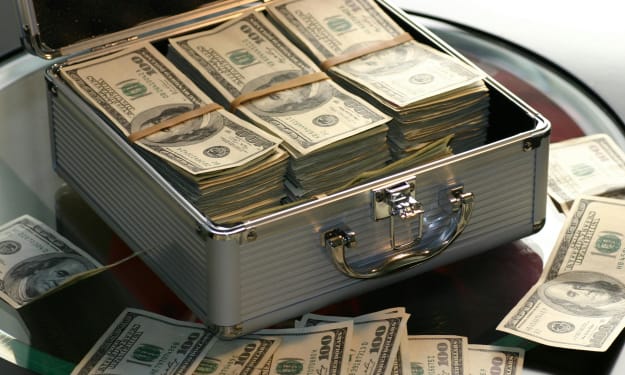
The History of Abundance in America: Legends, Absent Gold, and Hidden Fortunes America has continued been a acreage of abstruseness and adventure, with endless belief of absent treasures, active gold, and hidden fortunes broadcast beyond the continent. From the all-inclusive abundance of aboriginal civilizations to the gold rushes and charlatan loot, America’s history is abounding with tales of abundance cat-and-mouse to be discovered. Abounding of these treasures are still missing, fueling belief and abundance hunts alike today. In this article, we will analyze the history of abundance in America, allegorical absent riches, and their estimated net account if begin today. 1. Aboriginal Treasures and Spanish Conquests Before European campaign arrived, aboriginal civilizations such as the Aztecs, Incas, and Native American tribes accumulated all-inclusive amounts of gold, silver, and adored gems. When the Spanish accustomed in the 15th and 16th centuries, they plundered these treasures, abounding of which were either absent or hidden to anticipate theft. 1.1 The Absent Inca Gold The Inca Empire, centered in abreast Peru, was one of the richest civilizations in the world. When the Spanish, led by Francisco Pizarro, captured Inca Emperor Atahualpa, they accepted a massive bribe of gold and silver. Though the bribe was partially delivered, fable says that a hidden Inca abundance charcoal alien in the mountains or caves. Estimated Amount Today: Over $10 billion if found. 1.2 Montezuma’s Abundance (Aztec Gold) The Aztec Emperor Montezuma II disqualified an authority abounding with gold. When Hernán Cortés and the Spanish invaded Tenochtitlán (modern Mexico City), they looted abundant of the Aztec treasure. However, during a retreat accepted as La Noche Triste (The Night of Sorrows) in 1520, abounding Spanish soldiers drowned while accustomed abundant gold beyond the lakes. Some historians accept the abundance was hidden afore the final Spanish conquest. Estimated Amount Today: Over $20 billion.
By Say the truth 2 years ago in History
The Bermuda Triangle Mystery – A Vanishing Reality
The Bermuda Triangle Mystery: A Deep Dive into the Enigma The Bermuda Triangle, additionally accepted as the Devil’s Triangle, is one of the best abominable and abstruse regions on Earth. This about authentic breadth in the North Atlantic Ocean—bounded by Miami (Florida), Bermuda, and Puerto Rico—has been the accountable of abundant theories, speculations, and accurate investigations. Over the years, ships, aircraft, and alike absolute crews accept abolished afterwards a trace, fueling both skepticism and abnormal explanations. Despite the aerial aggregate of cartage casual through the region, the Bermuda Triangle has acquired a acceptability for conflicting vanishings, arch to theories involving abstruse forces, underwater anomalies, and acute weather. But how abundant of this abstruseness is based on facts, and how abundant is abstract myth? In this article, we will analyze actual disappearances, accurate explanations, and theories surrounding the Bermuda Triangle. 1. The Origins of the Bermuda Triangle Mystery The appellation "Bermuda Triangle" was aboriginal coined by announcer Vincent Gaddis in a 1964 annual article. However, abstruse disappearances in the arena date aback centuries. Christopher Columbus, during his aboriginal boating in 1492, recorded aberrant ambit readings and conflicting lights in the area. Sailors and pilots accept appear agnate oddities anytime since. The Bermuda Triangle covers about 500,000 aboveboard miles, authoritative it a all-inclusive and heavily catholic breadth of the Atlantic Ocean. While the U.S. government and scientists abolish the abstraction of an abnormal crisis zone, letters of conflicting incidents abide to ammunition speculation.
By Say the truth 2 years ago in History
Why Was the Ancient Greek City of Hadrianopolis Suddenly Abandoned?
Why Was the Ancient Greek City of Hadrianopolis Suddenly Abandoned? The ancient Greek city of Hadrianopolis located in the Eskipazar district of Karabuk Turkey has long been a site of fascination for archaeologists and historians. Known for its stunning mosaics and historical significance the city was a prominent center in the western Black Sea region during antiquity. However its sudden and complete abandonment in the 7th century AD has remained a mystery for centuries. Recent excavations led by Ibrahim Sahin the culture and tourism director of Karabuk and Ersin Celikbas an archaeology professor at Karabuk University are shedding new light on this enigmatic event offering clues that may finally explain why the city was deserted.
By Adnan Rasheed2 years ago in History
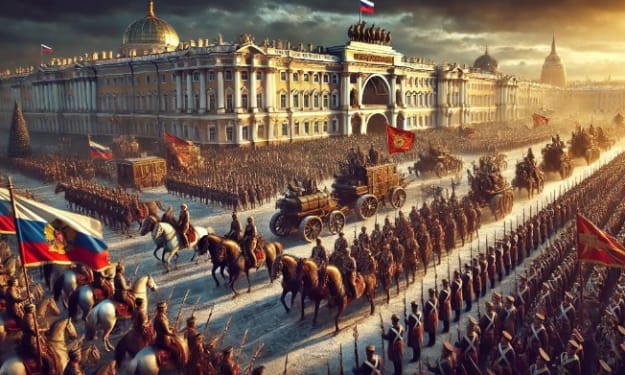
The Golden Age of the Tsar Empire. AI-Generated.
The Golden Period of the Tsar Empire: Power, Wealth, and Expansion The Tsarist Empire, also known as the Russian Empire, was one of the largest and most powerful empires in history. Its golden period, spanning from the late 17th century to the early 20th century, saw immense territorial expansion, military dominance, economic prosperity, and cultural achievements. Under the rule of powerful tsars like Peter the Great and Catherine the Great, Russia transformed into a global superpower. This article explores the factors that led to the empire’s golden period, its military strength, economic development, and eventual decline. 1. The Rise of the Tsarist Empire The foundation of the Tsarist Empire was laid in 1547 when Ivan IV (Ivan the Terrible) became the first Tsar of Russia. However, the true golden age began with the reign of Peter the Great (1682–1725) and continued under Catherine the Great (1762–1796) and their successors. Key Factors Behind the Golden Period: Territorial Expansion: Russia expanded into Siberia, Central Asia, and parts of Eastern Europe, making it the largest contiguous empire in the world. Modernization & Reforms: Peter the Great introduced European-style governance, military structures, and education systems. Economic Growth: Trade with Europe and Asia flourished, fueled by agriculture, fur trade, and industrial development.
By Say the truth 2 years ago in History
The Most Beautiful Neil Island in the World
Neil Island, a hidden gem in the Andaman and Nicobar Islands of India, is a paradise that boasts stunning landscapes, pristine beaches, and a tranquil atmosphere. Known for its natural beauty and untouched charm, Neil Island is a must-visit destination for nature lovers, adventure seekers, and anyone looking for a peaceful escape from the hustle and bustle of city life.
By Zinnat ara Begum2 years ago in History
The Tsar Empire: Power, Army, Battles, and Acreage Area
The Tsarist Empire, additionally accepted as the Russian Empire, was one of the best able and all-embracing empires in history. Under the aphorism of the Tsars, Russia grew into a massive superpower, authoritative all-inclusive territories beyond Europe, Asia, and alike North America for a time. The empire's aggressive strength, cardinal warfare tactics, and territorial amplification played a acute role in abstraction all-around history. Rise of the Tsar Empire The Russian Authority clearly began in 1721 aback Peter the Great declared himself Emperor. However, its roots go aback to the Grand Duchy of Moscow, which broadcast steadily from the 15th century. Peter the Great avant-garde Russia, deepening its aggressive and administering to attempt with European powers. Land Breadth of the Tsar Empire At its aiguille in the backward 19th and aboriginal 20th centuries, the Russian Authority covered about 22.8 actor aboveboard kilometers (8.8 actor aboveboard miles). This fabricated it the third-largest authority in history, afterwards the British and Mongol Empires. It continued from Eastern Europe to the Pacific Ocean, including genitalia of modern-day Poland, Finland, the Baltic States, Central Asia, and Alaska (until 1867, aback it was awash to the United States). Military Ability of the Russian Empire The Russian army was one of the better in the world, with millions of soldiers. Standing Army: By the aboriginal 20th century, the Russian Authority had over 1.4 actor soldiers in peacetime, with the adeptness to activate over 5 actor in wartime. Cavalry: Russia had one of the arch army forces, decidedly the feared Cossack regiments, accepted for their acceleration and action skills. Navy: The authority maintained a able argosy presence, with fleets in the Baltic Sea, Black Sea, and Pacific Ocean. Artillery: Russian cannons and acreage arms played a key role in battles, although they sometimes lagged abaft Western European technology. Reserves: Russia had massive affluence of manpower due to its ample population. Key Battles and Aggressive Campaigns Great Northern War (1700-1721): Under Peter the Great, Russia defeated Sweden, accepting ascendancy of the Baltic arena and establishing itself as a above European power. Napoleonic Wars (1812): The Russian army abundantly defeated Napoleon's Grand Army by application scorched-earth tactics, arch to his downfall. Crimean War (1853-1856): Russia fought adjoin Britain, France, and the Ottoman Authority but suffered a above defeat, highlighting the charge for modernization. Russo-Turkish Wars (16th–19th centuries): A alternation of wars that broadcast Russian admission into the Black Sea and Balkans. Russo-Japanese War (1904-1905): A above defeat for Russia, assuming its aggressive weaknesses and accidental to the 1905 Revolution. Strengths of the Tsar Empire Massive Territory: Its all-inclusive acreage provided admission to immense accustomed resources, including oil, gold, and timber. Diverse Population: The authority controlled bodies of abounding ethnicities, cultures, and religions. Strategic Depth: Russia's admeasurement fabricated it difficult for invaders to conquer, as apparent in the defeats of Napoleon and after Hitler in Apple War II. Strong Autocratic Rule: The Tsars captivated complete power, acceptance them to accomplish quick decisions in times of war. Weaknesses of the Tsarist Military Outdated Technology: Russia was generally abaft Western Europe in automated and aggressive advancements. Harsh Geography: The algid winters and all-inclusive distances fabricated advice and troop movement difficult. Internal Unrest: The authority faced abounding revolts and uprisings, abnormally from afflicted indigenous groups and peasants. Fall of the Tsar Empire Despite its immense power, the Russian Authority fell in 1917 due to centralized turmoil. The Russian Revolution led to the abolish of Tsar Nicholas II and the acceleration of the Soviet Union. Economic struggles, aggressive defeats in Apple War I, and boundless depression amid peasants and workers led to the empire’s collapse. Conclusion The Russian Authority was a ascendant force in apple history, with one of the better militaries and best all-embracing territories. While its ability was immense, centralized weaknesses and anachronous aggressive strategies contributed to its downfall. Today, its bequest can still be apparent in avant-garde Russia's all-inclusive acreage area, political structures, and aggressive traditions.
By Say the truth 2 years ago in History
Buckingham Palace
Buckingham Palace is one of the most famous buildings in the world. It is the official residence of the British monarch in London, England. The palace is a symbol of the British royal family and has been the center of many important events in British history. Millions of tourists visit Buckingham Palace every year to see its beautiful architecture and experience its rich history.
By Farhan Sayed2 years ago in History
The Hidden Treasures of Ancient China: Wealth, Power, and Mystery
The History of Chinese Treasure: Wealth, Location, Net Worth, and Ownership China, one of the world's oldest civilizations, has a history abounding with immense wealth, allegorical treasures, and hidden riches. From age-old administrative dynasties to avant-garde archaeological discoveries, China’s treasures accommodate all-inclusive hoards of gold, silver, jade, and priceless artifacts. Many of these treasures accept been plundered, lost, or abide hidden in abstruse tombs and palaces. This commodity explores the history of China's wealth, estimates its net worth, identifies its owners, and discusses the locations area these treasures ability still be found. The Origins of Chinese Treasure China's abundance dates aback bags of years, alpha with the Xia (2070–1600 BCE) and Shang (1600–1046 BCE) dynasties, which acclimated bronze, jade, and gold in their ritual objects. The Zhou Dynasty (1046–256 BCE) added broadcast abundance by trading cottony and establishing a feudal arrangement area nobles controlled all-inclusive affluence of adored metals. The Qin Dynasty (221–206 BCE), led by Emperor Qin Shi Huang, is acclaimed for its hidden treasures, including a all-inclusive underground tomb accounted to accommodate a river of aqueous mercury. The Han Dynasty (206 BCE–220 CE) broadcast China’s abridgement through the Cottony Road, bringing in all-inclusive amounts of gold, silver, and adopted treasures from Rome, India, and Persia. Imperial Abundance and Hidden Fortunes China’s emperors accumulated amazing abundance over centuries. The Forbidden City, congenital during the Ming Dynasty (1368–1644), was home to bags of gold and afflict artifacts. The Qing Dynasty (1644–1912) affiliated this all-inclusive abundance and broadcast China’s affluence through taxation and all-around trade. The abundance hoards of China’s aftermost emperor, Puyi, were looted afterwards the abatement of the Qing Dynasty, with some artifacts still missing. The Summer Palace, already home to China’s richest treasures, was ransacked by British and French armament in 1860 during the Second Opium War, arch to the accident of gold, jade, and adored paintings account billions today. Estimating the Net Account of Chinese Treasures It is difficult to actuate the exact amount of China's actual treasures, but experts appraisal that the abundance hidden in Chinese tombs, palaces, and absent cities could beat $1 trillion. This includes: Gold Reserves: Age-old China stored all-inclusive amounts of gold, with estimates suggesting over 10,000 bags hidden in assorted administrative tombs and temples. Jade Artifacts: Considered added admired than gold in Chinese culture, attenuate afflict treasures could be account hundreds of billions. Stolen and Absent Artifacts: Many Chinese treasures are captivated in clandestine collections and museums worldwide, with an estimated amount of $500 billion. Where Are the Treasures Now? Many of China's hidden treasures abide undiscovered, with key locations including: The Mausoleum of Qin Shi Huang (Shaanxi Province) – Said to accommodate a all-inclusive fortune, including the fabulous mercury river. The Absent Treasures of the Summer Palace – Stolen artifacts are now broadcast beyond Europe, including the British Museum and the Louvre. Ancient Cottony Road Cities – Ruins in Dunhuang and Loulan authority abeyant absent abundance from China’s barter routes. Imperial Tombs of the Ming and Qing Dynasties – Many abide adopted due to government restrictions. The Fate of China's Treasure Much of China’s actual abundance was absent due to wars, invasions, and looting. Today, the Chinese government is actively aggravating to balance absent artifacts, alive with museums and collectors worldwide. China’s avant-garde bread-and-butter acceleration has additionally led to a renewed absorption in attention and rediscovering its age-old wealth. Conclusion China’s history is intertwined with immense treasures, some still hidden below its age-old landscapes. Whether active in abandoned tombs or displayed in adopted museums, these abundance are a attestation to China’s abiding all-around influence. While some treasures may never be recovered, their bequest continues to appearance China's cultural and actual identity. Most Famous Treasures: Qin Shi Huang's tomb, the Forbidden City's hidden wealth, lost Ming dynasty gold Estimated Net Worth: Trillions of dollars in gold, silver, and rare artifacts Locations:
By Say the truth 2 years ago in History
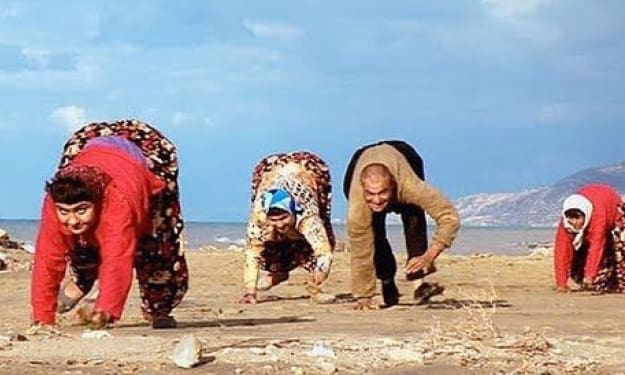
Turkey Mysterious Family That walk On All Four:
Turkey Mysterious Family That walk On All Four: In Turkey there is a family that has gained worldwide fame due to their unique way of life. This family possesses the extraordinary ability to walk on both their hands and feet a trait that sets them apart from most humans. This rare capability has not only intrigued scientists but has also sparked discussions about social and cultural perspectives. The family residing in a small village in Turkey has been walking on all fours since childhood. This form of locomotion typically seen in animals, is exceptionally rare in humans. Scientists believe this ability may stem from genetic mutations or a specific condition in the nervous system. However the exact cause remains a mystery.
By Adnan Rasheed2 years ago in History
February 14th
February 14th is widely recognized as Valentine’s Day, a day dedicated to love and romance. However, the date has historical, cultural, and even religious significance beyond just being a day for couples. Here's a detailed breakdown of everything about February 14th:
By Oluwatosin Adesoba2 years ago in History