World History
The Power of Self-Editing: A Writer's Epiphany
What is Self-Editing? At its core, self-editing is the process of revising your own work to improve clarity, coherence, style, and accuracy. Unlike initial drafts that are often raw and filled with imperfections, self-editing is about refining and polishing those ideas. It involves analyzing everything from sentence structure to word choice, pacing, and overall flow.
By Malik Kashif2 years ago in History
Historic Study Finds Signs of Soul Departing Body at Death
New Scientific Discoveries have come up with surprising new evidence that can provide more insight about what happens to us after death. Experts believe that brain activity in the last moments near death has shown that something intangible could leave the body perhaps the 'soul' in the final moments of life. A rare study on the very nature of consciousness and brain waves among dying patients reveals this radical conclusion.
By Rohitha Lanka2 years ago in History
The World’s Biggest Animal:
The World’s Biggest Animal: The Majestic Blue Whale When we think of the largest creature to have ever lived on Earth, our minds may wander to the prehistoric giants — the towering dinosaurs of ancient times. Yet, the record-holder for the biggest animal ever known is not a relic of the past; it still roams the oceans today. The blue whale (Balaenoptera musculus) is the largest animal to have ever existed, a true marvel of nature’s design. The Immense Size of the Blue Whale Blue whales are astonishing in their sheer size. An average adult can grow up to 100 feet (30 meters) in length and weigh as much as 200 tons — that’s equivalent to the weight of about 33 elephants! Their hearts alone can weigh as much as an automobile, and their tongues can be as heavy as an adult elephant. A human could theoretically crawl through a blue whale’s aorta, the largest artery in the body, which vividly illustrates the massive scale of these oceanic giants. Despite their colossal size, blue whales have streamlined bodies, allowing them to move gracefully through the water. Their skin is typically a mottled blue-gray color, and when sunlight filters through the ocean, they appear a shimmering, beautiful blue — a feature that gives them their iconic name. Diet and Feeding Habits Surprisingly, the world’s largest animal feeds almost exclusively on one of the smallest creatures in the ocean: krill. These tiny shrimp-like crustaceans form the primary diet of blue whales. During feeding season, a blue whale can consume up to 4 tons of krill per day. Blue whales use a feeding method called lunge feeding. They accelerate toward a dense swarm of krill, open their massive mouths, and engulf vast quantities of water and prey. Their baleen plates — comb-like structures hanging from the roof of their mouths — then filter out the water, leaving only the krill behind for the whale to swallow. This feeding behavior is a remarkable display of both power and precision. Each gulp can take in around 100,000 liters of water, yet the whale’s body efficiently separates its microscopic meal from the seawater. Habitat and Migration Blue whales inhabit all the world’s oceans except the Arctic. They are most commonly found in deep, open waters rather than coastal areas. These gentle giants are migratory creatures, traveling thousands of miles annually between their summer feeding grounds in polar regions and their winter breeding grounds in more temperate, tropical waters. The migration of blue whales is a complex and not fully understood phenomenon. They follow patterns dictated by food availability, water temperature, and breeding instincts. Some populations have relatively fixed routes, while others seem to adapt their migrations in response to changing ocean conditions. Communication and Intelligence Blue whales are not only the largest animals but also among the loudest. Their calls can reach volumes of up to 188 decibels — louder than a jet engine — and can be heard across vast distances underwater. These low-frequency sounds allow them to communicate with other whales hundreds of miles away, aiding in navigation, mating rituals, and social bonding. Though blue whales are largely solitary animals, their communication highlights a sophisticated social structure. Research suggests that they may use distinct calls to identify one another and even to coordinate group behaviors. Reproduction and Lifespan Blue whales have relatively slow reproductive rates. Females give birth once every 2 to 3 years after a gestation period of about 11 months. Calves are born weighing around 2.5 tons and measuring up to 25 feet long. These newborn giants drink up to 100 gallons of their mother’s milk daily, rapidly growing in their first year of life. In the wild, blue whales can live for 70 to 90 years, though some individuals may reach over 100 years old. Scientists estimate their age by counting the layers of earwax — known as “earplugs” — which accumulate annually like rings on a tree. Conservation Status and Threats Despite their grandeur, blue whales face numerous threats, primarily from human activities. They were once hunted nearly to extinction during the 20th century due to the commercial whaling industry. By the time whaling bans were enacted in the 1960s, their population had been decimated. Today, blue whales are listed as endangered by the International Union for Conservation of Nature (IUCN). Although their numbers have slowly increased since the whaling era, they still face significant dangers, including: Ship Strikes: Collisions with large vessels often result in serious injuries or fatalities for these gentle giants. Climate Change: Rising ocean temperatures and changes in krill populations threaten their primary food source. Noise Pollution: Increased underwater noise from shipping and industrial activities interferes with their communication, crucial for mating and navigation. Entanglement: Blue whales can become ensnared in fishing gear, leading to injuries, exhaustion, and sometimes death. Conservation Efforts Thankfully, there are ongoing efforts to protect and preserve the world’s largest animal. International bans on commercial whaling have been vital, but more work is needed. Marine protected areas (MPAs) have been established in key habitats to safeguard blue whales from human interference. Organizations like the International Whaling Commission (IWC) and various conservation groups work tirelessly to monitor populations, reduce ship strikes by altering shipping lanes, and advocate for stronger climate action to mitigate the impact of global warming. Public awareness campaigns also play a crucial role in conservation. Educating people about the importance of blue whales in maintaining healthy ocean ecosystems fosters global support for their protection. The Symbolism and Legacy of the Blue Whale Beyond their ecological significance, blue whales have captured human imagination for centuries. Their awe-inspiring size and gentle nature symbolize both the power and fragility of our planet’s biodiversity. In literature, music, and art, they often serve as icons of mystery, freedom, and resilience. In a world where many species face the threat of extinction, the blue whale’s story is a reminder of both the damage humans can inflict and the incredible capacity for recovery when concerted conservation efforts are made. Conclusion The blue whale is a testament to the wonders of the natural world. As the largest animal ever to exist, it commands both reverence and responsibility from humankind. By continuing to protect these gentle giants and their habitats, we not only preserve an iconic species but also uphold the delicate balance of marine ecosystems.
By Budhirai Tripura2 years ago in History
World of International Small Birds
The Fascinating World of International Small Birds Small birds, often overlooked due to their size, are some of the most captivating and diverse creatures on our planet. From the vibrant hummingbirds of the Americas to the delicate warblers of Europe and Asia, these tiny beings play vital roles in ecosystems and have captured the admiration of birdwatchers and scientists alike. This article delves into the world of international small birds, exploring their diversity, ecological significance, and the challenges they face. Diversity of Small Birds Across Continents The Americas: The Americas are home to an array of small birds, with hummingbirds standing out as some of the most remarkable. These feathered jewels, such as the Ruby-throated Hummingbird (Archilochus colubris), are known for their iridescent plumage and incredible agility. Weighing less than a nickel, they beat their wings up to 80 times per second, allowing them to hover in place and even fly backward. Another noteworthy group is the New World warblers, small songbirds like the Black-throated Blue Warbler (Setophaga caerulescens). These migratory birds travel thousands of miles between breeding and wintering grounds, a testament to their endurance despite their diminutive size. Europe: In Europe, small birds such as the Eurasian Blue Tit (Cyanistes caeruleus) charm observers with their bright blue and yellow feathers. They are agile foragers, often seen hanging upside down from branches as they search for insects. The European Robin (Erithacus rubecula) is another iconic small bird. Recognizable by its red breast, it is a symbol of winter and commonly associated with Christmas folklore. Despite their sweet appearance, robins are fiercely territorial and sing year-round to defend their space. Asia: Asia boasts a variety of small birds, including the Oriental White-eye (Zosterops palpebrosus). With their distinctive white eye-rings, these social birds often gather in flocks, flitting through trees in search of nectar and insects. Another notable species is the Japanese White-eye (Zosterops japonicus), which has expanded its range through intentional introductions in regions like Hawaii, showcasing how small birds can adapt to new environments. Africa: Africa’s small bird population includes vibrant species like the African Pygmy Kingfisher (Ispidina picta). Though only about 13 cm long, they are skilled hunters, feeding on insects, small reptiles, and amphibians. The waxbills, such as the Red-cheeked Cordon-bleu (Uraeginthus bengalus), add a splash of color to grasslands and savannas. Their soft, melodious songs and striking plumage make them favorites among bird enthusiasts. Australia and Oceania: Australia’s Fairy-wrens, particularly the Superb Fairy-wren (Malurus cyaneus), are famous for their striking blue plumage and complex social behaviors. These small, energetic birds often engage in cooperative breeding, where non-breeding individuals help raise the offspring of others. In New Zealand, the Rifleman (Acanthisitta chloris) holds the title of the country’s smallest bird. As a member of the ancient wren lineage, it serves as a living link to the island’s evolutionary history. Ecological Importance of Small Birds Despite their size, small birds have outsized impacts on ecosystems. They act as pollinators, seed dispersers, and pest controllers. Hummingbirds, for example, pollinate countless plant species, ensuring the continuation of floral biodiversity. Warblers and tits consume vast quantities of insects, helping to regulate pest populations. Moreover, small birds contribute to nutrient cycling by breaking down organic matter and spreading seeds through their droppings. Their presence often indicates ecosystem health, as their populations quickly respond to environmental changes. Challenges Faced by Small Birds While small birds are crucial to biodiversity, they face numerous threats. Habitat loss due to deforestation, urbanization, and agriculture is a major issue. Migratory species, such as warblers and swallows, are particularly vulnerable, as they depend on stopover sites for rest and refueling during long journeys. Climate change also poses a significant risk, altering food availability, breeding seasons, and migration patterns. Rising temperatures can disrupt the delicate timing between bird migrations and the emergence of their insect prey, leading to population declines. Additionally, small birds suffer from predation by invasive species, such as domestic cats, and the impact of pesticides, which reduce their insect food sources. Conservation Efforts Global efforts are underway to protect small birds and their habitats. Organizations like BirdLife International work to conserve important bird areas (IBAs) and raise awareness about the plight of vulnerable species. Citizen science initiatives, such as the Great Backyard Bird Count, allow people worldwide to contribute valuable data on bird populations. Planting native flora, reducing pesticide use, and creating bird-friendly spaces in urban areas can also help support small bird populations. Conclusion International small birds, though often overshadowed by their larger counterparts, are vital to the health of our planet’s ecosystems. Their incredible diversity, adaptability, and ecological roles highlight the need for continued conservation efforts. By appreciating and protecting these tiny marvels, we not only preserve their beauty but also maintain the intricate balance of nature.
By Budhirai Tripura2 years ago in History
Love and Pain:
Love and Pain: The Two Sides of the Same Coin Love is often described as one of the most beautiful emotions a person can experience. It has the power to uplift, to inspire, and to give life a deeper meaning. However, love is not always about joy and happiness—it also brings pain, heartbreak, and suffering. The connection between love and pain is profound, making them inseparable aspects of human relationships. The Beauty of Love Love fills life with warmth and meaning. It creates bonds between people, fosters understanding, and nurtures a sense of belonging. Love can be romantic, platonic, or familial, and each form carries its unique depth and intensity. The joy of love lies in the companionship, shared experiences, and the deep emotional connection between individuals. It brings a sense of fulfillment and purpose, making people feel alive and valued. Why Love Hurts The pain of love can arise from different circumstances—unreciprocated feelings, loss, betrayal, or the natural challenges that relationships face. When we love deeply, we open ourselves to vulnerability. The very act of loving someone means that their actions, words, or even absence can affect us profoundly. The stronger the love, the deeper the potential pain. One of the greatest sources of love pain is heartbreak. Losing someone we care about, whether due to separation, distance, or even death, can cause immense emotional suffering. The memories, the broken promises, and the sudden emptiness create a void that is difficult to fill. The Role of Pain in Love Although painful, love’s suffering has its purpose. Pain teaches us resilience, helping us grow emotionally and intellectually. It allows us to understand ourselves better—our desires, our boundaries, and our expectations in relationships. Without pain, we might never truly appreciate the joy that love brings. Pain also serves as a guide, teaching us valuable lessons about who we should trust, what we truly want, and how we should love ourselves before loving others. It pushes us to develop emotional strength and wisdom, allowing us to build healthier and more fulfilling relationships in the future. Healing from Love Pain Healing from love pain takes time, patience, and self-care. Acknowledging the hurt and allowing oneself to grieve is essential. Surrounding oneself with supportive friends and family, engaging in activities that bring joy, and focusing on personal growth can help in the healing process. Self-love is a crucial part of recovery. Understanding that love should not come at the cost of one’s well-being is important. Learning to prioritize self-respect and emotional health will make future relationships healthier and more fulfilling. Conclusion Love and pain are two sides of the same coin—where there is deep love, there is also the risk of deep pain. However, the pain of love should not discourage anyone from experiencing it. Love, despite its risks, remains one of the most enriching aspects of life. It teaches, it heals, and it gives meaning. Even in pain, love shapes us into stronger, wiser, and more compassionate individuals. Love pain manifests in many forms. It may arise from unrequited affection, when the heart longs for someone who does not feel the same. It can stem from heartbreak — the shattering of dreams built with a partner who no longer wishes to walk the same path. Even within healthy relationships, love pain can surface during conflicts, moments of jealousy, or the fear of losing a cherished bond. At its core, love pain is a reflection of vulnerability. To love is to open oneself completely, to offer your heart with the hope that it will be cradled gently. When that trust is broken — or even when the possibility of loss looms — the ache can feel unbearable. Why Does Love Hurt So Much? Science offers insight into the physiological roots of love pain. Studies show that heartbreak activates the same brain regions responsible for physical pain, explaining why emotional distress can feel like a physical blow. The release of stress hormones, such as cortisol, adds to the sensation of heaviness in the chest, the lump in the throat, and the tears that refuse to stop.
By Budhirai Tripura2 years ago in History
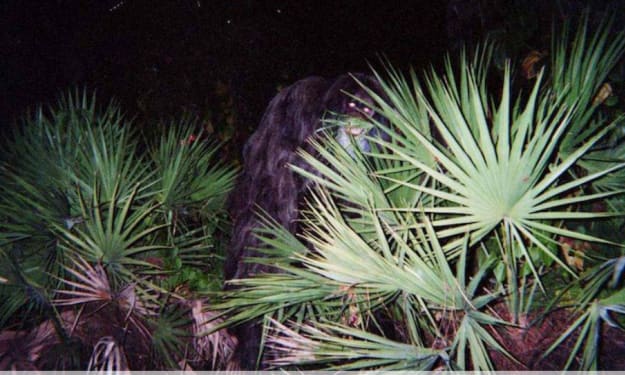
Florida's Elusive Bigfoot and the Mystery Behind its Existence
The Skunk Ape is little known but is a creature strange enough to be known as the Bigfoot of Florida, as sightings have been reported for decades. Described as an enormous, hairy beast, standing seven feet tall and tipping the scales at up to 500 pounds, it has captured the imagination of residents and visitors alike.
By Rohitha Lanka2 years ago in History
Whispers of the Unseen: The Enigmatic World of Jinn in Arabic Culture
In the heart of the Arabian desert, where the golden sands stretch endlessly and the stars illuminate the night sky, there exists a world unseen by human eyes. This is the realm of the Jinn, mysterious beings woven into the fabric of Arabic culture, folklore, and religion. Their stories, passed down through generations, are as vast and intricate as the desert itself. To understand the Jinn is to delve into a world where the lines between reality and myth blur, and where the unseen forces of nature and the supernatural coexist.
By Mosap Homa2 years ago in History
New language discovered to be developing in the United States.
New language discovered to be developing in the United States. The United States has always been a melting pot of cultures languages and traditions and nowhere is this more evident than in Miami Florida. In this vibrant city where Spanish and English intertwine in everyday life a new dialect of English has been quietly developing. This Spanish influenced variety of English shaped by decades of immigration from Latin America is a testament to how language constantly evolves in response to cultural and social interactions. Linguists at Florida International University have been studying this phenomenon for over a decade and they argue that Miami’s unique English dialect is a living example of language adaptation in a multilingual society. Miami is one of the most bilingual cities in the United States. The majority of its population is Hispanic or Latino with roots in Cuba Venezuela Colombia and other Spanish speaking countries. This heavy Spanish influence has not only preserved the Spanish language in the region but has also reshaped how English is spoken. Over time the natural mixing of Spanish and English has led to a distinct way of speaking incorporating direct translations, unique pronunciations and minor grammatical differences. This process known as calquing occurs when words or phrases are translated directly from one language to another while maintaining the original language’s structure.
By Adnan Rasheed2 years ago in History
The Fall of Giants
History has a unique way of demonstrating that no empire, regardless of its size or strength, is truly invulnerable. Time after time, those who seem all-powerful have succumbed, often to adversaries who initially appeared weak and inconsequential. This recurring narrative is prominently showcased in the ascension and decline of empires such as the Akkadian, Assyrian, and the Qin Dynasty in China. However, one of the most remarkable illustrations of this concept is the saga of the Persian Empire, a giant of the ancient world, ultimately defeated by a coalition of small, resolute Greek city-states. This narrative encompasses the Greco-Persian Wars, a series of battles that not only influenced the ancient world but also established the groundwork for Western civilization as we recognize it today.
By A História2 years ago in History
The Thousand and One Nights Tales from the Arab World and India
The Thousand and One Nights, or the Arabian Nights, is an expansive compilation of folk tales stretching out over generations. The best known version is a sort of compendium of tales of diverse provenance, from the Middle East to India, and is often credited with popularizing stories like Aladdin, Ali Baba, and Sindbad the Sailor, tales that have all but become synonymous with Western folklore.
By Rohitha Lanka2 years ago in History
The Rise and Fall of the Mughal Empires
One of the most remarkable empires in world history, the Mughal Empire spread across the Indian subcontinent from the early years of the 16th century. At its height, it ruled almost the entire Indian subcontinent, with access to immense riches and military strength.
By Rohitha Lanka2 years ago in History