World History
Transform Your Life: The Power of Prayer at Our Temple
Introduction: The Transformative Power of Prayer In the fast-paced world we live in, it's easy to lose touch with our spiritual selves. The demands of daily life, work, and personal commitments often leave little room for reflection and connection with the divine. However, regular visits to a temple and the practice of prayer can provide the spiritual nourishment and clarity needed to enhance one’s life. The power of prayer is a force that can heal, transform, and guide you on your spiritual journey.
By Sri Kamakshi Ambal Temple2 years ago in History
From Misunderstanding to Modern Understanding of Women's Health
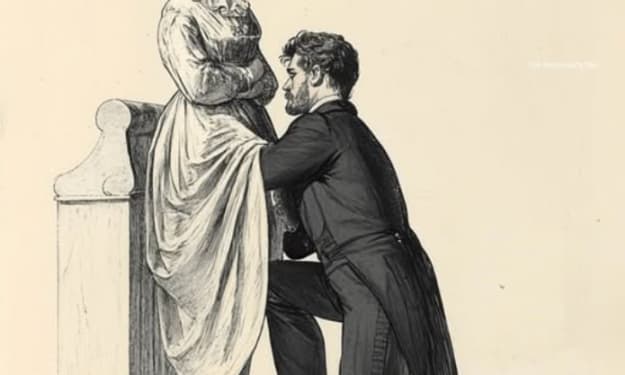
The Evolution of Hysteria A term once so ubiquitous in both medical and societal discourse regarding women, serves as a potent example of the misconceptions and biases that have plagued the history of women's health.
By Rohitha Lanka2 years ago in History
The Brutalist
"The Brutalist," directed by Brady Corbet, is a 2024 epic period drama that delves into the life of László Tóth, a Hungarian-Jewish architect and Holocaust survivor, as he navigates the complexities of post-war America. The film has garnered critical acclaim for its compelling narrative, stellar performances, and innovative production techniques. Plot Overview Set in the aftermath of World War II, "The Brutalist" follows László Tóth, portrayed by Adrien Brody, who immigrates to the United States with aspirations of rebuilding his life and career. Accompanied by his wife, Erzsébet (Felicity Jones), a journalist and fellow Holocaust survivor, László confronts the challenges of assimilating into a new culture while striving to establish himself in the architectural world. His journey takes a pivotal turn when he encounters Harrison Lee Van Buren (Guy Pearce), a wealthy industrialist who becomes both a benefactor and a source of profound conflict. The narrative intricately explores themes of ambition, exploitation, and the immigrant experience, set against the backdrop of America's evolving architectural landscape. Inspirations and Themes While "The Brutalist" is not a direct biographical account, it draws inspiration from real-life figures and historical events. Co-writers Brady Corbet and Mona Fastvold infused the character of László Tóth with attributes reminiscent of renowned architects such as Marcel Breuer and László Moholy-Nagy. The film's title and architectural focus serve as metaphors for post-war trauma and resilience, reflecting the stark and unadorned style of Brutalist architecture. The narrative delves into the exploitation of immigrant talent and the complexities of pursuing the American Dream in a society rife with systemic challenges. ENTERTAINMENT WEEKLY Cast and Performances Adrien Brody's portrayal of László Tóth has been widely lauded, earning him the Academy Award for Best Actor at the 97th Academy Awards. His immersive approach to the role showcases his dedication to capturing the nuances of a character marked by profound personal and professional struggles. Felicity Jones delivers a poignant performance as Erzsébet, embodying the resilience and complexity of a woman navigating her own survivor's guilt and aspirations. Guy Pearce's depiction of Harrison Lee Van Buren adds depth to the narrative, presenting a character whose support is intertwined with underlying motives. EN.WIKIPEDIA.ORG Production and Cinematic Techniques The production of "The Brutalist" faced several challenges, including delays due to the COVID-19 pandemic and geopolitical events. Filming locations spanned across Hungary and Italy, with Budapest and its environs doubling for 1950s Philadelphia and rural Pennsylvania. The film was shot using the VistaVision process, a technique that captures images horizontally on 35mm film stock, providing a higher resolution and a distinct visual aesthetic. This choice reflects Corbet's intent to authentically represent the era's cinematic style. EN.WIKIPEDIA.ORG AI Integration and Controversy "The Brutalist" garnered attention for its innovative use of artificial intelligence (AI) in post-production. To enhance the authenticity of Hungarian dialogue, AI tools from Respeecher were employed to refine the pronunciation of actors Adrien Brody and Felicity Jones. Despite initial dialect coaching, the filmmakers sought to perfect the accents to meet native speakers' expectations. This approach sparked discussions about the role of AI in filmmaking, with some critics expressing concerns over its implications. Director Brady Corbet addressed the controversy by emphasizing that the AI usage was limited to dialogue editing and did not alter the actors' performances. EN.WIKIPEDIA.ORG Musical Score and Accolades The film's score, composed by English musician Daniel Blumberg, has been integral to its emotional resonance. Blumberg collaborated closely with Corbet over seven years to develop a soundtrack that complements the film's narrative depth. The score features contributions from notable musicians, including pianists John Tilbury and Sophie Agnel, and saxophonist Evan Parker. This collaboration resulted in a haunting and evocative musical backdrop that garnered the Academy Award for Best Original Score in 2025. AS.COM Critical Reception and Box Office Performance Upon its release, "The Brutalist" received critical acclaim for its direction, screenplay, performances, cinematography, and score. The film's ambitious 215-minute runtime, complete with an intermission, was noted as a bold artistic choice that harkened back to classic epic cinema. At the 97th Academy Awards, the film secured ten nominations, winning three, including Best Actor for Adrien Brody, Best Cinematography, and Best Original Score. Financially, "The Brutalist" proved successful, grossing $41.5 million worldwide against a modest budget of $9.6 million. EN.WIKIPEDIA.ORG Availability For audiences interested in experiencing "The Brutalist," the film is currently available in theaters and on streaming platforms such as Amazon Prime. Its availability across multiple platforms ensures that viewers can engage with this cinematic work at their convenience. ENTERTAINMENT WEEKLY Conclusion "The Brutalist" stands as a testament to the power of storytelling, blending historical inspirations with contemporary cinematic techniques. Through its exploration of identity, ambition, and the immigrant experience, the film offers a poignant reflection on the human condition. The collaborative efforts of the cast and crew, coupled with innovative production choices, have culminated in a work that resonates with audiences and critics alike, solidifying its place in modern cinema. Disclaimer The information provided in this Article post is for general informational and educational purposes only. While we strive to ensure accuracy, we do not guarantee that all information is up-to-date or error-free. The content is based on personal opinions and experiences and should not be considered professional advice.
By Budhirai Tripura2 years ago in History
The Monkey
"The Monkey," released on February 21, 2025, is a darkly comedic horror film directed by Osgood "Oz" Perkins. Adapted from Stephen King's 1980 short story, the film explores the macabre consequences of a cursed toy monkey that brings death to those around it. With a talented ensemble cast led by Theo James, Tatiana Maslany, and Elijah Wood, "The Monkey" offers a unique blend of horror and humor that has both intrigued and divided audiences and critics alike. Plot Summary The narrative centers on twin brothers Hal and Bill Shelburn, portrayed by Theo James, who discover a sinister toy monkey in their childhood home. This seemingly innocuous object harbors a deadly curse: each time its mechanism is wound, a tragic and often gruesome death occurs nearby. The brothers' initial curiosity turns to horror as they witness the monkey's lethal influence, leading to the untimely demise of their babysitter and even their own mother, Lois Shelburn, played by Tatiana Maslany. In a desperate attempt to rid themselves of the curse, they dispose of the monkey, only to have it resurface 25 years later, threatening their families anew. Hal's teenage son, Petey, portrayed by Colin O'Brien, becomes entangled in the ensuing chaos as the family confronts the malevolent force once more. Production Background The journey to bring "The Monkey" to the screen has been lengthy. Initially, filmmaker Frank Darabont held the rights to adapt King's short story but did not proceed with the project. Years later, Osgood Perkins took on the challenge, both writing and directing the adaptation. Filming commenced in Vancouver from February 5 to March 22, 2024, with Perkins opting to replace the monkey's cymbals with a drum, due to concerns over potential copyright issues with a similar toy featured in "Toy Story 3." This creative decision also aligned with Perkins' vision to infuse the film with a playful yet horrifying tone, distinguishing it from more traditional possessed-toy horror narratives. EN.WIKIPEDIA.ORG Directorial Vision and Themes Perkins, known for his work in the horror genre, approached "The Monkey" with a distinctive blend of dark comedy and horror. Drawing inspiration from personal experiences of loss and grief, he crafted a narrative that delves into the randomness and inevitability of death. The film's tone oscillates between absurdity and horror, reminiscent of classics like "Death Becomes Her" and "An American Werewolf in London." Perkins' personal history, including the tragic loss of his parents—his father, actor Anthony Perkins, to AIDS-related pneumonia, and his mother, Berry Berenson, in the 9/11 attacks—deeply influenced his storytelling, infusing the film with themes of familial bonds and the haunting nature of unresolved trauma. THETIMES.CO.UK Cast Performances Theo James delivers a compelling performance in the dual roles of Hal and Bill Shelburn, capturing the nuanced dynamics of sibling relationships strained by supernatural forces. Tatiana Maslany portrays Lois Shelburn with a blend of maternal warmth and underlying tension, while Colin O'Brien brings authenticity to the role of Petey, effectively conveying teenage curiosity and fear. The supporting cast, including Elijah Wood as Ted Hammerman and Sarah Levy as Aunt Ida, adds depth to the narrative, each character grappling with the escalating horrors orchestrated by the cursed monkey. EN.WIKIPEDIA.ORG Critical Reception "The Monkey" has elicited mixed reactions from critics. Brian Tallerico of RogerEbert.com awarded the film three out of four stars, praising Perkins' confident direction and the film's striking imagery. Tallerico noted that Perkins "keeps upping the ante on his film’s comedic brand of insanity," delivering inventive and gruesome death sequences that underscore the film's dark humor. ROGEREBERT.COM Conversely, some critics have found fault with the film's tonal shifts. A review from the San Francisco Chronicle described the horror elements as "over-the-top" and bordering on self-parody, criticizing the film's oscillation between dark humor and emotional detachment, which made it challenging to empathize with the characters. DATEBOOK.SFCHRONICLE.COM Box Office Performance Upon its release, "The Monkey" debuted to $14 million, securing the second spot at the box office behind "Captain America: Brave New World." In its second weekend, the film earned an additional $6.3 million, bringing its domestic total to $24.6 million. While these numbers indicate a modest performance, they reflect a steady interest in the film, particularly given the competitive landscape of the horror genre. AP NEWS Audience Reactions Audience responses have been varied. CinemaScore reports an average grade of "C+," indicating a lukewarm reception from general viewers. PostTrak surveys reveal an average rating of 2.5 out of 5 stars, with 49% of respondents expressing a willingness to recommend the film. These mixed reactions suggest that while some viewers appreciate the film's unique blend of horror and comedy, others find the tonal shifts and narrative execution less satisfying. EN.WIKIPEDIA.ORG Conclusion "The Monkey" stands as a testament to Osgood Perkins' willingness to explore unconventional storytelling within the horror genre. By infusing Stephen King's chilling narrative with dark humor and personal thematic elements, Perkins offers audiences a film that challenges traditional horror conventions. While reactions have been mixed, "The Monkey" provides a thought-provoking cinematic experience that delves into the absurdity and inevitability of death, all through the lens of a cursed child's toy.
By Budhirai Tripura2 years ago in History
It took 73 years to find the wreck of the Titanic.. AI-Generated.
Titanic Found After 73 Years: The Untold Story of Discovery The Titanic. Its name conjures images of luxury, tragedy, and mystery. For over seven decades, the "unsinkable" ship lay hidden in the icy depths of the Atlantic. Many tried, but all failed to locate it. What finally led to the discovery of the Titanic's final resting place after so long? The Titanic Disaster and Initial Search Efforts The sinking of the Titanic was a global catastrophe. Initial search efforts faced impossible odds. Let's explore the timeline of events. The Night of the Sinking: A Catastrophic Loss On April 14, 1912, the Titanic struck an iceberg. Around 2,200 passengers and crew were aboard. Sadly, there were only enough lifeboats for about half. Over 1,500 people perished in the frigid waters. It remains one of history's deadliest maritime disasters. Early Search Attempts: Obstacles and Failures In the early 20th century, finding the Titanic was like searching for a needle in a haystack. Technology was limited. The search area was vast. Precise coordinates of the wreck were not available. These factors made early attempts futile. Shifting Focus: Technological Advancements and New Motivations As time passed, new technologies emerged. Interest in the Titanic never faded. These factors played a significant role in renewing the search. The Rise of Sonar and Deep-Sea Exploration Sonar technology sends sound waves to detect objects underwater. Advances in underwater vehicles allowed for deeper exploration. Mapping techniques became more accurate. These advancements greatly improved search abilities. Renewed Interest: The Titanic Historical Society and Others Organizations like the Titanic Historical Society kept the memory of the disaster alive. Individuals dedicated their time and resources to find the wreck. Their motivation stemmed from a desire to solve the mystery. They also wanted to honor those who perished. The Pivotal Role of Robert Ballard and Jean-Louis Michel Robert Ballard and Jean-Louis Michel were key figures in the successful expedition. Their combined expertise and strategic approach proved crucial. Robert Ballard: A Naval Officer with a Vision Ballard, a U.S. Naval officer, had a passion for underwater exploration. He proposed a secret mission to the Navy: locate two sunken submarines. This mission would also provide cover for his search for the Titanic. A clever plan, right? Jean-Louis Michel and French Collaboration Ballard partnered with Jean-Louis Michel, a French oceanographer. Michel brought the "SAR" sonar system. This device helped scan the ocean floor more effectively. Teamwork makes the dream work. The Discovery: Unveiling the Wreckage In 1985, the team finally found the Titanic. It was a moment of profound historical significance. The First Images: A Glimpse of History The first images of the wreckage were haunting. They showed a ship broken in two. Artifacts lay scattered across the ocean floor. It was a somber reminder of the tragedy. Confirming the Identity: Key Artifacts and Details The team confirmed the wreck was indeed the Titanic. They saw the ship's hull number. Distinct features of the ship remained. Recovered artifacts provided further proof. The Aftermath: Understanding the Wreck and Honoring the Lost The discovery had a lasting impact. It shed new light on the Titanic's story. It also sparked important discussions about preservation. Scientific Analysis and Historical Significance Scientists studied the wreckage. This helped understand the sinking better. The condition of the ship revealed the forces at play. It provided invaluable insight into the disaster. Preservation Efforts and Ethical Considerations There are debates about preserving the wreck site. Some want to leave it undisturbed. Others support retrieving artifacts. Ethical considerations are paramount. After all, it is a maritime grave. Lessons Learned and Future of Deep-Sea Exploration The Titanic discovery offers valuable lessons. It also inspires future underwater exploration. The Importance of Perseverance and Innovation Finding the Titanic required perseverance. It also needed innovative technology. Collaboration was essential. It shows what can be achieved with dedication. The Future of Underwater Exploration Underwater technology continues to advance. We can explore even deeper. New discoveries await us in the deep sea. Who knows what we will find next? Conclusion The discovery of the Titanic after 73 years was a remarkable achievement. It combined technological advancements, unwavering determination, and international collaboration. The story of the Titanic continues to fascinate. It serves as a reminder of human tragedy and the power of exploration. Its legacy endures, urging us to remember those lost and to explore the mysteries that lie beneath the waves.
By Story silver book 2 years ago in History
10 Bizarre Laws and Punishments in Ancient Civilizations
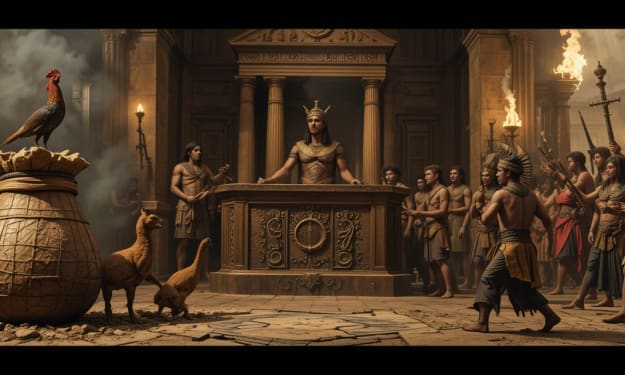
10 Bizarre Laws and Punishments in Ancient Civilizations Introduction Ancient civilizations crafted legal systems that often seem alien to modern sensibilities, blending brutality, religion, and social control into a tapestry of rules designed to maintain order. These laws were not merely about justice; they were tools of power, reflections of cultural values, and mechanisms to appease deities. From Babylon to the Vikings, societies imposed punishments that ranged from the poetic to the grotesque, often rooted in the belief that harsh penalties would deter wrongdoing and uphold divine favor.
By Dinesh Maurya2 years ago in History
Echoes of the Peninsula
The Korean Peninsula, renowned for its stunning scenery and deep cultural roots, currently represents both harmony and discord. Globally recognized for its innovations in technology, vibrant pop culture, and critical geopolitical role, Korea's narrative is marked by endurance, strife, and change. To fully grasp the contemporary essence of Korea, it is essential to trace back thousands of years to an era when the peninsula was home to ancient civilizations, well before the contemporary separation of North and South.
By A História2 years ago in History
Celebrating Heritage: Kamakshi Amman Temple and Its Role in Local Traditions
Introduction: Kamakshi Amman Temple – A Cultural Pillar of Kanchipuram Kamakshi Amman Temple in Kanchipuram, Tamil Nadu, is not just a spiritual center—it is a cornerstone of the local culture, shaping the traditions and festivals of the region. As one of the most revered temples in South India, Kamakshi Amman Temple holds an essential place in the hearts of the Tamil people, influencing their religious practices, cultural activities, and communal life. From grand annual festivals to the everyday rituals, the temple is deeply woven into the fabric of Kanchipuram’s cultural identity.
By Sri Kamakshi Ambal Temple2 years ago in History
Mindfulness and Meditation at Kamakshi Amman Temple: A Path to Inner Peace
Introduction: The Spiritual Sanctuary of Kamakshi Amman Temple Kamakshi Amman Temple, located in the serene town of Kanchipuram, is more than just a religious site—it's a spiritual sanctuary that offers peace, healing, and a deep sense of connection with the divine. Revered as a center for devotion, the temple also plays a significant role in inspiring mindfulness and meditation practices among its devotees. Whether seeking solace or spiritual growth, many pilgrims visit Kamakshi Amman Temple to quiet their minds, connect with their inner selves, and embrace the practice of mindfulness.
By Sri Kamakshi Ambal Temple2 years ago in History