World History
Why Was Thailand Never Colonized?
Countries across Asia have had quite a complicated relationship when it came to European powers throughout colonial times, with France colonizing what is now Laos, Cambodia, and Vietnam. Britain would control present-day India, Pakistan, Sri Lanka, Bangladesh, Malaysia, Myanmar, Singapore, Hong Kong, and Borneo. The Dutch held Indonesia, and after the Spanish left, the Philippines would become a colony of the United States. But one country would stand out, remaining fully independent during colonial times, the country of Thailand. Known as the Kingdom of Siam until 1939, there were many factors that allowed the country to continue its self-governance. One example is simply due to the geographical location of the kingdom. Situated between French Indochina and British-ruled Burma, Siam would serve as a buffer state by default. Frankly, the Europeans were almost glad to have Siam separate the two colonies, as it helped avoid the trouble of border disputes and allowed Siam to steer clear of direct conflict with the Europeans.
By Jacob Newsonabout a year ago in History
"The Might of Sparta: A Glimpse into the Spartan Army"
The Strength and Wealth of Sparta: Power, People, and Legacy Sparta, a powerful military city-state in ancient Greece, is renowned for its disciplined army, strategic skill, and stoic culture. For centuries, the Spartan civilization made a significant impact on history with its unmatched strength and strict societal hierarchy. This article examines Sparta’s military, its kingdom’s structure, its inhabitants, and the wealth that supported its supremacy. Spartan Army: The Backbone of Sparta’s Power The Spartan army was the most formidable military force in ancient Greece. Unlike other Greek city-states, Sparta placed complete emphasis on military superiority. Every male citizen received training to become a soldier from an early age. Boys entered the agoge, an intense military training program, at the age of seven. They were instructed to endure hardships, survive in the wilderness, and engage in combat with unwavering bravery. The Spartan army was arranged into lochoi (units), commanded by highly skilled leaders. They fought in a phalanx formation—a compact, disciplined square of soldiers equipped with large shields (aspis), spears (dory), and short swords (xiphos). This formation, coupled with their superior training and fearless mindset, rendered them nearly invincible on the battlefield. One of Sparta’s most renowned victories occurred at the Battle of Thermopylae ( 80 BCE), where King Leonidas and 300 Spartans held the immense Persian army at bay. Although they were ultimately defeated, their courage and strategic brilliance became legendary, epitomizing sacrifice and valor. The Spartan Kingdom: A Unique Political Structure Sparta’s political framework was different from other Greek city-states. It operated as an oligarchy with two kings, each from separate royal lineages. These kings commanded the army and performed religious ceremonies. However, they shared authority with the Gerousia (a council of elders), the Ephors (five annually elected officials), and the Apella (an assembly of male citizens). This balanced power system contributed to maintaining order and prevented any single ruler from gaining too much control. Spartan society was categorized into three primary classes: Spartiates: Full citizens who served as soldiers. Perioikoi: Free non-citizens who worked as artisans, traders, and farmers.
By Say the truth about a year ago in History
The Golden Majesty of the Mali Empire: Mansa Musa’s Legacy. AI-Generated.
The Rich and Complex History of Africa – Part 3: The Kingdom of Mali and the Wealth of Mansa Musa Africa's past is interwoven with stories of empires that flourished through trade, resources, and culture, with the Kingdom of Mali being particularly famous. At its peak, this medieval West African empire stood as a symbol of prosperity, intellectual achievement, and cultural impact. Central to its narrative is Mansa Musa, frequently regarded as the wealthiest individual in history. The Rise of the Mali Empire The Mali Empire arose in the 13th century, expanding upon the groundwork established by the Ghana Empire. By the mid-1200s, Mali had transformed into a significant trading center, gaining control over gold mines, salt reserves, and trade routes traversing the Sahara Desert. These assets enabled Mali to position itself as a crucial participant in worldwide commerce, attracting traders from Europe, the Middle East, and further. Under King Sundiata Keita's reign, Mali consolidated several smaller kingdoms and broadened its reach. Sundiata implemented foundational advancements in agriculture, trade structures, and military organization, yet it was during Mansa Musa's rule (c. 1312–1337) that the empire attained its peak. The Wealth of Mansa Musa Mansa Musa is predominantly recognized for his fabled wealth, which has frequently been characterized as unmatched in history. His riches were derived from Mali's plentiful natural resources, especially gold and salt. Throughout his reign, Mali accounted for almost half of the world's gold production. In 132 , Mansa Musa set out on a pilgrimage (Hajj) to Mecca, a venture that would solidify his legacy globally. His procession reportedly consisted of 60,000 individuals, 80 camels laden with gold, and many soldiers, attendants, and musicians. During the journey, Mansa Musa distributed gold to those in need, constructed mosques, and generously gifted the rulers he met along the way. His kindness in Cairo triggered a brief economic crisis due to the influx of gold diminishing the local currency's value. This incident not only highlighted Mali's vast wealth but also drew the attention of the broader world. Mansa Musa's Hajj is often referenced as one of the most opulent exhibitions of wealth in history. Intellectual and Cultural Achievements Beyond its material wealth, the Mali Empire also functioned as a center of education and culture. Mansa Musa allocated substantial resources to education, establishing schools, libraries, and mosques. The city of Timbuktu, especially, became a focal point of scholarship, enticing students and academics from various parts of Africa and the Islamic world. The Sankore University in Timbuktu contained thousands of manuscripts covering topics from astronomy and medicine to law and theology. This intellectual flourishing assisted Mali in earning a reputation as a beacon of wisdom and enlightenment. The Decline of the Mali Empire Like numerous great empires, Mali ultimately encountered decline. Internal conflicts, succession issues, and outside pressures undermined its central authority. By the 15th century, the empire had splintered, and its influence diminished. Nevertheless, the heritage of Mali and Mansa Musa persists. The legends of Mansa Musa’s riches, the accomplishments of Timbuktu, and the cultural influence of the Mali Empire still inspire individuals today. The empire's narrative exemplifies Africa’s historical significance as a hub for trade, learning, and culture. Modern Reflections The story of the Mali Empire and Mansa Musa acts as a reminder of Africa’s rich and varied history. It confronts stereotypes about the continent and underscores the contributions of African civilizations to global history. Currently, initiatives are in progress to safeguard and study the manuscripts of Timbuktu and other remnants from Mali’s golden era. These efforts intend to guarantee that future generations can learn from and appreciate this extraordinary period in African history. Conclusion The Mali Empire and the wealth of Mansa Musa represent just a part of Africa's intricate historical fabric. In forthcoming installments of this series, we will examine other significant African civilizations, including the Kingdom of Zimbabwe, the Swahili city-states, and the Songhai Empire, all of which played crucial roles in shaping the continent’s history and legacy. Stay tuned for the next chapter in this exploration of Africa’s past!
By Say the truth about a year ago in History
Forgotten History: The Siege of Jadotville
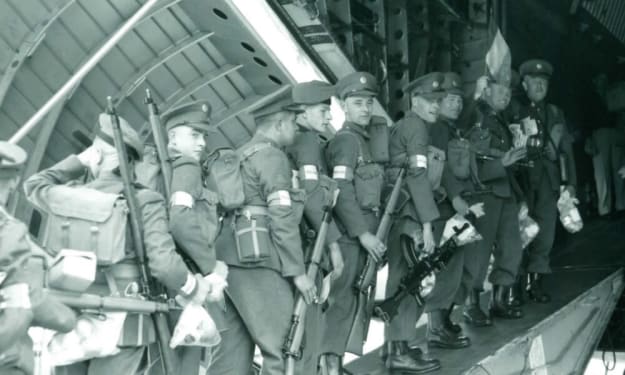
In the early 1900’s while Europe’s strongest countries were in a scramble to see who could colonize Africa the fastest, Belgium would end up with more than you would expect. The small, linguistically confused country colonized Ruanda-Urundi in 1922-1962 later becoming Rwanda and Burundi, the Lado Enclave from 1884-1910 which is now the Central Equatoria province in South Sudan. The colony of The Belgian Congo lasted from 1908 to 1960 up until the people wanted independence, it would then be known as Republic of the Congo or Leopoldville up until 1964. (For this article I will be shortening the name to “RC.” Or “The RC.”) This would be the beginning of what we know now as the Democratic Republic of the Congo. The RC’s battle for independence would be a long and extremely confusing one. From rebels with black market weapons fighting for control of the mineral rich country’s mines, to the Belgian army beefing up their presence, UN troops from all over the world, and deployment of some of France’s most decorated and seasoned Legionnaires. In this story, I will be digging up information that some wanted to stay hidden and give credit to the men who fought valiantly whether or not they had the means to. This is the story of the Siege of Jadotville.
By Jacob Newsonabout a year ago in History
The Quiet Legend of Simo Häyhä: Finland’s Unseen Hero
On April 1, 2002, a 96-year-old man slipped away peacefully in a modest care home along Finland’s southern coast. In death, he appeared frail and small, his once-five-foot frame diminished further by the weight of years. Decades earlier, this unassuming figure had lived a solitary life as a farmer, tending his land in quiet isolation. He never married, never had children, and kept mostly to himself. To the handful who knew him well enough to call him a friend, he was simply Simo. But long before that, in a frozen corner of his homeland, he bore a different name-one muttered in hushed tones by jittery soldiers peering through snow-laden trees: the White Death.
By KWAO LEARNER WINFREDabout a year ago in History
Port Royal: The Caribbean’s Sin City That Met a Biblical End
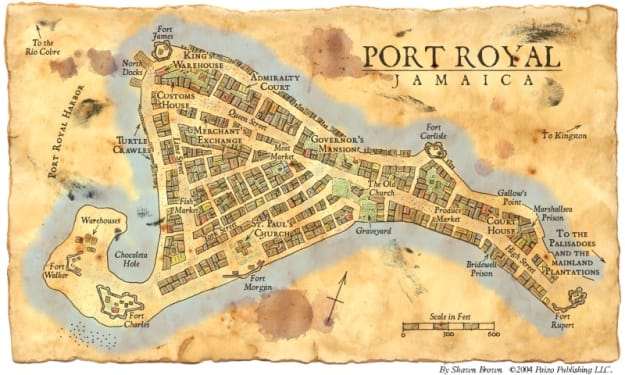
Imagine a tiny speck of a city, clinging to the edge of a 29-kilometer sandbar in the Caribbean, earning a reputation as the most notorious place on Earth. For a brief, wild stretch in the 17th century, Port Royal, Jamaica, was exactly that—a chaotic haven of pirates, privateers, prostitutes, and unimaginable plunder. It was a place where rum flowed like water, disputes ended in bloodshed, and wealth bought anything or anyone. But as quickly as it rose to infamy, Port Royal crumbled, with many believing its downfall was nothing short of divine justice. So, how did this obscure settlement transform into a legendary den of vice, only to vanish into the sea?
By KWAO LEARNER WINFREDabout a year ago in History
The Quiet Legend of Simo Häyhä: Finland’s Unseen Hero
On April 1, 2002, a 96-year-old man slipped away peacefully in a modest care home along Finland’s southern coast. In death, he appeared frail and small, his once-five-foot frame diminished further by the weight of years. Decades earlier, this unassuming figure had lived a solitary life as a farmer, tending his land in quiet isolation. He never married, never had children, and kept mostly to himself. To the handful who knew him well enough to call him a friend, he was simply Simo. But long before that, in a frozen corner of his homeland, he bore a different name-one muttered in hushed tones by jittery soldiers peering through snow-laden trees: the White Death.
By KWAO LEARNER WINFREDabout a year ago in History
The Deadly Art of Honor: A Journey Through Dueling Across Centuries
Throughout history, few practices have captured the imagination quite like dueling-a complex ritual of honor that transformed personal disputes into life-or-death confrontations. From medieval battlefields to 19th-century gentlemen's codes, dueling was far more than a mere method of conflict resolution; it was a sophisticated social language that spoke volumes about reputation, courage, and societal expectations.
By KWAO LEARNER WINFREDabout a year ago in History
A Traveler's Guide to Civil War Battlefields Around Fredericksburg, VA
At least a few of the most historically significant Civil War battlefields in the United States are located in Virginia, and Fredericksburg is the perfect central location from which historians can travel to these restored sites. From bloody fields of battle in The Wilderness to hallowed battlefields of Spotsylvania, these battlefields are the very threads stitched through with narratives of courage, selflessness, and the necessity of preserving civil war battlefields. Through this guide, you will be able to witness must-visit Civil War Battlefields near Fredericksburg, VA, activities by the American Battlefield Trust Fredericksburg, and ways to find such historic battlefields in the contemporary world.
By Michelle Stanleyabout a year ago in History
Frédéric Chopin and George Sand. AI-Generated.
In the world of classical music and literature, few romances have captivated the imagination as intensely as the tumultuous relationship between Frédéric Chopin, the Polish composer, and George Sand, the French author. Theirs was a love story marked by creative collaboration, personal turmoil, and ultimately, heartbreak. A Chance Encounter It was the summer of 1838, and Chopin, then 28, was vacationing in the French countryside. Sand, 34, was already an established writer, known for her bold and unconventional novels. The two met at a dinner party, and their initial encounter was marked by a spark of mutual attraction. A Whirlwind Romance As the days turned into weeks, Chopin and Sand romance blossomed. They spent hours talking about music, literature and philosophy, finding solace in each other's creative passions. Sand was captivated by Chopin's genius, and he, in turn, was drawn to her intelligence and independence. A Creative Partnership Their romance soon evolved into a creative partnership, with Sand becoming Chopin's muse and confidante. He would play his latest compositions for her, seeking her feedback and criticism. Sand, meanwhile, would read her latest writings to him, finding inspiration in his music. A Turbulent Relationship However, their relationship was not without its challenges. Chopin's fragile health and Sand's tumultuous past made for a volatile mix. The couple's arguments grew more frequent, with Chopin's family and friends disapproving of Sand's unconventional lifestyle. A Heartbreaking Separation In 1847, after nearly a decade together, Chopin and Sand separated. The breakup was a devastating blow to both parties, with Chopin's health deteriorating rapidly in the aftermath. Sand, meanwhile, was left to pick up the pieces of her shattered heart. A Legacy of Music and Literature Despite the heartbreak, Chopin and Sand relationship left an indelible mark on the world of music and literature. Chopin's music, in particular, continues to inspire generations of musicians and music lovers. Sand's writings, meanwhile, remain a testament to her bold and unconventional spirit. Further more The story of Chopin and Sand serves as a poignant reminder that even the most creative and passionate relationships can be fragile and fleeting. Yet, it is in these moments of beauty and heartbreak that we find the inspiration for some of the most sublime and enduring works of art in human history. A Lasting Impact The impact of Chopin and Sand's relationship can still be felt today. Chopin's music remains a staple of classical piano repertoire, with his nocturnes, waltzes and preludes continuing to inspire generations of musicians. Sand's writings, meanwhile, have had a lasting impact on French literature. Her novels, such as "Indiana" and "Valentine," remain classics of French Romanticism, and her commitment to social justice and women's rights continues to inspire writers and activists around the world. A Legacy of Love Despite the heartbreak and turmoil that marked their relationship, Chopin and Sand love for each other remained strong until the end. Chopin died in 1849, at the age of 39 and Sand was devastated by his loss. In the years that followed, Sand continued to write and advocate for social justice, but she never forgot the love she had shared with Chopin. Her memoirs, published after her death, remain a testament to the enduring power of their love. A Timeless Tale The story of Chopin and Sand is a timeless tale of love, loss, and creativity. It reminds us that even in the darkest moments, there is always the potential for beauty and transcendence. As we reflect on the lives and loves of these two remarkable artists, we are reminded of the enduring power of music and literature to inspire, to comfort and to transform us. A Final Tribute In the end, Chopin and Sand's love story is a testament to the human spirit's capacity for creativity, passion and endurance. Though their time together was marked by turmoil and heartbreak, their love remains a beacon of hope and inspiration, reminding us that even in the darkest moments, beauty and transcendence are always possible. CONCLUSION As we bid farewell to this star-crossed couple, we remember the words of George Sand, who wrote, "The most beautiful things in life are those that are felt, not those that are seen." Indeed, the love of Chopin and Sand is a beautiful thing, one that continues to inspire and captivate us to this day.
By Henry Lucyabout a year ago in History