World History
Cleopatra and Mark Antony. AI-Generated.
In the scorching deserts of ancient Egypt, a legendary love affair between Cleopatra, the enigmatic queen of the Nile, and Mark Antony, the powerful Roman general, would shake the foundations of the ancient world. Their tumultuous relationship, marked by passion, politics and tragedy, has been immortalized in literature, art and film, captivating the imagination of audiences for centuries. It was the year 41 BC and Cleopatra, then 29 years old, had just ascended to the throne of Egypt. Mark Antony, 42 years old, was one of the most powerful men in Rome and a key ally of Julius Caesar. Their meeting was a turning point in history, as they formed an alliance that would change the course of the ancient world. Their relationship was a whirlwind romance, marked by passion, luxury, and excess. Cleopatra, known for her intelligence, beauty and cunning, had a profound impact on Mark Antony, who was smitten by her charms. Together, they would sail the Nile, attend lavish feasts, and engage in fierce battles, forging a bond that would last a lifetime. But their love was not without its challenges. The Roman Empire, led by Octavian (later known as Augustus Caesar), viewed Cleopatra as a threat to their power and Mark Antony's alliance with her as a betrayal. The ensuing Battle of Actium, fought in 31 BC, would prove disastrous for the star-crossed lovers, as they were defeated by Octavian's forces. The tragic finale of their love affair is the stuff of legend. As Octavian's forces closed in on Alexandria, Cleopatra and Mark Antony took their own lives, rather than submit to their enemies. Cleopatra, famous for her beauty and cunning, died at the age of 39, allegedly from the bite of a poisonous asp. Mark Antony, the Roman general who had once been invincible, died at the age of 53, his heart broken by the loss of his beloved Cleopatra. The legacy of Cleopatra and Mark Antony's love affair continues to captivate audiences around the world. Their story has inspired countless works of literature, art, and film, including William Shakespeare's famous play "Antony and Cleopatra." The 1963 film "Cleopatra," starring Elizabeth Taylor and Richard Burton, is just one example of the many adaptations of their legendary love affair. Furthermore, the story of Cleopatra and Mark Antony serves as a testament to the enduring power of love and passion. Their legendary love affair, marked by politics, tragedy, and excess, continues to inspire and captivate audiences around the world, reminding us of the transformative power of love and the enduring legacy of two of history's most fascinating figures. The Enduring Legacy of Cleopatra and Mark Antony The impact of Cleopatra and Mark Antony's love affair extends far beyond the realm of history and literature. Their legendary romance has inspired countless works of art, music, and film, cementing their place in popular culture. From the iconic 1963 film "Cleopatra" to the numerous operas, plays, and musicals that have been written about their story, the legend of Cleopatra and Mark Antony continues to captivate audiences around the world. In art, Cleopatra and Mark Antony's love affair has inspired some of the most iconic works of the Renaissance and beyond. From the famous painting "The Meeting of Antony and Cleopatra" by Lawrence Alma-Tadema to the numerous sculptures and coins that have been minted in their honor, the image of Cleopatra and Mark Antony has become an enduring symbol of love and passion. In music, Cleopatra and Mark Antony's love affair has inspired countless operas, songs, and musicals. From the famous opera "Antony and Cleopatra" by Samuel Barber to the numerous musicals and songs that have been written about their story, the legend of Cleopatra and Mark Antony continues to inspire musicians and composers around the world.
By Henry Lucyabout a year ago in History
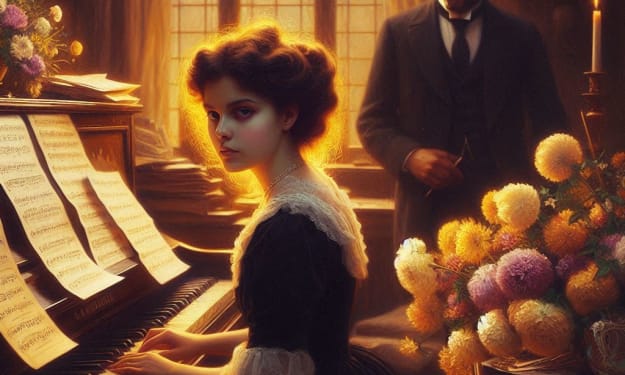
Franz Liszt and Countess Marie d'Agoult. AI-Generated.
In the salons of 19th-century Paris, a chance encounter between Franz Liszt, the renowned Hungarian composer and Countess Marie d'Agoult, a beautiful and intelligent French aristocrat, would spark a relationship that would be marked by passion, jealousy and artistic inspiration. Their tumultuous love affair would leave an indelible mark on Liszt's music and legacy, and remain one of the most fascinating stories in the history of classical music. It was the year 1833, and Liszt, then 22 years old, had just arrived in Paris, seeking to establish himself as a composer and pianist. Countess d'Agoult, 27 years old, was a member of the French nobility, known for her beauty, intelligence, and strong will. Their meeting was nothing short of fate, with Liszt being immediately drawn to the Countess's charms. Their relationship was intense and passionate, with Liszt and the Countess sharing a deep love of music, literature and art. They would often spend hours discussing the latest works of Victor Hugo, Honoré de Balzac and other prominent writers of the time. The Countess, who was also a talented writer, would often provide Liszt with inspiration and feedback on his compositions. But their relationship was not without its challenges. Liszt's jealousy and possessiveness would often lead to fierce arguments and reconciliations. The Countess, who was also known for her strong temper, would often retaliate against Liszt's accusations, leading to a cycle of tension and drama. Despite these challenges, Liszt and the Countess's love for each other only grew stronger. They had three children together, including Cosima, who would later marry Richard Wagner. The Countess would often accompany Liszt on his concert tours, providing him with emotional support and inspiration. The Countess's influence on Liszt's music was undeniable. She would often provide him with ideas and inspiration for his compositions, and her own literary talents would influence the librettos of his operas. Liszt's music, in turn, would provide the Countess with a source of comfort and inspiration, helping her to cope with the challenges of their tumultuous relationship. Today, the story of Franz Liszt and Countess Marie d'Agoult serves as a testament to the power of love and art to transcend even the most challenging of circumstances. Their relationship, marked by passion, jealousy and artistic inspiration, continues to fascinate audiences around the world and remains an integral part of the history of classical music. The Legacy of Liszt and the Countess Despite the challenges they faced, Liszt and the Countess's relationship had a profound impact on the world of classical music. Liszt's music, inspired by the Countess's beauty and intellect, continues to be celebrated for its passion, innovation, and technical brilliance. The Countess, too, left her mark on the world of music. Her literary talents and her influence on Liszt's compositions helped to shape the course of classical music history. Her legacy extends beyond her relationship with Liszt, and she remains an important figure in the history of French literature and music. In the years following their separation, Liszt continued to compose some of his most iconic works, including the "Piano Sonata in B minor" and the "Mephisto Waltz." The Countess, meanwhile, dedicated herself to raising their children and pursuing her literary career. Despite their tumultuous past, Liszt and the Countess remained in contact until the end of their lives. The Countess passed away on March 5, 1876, and Liszt followed her on July 31, 1886. They are buried together in the Bayreuth Stadtfriedhof, a testament to the enduring power of their love and their legacy. Today, the story of Franz Liszt and Countess Marie d'Agoult continues to inspire audiences around the world. Their passionate and tumultuous relationship serves as a reminder of the power of love and art to transcend even the most challenging of circumstances.
By Henry Lucyabout a year ago in History
Giuseppe Verdi and Giuseppina Strepponi. AI-Generated.
In the picturesque town of Busseto, Italy, a chance encounter between Giuseppe Verdi, the renowned composer and Giuseppina Strepponi, a talented soprano, would spark a relationship that would last a lifetime. Their bond, marked by love, loss and artistic partnership, would inspire some of Verdi's most iconic works and leave an indelible mark on the world of opera. It was the year 1839 and Verdi, then 26 years old, had just arrived in Milan, seeking to establish himself as a composer. Strepponi, 29 years old, was already an established soprano, known for her powerful voice and captivating stage presence. Their meeting was nothing short of fate, with Verdi being immediately drawn to Strepponi's talent and beauty. Their relationship was intense and passionate, with Verdi and Strepponi sharing a deep love of music and art. They would often spend hours discussing literature, philosophy and music and Verdi would frequently attend Strepponi's performances, marveling at her talent. But their relationship was not without its challenges. Strepponi had a reputation for being difficult and demanding and Verdi's own temper and perfectionism often led to clashes between the two. Additionally, Strepponi's past was marked by scandal and heartbreak, having been abandoned by her previous lover and left to raise their child alone. Despite these challenges, Verdi and Strepponi's love for each other only grew stronger. They eventually married in 1859, and Strepponi became Verdi's closest confidante and artistic partner. She would often provide feedback on his compositions and even helped him to secure performances and commissions. Together, Verdi and Strepponi created some of the most iconic operas of all time, including "La Traviata," "Aida" and "Otello." Strepponi's influence on Verdi's music was undeniable and her own talent and dedication helped to inspire some of Verdi's most memorable heroines. Today, the story of Giuseppe Verdi and Giuseppina Strepponi serves as a testament to the power of love and art to transcend even the most challenging of circumstances. Their relationship, marked by passion, creativity and devotion, continues to inspire audiences around the world and their legacy remains an integral part of the world of opera. The Later Years: A Legacy of Love and Music As the years passed, Verdi and Strepponi's love for each other only grew stronger. They continued to work together, creating some of the most iconic operas of all time. Strepponi's influence on Verdi's music remained undeniable and her own talent and dedication helped to inspire some of Verdi's most memorable heroines. Despite their personal and professional successes, the couple faced numerous challenges in their later years. Verdi's health began to decline and he suffered from a series of strokes that left him increasingly disabled. Strepponi, devoted as ever, cared for him tirelessly, nursing him back to health and supporting him through the darkest of times. Together, they continued to work on Verdi's final operas, including "Falstaff" and "Otello." Strepponi's influence on these works was as significant as ever, and her own talent and dedication helped to bring Verdi's vision to life. Verdi passed away on January 27, 1901, surrounded by Strepponi and their loved ones. Strepponi was devastated by his loss, but she continued to promote Verdi's music and legacy, working tirelessly to ensure that his operas remained a vital part of the classical music repertoire. Strepponi passed away on November 14, 1897, four years before Verdi's death. She was buried in the Cimitero Monumentale in Milan and Verdi was laid to rest beside her after his passing. Today, the legacy of Giuseppe Verdi and Giuseppina Strepponi continues to inspire audiences around the world. Their love story, marked by passion, creativity and devotion, remains an integral part of the world of opera and their music continues to touch the hearts of all who listen. References: [1] "Verdi: A Biography" by Mary Jane Phillips-Matz [2] "Giuseppina Strepponi: A Life of Music and Passion" by Gabriella Carrara
By Henry Lucyabout a year ago in History
Johannes Brahms and Agathe von Siebold. AI-Generated.
In the picturesque town of Göttingen, Germany, a chance encounter between Johannes Brahms, the renowned composer and Agathe von Siebold, a beautiful and talented young singer, would spark a romance that would leave an indelible mark on Brahms' life and music. Though brief, their passion would burn brightly, only to be extinguished by Brahms' own fears and doubts, leaving a lifelong regret that would haunt him forever. It was the year 1858 and Brahms, then 25 years old, had just arrived in Göttingen, seeking refuge from the chaos of his life in Hamburg. Agathe, 23 years old, was a member of the local nobility, with a voice that was as beautiful as it was rare. Their meeting was nothing short of fate, with Brahms being immediately smitten by Agathe's charms. Their romance was intense and all-consuming, with Brahms pouring out his heart and soul to Agathe. He would often take her on long walks, discussing literature, philosophy, and music. Agathe, in turn, would inspire Brahms' creativity, encouraging him to pursue his artistic vision. But despite the passion that burned between them, Brahms' fears and doubts began to surface. He was hesitant to commit to a relationship, fearing that it would stifle his artistic freedom. Agathe, sensing Brahms' hesitation, began to feel uncertain about their future together. The turning point came when Brahms, in a moment of panic, rejected Agathe's proposal of marriage. Agathe, heartbroken and humiliated, ended their relationship, leaving Brahms alone and regretful. The aftermath of their breakup was marked by a period of intense creativity for Brahms. He poured his emotions into his music, composing some of his most iconic works, including the "German Requiem" and the "Violin Concerto". Despite his artistic success, Brahms never forgot Agathe, and the regret of losing her would haunt him for the rest of his life. He would often speak of her to his friends and family, remembering the passion and love they had shared. Today, the story of Johannes Brahms and Agathe von Siebold serves as a testament to the power of love and regret to shape our lives and art. Though their romance was brief, its impact on Brahms' music and legacy is still felt today. The Enduring Legacy of Brahms and Agathe The story of Johannes Brahms and Agathe von Siebold is a poignant reminder of the power of love and regret to shape our lives and art. Though their romance was brief, its impact on Brahms' music and legacy is still felt today. Brahms' music is characterized by its complexity, depth and emotional intensity. His works, such as the "German Requiem" and the "Violin Concerto," are considered some of the greatest masterpieces of classical music. The passion and emotion that Brahms poured into his music were deeply influenced by his relationship with Agathe. Agathe, too, left her mark on the world of music. Though she never pursued a career as a singer, her influence on Brahms' music is undeniable. Her beauty, intelligence and passion inspired Brahms to create some of his most iconic works. The legacy of Brahms and Agathe extends far beyond their music. Their story serves as a reminder of the power of love and regret to shape our lives. It is a testament to the enduring power of art to express the deepest emotions of the human experience. Today, the town of Göttingen, where Brahms and Agathe first met, is a pilgrimage site for music lovers from around the world. Visitors can walk the same streets where Brahms and Agathe strolled, hand in hand, discussing literature, philosophy, and music. The story of Johannes Brahms and Agathe von Siebold is a timeless tale of love, loss, and the enduring power of art. It is a reminder that even the briefest of romances can leave an indelible mark on our lives and our art. References: [1] "Brahms: A German Requiem" by Michael Musgrave [2] "The Brahms Biography" by Malcolm MacDonald [3] "Göttingen: A City of Music and Literature" by Hans-Joachim Hinrichsen
By Henry Lucyabout a year ago in History
Richard Wagner and Mathilde Wesendonck. AI-Generated.
In the picturesque Swiss town of Zurich, a chance encounter between Richard Wagner, the renowned German composer and Mathilde Wesendonck, the beautiful and intelligent wife of poet Otto Wesendonck, would spark a relationship that would change the course of Wagner's life and art forever. Their bond, though intense and passionate, would remain platonic, yet inspire some of Wagner's most iconic works. It was the year 1852 and Wagner, then 39 years old, had just arrived in Zurich, seeking refuge from the tumultuous politics of Dresden. Mathilde, 10 years his junior, was a member of the wealthy and influential Wesendonck family, known for their patronage of the arts. Her husband, Otto, was a successful businessman and poet, who would later become Wagner's benefactor and close friend. The meeting between Wagner and Mathilde was nothing short of fate. They were introduced at a dinner party hosted by the Wesendoncks and from that moment on, they were inseparable. Mathilde, with her striking beauty, sharp intellect and passion for art, captivated Wagner, who was struggling to find inspiration for his next great work. Their relationship was intense, with Wagner pouring out his heart and soul to Mathilde, who listened with empathy and understanding. He would often take her on long walks, discussing literature, philosophy and music. Mathilde, in turn, would inspire Wagner's creativity, encouraging him to pursue his artistic vision . The result of their collaboration was nothing short of extraordinary. Wagner's famous opera, "Tristan und Isolde," was inspired by his relationship with Mathilde. The opera's themes of love, passion and sacrifice mirrored the intense emotions Wagner felt for Mathilde, yet could never express physically. Despite the platonic nature of their relationship, rumors of an affair began to circulate, causing tension between Wagner and Otto Wesendonck. The situation became increasingly complicated, with Wagner's dependence on the Wesendoncks' financial support creating a sense of obligation and guilt. In 1858, Wagner was forced to flee Zurich, leaving behind Mathilde and the Wesendoncks. The separation was devastating for both Wagner and Mathilde, who continued to exchange letters, pouring out their hearts to each other. Today, the relationship between Richard Wagner and Mathilde Wesendonck remains a fascinating and complex chapter in the history of music and art. Their bond, though platonic, inspired some of Wagner's most iconic works, and continues to captivate audiences with its intensity and passion. The Legacy of Wagner and Wesendonck The relationship between Wagner and Wesendonck may have been platonic, but its impact on Wagner's music was undeniable. Mathilde's inspiration can be heard in the soaring melodies and intense emotions of "Tristan und Isolde," which premiered in 1865 to great acclaim. Wagner's music was not the only area where Mathilde's influence was felt. She also played a significant role in promoting Wagner's work, using her social connections to introduce his music to a wider audience. Despite the challenges and controversies that surrounded their relationship, Wagner and Mathilde remained close friends until the end of their lives. Mathilde continued to support Wagner's work, even after his death in 1883. Mathilde's legacy extends far beyond her relationship with Wagner. She was a talented poet and writer in her own right, and her work was widely admired by the literary circles of her time. Today, the Wesendonck House in Zurich, where Wagner and Mathilde spent countless hours discussing art and music, is a museum dedicated to the life and work of Richard Wagner. Visitors can see the very rooms where Wagner composed some of his most famous works and even view some of the original manuscripts and letters exchanged between Wagner and Mathilde. The story of Richard Wagner and Mathilde Wesendonck serves as a testament to the power of art to transcend even the most complex and challenging of relationships. Their bond may have been platonic, but its impact on the world of music and art is still felt today. References: [1] "Richard Wagner: A Life in Music" by Martin Geck [2] "Mathilde Wesendonck: A Life of Inspiration" by Eva Rieger [3] "The Wesendonck House Museum" official website
By Henry Lucyabout a year ago in History
Gustav Mahler and Alma Schindler. AI-Generated.
In the vibrant city of Vienna, a chance encounter between Gustav Mahler, the renowned Austrian composer and Alma Schindler, a beautiful young socialite, would spark a whirlwind romance marked by intense passion, intellectual debates, and personal struggles. Their love story, though tumultuous, would leave an indelible mark on the world of music and art. Alma Schindler, born on August 31, 1879, was the daughter of a respected landscape painter and a singer. She was a talented composer in her own right, having started composing at the age of eight Gustav Mahler, 19 years her senior, was the director of the Vienna State Opera, where he had introduced many innovations since 1897. Their meeting in 1901 would set off a chain of events that would change their lives forever. Their romance was intense and all-consuming, with Mahler proposing to Alma just a month after meeting her. They married in 1902 and Alma became Mahler's muse, inspiring some of his most iconic works. However, their relationship was not without its challenges. Mahler's demands for Alma to abandon her own composing career created tension and Alma's desire for intellectual stimulation and independence often put her at odds with Mahler's traditional views on women. Despite these challenges, the couple shared a deep passion for music and art. Mahler would often take Amla on long walks, discussing literature, philosophy and music. Alma, in turn, would inspire Mahler's compositions, including his iconic Fifth Symphony, which he dedicated to her. Tragedy struck in 1907 when their young daughter, Maria, died of scarlet fever. Mahler was devastated and the loss would haunt him for the rest of his life. Alma, too, was grief-stricken, and the couple's relationship began to fray. In 1910, Alma began an affair with the young architect Walter Gropius, which would eventually lead to the breakdown of her marriage to Mahler. Mahler, sensing his marriage was crumbling, sought advice from Sigmund Freud in 1910. Gustav Mahler passed away on May 18, 1911, leaving Alma a widow at just 31 years old. Though their marriage had been tumultuous, Alma would go on to champion Mahler's music, ensuring his legacy lived on. Alma's life after Mahler was marked by personal struggles and artistic pursuits. She married Walter Gropius in 1915, but their marriage ended in divorce in 1920. She later married Franz Werfel, with whom she fled Austria in 1938 to escape the Nazi occupation. Today, Alma Mahler-Werfel is remembered not only as the muse and wife of Gustav Mahler but also as a talented composer and artist in her own right. Her legacy serves as a testament to the power of passion, intellect and creativity to transcend even the most tumultuous of lives. Alma Mahler's life was a complex web of love, loss and artistic expression. Her marriage to Gustav Mahler was marked by intense passion, but also intellectual debates and personal struggles. Mahler, 19 years her senior, was a renowned composer and director of the Vienna State Opera. He was smitten with Alma, but their relationship was tumultuous, with Mahler demanding she abandon her own composing career. Alma's artistic ambitions were stifled and she became Mahler's muse, inspiring some of his most iconic works, including his Fifth Symphony. The famous Adagietto movement is a love letter to Alma, with musical messages woven throughout the score. However, their marriage was also marked by tragedy, including the loss of their young daughter, Maria, who died of scarlet fever in 1907. Despite the challenges, Alma remained a charismatic figure, enchanting artistic men with her wit, intellect and musical talent. Her relationships with men like Gustav Klimt, Alexander von Zemlinsky and Walter Gropius were marked by intense passion and intellectual debates. Throughout her life, Alma struggled with her own artistic identity, torn between her desire to compose and her role as a muse and supporter of her husband's music. Her legacy is complex, with some viewing her as a female incarnation of inspiration and others as a domineering and sex-crazed figure. Today, Alma Mahler's music is being rediscovered, with 17 of her songs known to have survived. Her life serves as a testament to the power of love, art and intellectual curiosity, despite the challenges and controversies that surrounded her.
By Henry Lucyabout a year ago in History
"America's Biggest Tomb Treasure"
The Forgotten Inheritance: The Chronicles of America's Largest Tomb Riches Over the course of history, humanity has been fascinated by the enchantment of concealed fortunes buried beneath the ground, secured within ancient graves, and enigma-laden. The United States, though comparatively young in its historical narrative relative to other cultures, possesses its own collection of mythical tomb riches. From Indigenous American burial mounds to the legendary treasures of buccaneers and conquerors, the pursuit of America’s largest tomb riches has traversed centuries, leaving a legacy of discovery, folklore, and fascination.
By Say the truth about a year ago in History
"Treasure of the Amazon"
The Concealed Wealth of the Amazon: A Chronicle of Fabled Treasures The Amazon rainforest, frequently dubbed the "lungs of the Earth," has captivated explorers, scientists, and treasure seekers for centuries. Beneath its thick canopy and alongside its sinuous rivers exists the potential for one of the globe’s most legendary undiscovered treasures. The immense scale, enigma, and historical significance of the Amazon have given rise to narratives of substantial riches concealed deep within this tropical wilderness. From ancient indigenous relics to gold and gemstones believed to be lost in the jungle, the wealth of the Amazon continues to be one of history’s most enthralling enigmas. The Legend of El Dorado One of the most renowned myths associated with the Amazon is that of El Dorado, the legendary city of gold. Spanish conquistadors in the 16th century, enticed by tales of boundless wealth, initiated explorations into the Amazon searching for this mythical city. El Dorado was said to be governed by a golden monarch who adorned his body in gold dust before cleansing it in a sacred lake. However, despite years of searching, the city of gold was never located, fostering speculation that its treasures may still be interred somewhere in the depths of the rainforest. The Vanished City of Z Another lasting Amazonian enigma is the narrative of the Lost City of Z, popularized by British explorer Percy Fawcett. In the early 20th century, Fawcett believed he had uncovered evidence of an ancient, advanced civilization concealed deep within the Amazon basin. He undertook numerous expeditions in pursuit of this lost city, convinced that it harbored vast treasures, including gold, precious gems, and ancient relics. In 1925, Fawcett and his expedition team disappeared without a trace, further enhancing the allure and peril of the Amazon’s concealed riches. Ancient Indigenous Relics Long before European explorers ventured into the Amazon, indigenous civilizations thrived there. Archaeological findings, such as pottery, tools, and ceremonial objects, indicate that these ancient societies possessed advanced knowledge and resources. Some legends recount indigenous treasures hidden in sacred locations to safeguard them from invading forces. These relics could possess significant historical and cultural importance, illuminating the rich heritage of the Amazon’s earliest inhabitants. Natural Resources: Gold, Diamonds, and Rare Minerals The Amazon is not only the realm of myths and legends; it is also abundant in natural resources. Gold and diamond deposits have been discovered in various regions of the rainforest, and illicit mining operations have been attracted to the area in search of these valuable materials. Although much of this wealth has been extracted unlawfully and at considerable environmental cost, it is believed that untapped reserves of gold, diamonds, and other rare minerals remain concealed beneath the jungle floor. Challenges of Discovering the Wealth Notwithstanding the attraction of the Amazon’s concealed riches, uncovering treasure in this expansive and isolated wilderness poses significant challenges. The thick forest, severe climatic conditions, and perilous fauna render exploration hazardous. Furthermore, the possibility of ailments, such as malaria, along with the menace of illegal mining operations augment the risks encountered by contemporary treasure seekers. Contemporary Expeditions and Discoveries In recent times, progress in technology, such as satellite imagery and LiDAR (Light Detection and Ranging), has enabled new approaches to exploring the Amazon. These instruments have unveiled the remnants of ancient cultures, including geometric earthworks and roadway systems, indicating that the Amazon may have once supported flourishing, intricate societies. These findings have stimulated speculation that additional treasures, both natural and anthropogenic, may yet be concealed beneath the jungle's exterior. The Authentic Treasure of the Amazon While the notion of discovering gold, diamonds, and historical artifacts is undeniably appealing, many contend that the genuine treasure of the Amazon resides in its unmatched biodiversity. The rainforest harbors innumerable species of flora, fauna, and insects, many of which remain undiscovered. The Amazon’s natural assets, including medicinal plants with the ability to heal ailments, embody a type of wealth that could benefit all humanity. Safeguarding the Amazon’s Heritage As the quest for the Amazon’s concealed treasures persists, it is crucial to harmonize exploration with conservation efforts. The Amazon is pivotal in regulating the global climate and supporting biodiversity, and its conservation is essential for future generations. Initiatives to protect the rainforest and its indigenous populations must occur concurrently with any efforts to reveal its hidden fortunes. Conclusion The Amazon rainforest endures as one of the planet’s final great frontiers, a realm where history, myth, and natural splendor intertwine. Irrespective of whether the legendary treasures of El Dorado or the Lost City of Z are ever discovered, the Amazon’s true riches are found in its profound history, cultural legacy, and ecological significance. The pursuit of treasure in the Amazon transcends mere gold and gemstones; it encompasses the revelation of the secrets of a land that has enthralled human imagination for centuries.
By Say the truth about a year ago in History
"The biggest Riches: The Greatest Treasure Discoveries in History"
The Greatest Treasures Unearthed in History: A Journey of Riches and Legends Throughout history, humanity has been captivated by the allure of hidden treasures. From ancient civilizations that buried their wealth to protect it from enemies, to shipwrecks lying at the bottom of the oceans, treasure discoveries have sparked imagination, greed, and fascination. Some of these finds have reshaped our understanding of history, revealing the culture, trade, and craftsmanship of past civilizations. Let us explore some of the greatest treasure finds in history, their origins, and their estimated worth. 1. The Staffordshire Hoard (England, 2009) Estimated Value: $4.3 Million Discovered by an amateur metal detectorist, Terry Herbert, in a farmer's field, the Staffordshire Hoard is the largest collection of Anglo-Saxon gold and silver ever found. The hoard contains over 3,500 items, including intricately designed sword hilts, gold crosses, and decorative armor. Dating back to the 7th century, the treasure provides valuable insights into the warrior culture of early medieval England. Scholars believe it may have been buried to protect it from raiding forces during a time of political unrest. 2. The Dead Sea Scrolls (Qumran Caves, 1947) Historical Significance: Priceless While not a treasure in terms of gold and jewels, the discovery of the Dead Sea Scrolls is one of the most important archaeological finds in history. Found in a cave near the Dead Sea, these ancient manuscripts include some of the earliest known copies of the Hebrew Bible. Dating back to the 3rd century BCE, they provide invaluable insights into ancient Judaism and the origins of Christianity. The scrolls were hidden in the caves to protect them during the Roman occupation of Judea. 3. The Nuestra Señora de Atocha (Florida Keys, 1985) Estimated Value: $400 Million
By Say the truth about a year ago in History
The Elamites
Beneath the passage of time lies the ancient Elamites, one of history's most intriguing civilizations. Thriving in the rugged highlands of the Iranian plateau, they exerted influence that extended well beyond their own territory, significantly impacting the cultural and political dynamics of Mesopotamia and adjacent regions. However, despite their importance, the Elamites often remain eclipsed by their more renowned neighbors—the Sumerians, Babylonians, and Assyrians.
By A Históriaabout a year ago in History
Why Did Hitler Hate Jews?
In the context of the events of World War I, World War II and in particular the genocide, the Holocaust, in which Hitler murdered six million Jews, Hitler’s hatred of Jews also played a major role. Nazi ideology -- which drew on personal, political and social factors -- included his own anti-Semitic beliefs. This piece looks at the roots and causes of Hitler’s hatred for Jews and how it led to one of the darkest periods in history.
By Lightbringer about a year ago in History