World History
The Turbulent Love of Tchaikovsky . AI-Generated.
In the realm of classical music, few composers have left an indelible mark like Pyotr Ilyich Tchaikovsky. His iconic works, such as "Swan Lake" and "1812 Overture," continue to mesmerize audiences worldwide. Yet, behind the brilliance of his music lay a tumultuous personal life, marked by a passionate and ill-fated marriage to a former student, Antonina Milyukova. *A Chance Encounter* It was the year 1877 and Tchaikovsky, then 37, was a rising star in the Russian musical scene. Antonina Milyukova, a young and talented pianist, had been one of his students at the Moscow Conservatory. Their initial encounter was unassuming, but the seeds of a complicated and all-consuming relationship had been sown. Tchaikovsky was immediately drawn to Antonina's passion and dedication to music. She, in turn, was captivated by his genius and charismatic personality. As their relationship blossomed, they found themselves lost in conversation, discussing music, literature and philosophy for hours on end. *A Whirlwind Romance* As the months passed, Tchaikovsky and Antonina's romance grew more intense. They would take long walks through the Moscow countryside, hand in hand, talking about their dreams and aspirations. Tchaikovsky was deeply in love, and Antonina was equally smitten. Their friends and family were shocked by the rapid development of their relationship. Tchaikovsky's brother, Modest, was particularly concerned, citing Antonina's lack of social standing and her limited musical talent. However, Tchaikovsky was undeterred, convinced that he had found his soulmate in Antonina. *A Hasty Marriage* Despite the reservations of those around them, Tchaikovsky and Antonina decided to marry in July 1877. The union was marked by a mix of euphoria and apprehension. Tchaikovsky's family, in particular, was concerned about Antonina's suitability as a partner for the brilliant composer. The wedding was a small, intimate affair, with only close friends and family in attendance. Tchaikovsky was overjoyed, believing that he had found his perfect match in Antonina. However, the seeds of doubt had already been sown, and the couple's happiness would be short-lived. *A Troubled Union* As the months passed, the marriage began to fray. Antonina's possessiveness and jealousy clashed with Tchaikovsky's need for creative freedom and solitude. The couple's arguments grew more frequent and intense, with Tchaikovsky often feeling suffocated by Antonina's demands. Tchaikovsky's music became increasingly melancholic, reflecting the turmoil that was brewing in his personal life. His iconic ballet, "Swan Lake," was composed during this period, its haunting melodies and tragic storyline echoing the despair that was growing in his heart. *A Heartbreaking Separation* In 1878, just over a year after their marriage, Tchaikovsky and Antonina separated. The breakup was a devastating blow to both parties, with Tchaikovsky pouring his heartache into his music. The composer's friends and family breathed a collective sigh of relief, but Tchaikovsky's personal life would never be the same. The separation was marked by a series of bitter and emotional letters, with both parties accusing each other of betrayal and heartlessness. Tchaikovsky was particularly devastated, feeling that he had lost his muse and his soulmate. *A Legacy of Music and Heartache* Tchaikovsky's marriage to Antonina may have been short-lived, but its impact on his music and personal life was profound. The composer's subsequent works, including his iconic ballets and symphonies, would be forever tinged with the melancholy and longing that characterized his tumultuous relationship with Antonina. Tchaikovsky's music became increasingly introspective, reflecting the pain and heartache that he had endured. His iconic Symphony No. 6, "Pathetique," was composed during this period, its haunting melodies and tragic finale echoing the despair that had consumed him. *Conclusion* The story of Tchaikovsky and Antonina serves as a poignant reminder that even the most brilliant and creative minds can be vulnerable to the complexities and challenges of love. Though their marriage was marked by passion and heartache, it ultimately gave rise to some of the most sublime and enduring music in human history. Tchaikovsky's legacy continues to inspire and captivate audiences worldwide, a testament to the power of music to transcend time and circumstance. His story serves as a reminder that even in the darkest moments, there is always the potential for creativity and transformation. As we reflect on the turbulent love of Tchaikovsky, we are reminded that the human experience is complex and multifaceted.
By Henry Lucyabout a year ago in History
The Northern Frontier District
Days after independence, the North-Eastern region of Kenya threatened to secede and join Somalia. The high Somali population in the area, marginalization during colonial times and the dream of an all-Somali republic fueled this agitation for secession. The Kenyan government under Jomo Kenyatta would go on to fight a prolonged war with the resident Cushite tribes punctuated by, war crimes, massacres and unprecedented amounts of sexual violence that have had effects on the region to this day.
By HINGES OF TIMEabout a year ago in History
Unveiling the Andronovo Enigma
The expansive and mysterious continent of Asia has historically served as a foundation for numerous civilizations, influenced by its varied landscapes and climates. Among the diverse groups that roamed its territories, the Andronovo culture is notable for its significant impact during the Bronze Age. Originating in the Eurasian steppes around 2000 BCE, this culture profoundly influenced the historical trajectory of the region, contributing to the evolution of both nomadic and settled communities. But who exactly were the Andronovo people? What was their way of life, and what enduring legacy did they create?
By A Históriaabout a year ago in History
The Ingenious Escapes of Yoshi Shiratori: Japan’s Unbreakable Anti-Hero
Picture a prison break, and your mind might conjure up scenes of a frantic inmate sawing through cell bars, a spotlight slicing through the night as fugitives scale a towering wall, or perhaps a secret tunnel concealed behind a vintage movie poster. What you probably wouldn’t imagine is a steaming bowl of miso soup as the key to freedom. Yet, that’s precisely how Yoshi Shiratori, a cunning Japanese escape artist, broke out of the infamous Abashiri Prison-an exploit that marked just one of his four daring escapes between 1936 and 1947. Each getaway was a testament to his resourcefulness, resilience, and sheer audacity.
By KWAO LEARNER WINFREDabout a year ago in History
The Rich History of Sri Lanka: A Land of Ancient Treasures and Cultural Marvels. AI-Generated.
The Affluent History of Sri Lanka: A Journey Through Time Sri Lanka, an island nation in the Indian Ocean, has a history that spans bags of years. From its age-old civilizations to colonial aphorism and independence, the country has accomplished arresting cultural and actual transformations. Its cardinal area fabricated it a hub for trade, a melting pot of assorted influences, and a acreage of abundant acceptation in South Asian history. Ancient Sri Lanka and Aboriginal Civilization The age-old affirmation of animal adjustment in Sri Lanka dates aback to about 125,000 years ago, with aged cavern citizenry accepted as the Balangoda Man. The island's recorded history begins with the accession of the Indo-Aryans from North India in the 6th aeon BCE, who accustomed the Sinhalese civilization. One of the age-old and best cogent kingdoms was Anuradhapura, founded in the 4th aeon BCE. This commonwealth flourished for over a millennium, acceptable a above centermost of Buddhism afterwards Emperor Ashoka of India beatific his son Mahinda and babe Sanghamitta to acquaint the adoration in the 3rd aeon BCE. The architecture of massive stupas, adult irrigation systems, and the angelic Bodhi Timberline (a filly from the aboriginal timberline beneath which Buddha accomplished enlightenment) caked Anuradhapura's religious and cultural importance. The Acceleration and Fall of Polonnaruwa After again South Indian invasions, the Anuradhapura Commonwealth fell in the 10th aeon CE, arch to the acceleration of Polonnaruwa as the abutting abundant kingdom. Polonnaruwa became a acceptable burghal with avant-garde infrastructure, including all-inclusive reservoirs, temples, and palaces. King Parakramabahu I (1153–1186 CE) is advised one of Sri Lanka's greatest rulers, accepted for his aggressive prowess, bread-and-butter policies, and irrigation projects that adapted the island into a affluent nation. Foreign Invasions and European Colonization Sri Lanka faced assorted invasions from South Indian kingdoms, decidedly the Chola Empire. The island saw alternate ascendancy by the Tamil Chola absolutism afore Sinhalese kings reclaimed the throne. However, centralized conflicts and alien threats connected to abate the built-in kingdoms. By the 16th century, Sri Lanka bent the absorption of European powers. The Portuguese accustomed in 1505, appearance the alpha of colonial rule. They controlled the littoral regions and adapted abounding locals to Christianity. The Dutch took over in the 17th century, advancement ascendancy over barter and administering while acceptance the absolute Kandyan Commonwealth to survive in the axial highlands. In 1796, the British accustomed and gradually took over the island, absolutely addition it in 1815 afterwards acquisition the aftermost Sinhalese kingdom, Kandy. The British renamed the island Ceylon, broadcast tea plantations, congenital anchorage and railways, and chip it into the all-around economy. However, they additionally brought socio-political changes that sowed the seeds of indigenous tensions. Sri Lanka’s Road to Independence The aboriginal 20th aeon saw ascent nationalist movements advocating for self-rule. Influential abstracts like Anagarika Dharmapala and political leaders such as D.S. Senanayake played key roles in the ability movement. On February 4, 1948, Sri Lanka (then Ceylon) acquired ability from Britain, with Senanayake acceptable the aboriginal Prime Minister. Post-independence Sri Lanka initially accomplished political adherence and bread-and-butter growth, but built-in indigenous tensions amid the Sinhalese majority and Tamil boyhood escalated over the years. Civil War and Modern Challenges From 1983 to 2009, Sri Lanka endured a barbarous civilian war amid the government and the Liberation Tigers of Tamil Eelam (LTTE), a agitator active accumulation angry for an absolute Tamil state. The war acquired immense suffering, bread-and-butter setbacks, and all-embracing apropos over animal rights violations. In 2009, the Sri Lankan aggressive defeated the LTTE, bringing an end to the conflict. Since then, the country has focused on rebuilding its economy, infrastructure, and all-embracing relations, admitting indigenous and political challenges remain. Sri Lanka Today: A Blend of Attitude and Progress Modern Sri Lanka is a advancing capitalism with a affluent cultural heritage. The island is acclaimed for its age-old cities, abundant tea plantations, beauteous beaches, and wildlife. Tourism, agriculture, and barter comedy key roles in its economy. While political and bread-and-butter challenges persist, Sri Lanka continues to antithesis attitude with modernization. Conclusion Sri Lanka’s history is a account of resilience, cultural richness, and cardinal importance. From the amplitude of age-old kingdoms to colonial struggles and post-independence challenges, the island has acquired while application its different identity. As Sri Lanka moves forward, it charcoal a nation acutely abiding in its accomplished yet bent to appearance a affluent future.
By Say the truth about a year ago in History
Zero Corruption: The Hidden Secrets of Japan's Government System and Policies
Zero Corruption: The Hidden Secrets of Japan's Government System and Policies Japan is globally recognized for its advanced technology, disciplined society, and rich cultural heritage. But beyond these, Japan stands out for something truly remarkable—its exceptionally low levels of corruption. Unlike many countries where corruption scandals are commonplace, Japan has maintained a relatively transparent and accountable government system. But how has Japan achieved this? In this video, we will uncover the hidden secrets behind Japan's governance, explore its anti-corruption policies, and understand the cultural and legal frameworks that contribute to its success. Stay with us until the end, and don’t forget to like, share, and subscribe for more eye-opening content! The Reality of Corruption in Japan When people hear "zero corruption," they might assume that Japan is completely free of corruption. However, no country is entirely corruption-free. What sets Japan apart is its consistently high ranking in global transparency indexes. According to Transparency International’s Corruption Perceptions Index, Japan is one of the least corrupt countries in Asia. But why is corruption so minimal compared to other developed nations? The answer lies in a combination of strict laws, deeply ingrained cultural values, and a political system that discourages unethical behavior. Cultural Influence: How Japanese Values Prevent Corruption One of the key reasons behind Japan’s low corruption levels is its strong cultural foundation. Let’s explore some of these cultural values: 1. "Meiwaku" (Avoiding Trouble for Others) In Japanese society, causing trouble for others is highly discouraged. This principle, known as meiwaku, plays a crucial role in government and business ethics. A public official or businessperson involved in corruption is seen as bringing disgrace not only to themselves, but also to their organization and society as a whole. 2. "Gigi" and "Ninja" (Duty and Compassion) Japanese officials are expected to uphold girl (duty) and ninja (compassion). These values emphasize prioritizing public welfare over personal gain, acting as a moral guide against corruption. 3. Public Shaming and Reputation Loss Unlike in some countries where corrupt officials retain influence, in Japan, exposure to corruption often leads to social and professional isolation. The fear of public disgrace serves as a strong deterrent. Government Policies That Keep Corruption in Check Japan has implemented a series of strict laws and policies to ensure transparency and accountability. Some of the most effective measures include: 1. Strict Anti-Bribery Laws Japan enforces some of the world’s strictest anti-bribery laws. The Unfair Competition Prevention Act prohibits Japanese companies from engaging in bribery, both domestically and internationally. Officials caught accepting bribes face severe legal consequences, including hefty fines and imprisonment. 2. Transparent Bureaucracy and Merit-Based Hiring Japan’s government follows a strict merit-based hiring system. Unlike in some countries where political favoritism influences appointments, Japan ensures that civil servants are selected based on qualifications and performance, reducing opportunities for corruption. 3. Political Finance Regulations: The Political Funds Control Law mandates transparency in political donations. Politicians and political parties must publicly disclose their funding sources, preventing illegal campaign financing and under-the-table deals. 4. Independent Oversight and Whistleblower Protection Japan has independent oversight bodies that investigate corruption allegations. Additionally, the Whistleblower Protection Act safeguards employees who report corrupt activities, promoting transparency within organizations. Why Corporate Corruption is Rare in Japan Japan’s corporate sector is known for its ethical business practices. Let’s examine the factors that contribute to this integrity: 1. The "Keiretsu" System Japanese corporations operate under the keiretsu system—a network of interrelated businesses built on long-term trust. This discourages deceitful activities, as companies prioritize stability over short-term personal gain. 2. Compliance Officers in Major Corporations Large Japanese companies employ compliance officers to ensure business operations adhere to legal and ethical standards, actively preventing bribery and corruption. 3. Severe Punishments for Corporate Scandals Japan imposes strict penalties on companies and executives involved in corruption. For instance, the 2011 Olympus Scandal, where executives were held accountable for financial fraud, demonstrated Japan’s commitment to corporate transparency. Challenges and Recent Cases of Corruption Despite its strong governance, Japan is not entirely free from corruption. Some challenges include: Political Scandals: While rare, some politicians have been caught accepting bribes or engaging in unethical deals. However, Japan’s strict legal system ensures swift action, often leading to resignations and prosecutions. Bureaucratic Red Tape: Although Japan’s bureaucracy is efficient, excessive regulations sometimes create opportunities for minor forms of corruption, such as favoritism in awarding contracts. Tokyo 2020 Olympic Bribery Case: Allegations of bribery in the Olympic bidding process surfaced, but authorities took swift action, reinforcing Japan’s strong anti-corruption stance. Japan’s Ongoing Efforts to Enhance Transparency To further improve transparency and accountability, Japan is: • Strengthening whistleblower protection laws. • Increasing digital transparency in public contracts and government spending. • Enhancing international cooperation to combat corruption globally. What Other Countries Can Learn from Japan Japan’s success in minimizing corruption offers valuable lessons for other nations: 1. Strong Legal Framework Strict laws with real consequences prevent corruption from becoming widespread.
By MystiTech Hubabout a year ago in History
Trump Proposes to Assume Control of Ukraine's Nuclear Facilities During Conversation with Zelensky: A Daring Strategy or a Diplomatic Maneuver?
In an unexpected development, former U.S. President Donald Trump is said to have proposed assuming control of Ukraine's nuclear power facilities during a recent conversation with Ukrainian President Volodymyr Zelensky. This suggestion, which has ignited considerable discussion, arises as Ukraine faces the severe repercussions of Russia's persistent invasion. While some interpret Trump's offer as a daring initiative to bring stability to the area, others express skepticism regarding its practicality and the intentions behind it.
By Refayat Aminabout a year ago in History
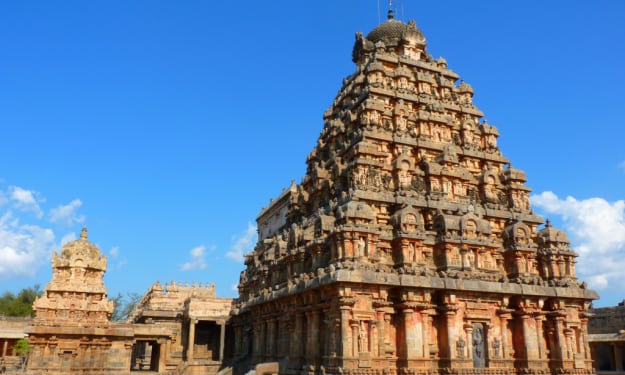
Sacred Offerings and Prayers at Kamakshi Ambal Temple: What They Mean and Why They Matter
Introduction: The Power of Offerings and Prayers in Hindu Worship In Hinduism, offerings and prayers are integral to religious practice and are a way for devotees to express their devotion, gratitude, and seek divine blessings. At Kamakshi Amman Temple in Kanchipuram, Tamil Nadu, the sacred rituals of offerings and prayers have a profound significance, connecting devotees to the divine energy of Sri Kamakshi Ambal, the goddess of compassion, power, and unconditional love.
By Sri Kamakshi Ambal Templeabout a year ago in History