World History
"The Ottoman Legacy: Uncovering the Greatest Treasure in Muslim History". AI-Generated.
The Concealed Treasures of Islam: Revealing the Most Significant Wealth in Muslim History Throughout Islamic chronology, numerous valuables have been amassed, uncovered, and safeguarded by various Muslim dynasties. Notably, the treasury of the Ottoman Empire is distinguished as the most precious and extensive. Featuring relics associated with the Prophet Muhammad, war spoils, royal jewels, and generous offerings from across the Islamic realm, the Ottoman Imperial Treasury remains one of the most remarkable assemblages of Islamic affluence ever gathered. This article examines its historical context, importance, and appraised worth. The Wealthy Heritage of Muslim Civilization From the illustrious period of the Abbasids to the pinnacle of the Ottoman Empire, Islamic civilization has been a nucleus of wisdom, architecture, cultureand substantial riches. Among the myriad treasures that Islam generated or acquired through epochs of conquest, commerce, and diplomacy, one rises above the rest: The Ottoman Imperial Treasury. Currently located in Istanbul's Topkapi Palace, this assemblage transcends a simple exhibition of gold and gemsit epitomizes centuries of Islamic authority, devotion, and distinction. Origins of the Ottoman Treasure The accumulation of treasure commenced in the 14th century as the Ottoman Turks, evolving from a modest Anatolian principality, began to expand into Byzantine and Balkan domains. As they subjugated territories, they absorbed wealth from local sovereigns and collected offerings from allied states and vassals. By the era of Suleiman the Magnificent in the 16th century, the Ottoman Empire had attained its zenith. Istanbul had transformed into not only the political center but also a spiritual and economic nucleus of the Muslim world. Lavish gifts streamed in from Persia, Egypt, India, and even Europe. The treasures also included the spoils of victorious military campaigns, especially against the Safavids and the Habsburgs. The Prophet’s Relics: A Sacred Treasure What distinguishes the Ottoman treasure from other royal hoards is the presence of revered Islamic relics. The Sultans, as Caliphs of the Muslim realm, were guardians of articles believed to have belonged to the Prophet Muhammad: The Prophet’s Mantle (Hırka-i Saadet) His Sword and Bow The Sacred Seal A Hair from His Beard These relics were kept with profound respect, watched over by dedicated Quran reciters who would continuously chant in their vicinity. For many Muslims, these were not merely treasures but sacred artifacts symbolizing their faith and identity. Jewels, Gold, and Gifts In addition to relics, the treasury included ornate weaponry, jewel-encrusted thrones, ceremonial armor, and gold Qurans. One of the most emblematic items is the Topkapi Dagger, an exquisite creation in emerald and gold, signifying Ottoman opulence and artistic genius. Another notable piece is the Spoonmaker’s Diamond, an 86-carat gemstone encircled by numerous smaller diamonds. This treasury also encompasses thousands of ceremonial garments, china from China, manuscripts, and ceremonial bannersmany of which were invaluable gifts from other Muslim monarchs or sultans. Estimated Net Worth While the precise value is challenging to ascertain due to the historical and religious significance of numerous artifacts, the net worth of the Ottoman Imperial Treasure is approximated to surpass $10 billion USD, with certain experts estimating it to be nearer to $20 billion when factoring in the cultural and historical context. The Spoonmaker’s Diamond alone is valued at more than $100 million. The worth of the sacred relics is, naturally, considered immeasurable in monetary terms by devotees. Preservation and Legacy Following the collapse of the Ottoman Empire after World War I, the Republic of Turkey implemented measures to safeguard this treasure, inaugurating Topkapi Palace as a museum in 1924. The Imperial Treasury remains one of the most frequented sections of the palace, drawing millions of visitors each year. More than mere wealth, this collection signifies a link between spiritual reverence and imperial strength. It stands as a testament to a civilization that once bridged East and West, governed three continents, and left an indelible impact on world history. Conclusion The treasure of the Ottoman Empire transcends the simplistic notions of diamonds, gold, and ceremonial items. It embodies a confluence of faith, history, politics, and identityall encompassed within the magnificence of the Islamic world’s most dominant dynasty. Its preservation today attests to the lasting legacy of Islamic civilization, and it remains arguably the greatest treasure ever possessed in Muslim history.
By Say the truth about a year ago in History
2025 Youth & Health: Discover the Fountain of Youth. AI-Generated.
2025 Youth & Health: Discover the Fountain of Youth Looking ahead to 2025, we all want to stay young and healthy. The idea of finding the "fountain of youth" has changed. Now, it's about the newest wellness trends and tech that help us live longer.
By Junayed Ahmedabout a year ago in History
Old Rules
In the heart of the Swat Valley, nestled between mountains and rivers, lay a quiet village named Derai. Known for its beautiful orchards and strong community spirit, Derai was also known for something else: its old rules. These rules were written down over a hundred years ago by the village elders, etched into stone and memorized by every household. They governed everything—from how land was divided to how disputes were settled. The rules forbade things like girls going to school, the use of mobile phones, or any change in farming methods. The villagers called it Riwaj, the sacred tradition. For years, the old rules served the village well. But as the world outside began to change, the youth of Derai began to question them. Among them was a boy named Ayan. At seventeen, Ayan was curious, bold, and smart. He loved reading, especially books about science and technology. His father, Gul Rahman, was a farmer and a firm believer in the old rules. He often warned Ayan, “The old ways are the best ways. Don’t bring trouble by challenging them.” But Ayan couldn’t help himself. One day, Ayan brought home a solar-powered water pump he had built using old parts and some help from YouTube videos. The pump could help the farmers irrigate their land more efficiently, especially during power outages. Excited, he demonstrated it to his father. Gul Rahman was stunned. It worked. The water flowed steadily from the pump, and the fields drank it eagerly. But instead of joy, fear settled on his face. “If the elders see this, they’ll say it’s against the Riwaj,” he warned. “They’ll accuse you of bringing outside influence.” “But Baba,” Ayan replied, “isn’t it better than letting crops die? Isn’t helping the village more important than following old rules blindly?” Gul Rahman had no answer. News of the pump spread quickly, and within days, the village jirga (council) summoned Ayan. The jirga consisted of white-bearded men who sat on carved wooden chairs, with the Riwaj stones laid out before them. The head of the jirga, Haji Meeran, spoke first. “Young man, we heard you have brought something new into our village. A machine that defies tradition. Is this true?” “Yes, Haji Sahib,” Ayan replied respectfully. “But it is not to defy. It is to improve.” Another elder scoffed. “Improvement? Our ancestors survived without machines. So can we.” “But our ancestors also walked for miles to fetch water. Do we still do that?” Ayan asked. “They lit lamps with oil. Should we break our bulbs and go back to darkness?” A silence fell. Ayan continued, “Respecting our traditions doesn’t mean we stop thinking. We can honor the past and still move forward. My invention doesn’t break Riwaj—it saves our land.” Some elders looked at each other. Others frowned. Then Haji Meeran stood up. “The boy speaks with wisdom. Maybe it is time we review the old rules. The world is changing. Perhaps we too must adapt, not abandon our ways, but evolve them.” It was a turning point. For the first time in decades, the jirga agreed to form a small committee of young and old members to review the Riwaj. They decided that rules harming progress or education would be discussed and possibly revised. Girls were slowly allowed to attend the village school. Farmers started adopting modern techniques. Mobile phones were still restricted in some areas, but the wall was cracking. The village began to breathe. Gul Rahman watched his son with pride. “You did what I was afraid to even imagine,” he said one evening. “I only asked questions,” Ayan replied, smiling. “Sometimes, that’s all it takes to start change.” Years later, Derai became known not just for its orchards, but also as a model village in the Swat Valley—where old rules were honored, but not worshipped, and where new ideas were welcomed, not feared. And on one of the original Riwaj stones, a new line was carved:
By Hazrat bilal about a year ago in History
Scientists find evidence that challenges theories of the origin of water on Earth
For decades, scientists have debated how Earth acquired its vast oceans. The prevailing theory suggests that water was delivered by icy comets or asteroids during the planet's early formation. However, new research is challenging this idea, suggesting that Earth may have had water from the very beginning.
By Mahbubul Hasan Masumabout a year ago in History
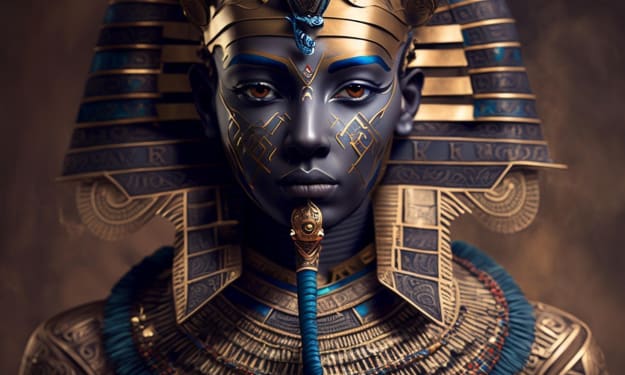
Tutankhamun: The Boy King and the Forgotten Truth of the Sphinx
Tutankhamun: The Boy King and the Forgotten Truth of the Sphinx When Tutankhamun, the boy pharaoh, was discovered in 1922 by Howard Carter, his tomb stunned the world. Sealed for over 3,000 years, it was a time capsule from a forgotten era. Gold, art, and strange symbols filled the chambers. But what the world saw was just the surface.
By The Secret History Of The Worldabout a year ago in History
Akhenaten: The Heretic Pharaoh and the God from the Sun
Akhenaten: The Heretic Pharaoh and the God from the Sun In the golden sands of ancient Egypt, a pharaoh rose who defied the gods, rewrote the spiritual order, and may have unlocked secrets far beyond our world. His name was Akhenaten, and his reign marked one of the most mysterious and radical chapters in Egyptian history. But was his "one god" merely a religious experiment… or something more?
By The Secret History Of The Worldabout a year ago in History
A Genocide Ignored: The World Must Act to Stop Israel’s Assault on Gaza
A Cry for Justice: Humanity Must End the Violence in Gaza On March 18, a new wave of destruction struck Gaza as continuous airstrikes resumed, resulting in the deaths of over 730 Palestinians and injuries to more than 1,300 others within just one week. For countless individuals in Gaza, this latest round of violence is not a standalone event—it is part of a prolonged history of turmoil under an 18-year blockade that has gradually diminished hope, infrastructure, and the very essence of a society striving to endure under siege.
By Mubarak Hossain Akashabout a year ago in History