World History
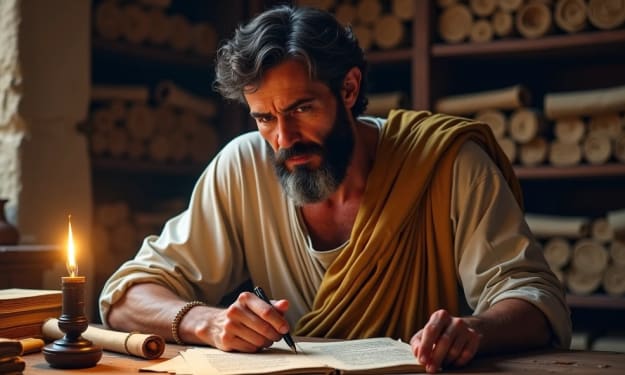
Thucydides of Athens
Thucydides of Athens (circa 460 – circa 400 BCE) is celebrated as one of history's foremost historians, recognized for his meticulous method of documenting historical events. In contrast to earlier historians who frequently intertwined myth with reality, Thucydides aimed to deliver a precise and analytical narrative grounded in evidence and firsthand accounts. His seminal work, The History of the Peloponnesian War, continues to be a cornerstone in the fields of historiography, political science, and military strategy.
By A Históriaabout a year ago in History
NASA’s Oldest Astronaut Don Pettit Set to Return to Earth After Historic Mission . AI-Generated.
After a historic six-month stint aboard the International Space Station (ISS), NASA astronaut Don Pettit, 69, is getting ready to return to Earth. He is the agency's oldest current astronaut. Over the course of his illustrious career, veteran spacefarer Pettit—who is renowned for his scientific inventiveness and captivating pedagogical outreach—has accumulated 370 days in space. His most recent expedition, which began in late 2024, is evidence of his unwavering enthusiasm for space travel and study. The scientific community and space enthusiasts around the world consider Pettit's contributions to microgravity research, his well-known "Saturday Morning Science" experiments, and his unwavering commitment to advancing human spaceflight—even as he approaches his 70s—as he and his crew prepare for their return trip to Earth. A Legendary Career in Space: When Don Pettit was chosen as an astronaut candidate in 1996, his adventure with NASA officially began. Since then, he has participated in three long-duration ISS flights: Expedition 71/72, which is his current mission, Expedition 30/31 in 2011-2012, and Expedition 6 in 2002-2003. Additionally, in 2008, he was a mission specialist on the STS-126 space shuttle mission. Pettit is an important player in ISS research because of his knowledge of fluid dynamics, combustion science, and materials processing. He has been dubbed the "MacGyver of Space" for his ability to create experiments with commonplace objects on board the station, which has resulted in surprising scientific discoveries. Latest Mission Highlights: Pettit carried out a number of experiments during his most recent visit to the ISS, concentrating on: Microgravity fluid behavior: Researching the behavior of liquids in space to enhance life support and fuel systems. Growing plants in space: Supporting NASA's endeavors to create sustainable food sources for upcoming expeditions to Mars. Microgravity 3D printing: Experimenting with novel manufacturing methods to construct tools and structures in space. Reviving "Saturday Morning Science," a set of unofficial experiments he initially invented during his 2002–2003 mission, was one of his most noteworthy endeavors. Pettit enthralled scientists and the general public by demonstrating difficult physics ideas using straightforward materials like water, food coloring, and spare parts. Age is Just a Number: Pettit’s Endurance in Space: At 69 years old, Pettit has become NASA’s oldest astronaut to undertake a long-duration mission, demonstrating that age should not limit the possibility of space travel. His mental and physical endurance has been a focal point for NASA’s Human Research Program, which studies the impacts of aging in microgravity environments. "Don has performed exceptionally well," stated Dr. Julie Robinson, NASA’s chief scientist for the ISS. "His adaptability, impressive problem-solving abilities, and passion for science make him an invaluable contributor, irrespective of his age." Pettit has consistently downplayed worries about his age, frequently quipping that "experience is the one thing you can’t train for." His fitness routine—which involves daily intensive exercise on the ISS’s treadmill and resistance equipment—has ensured he remains in optimal shape. The Challenges of Long-Duration Spaceflight: Pettit and his fellow crew members are diligently preparing for the challenging return journey as Expedition 72 draws to a close. A SpaceX Dragon capsule is scheduled to bring them back, where they will be taken to NASA's recovery teams before safely sinking into the Atlantic Ocean. Readapting to Earth’s gravity—a process known as reconditioning—will be a key focus. Pettit will undergo thorough medical evaluations, customized physical therapy, and a gradual reintroduction to normal daily activity. NASA's medical team will closely monitor him due to his age, but Pettit has expressed high confidence in his recovery. "I’ve done this a few times before," he quipped. "Remembering that things actually fall when you drop them is the hardest part." After months in microgravity, Pettit knows that regaining strength, balance,.
By Badsha Mondal about a year ago in History
MAUMAU GENERAL'S GRAND RETURN?
47 years after his disappearance, the country rejoiced at the alleged return of the former Maumau General, Stanley Mathenge. He had been invited by the then President Mwai Kibaki who had been sworn into power a few months prior after a journalist had claimed to have found the former guerrilla still in exile in Ethiopia. The new Kibaki regime had signaled a new era of hope and although Mathenge’s return was perceived as yet another good omen, it deteriorated into an embarrassing scandal after the man claiming to be Mathenge turned out to be an Ethiopian farmer.
By HINGES OF TIMEabout a year ago in History
Whispers of the Heart
It was a crisp fall morning when Mahi first noticed him—Amjid, the quiet, mysterious boy from the neighboring class. He sat by himself in the back corner of the campus café, his dark hair slightly tousled, eyes lost in the pages of an old novel. His presence was magnetic, but it wasn’t just his looks that caught Mahi’s attention—it was the way he seemed to be in his own world, a world that somehow felt both distant and inviting. Mahi, on the other hand, was the opposite. Bright, outgoing, with an infectious smile that made people feel like they were the most important person in the room. She had an ease to her, a charm that could make even the grumpiest professor crack a smile. But despite her seemingly perfect life, Mahi often found herself searching for something more, something deeper. She had no idea that the missing piece was about to appear in the form of a quiet stranger with a book. One rainy afternoon, after a particularly grueling history class, Mahi found herself sitting alone at a table in the café. The storm outside had driven most of the students to the library or their dorms, but Mahi liked the solitude of the café when the rain fell—there was something comforting about the gentle tapping of raindrops against the window. As if on cue, Amjid entered the café, his wet jacket clinging to his broad shoulders. He glanced around before spotting Mahi and, to her surprise, made his way toward her. “Is this seat taken?” he asked, his voice deep and soft, yet with an unfamiliar warmth. Mahi shook her head, her heart suddenly racing. “No, not at all. You can sit here.” Amjid smiled faintly, pulling out the chair opposite her. “Thanks,” he muttered, setting his bag down before sliding into the seat. For a moment, neither of them spoke. Mahi couldn’t help but feel a strange pull toward him, a magnetic energy that she couldn’t quite understand. Amjid, too, seemed to be lost in thought, glancing out at the rain as if the storm outside held the answers to the questions in his mind. “What’s your name?” Mahi finally asked, breaking the silence. Amjid turned his gaze back to her, his eyes dark yet kind. “Amjid,” he replied, his voice like a soft melody. “And you?” “Mahi,” she said with a warm smile. “I’ve seen you around a few times. You’re in the literature class, right?” Amjid nodded, his lips curving into a small smile. “Yeah. I’m surprised you noticed me.” Mahi tilted her head slightly, curious. “Why?” “Most people don’t.” He glanced at his book, which was still open on the table. “I’m not exactly… what you’d call ‘social.’” “Sounds like we have something in common,” Mahi said lightly. “I’m not really the ‘let’s go party every weekend’ type either.” That was the beginning of something neither of them expected. What started as casual conversation quickly blossomed into something deeper. They began meeting every day after classes, sitting in the same corner of the café, talking for hours about books, music, dreams, and everything in between. There was an unspoken understanding between them, a bond that grew stronger with every passing day. Amjid’s stoic demeanor slowly unraveled around Mahi. She saw through the quiet exterior to the layers beneath—the tenderness, the vulnerability, the pain he carried. He had suffered loss in his life, a tragedy that had shaped him into the person he was. He often spoke of his mother, who had passed away when he was a child, and the weight of that loss still haunted him. Mahi, in turn, shared pieces of her own life with him—how she had always been the ‘perfect student,’ the girl who was always happy on the outside but sometimes felt lost and empty on the inside. She confided in Amjid like she had never done with anyone else. Their conversations were raw, real, and filled with a depth that neither of them had experienced before. As weeks passed, their bond evolved into something neither could deny. The first time Amjid kissed Mahi, it felt like the world had shifted beneath their feet. It was gentle at first, a soft brushing of lips, but it ignited something inside both of them, a flame that couldn’t be extinguished. From that moment on, their love grew—slowly but surely—into something all-encompassing. They spent late nights studying together, their hands brushing as they passed notes, their laughter echoing through the empty halls of the dorm. Amjid would walk Mahi to her dorm after every date, always holding her hand as if he never wanted to let go. And Mahi? She would rest her head on his shoulder, feeling like she had finally found the place where she belonged. But life, as it often does, had other plans. One rainy evening, just like the one when they first spoke, Mahi and Amjid found themselves walking through the campus park, hand in hand. The air was thick with the scent of rain-soaked earth, and the sound of distant thunder rumbled through the sky. “I have something to tell you,” Amjid said suddenly, his voice low and serious. Mahi looked at him, concern creeping into her chest. “What is it?” she asked, squeezing his hand. Amjid stopped walking, turning to face her. “I’ve been diagnosed with a rare heart condition. The doctors say it’s… terminal.” Mahi’s heart skipped a beat, her mind struggling to process the words. “What do you mean, terminal?” Amjid swallowed hard, his eyes dark with a sadness she had never seen before. “It means I don’t have much time left.” Mahi felt a wave of emotion crash over her. She wanted to scream, to demand that this wasn’t fair, that she couldn’t lose him—not now, not when they had just found each other. But instead, she reached up, cupping his face in her hands. “We’ll fight this together,” she said, her voice trembling but strong. “I don’t care what the doctors say, we’ll make the most of every moment we have.” And they did. They spent every day together, savoring each moment as if it were their last. They traveled to places they had always dreamed of, made memories that would last forever, and loved each other with a passion that transcended time. But despite their efforts, Amjid’s condition worsened, and one fateful night, as Mahi held him in her arms, he took his final breath. Mahi was devastated, lost in a grief so deep it threatened to consume her. But she knew that Amjid would never truly be gone. His love, his presence, would live on in her heart forever. And as she stood at the edge of the campus, looking out over the spot where they had first met, she whispered to the wind, “I’ll carry you with me, always.” Their love, though brief, had been the most beautiful thing either of them had ever known. And even in death, their hearts remained intertwined, forever whispering in the silence of the campus that had brought them together.
By Hassan Ahmadabout a year ago in History
“The Golden Mirage: Unveiling the Legend of El Dorado’s Hidden Palace” . AI-Generated.
The Golden Mirage: Chronicle of the Golden Palace in El Dorado For centuries, the myth of El Dorado, the legendary city of gold concealed deep within South America, has sparked the imagination of explorers, historians, and adventurers. Central to this legend is the Golden Palace, a radiant fortress purportedly decorated entirely with goldits walls, floors, thrones, and even sacred altars. Although no concrete evidence of its existence has ever been discovered, the legacy of the palace continues to cast a golden hue throughout the annals of history. Origins of the El Dorado Legend The narrative of El Dorado stems from the indigenous Muisca populace of contemporary Colombia. “El Dorado,” which translates to “The Gilded One” in Spanish, initially denoted not a metropolis, but a ceremonial rite. According to early Spanish narratives, the Muisca would coat their new leader in gold dust and place him on a raft in Lake Guatavita, where he would present offerings of gold and emeralds to the deities by casting them into the waters. This spectacle of gold captivated the Spanish conquistadors, who perceived the ceremony as an indication of a prosperous kingdom governed by a gilded monarch. As the tale proliferated, the concept of El Dorado evolved from a singular entity into an entire cityor, more ambitiously, a golden empire. The Quest for the Golden Palace Driven by aspirations of wealth and renown, countless expeditions navigated the dense jungles and perilous landscapes of the New World during the 16th and 17th centuries. Conquistadors such as Gonzalo Pizarro, Francisco de Orellana, and Sir Walter Raleigh embarked on treacherous journeys in search of this elusive city. Raleigh was convinced that El Dorado, with its golden palace, was situated near Lake Parime in what is now Venezuela or Brazil. He depicted the city of Manoa, which he asserted gleamed with golden towers and luminous temples. These endeavors, however, were laden with peril. Severe climates, famine, illness, and violent confrontations with indigenous tribes claimed numerous lives. Despite the exorbitant toll, the allure of an extravagant palace, allegedly capable of rivaling any European court, sustained the legend.
By Say the truth about a year ago in History
The Day the World Almost Ended, And How We Dodged Disaster
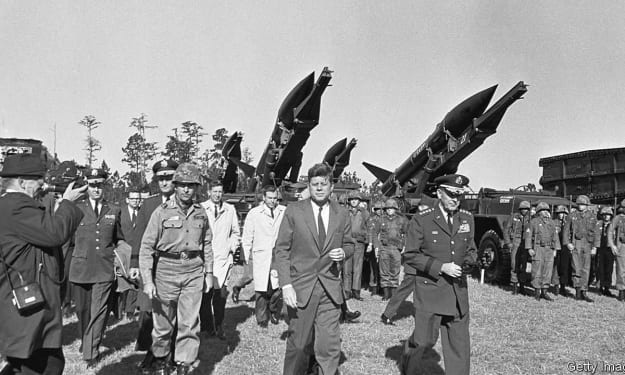
Have you ever lie awake at night wondering how close we’ve come to total annihilation? I’m not talking about asteroids or supervolcanoes—I’m talking about human decisions, split-second choices, and sheer dumb luck that kept us from blowing ourselves to smithereens. Spoiler alert: we're still around. But believe me, the story of how we survived is more bizarre than any Hollywood blockbuster. Let's dive into one of the most horrific times in history—the Cuban Missile Crisis—and see how humanity nearly dodged a nuclear catastrophe.
By ChronoCuratorabout a year ago in History
Beggar thy neighbor, harm thyself: Tariffs like Trump’s come with pitfalls
The phrase "beggar thy neighbor" refers to economic policies that a country adopts to improve its own situation at the expense of others. Tariffs, particularly those aggressively applied in the name of nationalism or economic protection, have long fallen into this category. However, the broader lesson of history is clear: such policies often backfire. The protectionist tariffs implemented during Donald Trump’s presidency, while designed to promote American manufacturing and reduce trade deficits, serve as a modern example of how these measures can ultimately harm not just trading partners, but the very economy they aim to protect.
By Md Soriful Islamabout a year ago in History
"The Billion-Dollar Gorge: Unveiling the History and Net Worth of the Grand Canyon". AI-Generated.
"The Grand Legacy: Investigating the History and Worth of the Grand Canyon" The Grand Canyon, one of the planet's most stunning natural marvels, possesses not only geological significance but also considerable cultural, historical, and economic importance. This article explores the profound history of the canyon, from ancient civilizations to contemporary tourism, and evaluates its extraordinary value in terms of natural resources, tourism income, and ecological significance. The Grand Legacy: Investigating the History and Worth of the Grand Canyon Extending 277 miles in length, up to 18 miles in width, and exceeding a mile in depth, the Grand Canyon is not solely a striking geological formation it is a testament to the might of natural forces and the lasting legacy of time. Sculpted over millions of years by the powerful Colorado River, the Grand Canyon presently stands as one of the most recognizable symbols of natural beauty, adventure, and heritage in the United States and globally. A Journey Through Ancient Time The narrative of the Grand Canyon commenced nearly two billion years ago when ancient rocks, such as Vishnu Schist, were formed deep beneath the planet's crust. The area was once an ocean floor, which underwent numerous uplifts and erosions. Approximately 5 to 6 million years ago, the Colorado River initiated its course, gradually carving its path through layers of rock and sediment. This erosion process produced the intricate landscapes we now admire. Indeed, some rock layers visible in the canyon walls date back as far as 1. 8 billion years, ranking them among the oldest exposed rocks on the planet. This has established the Grand Canyon as a crucial research site for geologists and earth scientists examining the Earth’s history. Indigenous Heritage and Cultural Origins Long before the Grand Canyon transformed into a national park or a tourist hotspot, it served as the home to various Native American tribes. The Ancestral Puebloans (also referred to as Anasazi), who occupied the area over 12,000 years ago, left behind archaeological proof of their culture, including structures and artifacts. Even today, the canyon is regarded as sacred by numerous Native tribes, including the Havasupai, Hualapai, Hopi, and Navajo peoples. Their traditions, narratives, and spiritual ties to the canyon continue to shape its identity and remind visitors that this land possesses a profound and intricate human history. Exploration and Conservation The first documented European to witness the Grand Canyon was Spanish explorer García López de Cárdenas in 1540, but it wasn’t until the 19th century that American explorers and settlers began to systematically map and investigate the region. In 1869, John Wesley Powell led the first successful expedition through the canyon by river, chronicling its grandeur and advocating for its scientific relevance. President Theodore Roosevelt, a fervent proponent of conservation, visited the Grand Canyon in 1903 and subsequently declared parts of it a national monument in 1908. In 1919, it was formally designated as a National Park one of the earliest established within the U. S. National Park Service ensuring its preservation for future generations. The Economic and Ecological Worth The Grand Canyon is not merely a visual spectacle; it is also a substantial economic engine. As reported by the National Park Service, the Grand Canyon National Park attracts over 5 million visitors each year, generating approximately $1. 5 billion annually in tourism-related income, encompassing accommodations, excursions, dining, and retail. When evaluating the canyon's "net worth," one must take into account its: Tourism Revenue: Exceeding $1. 5 billion each year. Ecosystem Services: The canyon's safeguarded ecosystems sustain wildlife, water filtration, and air quality services valued at potentially hundreds of millions. Geological and Scientific Importance: Inestimable, due to its distinctive and ancient rock formations. Cultural and Historical Relevance: Priceless, owing to Native American heritage, historical explorations, and its significance in conservation history.
By Say the truth about a year ago in History