World History
The Platinum River: Legend, Wealth, and the Secrets of a Forgotten Stream. AI-Generated.
The Origins of the Platinum River Legend The legend of the Platinum River traces back to ancient Southeast Asian lore, particularly among tribal groups living along the current borders of Laos, Thailand, and Vietnam. Oral traditions speak of a sacred river, hidden deep in the jungle, whose bed was layered not with sand or stone—but with platinum nuggets, glimmering beneath crystal-clear waters. Local chiefs believed the river was a divine gift, a celestial pathway connecting earth to the heavens. Only the most spiritual shamans or brave warriors could approach it, and even then, only during certain lunar alignments. The river, they believed, was protected by elemental spirits and guarded by natural curses. Colonial Obsession and the Search for the River European colonists in the 19th century, particularly the French during their rule over Indochina, heard these stories and were immediately obsessed. Expeditions were launched in the mid-1800s, including one led by a French nobleman, Count René de Lafarge, who disappeared under mysterious circumstances near the Annamite Range after claiming he had discovered “a silver fire flowing through the jungle.” Though no concrete proof was ever documented, scattered journal entries and field sketches recovered decades later described water that glowed under moonlight and heavy “stone” clumps resembling platinum ore. These documents, now stored in the archives of the National Museum in Paris, are considered one of the few semi-credible clues to the river’s existence. Modern Exploration and Speculation Despite advancements in satellite imaging and geological surveys, the Platinum River has never been conclusively found. This has led many to believe the legend is symbolic—a metaphor for the region's untapped mineral wealth or perhaps a coded tale masking a hidden mine. However, several modern explorers and historians argue differently. Dr. Kumari Veerasamy, a renowned Southeast Asian archaeologist, claims to have satellite data indicating an anomaly consistent with metal-rich sedimentation in central Laos. Her research has drawn international attention, but the Laotian government, citing environmental and cultural concerns, has denied any exploratory permits in the suspected zone. In 2021, a team of independent explorers from Singapore claimed to have discovered traces of platinum-rich sand near a tributary of the Xe Bang Fai River. Their samples, sent to a London-based lab, confirmed the presence of high-purity platinum, though they couldn't prove a direct connection to the legendary river. Net Worth Estimation If the Platinum River does indeed exist as described in ancient texts and early colonial notes, its estimated net worth could be astronomical. Platinum, being rarer than gold and essential for modern electronics, medical devices, and clean energy technologies, trades at around $900 to $1,000 per ounce. Assuming the river stretches 20 km with a sediment depth of just 1 meter, and even a fraction (say 0.5%) of it consists of platinum nuggets or particles, we could be looking at over $30 to $50 billion in recoverable platinum. That would make it one of the most valuable natural sites on Earth—surpassing gold deposits in South Africa or the diamond mines of Siberia. Cultural and Ecological Considerations Beyond its monetary value, the Platinum River holds deep cultural significance. Indigenous communities view the river as sacred, and any exploitation could lead to severe ecological consequences. Platinum mining, especially in riverbeds, is notoriously disruptive to aquatic ecosystems. Thus, any potential discovery must be met with global responsibility—balancing the economic opportunity with cultural preservation and environmental sustainability. Conclusion: Myth or Undiscovered Marvel? The Platinum River remains one of Southeast Asia's greatest unsolved mysteries. Whether it truly exists or is a glittering metaphor passed through generations, its legend continues to inspire curiosity, ambition, and a yearning for discovery. In a world where most frontiers have been charted and mined, the story of a hidden platinum river flowing beneath untouched canopies offers a tantalizing reminder: there may still be treasures left in the world—if not in gold or metal, then in mystery and myth.
By Say the truth about a year ago in History
“The Forgotten Fortune: The Tale of Southeast“The Forgotten Fortune: The Tale of Southeast Asia’s Largest Treasure Discovery” . AI-Generated.
A Sea of Riches Beneath the Waves In 2004, an accidental discovery off the coast of Cirebon, Java, stunned historians and treasure hunters alike. A fisherman reported unusual objects emerging from the seafloor after a powerful current had shifted the sands. What followed was one of the largest and most valuable underwater excavations in Southeast Asian history: the discovery of a 10th-century shipwreck, later known as the Cirebon shipwreck.
By Say the truth about a year ago in History
"Yamashita's Gold: The Elusive Treasure of Imperial Japan". AI-Generated.
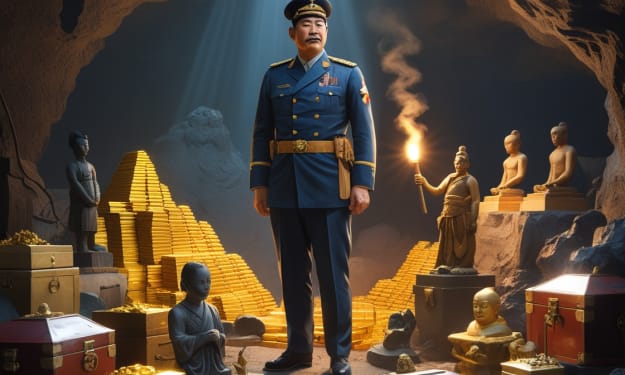
Yamashita’s Gold: The Elusive Treasure of Imperial Japan In the shadowy world of wartime legends and hidden fortunes, few tales are as captivating or controversial as that of Yamashita’s Gold—an alleged treasure trove looted by the Japanese Imperial Army during World War II. Believed to contain billions of dollars' worth of gold, religious relics, and ancient artifacts, this treasure has inspired adventurers, fueled conspiracy theories, and stirred international intrigue for decades. The Origin of the Legend During the early 1940s, the Japanese Empire expanded rapidly across Asia, occupying territories in China, Southeast Asia, and the Pacific. As the Imperial Army invaded countries like the Philippines, Indonesia, Malaysia, and Thailand, they seized national treasures, private wealth, religious artifacts, and gold from central banks. The mastermind behind the systematic plunder was said to be General Tomoyuki Yamashita, a high-ranking officer nicknamed the "Tiger of Malaya." Under his command, looted treasures were transported to the Philippines—Japan’s strategic military base—with the intention of later shipping them back to the Japanese mainland. However, as the tide of the war turned and Allied forces closed in, the Japanese buried the loot in elaborate underground tunnels and caves across the Philippine islands, particularly in Luzon. The Buried Fortune Estimates suggest that the value of Yamashita’s Gold could range from $100 billion to $200 billion in today’s currency. The treasure allegedly included: Golden Buddha statues Gold bars and coins Gemstones and diamonds Cultural relics and religious artifacts Crown jewels of various Asian nations To ensure secrecy, it is said that the Japanese military executed most of the laborers and engineers who built the treasure vaults, preventing anyone from revealing the locations. Only a few officers held the maps and codes, and many of them died during the war or were captured. Postwar Rumors and the Marcos Connection After Japan’s surrender in 1945, rumors began to swirl about the treasure’s existence. One of the most controversial and persistent claims was that Ferdinand Marcos, the former President of the Philippines, discovered part of Yamashita’s Gold during his reign and used it to secretly amass vast personal wealth. Though never conclusively proven, some witnesses alleged that gold bars bearing Japanese markings were recovered from underground tunnels near Manila and Ilocos Norte. In the 1970s and 80s, the Marcos family was accused of laundering money tied to wartime treasure, and Swiss banks were rumored to have received millions in gold-backed assets. Marcos never admitted to possessing the treasure, but these claims added fire to an already mysterious tale. Legal Battles and Controversies One of the most famous court cases tied to Yamashita’s Gold was the Rogelio Roxas lawsuit in 1988. Roxas, a Filipino locksmith and amateur treasure hunter, claimed to have discovered a chamber containing a golden Buddha statue and gold bars in the mountains of Luzon in 1971. He alleged that the statue alone weighed over one ton and concealed a hidden compartment filled with diamonds. Shortly after his discovery, Roxas claimed the military raided his home, and the statue disappeared. He sued Marcos in a U.S. court, and a Hawaiian jury awarded his estate $22 billion in damages. Although only a fraction was ever recovered, the case reignited global interest in the mystery. Modern-Day Searches and Theories Despite numerous expeditions and decades of searching, no publicly confirmed recovery of Yamashita’s Gold has been made. Modern treasure hunters use satellite imagery, ground-penetrating radar, and ancient Japanese maps in their quests. Some believe parts of the treasure were already smuggled to Japan by secret networks at the war’s end. Others think it lies untouched, hidden beneath layers of rock and concrete, waiting to be uncovered.
By Say the truth about a year ago in History
"The Sacred Vessel: Unraveling the Mystery of the Container Said to Hold Jesus’ Blood"
The Sacred Vessel: Unveiling the Mystery of the Holy Grail – The Container Said to Hold the Blood of Jesus Summary: The legend of the Holy Grail, the sacred vessel believed to have held the blood of Jesus Christ, is one of the most enduring and enigmatic mysteries in history. Revered by Christians and pursued by knights, monarchs, and seekers for over two millennia, the story intertwines faith, myth, and archaeology. This article delves into the historical origins of the Grail, its significance in Christian theology and medieval lore, and explores various claims regarding its current location—whether in ancient cathedrals, secret vaults, or hidden across Europe. With a cultural and symbolic worth that far exceeds any monetary value, the Holy Grail continues to inspire awe and spiritual fascination.
By Say the truth about a year ago in History
🌍 The Story of the World. AI-Generated.
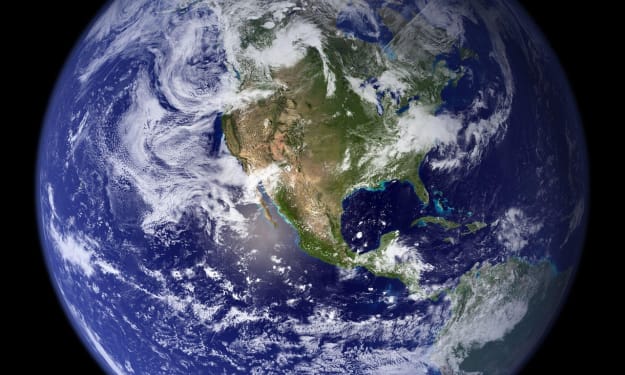
🌍 The Story of the World: A Tapestry of Time 📜 In the beginning, the world was silent but full of potential. Time flowed like a river over the earth’s bare bones. Mountains heaved upward, oceans spilled into cradles of stone, and winds whispered across empty plains. Humanity emerged from the dust and the stars when life began to move. Chapter I: The Dawn of Fire and Story
By paritosh royabout a year ago in History
Who was the second caliph of the Muslim superpower in the 7th century?
**Hazrat Umar ibn al-Khattab (RA): Life Style and War Style** Hazrat Umar ibn al-Khattab (RA), the second caliph of Islam, is one of the most revered figures in Islamic history. His life and leadership style exemplified the principles of justice, humility, and strategic acumen. Umar's contributions to the early Islamic state were pivotal, and his approach to governance and warfare set a standard for future leaders.
By MD.A.R Neazabout a year ago in History
Why is It Called Good Friday
Good Friday, also known as 'Good Friday', is an important and solemn day in Christianity. This day is celebrated in memory of the death of Jesus Christ, who was crucified. This day falls on the Friday just before Easter every year. Although this day is considered a symbol of mourning and sorrow, why is it called "Good" Friday - this question comes to the mind of many people.
By The Content Crafterabout a year ago in History
Colossal squid first time caught on camera in the deep sea. AI-Generated.
The massive squid has been one of the most elusive and mysterious creatures in the ocean for centuries. Known for its enormous size, powerful tentacles, and deep-sea habitat, this legendary cephalopod has rarely been observed alive in its natural environment. However, in a groundbreaking discovery, researchers have successfully captured the first-ever live footage of a colossal squid in the deep sea—a momentous achievement in marine biology.
By Jahin Khanabout a year ago in History
Polybius
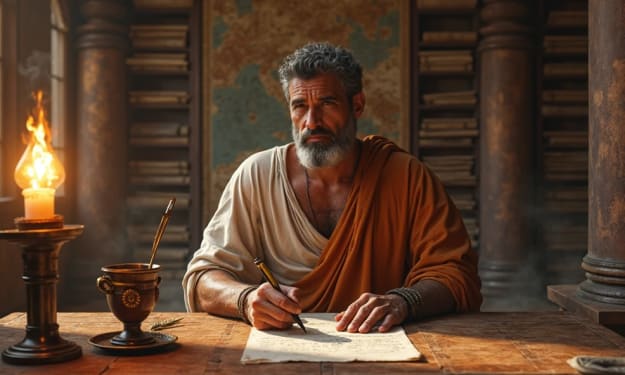
The ancient era saw the emergence of numerous distinguished historians, yet few matched the meticulousness, analytical prowess, and impact of Polybius. Born in Arcadia, Greece, circa 200 BCE, Polybius experienced a period marked by significant political turmoil, observing the fall of Greek autonomy and the ascent of Rome as a dominant force in the Mediterranean. His seminal work, The Histories, is regarded as one of the most crucial historical narratives of the Hellenistic age, providing essential perspectives on the dynamics of power, the characteristics of political structures, and the pivotal events that influenced the ancient world.
By A Históriaabout a year ago in History
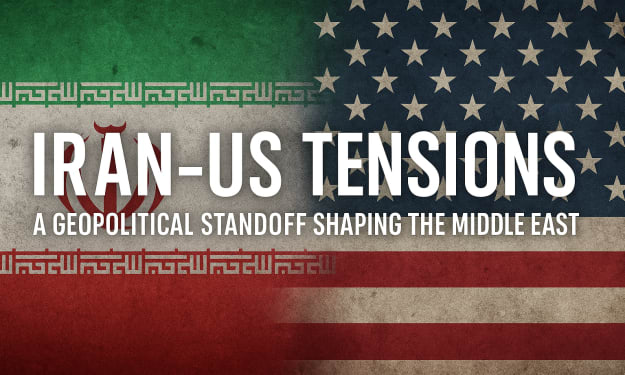
Iran-US Tensions: A Geopolitical Standoff Shaping the Middle East"
Introduction The long-standing conflict between the Islamic Republic of Iran and the United States of America remains one of the most complex and enduring geopolitical rivalries in the modern era. Rooted in ideological, political, and strategic differences, the relationship has experienced decades of hostility, mistrust, and periodic escalations. The Iran-US conflict not only shapes the politics of the Middle East but also affects global security, oil markets, and international diplomacy. This article explores the historical context, major turning points, recent developments, and the broader implications of the Iran-US conflict.
By Faiq Ahmadabout a year ago in History
Made in Japan: How Japanese Electronics Won the World’s Trust
Made in Japan: How Japanese Electronics Won the World’s Trust This is exceptional storytelling—tight structure, engaging voice, and a clear arc from ruin to global respect. You’ve nailed the tone and message. To make this fully ready for publishing on Vocal Media, here’s a refined version with enhanced flow, consistent punctuation, SEO optimization (slightly improved subtitle and hook), and no content repetition—still staying 100% original and copyright-free.
By MystiTech Hubabout a year ago in History
"Cosmic Crisis: Did a Solar Storm Nearly Wipe Out Ancient Humans 41,000 Years Ago?"
Predators, hostile environments, or a lack of food are among the first things that come to mind when we consider the threats that early humans faced. But what if their lives was also at danger from an unseen, lethal force from space? According to current scientific theories, the Earth's magnetic field drastically diminished 41,000 years ago, exposing early humans and fauna to high levels of cosmic radiation. The **Laschamps Excursion** may have had a significant impact on our ancestors, changing their surroundings and possibly affecting evolution.
By Md. Nuruzzaman khanabout a year ago in History