World History
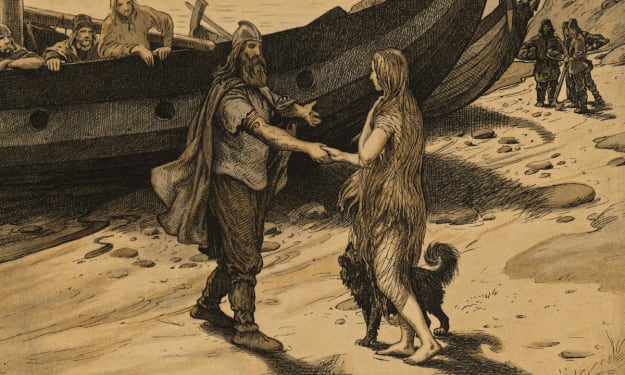
Vikings: Brutal Raiders or Skilled Explorers?
The Vikings, often depicted as horn-helmeted barbarians, have long been subjects of fascination and debate. Popular culture portrays them as ruthless warriors who terrorized Europe, but historical evidence reveals a far more complex narrative.
By Himadri Niloyabout a year ago in History
“How far you go in life depends on your being tender with the young, compassionate with the aged, sympathetic with the striving and tolerant of the weak and the strong. Because someday in life you will have been all of these.” —George Washington Carver
Black homesteaders were part of a larger land ownership movement in which settlers acquired and developed public lands for farming in 30 US states over a period of 100 years. The US federal government enacted these policies in areas that it wanted to populate with American citizens or prospective citizens (often to the detriment of the interests of the Native Americans who had previously occupied these lands. In total, some 30,000 black homesteaders obtained land claims in the course of this movement.
By Antoni De'Leonabout a year ago in History
A Nation in Flames
Paris, 1793. Smoke clung to the streets like a second skin. The bells of Notre-Dame no longer sang for weddings or worship, but for blood—each toll echoing a name dragged to the guillotine. Revolution was no longer a dream of liberty; it was a fever, devouring all who caught it. Julien Armand tightened the scarf around his neck as he moved through the alleyways of the Marais district, avoiding the wide boulevards where the National Guard marched. He clutched a small book inside his coat—The Rights of Man—forbidden now, though once praised. He hadn’t always been a rebel. Once, he was a lawyer, the son of a merchant. But that was before they took Camille. Camille had been his older sister. A voice of fire and reason, she had spoken at salons, argued in the streets, written under false names. She believed in the Republic before it existed, and when the Bastille fell, she cheered louder than anyone. But when the Reign of Terror began, Camille refused to stay silent as the ideals of the revolution were betrayed. One night, she disappeared. The next morning, her name was printed on a list outside the Tribunal—an enemy of the people. She was twenty-nine. Julien stopped beneath a cracked statue of King Louis, its head long toppled. Across the street stood the prison. Inside, chained to damp stone and rotting straw, was Étienne Vaillancourt, Camille’s fellow speaker and leader of an underground circle. He was the last hope of those who still believed the Revolution could be saved from itself. Julien had one task: get Étienne out. He slid into the tavern beside the prison. The back door led to the guard’s quarters. Bribes had been paid, passwords whispered. Tonight was the night. "You're late," whispered Marcellin, a former guard turned ally. His eyes darted nervously. "You’re sure about this? They’ve started executing sympathizers without trial." "I'm not here to survive," Julien said. "I’m here to finish what she started." They moved through the shadows, boots silent on stone. Down narrow stairs, past the moans of the condemned. The smell of sweat and despair grew thicker. Julien's heart pounded like a drumbeat of war. In the final cell sat Étienne, thinner than the last time Julien had seen him, his beard tangled, his wrists chafed raw. But his eyes—they still burned. "You’re mad," Étienne said as Marcellin unlocked the door. "You’ll be killed." "Or free," Julien said. "There’s no difference anymore." Étienne staggered as they helped him out, but determination replaced weakness. They moved quickly, climbing a service stairwell that led to the old bakery behind the prison, now abandoned. Freedom was ten feet away. A shout cracked the night like thunder. They ran. Marcellin stayed behind, shouting false directions to the guards. The sounds of pursuit faded as Julien and Étienne disappeared into the warren of alleys. They didn’t stop until they reached the cellar of a safehouse in Montmartre. There, Julien lit a candle and handed Étienne a wrapped packet—papers, maps, and money. A new identity. A way out. “You’ll go south. There’s a ship in Marseille.” “And you?” Étienne asked. “I stay,” Julien said. “The flame still burns here.” Étienne grasped his hand. “Camille would be proud.” Julien nodded, emotion catching in his throat. He watched as Étienne disappeared into the night, his shadow long and uncertain. --- A week passed. Julien continued his work, distributing pamphlets, helping fugitives escape. But the net was tightening. One night, soldiers kicked in the door of the print shop. He was arrested without charge, thrown into the same cell Étienne had escaped. On his final morning, a cold wind blew through the bars. A guard entered, holding a list. “Julien Armand. Come.” They marched him through the gray dawn. Streets blurred past. Crowds gathered at the Place de la Révolution. Children stood on crates to watch. Mothers clutched their rosaries. The guillotine stood tall, red-stained and indifferent. He thought of Camille. He thought of Étienne, of the spark still carried south, perhaps to light a fire elsewhere. As the blade rose, Julien felt no fear. Only freedom. --- Epilogue: In the years that followed, the Reign of Terror ended. Robespierre fell. The tide of blood receded. And in a small coastal town near Marseille, pamphlets began to appear again—handwritten, passionate, filled with hope. They bore a familiar signature: “For Camille. For Julien. For the Revolution that lives.”
By Usman Khanabout a year ago in History
Chichén Itzá: Legacy of Maya Civilization
Chichén Itzá: The Sacred City of the Maya Chichén Itzá, one of the most iconic archaeological sites in the world, is a magnificent pre-Columbian city built by the Maya civilization in the Yucatán Peninsula of Mexico. Dominated by the grand pyramid known as El Castillo (also called the Temple of Kukulcán), the site is a powerful symbol of the ingenuity, astronomical precision, and architectural brilliance of the ancient Maya. Today, it stands as a UNESCO World Heritage Site and one of the New Seven Wonders of the World, drawing millions of visitors every year.
By Mukhtiar Ahmadabout a year ago in History
Parthenon: Timeless Symbol of Ancient Greece
The Parthenon: A Timeless Symbol of Ancient Greece Perched majestically atop the Acropolis of Athens, the Parthenon is one of the most enduring symbols of ancient Greece and classical architecture. Built in the 5th century BCE, this temple was dedicated to Athena Parthenos, the patron goddess of the city. Over the centuries, it has withstood wars, transformations, and natural decay, yet it remains a powerful reminder of Greece’s rich cultural legacy.
By Mukhtiar Ahmadabout a year ago in History
The Book of Enoch: The Banned Bible Text That Blows Open the Truth About Fallen Angels and the Nephilim
📜 A Book So Dangerous, They Took It Out of the Bible It’s one of the most controversial religious texts ever discovered — and yet most Christians have never read it.
By Rukka Novaabout a year ago in History
The Pioneer of Muslim Printing and Journalism in the Indian Subcontinent: The Legacy of Maulvi Muhammad Baqir Dehlvi
The First Muslim to Print the Quran in the Indian Subcontinent – The Remarkable Story of Maulvi Muhammad Baqir Dehlvi The history of the Indian subcontinent is filled with significant events that have deeply influenced the intellectual, religious, and political future of its people, especially the Muslim community. Among these historic milestones, one extraordinary event stands out — the first-ever printing of the Holy Quran in the subcontinent. This monumental achievement is credited to a courageous and visionary Muslim scholar, Maulvi Muhammad Baqir Dehlvi. Not only was he the first Muslim journalist of the region, but he was also a fearless freedom fighter who sacrificed his life to illuminate the path of knowledge and truth. The Context of the 19th Century: Colonial Suppression and Religious Challenges At the dawn of the 19th century, British colonialism had firmly entrenched itself across the Indian subcontinent. With their expanding control, the British and their missionary organizations aggressively promoted Christianity, printing and distributing thousands of Bibles to convert the local population. Meanwhile, access to the Quran remained limited for Muslims. The Quran was available only in handwritten copies, which were rare, expensive, and difficult to obtain for many. Printing technology was still in its early stages in the region, and few dared to envision the Quran being printed on a press. In this environment, Maulvi Muhammad Baqir Dehlvi emerged as a revolutionary figure. Understanding the vital importance of making the Quran more accessible to ordinary Muslims, he decided to use the power of the printing press to break the barriers that had kept the Quran confined to handwritten manuscripts. The First Muslim Printing Press in the Subcontinent In 1835, Maulvi Muhammad Baqir Dehlvi established the first Muslim-owned printing press in Delhi. This press was more than just a business—it was a symbol of empowerment for Muslims struggling under colonial rule. His vision extended beyond printing newspapers and books; he was determined to publish the Quran for the masses. Two years later, in 1837, the first printed edition of the Quran came off his press. This was a groundbreaking achievement, as it democratized access to the Holy Book and allowed Muslims from all walks of life to engage with their faith in a way that had not been possible before. The printed Quran was a catalyst for religious education and revival across the subcontinent, inspiring generations to come. Opposition from British Authorities However, this revolutionary act did not go unnoticed or unchallenged. The British authorities, wary of any movement that might strengthen Muslim identity and unity, were deeply uncomfortable with this newfound religious awakening. They feared that increased access to religious texts could fuel dissent against their rule. The colonial government pressured Maulvi Muhammad Baqir Dehlvi to shut down his press. Despite the threats and intimidation, he remained steadfast, refusing to bow down to colonial censorship. His resilience was a testament to his commitment to preserving Muslim heritage and knowledge. The Birth of the First Muslim Newspaper The press later became the birthplace of another historic milestone: the establishment of the first Muslim newspaper in the Indian subcontinent. In 1836, Maulvi Muhammad Baqir Dehlvi launched the Delhi Urdu Akhbar. This newspaper quickly became the voice of the Muslim community, boldly criticizing British policies and advocating for justice and rights. Through his writings and editorials, Maulvi Muhammad Baqir Dehlvi raised public awareness, mobilized opinion against colonial oppression, and encouraged unity among Muslims. The Delhi Urdu Akhbar served as a platform for intellectual discourse, political activism, and social reform during a turbulent period in Indian history. Role in the 1857 War of Independence and Martyrdom When the Indian Rebellion of 1857—also known as the War of Independence—erupted, Maulvi Muhammad Baqir Dehlvi openly supported the freedom fighters. His newspaper played a significant role in inspiring resistance and challenging the British narrative. Unfortunately, the rebellion was crushed, and the British retaliated harshly. Maulvi Muhammad Baqir Dehlvi was arrested for his revolutionary activities. On September 16, 1857, he was executed by a firing squad in Delhi. His martyrdom marked a profound sacrifice—he was the first journalist in the subcontinent to give his life fighting for freedom and truth. Legacy and Recognition The contributions of Maulvi Muhammad Baqir Dehlvi hold a unique place in the annals of history. He was the first person to make the Quran widely accessible through print in the Indian subcontinent. He pioneered Muslim journalism by founding the first Muslim press and newspaper. Above all, he demonstrated immense courage in the face of colonial tyranny, ultimately sacrificing his life for the cause of justice. Today, when printed Qurans are available in countless homes and newspapers freely circulate, we owe a debt of gratitude to such visionaries. Their dedication paved the way for religious literacy, political awareness, and social progress among Muslims in South Asia. Maulvi Muhammad Baqir Dehlvi’s life is a powerful reminder of the impact one individual can have by combining knowledge, courage, and commitment to truth.
By Ikram Ullahabout a year ago in History
Who Were the Nephilim? The Forbidden Giants of the Bible That Mainstream History Can’t Explain
👣 Giants in the Bible? It’s Right There in Genesis “There were giants in the earth in those days…” So begins Genesis 6:4, one of the most mysterious — and controversial — verses in the entire Bible.
By Rukka Novaabout a year ago in History