World History
4. "The Crimson Message"
The envelope was ordinary—cream-colored, unmarked, and left on the kitchen table. But it was the ink that made Olivia’s fingers tremble. Blood-red, bold strokes scrawled her name across the front: OLIVIA. No return address. No stamp. Someone had left it there. She lived alone. Her apartment was still locked when she got home, keys jangling in her hand. The windows were shut. Nothing was out of place, except this single note in red. She hesitated, staring at it like it might scream. Then, cautiously, she slid a knife beneath the flap and peeled it open. One piece of paper. One line. “You forgot what you buried.” That was it. Her heart stuttered. Her breath caught. She looked around as if the walls might speak, but they stood silent and still. The note trembled in her hands. The ink—red and thick—looked almost fresh. It had been ten years since that night in the woods. Ten years since she and the others had made a choice. Ten years since silence had become survival. “No one knows,” she whispered, trying to steady herself. “No one can know.” But someone did. That night came rushing back—cold dirt, heavy breaths, the sound of shovels hitting something that wasn’t earth. There had been four of them: Olivia, Marcus, Talia, and Ben. And one secret they swore would never surface. She reached for her phone and dialed Marcus. He answered on the second ring. “Liv?” “I got a note,” she said, voice low. “Written in red. It said: ‘You forgot what you buried.’” Silence. Then: “I got one too.” Her throat went dry. “Same words?” she asked. “Yes,” Marcus said. “This morning. I thought—God, I thought it was a prank. But now…” “Have you talked to Talia or Ben?” “Ben’s gone. Disappeared a week ago. No call, no texts. Just gone.” Her stomach clenched. “What?” “Talia’s not answering. I’ve called her five times.” Olivia looked at the note again. The handwriting wasn’t familiar. It was sharp, uneven—almost like someone had written it in a hurry. Or anger. “I think someone’s making a move,” she said. “Someone who knows.” “We need to meet,” Marcus said. “Tonight.” They agreed on the old diner off Route 7—the one they used to visit before everything went wrong. --- The neon sign buzzed overhead as Olivia pulled into the lot. Marcus was already inside, staring at a mug of coffee like it held answers. “Anything else?” she asked, sliding into the booth. He nodded. “Another note was on my windshield when I left work.” He handed it to her. It was the same ink, same handwriting. “Confession is coming.” “We need to dig it back up,” Marcus said. “If someone’s threatening us, it means they know what’s there.” “No,” Olivia said sharply. “Touching it again—going back—that’s how we get caught. We leave it buried. We stay quiet.” “But someone already knows. What if Ben talked? What if Talia’s—?” He didn’t finish the sentence. They both looked at the note again. Confession is coming. They stayed in silence until Olivia’s phone buzzed. A message. No name. Just a photo. Talia. Pale. Eyes closed. Unmistakably lifeless. Olivia dropped the phone. The red ink wasn’t a warning. It was a countdown. --- By the time they reached the woods, it was almost midnight. The same place. The same trees. The same wind whispering through the branches. Olivia’s hands were shaking as she held the flashlight. Marcus had brought a shovel. They found the old clearing easily. Even after all this time, the ground looked different—like the earth hadn’t forgotten either. He started digging. “She didn’t deserve it,” Olivia whispered, watching dirt fly. “She wasn’t innocent,” Marcus muttered. “None of us were.” “But we made her disappear.” “We buried the truth,” he said, pausing. “And now it’s clawing back.” The shovel hit something. They both froze. It wasn’t a body. It was a box—metal, rusted, locked. Marcus pried it open. Inside: a stack of photos. The four of them. That night. Digging. Smiling nervously. Caught in the flash of a hidden camera. And a final note, sitting on top: “Time’s up.” The flashlight died. A twig snapped behind them. Olivia turned just in time to see a figure step into the clearing, face hidden by shadow, holding a recorder. “Say it,” the voice demanded. “Say what you did.” The red light on the recorder blinked. The night was no longer silent. It was confession.
By Usman Khanabout a year ago in History
Andalusia: The Forgotten Beacon of Civilization
The Forgotten Glory of Andalusia: A Legacy of Civilization, Now Overshadowed It is a historical fact that when the streets of Europe were overflowing with filth and plagued by disease—when people in many European cities were compelled to wear high wooden clogs just to avoid stepping in their own waste—Andalusia stood as a beacon of cleanliness, culture, and unparalleled development. In that golden era of Islamic Spain, not only did every Muslim household boast a private bath, but a well-structured sewage and drainage system also existed—an advanced infrastructure that was centuries ahead of its time and of anything found in Europe. Andalusia (Al-Andalus), under Muslim rule, was not merely a center of learning and arts; it was a symbol of a comprehensive civilizational and social transformation. While the rest of Europe was still entrenched in the Dark Ages—grappling with ignorance, superstition, epidemics, and backwardness—cities like Córdoba, Granada, and Seville shone brightly as centers of enlightenment, refinement, and scientific progress. The legacy of Al-Andalus is not limited to its majestic palaces or poetic gardens; it includes its libraries, universities, public baths, hospitals, and intricate urban planning. The city of Córdoba alone, in the 10th century, had over 70 libraries and 300 public baths, while most of Europe at that time had barely any public sanitation infrastructure. Streets were lit at night, water was supplied through aqueducts, and education was freely available to all segments of society—regardless of class, religion, or gender. Muslim Spain welcomed scholars of all backgrounds, promoting a culture of tolerance, dialogue, and intellectual curiosity. The knowledge preserved and produced there—ranging from medicine to astronomy, from architecture to philosophy—became the foundation upon which modern European renaissance was later built. It is not an exaggeration to say that the seeds of today’s Western progress were first planted in the soil of Al-Andalus. But today? Those very nations, which once lived in darkness and filth, now consider themselves the torchbearers of modern civilization. They now attempt to teach us the very principles of hygiene, discipline, urban planning, and civil society that we once taught them. This twist of history is not only ironic but deeply thought-provoking. It prompts us to reflect: How did a civilization that once led the world in every sphere of life fall so far behind? The answer lies not just in historical invasions or political failures. The real tragedy began when we forgot our own legacy. We ceased valuing knowledge, stopped nurturing critical thought, and turned away from our commitment to justice, excellence, and innovation. When a nation loses connection with its glorious past, it not only loses direction but also dignity. It is then forced to look up to others who were once its students. This loss of historical consciousness is more than just forgetfulness—it is a form of collective amnesia. Today’s generation often views Western achievements as independent developments, disconnected from the contributions of their ancestors. This ignorance leads to a dangerous inferiority complex, where we assume others are inherently superior and we are forever to play catch-up. However, history does not have to be a burden—it can be a guiding light. The example of Al-Andalus can inspire a revival. The Muslims of Spain were not superhumans; they were ordinary people with extraordinary commitment to values: the pursuit of knowledge, societal reform, cleanliness, justice, and the welfare of all. Their mosques were not just places of prayer but centers of education and public service. Their homes were not just private shelters but embodiments of beauty, order, and hygiene. What made their civilization great was not just what they built, but what they believed in. They believed in progress not for the sake of competition, but for the service of humanity. Their advancements in medicine were not designed to dominate but to heal. Their architecture was not built to intimidate but to inspire. Their governance was not aimed at control, but at delivering justice to the poor, the weak, and even the non-Muslim subjects under their rule. If we truly wish to rise again, we must reconnect with the values that made our ancestors worthy of admiration. We must learn to value knowledge not merely as a tool for earning a livelihood, but as a sacred trust for the betterment of society. We must take pride in cleanliness not just as a religious duty but as a public responsibility. We must understand that civilization is not about skyscrapers and machines alone, but about manners, ethics, and respect for all forms of life. Let us not lament the loss of Al-Andalus as a tale of the past, but let us take it as a call to rebuild. The rise of others is not a threat—it is a reminder of what is possible. But if we continue to forget our own history, we will forever be students of those who once learned from us. The lesson of Al-Andalus is clear: greatness is not inherited—it is earned, through consistent effort, vision, and unity. And those who forget their past are destined to live at the mercy of others’ futures.
By Ikram Ullahabout a year ago in History
Exploring the Rich History and Culture of Afghanistan . AI-Generated.
Afghanistan’s culture can be traced as far back as 4000 BC with stunning prehistoric monuments standing to witness to its rich tribal history, many of which are still evident today outside of Kabul. Male and female roles are strictly delineated and traditional religious customs are very much adhered to. While most of Afghanistan’s timeline has been dominated by war, the country is making every effort to turn itself around and progress into a brighter tomorrow.
By Mehedi Mondolabout a year ago in History
The Untold Story of the Pendle Witches.
Lancashire, England , 1612. It all started with a coin. A single, cold shilling passed between the rough fingers of a peddler and the calloused palm of Alizon Device, a young woman with nothing but her name and her need. She looked down at the man , John Law, a traveling merchant , and saw in him the same contempt she saw from every stranger: that narrowed gaze that weighed her by the dirt under her fingernails and the cadence of her accent. When he refused her charity, when he cursed her family’s name, Alizon cursed him back. Not with fire, not with brimstone , but with the sharp, childish instinct of someone whose powerlessness burns in the gut: “I hope your bones rot where you stand.” He collapsed not long after. His body failed him , a stroke, they said later , and the whispers started. In a place like Pendle, whispers are deadlier than wolves.
By Strategy Hubabout a year ago in History
The Overlooked Treasures of the Khmer Empire: Cambodia's Concealed Wealth
The Overlooked Treasures of the Khmer Empire: Cambodia's Concealed Wealth When discussing the world's most affluent ancient empires, names such as Rome, Persia, and Mali often take precedence. However, nestled deep within the jungles of Southeast Asia lies an unrecognized giant—the Khmer Empire, whose lavishness once matched the greatest empires globally. Spanning across present-day Cambodia, Thailand, Laos, and Vietnam, the Khmer Empire thrived between the 9th and 15th centuries, leaving behind treasures—both material and spiritual—that astonish contemporary observers. At the core of this empire was Angkor, the largest pre-industrial urban center globally, home to the magnificent temple of Angkor Wat, now recognized as a UNESCO World Heritage site. Yet Angkor was more than a spiritual and architectural wonder—it was also a bastion of wealth and authority. The Riches Beneath the Stone The Khmer Empire's affluence stemmed from a potent mix of agriculture, commerce, and expertise in hydraulic engineering. The empire flourished through rice cultivation, utilizing sophisticated irrigation systems that supported a vast populace. However, agriculture formed only the foundation. What genuinely enriched the Khmer elite was trade—especially in gold, gemstones, ivory, and forest resources. The empire occupied a pivotal position along the trade routes connecting the Indian Ocean and East Asia. Chinese, Indian, and Arab merchants frequently visited Khmer ports to barter silks, ceramics, and spices for Khmer gold, sandalwood, and exotic birds. Evidence of this wealth is dispersed throughout the temples. Inscriptions and bas-reliefs portray processions of royals and priests adorned in jewels, gold necklaces, and intricately designed crowns. Archaeological discoveries suggest that the Khmer elite possessed substantial quantities of sapphires, rubies, and emeralds—many of which came from the empire’s own mines and riverbeds. The Concealed Treasures of Angkor Despite centuries of looting, some Khmer treasures remain hidden. In 2008, during the excavation of a concealed chamber in Angkor Thom, archaeologists uncovered numerous gold artifacts, including rings, figurines, and ceremonial implements dating back to the 11th century. Many experts believe this is merely the beginning. Submerged crypts, underground reservoirs, and temples lost to history continue to conceal what could amount to millions of dollars in ancient relics. Looters have long targeted these locations, selling statues and jewelry on the black market; however, extensive areas of Angkor remain unexplored due to dense forest coverage and insufficient funding. In 2016, LIDAR (Light Identification and Ranging) technology unveiled previously unrecognized temple complexes, roadways, and urban structures beneath the forest surface—indicating that Angkor was part of a much broader network of cities, all of which may harbor untouched caches of wealth. Assessing the Empire’s Valuation Determining a monetary value for a long-lost empire is a complex endeavor, yet historians and economists have formulated rough assessments. When adjusted for contemporary values, the Khmer Empire’s assets in gold, land, and precious stones could have been valued at over $200 billion. This does not consider cultural capital—the significance of monuments such as Angkor Wat or misplaced artifacts currently residing in private collections. The immense scale of Angkor Wat alone, which necessitated 5 million tons of sandstone, illustrates the magnitude of resources the empire could assemble. In current terms, constructing such a edifice would entail billions—and this figure pertains to merely one of over 1,000 temples erected during the apex of the empire. The Decline and Heritage The Khmer Empire commenced its decline in the 13th century, attributed to a combination of factors: climatic shifts, overpopulation, internal discord, and assaults from neighboring realms such as the Ayutthaya of Thailand. As the capital cities deteriorated, numerous temples were forsaken, and their riches abandoned—some interred, some pilfered, and others simply overlooked. Nevertheless, the Khmer heritage endures. The Cambodian royal regalia still features symbols derived from the Khmer Empire, and the national pride associated with Angkor is substantial. Initiatives are currently underway to reclaim and conserve what remains of this concealed wealth, with museums and archaeologists collaborating closely with local communities. Final Thoughts Although the Khmer Empire may not garner the same prominence as Rome or Egypt, its affluence, creativity, and magnificence warrant acknowledgment. Beneath the towering trees and moss-laden stones of Cambodia lies a narrative of monarchs, deities, and gold—a narrative still being uncovered. As technology and international collaboration progress, we may yet rediscover more of this lost wealth and redefine the history of the world’s most affluent empires.
By Say the truth about a year ago in History
The Treasure Beneath the Nile: Egypt's Lost Gold Mines and Ancient Wealth. AI-Generated.
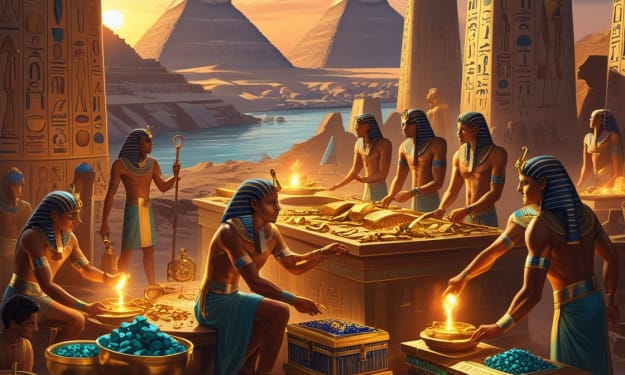
The Golden Legacy of the Nile The Nile River is justifiably regarded as the lifeblood of Ancient Egypt. Spanning over 6,600 kilometers, it not only facilitated agriculture in the arid desert but also functioned as a trade artery and spiritual thoroughfare. However, what rests beneath the deserts encircling the Nile has intrigued archaeologists and historians for centuries—gold. Gold represented more than a mere metal in Ancient Egypt. It symbolized divine power, eternal existence, and royal dominion. The pharaohs believed it constituted the flesh of the deities, particularly the sun god Ra. It adorned temples, accompanied kings in burial, and was crafted into objects of remarkable beauty and precision. But from whence did all this gold originate? The Lost Mines of Nubia The ancient territory of Nubia, situated south of Egypt (present-day Sudan), was abundant in gold mines. This region was so vital that the pharaohs referred to it as Ta-Seti (Land of the Bow) and often waged warfare or engaged in diplomacy to gain control. The gold of Nubia was sourced from quartz veins and alluvial deposits, subsequently smelted and refined in desert workshops. Evidence from inscriptions and archaeological excavations indicates that Egypt possessed a highly organized gold mining system as early as 2600 BCE. Laborers resided in isolated desert camps and utilized rudimentary tools to excavate shafts and tunnels deep into the rock. Despite the challenges and hazards, the allure of wealth motivated the empire's aspirations.
By Say the truth about a year ago in History
The Concealed Wealth of the Inca Empire: Forgotten Treasures of the Andes. AI-Generated.
The Concealed Wealth of the Inca Empire: Forgotten Treasures of the Andes Situated high in the Andes Mountains, the Inca Empire (1438–1533) was the most extensive pre-Columbian empire in the Americas. At its zenith, it spanned across Peru, Bolivia, Ecuador, and portions of Chile and Argentina, governing over more than 10 million individuals. However, beyond its expansive territory and sophisticated infrastructure, what astonished Spanish conquistadors most was the empire’s unfathomable wealth—particularly its vast reserves of gold and silver.
By Say the truth about a year ago in History
The Wealthiest Empire in History: The Golden Heritage of the Mali Empire
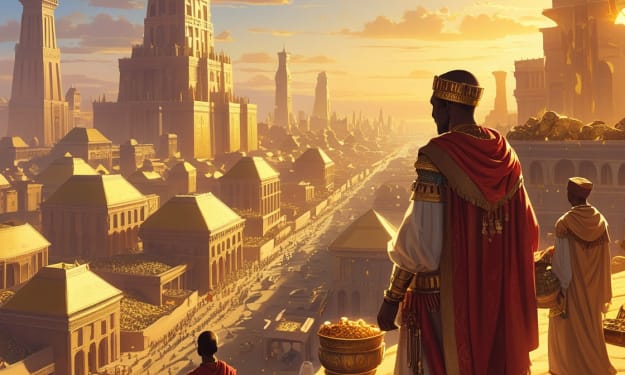
The Foundations of the Mali Empire The Mali Empire was established circa 1235 AD by Sundiata Keita, who unified several smaller kingdoms following the decline of the Ghana Empire. Under Sundiata’s guidance, Mali evolved into a centralized entity with a formidable military and effective administration. Nonetheless, it was under his successors—most notably Mansa Musa (r. 1312–1337)—that the empire attained its pinnacle. Encompassing portions of contemporary Mali, Senegal, Gambia, Guinea, Niger, Nigeria, and Mauritania, the Mali Empire governed extensive territories and essential trade routes, including segments of the Sahara Desert. This positioned it to dominate trans-Saharan commerce, especially in salt, ivory, enslaved individuals, and most crucially—gold. Mansa Musa: The Most Affluent Individual in History Mansa Musa, the tenth sovereign of Mali, is frequently recognized as the most affluent person in documented history. His net worth, adjusted for inflation and current assessments, is approximated to exceed $400 billion USD. This fortune was not solely attributed to dominion over land but also the empire’s gold mines, which contributed more than half of the world’s gold during his reign. In 1324, Mansa Musa embarked on a renowned pilgrimage to Mecca (Hajj), an occasion that highlighted the immense scale of his empire’s riches. He journeyed with a caravan composed of: 60,000 individuals, 12,000 enslaved individuals conveying gold bars, 80 camels transporting hundreds of pounds of gold dust each. According to historians, he distributed so much gold in Cairo, Mecca, and Medina that it diminished the value of the metal, resulting in economic inflation in the region for over a decade. This singular incident established Mali—and Musa—as significant players on the medieval global landscape. Sources of Wealth
By Say the truth about a year ago in History
Painted in Blood: The Renaissance of Artemisia Gentileschi. . Content Warning.
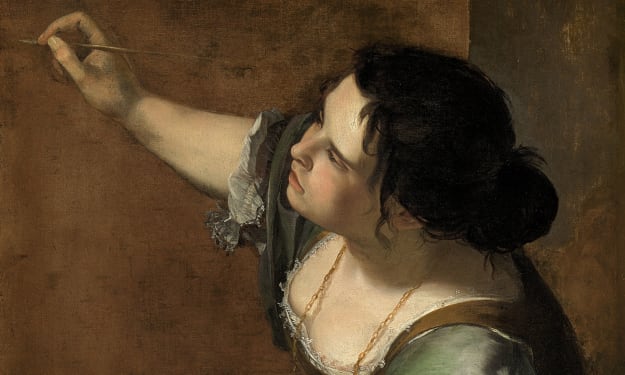
History does not remember Artemisia Gentileschi with the reverence she deserves. Her name was omitted from textbooks for centuries. When it was mentioned, it was often tethered to scandal rather than skill. But behind the layers of oil paint and baroque shadow lies the story of a woman who dared to wield her brush as a weapon against violence, patriarchy, and artistic obscurity.
By Strategy Hubabout a year ago in History
What History Was Meant To Leave Out
“In the beginning God created the heaven and the earth. And the earth was without form, and void; and darkness was upon the face of the deep. And the Spirit of God moved upon the face of the waters.”Genesis 1:1-2
By Natasha Collazoabout a year ago in History
The Unseen World of Abandoned Places: A Journey Through Time
** Have you ever wondered what happens to places when they're left behind? The silence, the stillness, and the secrets they keep are a mystery to many. Abandoned places are a window into the past, a glimpse of what once was, and a reminder of the transience of time. In this article, we'll embark on a journey to explore the unseen world of abandoned places, and uncover the stories they tell. *The Allure of Abandoned Places* There's something hauntingly beautiful about abandoned places. The crumbling structures, the overgrown gardens, and the eerie silence all seem to whisper stories of the past. These places are a testament to the passage of time, a reminder that everything that rises will eventually fall. Yet, despite their neglect and decay, abandoned places hold a certain allure, a mystique that draws us in. *A Window into the Past* Abandoned places are a window into the past, a glimpse of what life was like in a bygone era. They tell stories of people, places, and events that shaped the world we live in today. From abandoned factories to ghost towns, each place has its own unique history and significance. By exploring these places, we can gain a deeper understanding of the past and its relevance to our present. *The Psychology of Abandonment* Abandonment is a complex phenomenon that can be triggered by various factors, including economic decline, natural disasters, or simply a change in societal values. When a place is abandoned, it's not just the physical structure that's left behind; it's also the memories, the emotions, and the stories that were once associated with it. The psychology of abandonment is a fascinating topic that reveals the intricate relationships between people, places, and things. *Exploring Abandoned Places* Exploring abandoned places can be a thrilling experience, but it's not without its risks. From structural hazards to environmental concerns, there are many factors to consider before venturing into an abandoned place. However, for those who are willing to take the risk, the rewards can be immense. Whether it's the thrill of discovery, the rush of adrenaline, or the sense of adventure, exploring abandoned places can be a truly unforgettable experience. *The Art of Urban Exploration* Urban exploration, or urbex, is a growing trend that involves exploring abandoned places and capturing their beauty through photography and videography. Urban explorers are drawn to the aesthetic appeal of abandoned places, the textures, the colors, and the compositions that can be found in these forgotten spaces. Through their art, urban explorers can reveal the beauty in decay, the elegance in neglect, and the stories that lie hidden in plain sight. *Preserving the Past* As we explore abandoned places, we're often faced with the question of preservation. Should we preserve the past, or let it fade away? The answer is complex, and it depends on the context and significance of the place. Some abandoned places are historic landmarks that deserve to be preserved, while others are mere relics of a bygone era that can be left to nature. The key is to strike a balance between preservation and progress, to respect the past while embracing the future. *Conclusion* Abandoned places are a mysterious and fascinating world that holds many secrets and stories. By exploring these places, we can gain a deeper understanding of the past, appreciate the beauty in decay, and uncover the hidden narratives that lie within. Whether you're an urban explorer, a historian, or simply a curious individual, abandoned places have something to offer. So, the next time you come across an abandoned place, take a moment to pause, reflect, and appreciate the stories it tells.
By Umair Khanabout a year ago in History
Phil Robertson, ‘Duck Dynasty’ Patriarch, Dies at 79. AI-Generated.
Hit reality-Phil Robertson, a robust, bearded nature lover who became a famous name through the TV series Duck Dynasty, passed away peacefully on May 25, 2025 at his home in Louisiana. He was 79 years old. His death followed a lengthy struggle with several health conditions, including Alzheimer's disease and degenerative blood disorders.
By Sonia begumabout a year ago in History