World History
⚡Thomas Edison electrocuted an elephant to show AC was dangerous
⚡The War of the Currents and Electric Power Technologies In the late 19th and early 20th centuries, the world was on the cusp of a revolution—moving from gas lighting and direct current (DC) power systems to alternating current (AC). Thomas Edison, a pioneering inventor and businessman, was a fierce advocate of direct current electricity, which he had developed and promoted extensively through his Edison Electric Light Company. However, Nikola Tesla and George Westinghouse championed AC power, which proved to be more efficient for long-distance transmission and ultimately became the dominant technology for electrical systems worldwide. The rivalry, known as the "War of the Currents," was fierce, involving propaganda, legal battles, and public demonstrations.
By History Seekerabout a year ago in History
A Nation Stolen in Silence: Cromwell’s War on the Irish
They came before dawn; the boy had just reached for the door latch when the boots struck it open. Soldiers poured in, masked in soot and cruelty, shoving his mother aside with the butt of a musket. He screamed, but it didn't matter. They weren't listening. No one was.
By Robert Lacyabout a year ago in History
👑Kaiser Wilhelm who had a deformed arm and hated England... Yet was Queen Victoria’s grandson
👑A Royal Lineage and a Fateful Birth Kaiser Wilhelm II, born Friedrich Wilhelm Viktor Albert, was one of the most prominent and controversial monarchs of German history. As the last German Emperor and King of Prussia, his reign (1888–1918) coincided with a turbulent era marked by rising nationalism, militarism, and the eventual outbreak of World War I. He was born on January 27, 1859, as the eldest grandson of Queen Victoria of the United Kingdom. This familial connection placed him within a vast network of European royal families, which at the time was called "the matrimonial league," intended to maintain peace through interconnected dynasties. Yet, his personal traits and political beliefs would contribute to global upheaval rather than harmony.
By History Seekerabout a year ago in History
British Soldiers Defeated a Tank with a Bagpipe
On the morning of June 6, 1944—D-Day—the beaches of Normandy erupted in fire, fury, and metal. Allied soldiers stormed ashore under a relentless hail of German machine gun fire, mortar blasts, and chaos. Yet among the smoke and death, something surreal happened on Sword Beach: a lone man in full Scottish Highland dress, kilt fluttering in the wind, calmly strode across the sand playing a set of bagpipes.
By History Seekerabout a year ago in History
Guardians of the Lotus Mist: The Silent Bond at the River’s Edge
The Symbolism of a Chinese Woman and a Bear: A Deep Exploration The imagery of a Chinese woman standing alongside a bear is rich with symbolic resonance, blending elements of cultural history, mythology, and natural harmony. This theme captures the intricate relationship between humanity and nature, portraying strength, protection, and spiritual balance in a profoundly poetic way.
By Anees Kaleemabout a year ago in History
Polka-Dotted Wonder: Rare Zebra Foal in Kenya Sparks Global Curiosity
An Extraordinary Encounter in the Wild In the center of Kenya’s Maasai Mara National Reserve, nature has recently unveiled a phenomenon that has captivated the global scientific community and wildlife enthusiasts alike—a newborn zebra foal adorned with polka dots rather than the traditional black-and-white stripes. This sighting, verified by both rangers and wildlife photographers, is considered by many to be the first documented instance of such an unusual coat pattern in the species. The foal, endearingly named "Tira" by the locals, boasts a dark brown coat embellished with prominent white dots scattered across its body. Although variations in stripe patterns have been noted previously—such as faded or incomplete striping—this spotted pattern is nearly unprecedented among zebras.
By MILTON CHANDRA ADIKARYabout a year ago in History
Scientific period of pyschology. History of psychology? School of thoughts?
sixteen and seventeen centuries, philosophers and scientists proposed new theories in light of observation and experiments.This period may be divided into two periods. Renaissance period Modern period Renaissance period Early in 16 century, a severe reaction set in against unquestioning dependence on philosophy and faith in logic without observation. Other influences came from biology and physics. Francis Bacon(1564-1642) He was founder of modern science he separated science from religion and philosophy. He proposed several theories upon education habits and human personality.He emphasized the importance of observation instead of speculation. Descartes( 1596-1650)
By Real contentabout a year ago in History
Step Inside 6 Luxury Ranches Across America: Where Opulence Meets the Wild West
Step Inside 6 Luxury Ranches Across America: Where Opulence Meets the Wild West The allure of the American West has long captivated those seeking adventure, tranquility, and a connection to nature. However, a new breed of high-end retreats has emerged for those who desire the rustic charm of ranch life without sacrificing luxury. These luxury ranches combine Western heritage with five-star amenities, ranging from sprawling estates in Wyoming to chic hideaways in Texas. Here, we take you inside five of the most exclusive ranches across the U.S., where wide-open spaces meet world-class hospitality.
By parves mosharafabout a year ago in History
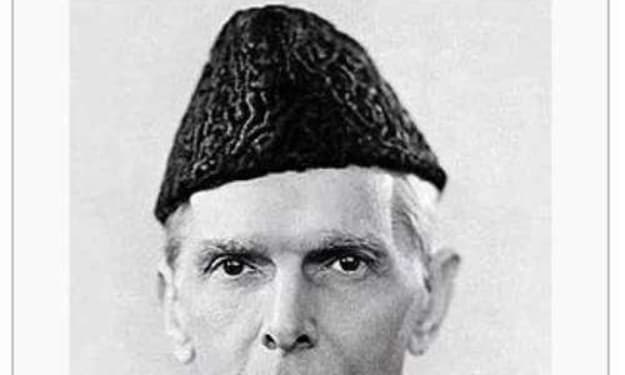
Jinnah" redirects here
Wilderness years; interlude in England Jinnah's passport The alliance between Gandhi and the Khilafat faction did not last long, and the campaign of resistance proved less effective than hoped, as India's institutions continued to function. Jinnah sought alternative political ideas, and contemplated organising a new political party as a rival to the Congress. In September 1923, Jinnah was elected as Muslim member for Bombay in the new Central Legislative Assembly. He showed much skill as a parliamentarian, organising many Indian members to work with the Swaraj Party, and continued to press demands for full responsible government. In 1925, as recognition for his legislative activities, he was offered a knighthood by Lord Reading, who was retiring from the Viceroyalty. He replied: "I prefer to be plain Mr Jinnah."[66]
By FAWAD KHANabout a year ago in History