World History
✈️The Top 5 Warplanes of World War II
✈️The Top 5 Warplanes of World War II: Masters of the Skies World War II was as much a war of machines as it was of men. Among those machines, warplanes soared to unprecedented importance. They reshaped battlefields, changed tactics, and became symbols of national pride and technical prowess. From the early days of dogfights to massive bombing raids, the aircraft that dominated the skies played crucial roles in determining the fate of nations. Many planes flew in these skies, but a handful stood out for their design, performance, versatility, and impact on the war effort.
By History Seekerabout a year ago in History
The Conneaut Giants: Unearthing the Forgotten Race of Titans
Whispers Beneath the Ohio Soil Long before concrete towns and railroad tracks stitched the American frontier together, the land spoke in whispers. Ancient forests blanketed the hills, rivers shimmered untouched, and secrets, deep, ancient secrets, lay hidden just beneath the surface. One such secret revealed itself in the early 1800s in Conneaut, Ohio.
By The Secret History Of The Worldabout a year ago in History
🛡️When 400 Polish hussars resisted a 40,000-strong Tatar force
The Battle of Hodów, fought in the summer of 1694, stands out as one of the most extraordinary confrontations in the history of the Polish-Lithuanian Commonwealth. This clash between a small detachment of approximately 400 Polish hussars and a massive Tatar raiding force, estimated at around 40,000 warriors, has become legendary as a symbol of valor, discipline, and tactical genius. Often called the “Polish Thermopylae,” the Battle of Hodów showcases how steadfast courage and military skill can defy overwhelming odds.
By History Seekerabout a year ago in History
3. The Empire That Burned
I was born beneath the shadow of Templo Mayor, raised on stories of gods who demanded blood and empires built on stone. My name is Ichtaca, scribe of the House of Glyphs, and I write this as fire devours the city of Tenochtitlán. It began with omens: the weeping woman who wandered the causeways at night, the temples struck by lightning, and the twin-headed men born in the market district. The priests warned us the gods were displeased, but no one listened—not even Emperor Moctezuma. Then they came—men with thundersticks and metal skin, their horses like beasts from the underworld. They called themselves Spaniards, led by a man named Hernán Cortés. Moctezuma welcomed them, perhaps believing them gods, or perhaps hoping diplomacy could spare the city. He gave them gold. They asked for more. I saw them in the palace. They did not bow or observe our customs. They stared at our gold as if it were more sacred than Huitzilopochtli himself. I remember the chill in my bones when one of them laughed during a temple ceremony. The gods would not forgive that, I thought. I was wrong. The gods did nothing. Moctezuma became their puppet. Our emperor, once feared and divine, now stood behind foreign guards like a captured bird. The people murmured, then shouted, and finally rebelled. Stones were thrown, blades were drawn. Moctezuma died—some said by their hands, others by ours. It no longer mattered. The spell of the gods was broken. Then came La Noche Triste, the Night of Sorrows. We drove the Spaniards from our city in a torrent of blood and screams. I remember standing on the causeway, watching their soldiers drown beneath the weight of stolen gold. We cheered. We believed it was over. But it was not. They returned less than a year later with thousands of native allies—Tlaxcalans and others who had long hated our empire. They brought disease, a curse we could not fight. Smallpox swept through the city, killing warriors and priests alike. Even children bore its mark. Our gods did not protect us. We fortified Tenochtitlán, cutting bridges, hiding food. Still, they came. Day by day, they tore through the outer defenses. I wrote on bark and cloth as our temples burned. I painted the deaths of warriors whose names deserved eternity. I carved the sun god’s symbol with hands that trembled. I remember the final week. The air stank of smoke and rot. The lake ran red. We ate insects, leather, and rats. The once-proud city became a graveyard of echoes. I saw children fighting over dead dogs. I saw priests weep, not in ritual, but from despair. On the last day, I found myself near the broken palace, my stylus still in hand. Around me, warriors screamed. The Spaniards moved like demons, fire in their wake. I saw one tear the heart from our eagle knight and shout to his god. Was this what their god demanded? I fled through the sacred square, past fallen idols, past the body of my friend, Xolotl. He had once dreamed of becoming a high priest. Now he lay with his face in the dust, his throat cut. There were no prayers left for him. And then I reached the top of Templo Mayor, the once-holy place. Smoke blackened the sky. From there, I saw the city of Tenochtitlán—not in splendor, but in ruin. No chanting. No drums. Only silence and ash. I knelt, pressing my writings to the altar. My last gift to gods who had abandoned us. --- Now, they call this the New Spain. They build churches where our temples stood. They melt our gold into coins. They teach us new prayers, new gods, new names. But I remember. I remember the scent of burning feathers and incense, the rhythm of warrior songs, the pride of a city floating on a lake. I remember the old gods. And even if they did not save us, I will write their names until my hands forget how to hold a stylus. Let them build their empire of stone and crosses. Mine was an Empire of Ashes—and it was beautiful.
By Usman Khanabout a year ago in History
The History Of Bitcoin
How Bitcoin Came to Be in the Shadows of Crisis: The Quiet Revolution The world was hungry for change—even if it didn't know it yet—in the wake of the global financial crisis of 2008, when headlines screamed of bank collapse and governments rushing to print money out of thin air. Amid the chaos, on a quiet cryptography mailing list, an anonymous figure named Satoshi Nakamoto released a nine-page whitepaper. The title? "Bitcoin: An Electronic Cash System That Works Peer to Peer" It landed softly—no press releases, no marketing campaigns. However, a financial revolution would begin with this insignificant document. However, Bitcoin's history does not begin in 2008. Its roots go deeper—into decades of failed attempts to create digital money and the ideological battlegrounds of the internet’s early years. Back in the 1990s, a group of privacy-focused visionaries known as the cypherpunks believed that personal freedom could only be preserved in the digital age through strong cryptography. Among them were pioneers like David Chaum, who created DigiCash—an early form of digital currency that was ultimately stifled by corporate entanglements. Then came Nick Szabo, with his idea of Bit Gold—a decentralized currency that was never quite realized, but eerily close to Bitcoin’s core principles. The fact that all of these initiatives still required trust in centralized entities or were too susceptible to manipulation was their common flaw. Satoshi was the one who saw the missing piece, the elegant solution that had eluded so many minds—the blockchain. What set Bitcoin apart wasn’t just that it was digital money. It was decentralized, borderless, and devoid of trust. It didn't need a government or a bank to validate transactions. Instead, it relied on a public ledger—maintained not by a single institution, but by thousands of nodes around the world, each running the same open-source software. On January 3, 2009, the first Bitcoin block—the genesis block—was mined by Satoshi. “The Times 03/01/2009 Chancellor on brink of second bailout for banks” was encoded into its data. It was more than a timestamp. It was a quiet protest—a poetic jab at the traditional financial system that had just failed millions of people. Bitcoin began not as a business, but as an idea—a community of cryptographers, developers, and digital rebels sharing thoughts on forums like Bitcointalk. It wasn’t long before someone decided to see if this magic internet money could actually buy something tangible. Enter Laszlo Hanyecz, a Florida programmer who, on May 22, 2010, made the first documented real-world Bitcoin purchase: two large pizzas in exchange for 10,000 BTC. At the time, they were worth around $41. They would be worth hundreds of millions of dollars now. But back then, they were priceless—a symbol that this thing called Bitcoin wasn’t just theoretical anymore. As time passed, the network matured. The code was improved by developers. Miners, once amateurs running computers in their bedrooms, became professionals operating massive data centers. The world began to take notice. Idealists saw hope. Libertarians saw freedom. Governments saw risk. And investors saw opportunity. Bitcoin’s value fluctuated wildly, often declared dead by media outlets, only to come back stronger. It survived massive exchange hacks, regulatory crackdowns, and brutal bear markets. It forked, split, and evolved. And through it all, Satoshi Nakamoto remained silent—vanishing in 2011, leaving only a legacy and one final message: “I’ve moved on to other things.” Today, Bitcoin is far more than a currency. It’s a symbol of resistance against centralized control. It’s used to hedge against inflation in struggling economies, to raise funds beyond borders, and to spark debates in halls of power. And while critics still argue over its volatility or environmental impact, one thing is clear: it’s here to stay. The human aspect of the Bitcoin story is just as fascinating as its technical brilliance. It was born out of distrust, designed by a faceless innovator, and nurtured by a global collective of dreamers and skeptics alike. It challenged centuries-old financial assumptions and flipped the question from “Why would you trust code?” to “Why would you trust anything else?” The invention of Bitcoin wasn’t a flash of genius in a Silicon Valley garage. It was a culmination of decades of thought, failure, and perseverance. It’s the result of a community that believed in a better way to move value, to store freedom, and to resist censorship.
By Itachi Jhonabout a year ago in History
21 Sikh soldiers vs. 10,000 Afghan tribesmen, who won? - The Battle of Saragarhi (1897)
21 Sikh soldiers vs. 10,000 Afghan tribesmen, who won? - The Battle of Saragarhi (1897) The Ultimate Last Stand In the rugged mountains along the North-West Frontier of British India, a tiny outpost named Saragarhi became the stage for one of history’s most astonishing acts of military bravery. On September 12, 1897, 21 Sikh soldiers, part of the 36th Sikh Regiment of the British Indian Army, faced off against an estimated 10,000 Pashtun tribesmen. Outnumbered nearly 500 to 1, these men fought to the last breath, their sacrifice echoing through time as a symbol of courage, loyalty, and the unbreakable human spirit.
By History Seekerabout a year ago in History
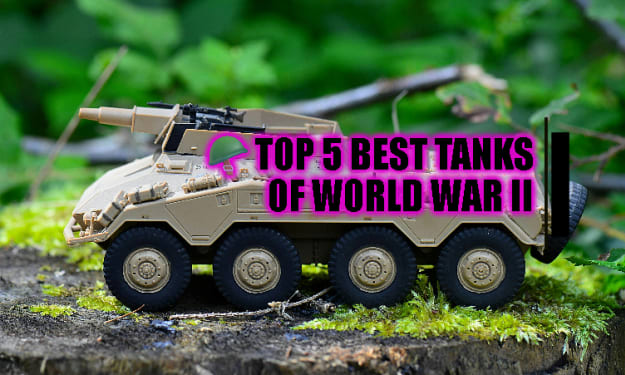
🪖Top 5 Best Tanks of World War II
World War II was a watershed moment in the history of armored warfare, fundamentally changing how wars were fought and accelerating tank development at an unprecedented pace. Tanks became the spearhead of offensives, the backbone of mechanized infantry, and a symbol of industrial power and military innovation. Among the thousands of tanks produced by various nations during this global conflict, a handful emerged as icons of their era, epitomizing design excellence, battlefield effectiveness, and strategic impact. This article examines the five best tanks of World War II, weaving their stories continuously with in-depth analysis of their design philosophies, production challenges, battle performance, and lasting legacy.
By History Seekerabout a year ago in History
World tour to world war
My grandfather, Lorenzo, arrived in Australia from the small alpine village of Zorzoi, community of Sovramonte, province of Belluno in Northern Italy on June 16, 1914. He was always very particular about letting us know exactly where we came from.
By Michèle Nardelliabout a year ago in History
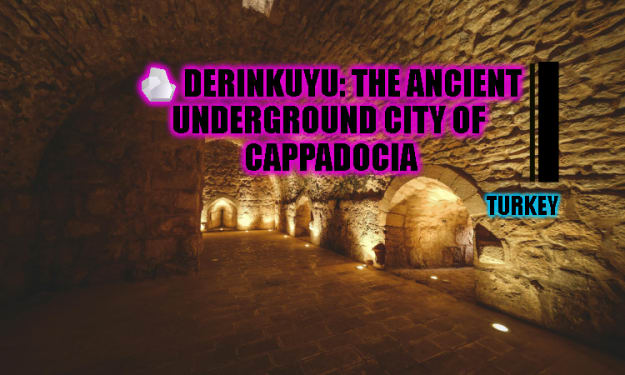
🪨Derinkuyu: The Ancient Underground City of Cappadocia in Turkey
🪨Derinkuyu: The Ancient Underground City of Cappadocia in Turkey 🌍 Deep beneath the arid plains of central Turkey, in the heart of the Cappadocia region, lies one of the most remarkable feats of ancient engineering ever discovered: the underground city of Derinkuyu. This vast subterranean complex, carved into soft volcanic rock, descends more than 85 meters (approximately 280 feet) below the earth’s surface and contains a network of tunnels, chambers, staircases, wells, and ventilation shafts that once served as a fully functioning city. It could house up to 20,000 people, along with their food, livestock, and belongings. The scale, complexity, and historical significance of Derinkuyu make it one of the most fascinating archaeological discoveries of the modern era.
By History Seekerabout a year ago in History
⚔️ The Lindisfarne Raid of 793: The Thunder Before the Storm of the Viking Age 🛡️
In the year 793 CE, a catastrophe unfolded on the eastern shores of Anglo-Saxon England that would echo across the continent and mark the beginning of one of the most transformative eras in European history: the Viking Age. This event, the violent raid on the monastic island of Lindisfarne, was not the first Scandinavian incursion into the British Isles, but it was the first to shock contemporary chroniclers so deeply that it made its way into the annals of medieval history as a moment of divine terror and political warning. It is now recognized by historians as the symbolic start of nearly three centuries of Norse expansion, violence, exploration, and cultural exchange.
By History Seekerabout a year ago in History