World History
"Gadsby": A Wierd Novel Without the Letter "E" by Ernest Vincent Wright
"Gadsby": A Wierd Novel Without the Letter "E" by Ernest Vincent Wright The Inspiration and Origins of "Gadsby" The concept of constrained writing has fascinated authors for centuries, serving as a playground for linguistic experimentation. Among the most iconic examples is "Gadsby," a novel that boldly omits the letter 'e'—the most commonly used letter in English. Written by American author Ernest Vincent Wright in 1939, "Gadsby" stands as a cultural and literary marvel, symbolizing that language, despite its complexity, can be bent and shaped by sheer ingenuity and discipline.
By History Seekerabout a year ago in History
🐸Australia Lost a War against the Cane Toads
🐸Australia Lost a War against the Cane Toads Origins of the Invasion – A Misguided Introduction In the early 20th century, Australia's sugar cane industry faced a significant threat from cane beetles, which were devastating crops in Queensland. In an attempt to control these pests, 102 cane toads (Rhinella marina) were imported from Hawaii in June 1935 and released into the fields of northern Queensland. The hope was that these toads would prey on the beetles and protect the sugar cane. However, this biological control strategy was based on limited understanding of the toads' behavior and ecology. The cane toads did not significantly impact the beetle population, as they preferred other prey and could not reach the beetles high on the cane stalks. Instead, the toads found the Australian environment highly conducive to their survival and reproduction, leading to an unforeseen ecological disaster.
By History Seekerabout a year ago in History
🪖Top 7 Submachine Guns of World War II
🪖Top 7 Submachine Guns of World War II MP40 — The Backbone of German Firepower The **MP40**, known as the Maschinenpistole 40, became one of the most iconic and widely used submachine guns of Nazi Germany during World War II. It was developed as a successor to the MP38, streamlining the design for mass production using stamped steel and bakelite, which made it cheaper and faster to manufacture. The MP40 was chambered in 9x19mm Parabellum and had a relatively low rate of fire at approximately 500–550 rounds per minute, allowing for better control in full-auto fire. It featured an open-bolt blowback action and a 32-round magazine, though the magazine was prone to jamming if not handled carefully.
By History Seekerabout a year ago in History
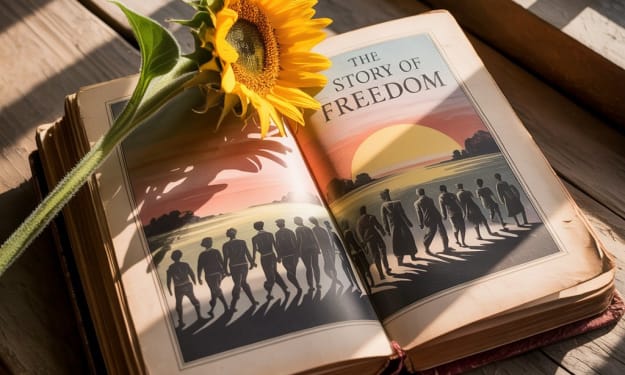
The Story of Freedom
It was the 14th of August, and the air was filled with joy. The entire school was adorned with flags, and students in all grades were enthusiastically celebrating Independence Day. Happiness was visible on every face. Yet, amidst the vibrant celebration, one person sat quietly—Sir Tahir. Lost in deep thought, he seemed distant from the jubilant atmosphere around him.
By MUHAMMAD YOUSAFabout a year ago in History
How Music Played a Role in Social Revolutions
Music has always been a potent force for societal transformation, serving as more than just amusement. Throughout history, songs have amplified the voices of the oppressed, united movements, and challenged oppressive regimes.
By Himadri Niloyabout a year ago in History
Swat State's Accession to Pakistan: A Historical Overview. AI-Generated.
The Genesis of Swat State Swat's origins trace back to 1849 when Saidu Baba, also known as the Akhund of Swat, established the state. After his death in 1878, the region experienced instability until 1915, when Syed Abdul Jabbar Shah was appointed ruler. In 1918, Miangul Abdul Wadud, a descendant of Saidu Baba, became the Wali (ruler) of Swat. Under his leadership, Swat was recognized as a princely state in alliance with the British Raj in 1926.
By Zain Ul Abidin Khanabout a year ago in History