World History
When the World Went Quiet
At exactly 6:00 a.m. UTC, the world went quiet. Not a simple hush. Not the peaceful silence of dawn or a quiet forest. This was a profound stillness—global, sudden, absolute. Planes froze mid-air and landed without a word from control towers. Trains stopped. Cars rolled to a halt. Phones dimmed, screens went black, and even the electrical buzz—the unnoticed hum of daily life—disappeared. People feared the worst: a cyberattack, war, or divine reckoning. But no destruction came. No smoke, no fire. Only stillness. And slowly, humanity began to listen. --- 1. Ava — New York City, USA Ava was never off-screen. Her life as a social media influencer was a blur of filters, scheduled posts, and sponsored content. When her phone died, she cursed under her breath and reached for her laptop. It, too, was unresponsive. Even her ring light—her constant companion—flickered off. The silence outside unnerved her. New York, silent? She stepped out onto her fire escape, expecting sirens, shouting, chaos. Instead, she heard birds. Wind. Laughter from a rooftop. A man strummed a guitar two buildings over. She retrieved a journal—a gift from a follower, barely touched—and a pen. Without hashtags or algorithms, she wrote her thoughts with trembling hands. They flowed. She kept going. Hours passed. She had forgotten the world could feel like this. --- 2. Bilal — Swat Valley, Pakistan Bilal knew quiet, but this was different. His small school in the hills had always buzzed with morning routines: the groan of ceiling fans, children’s chatter, radio music from passing bikes. Now, all was still. Yet the children came, barefoot and curious. With no electricity or distractions, Bilal led them under the ancient banyan tree. He began with a folk tale his grandmother once told him—about moonlight, djinns, and brave shepherds. The children leaned in. A girl named Aasma offered a story of her own. By midday, they were taking turns. Laughter rippled. Imagination awakened. Bilal felt something stir in him too—a return to a kind of teaching deeper than textbooks. --- 3. Mei — Shanghai, China Mei had lived by the clock. With the Gaokao exam looming, her days were perfectly scheduled—digital tutoring, mock tests, meals timed to minutes. When the blackout hit, panic flared. Her tablet froze mid-formula. Her smart assistant shut off. No water boiled in the electric kettle. Then, silence. Her grandmother, long ignored in her daily grind, appeared at the door with a shy smile and a worn deck of playing cards. Mei hesitated—then followed her to the balcony. They played for hours under the smog-cleared sky. No lessons, no deadlines. Just laughter, the shuffling of cards, and a soft breeze. That night, Mei slept without dreams of failure. --- 4. Jonah — Cape Town, South Africa For Jonah, sound was life. A professional sound engineer, he built his world out of recordings, layers, and frequencies. When every machine fell quiet, he thought something had gone wrong with him. He stepped outside, searching for anything—music, voices, engines. Nothing. Then he heard it: the sea. The ocean hadn’t stopped. The tide rolled in like a metronome from before machines. Jonah walked to the beach and found others there—silent, barefoot, reverent. No one spoke. They just listened. He sat in the sand, held up his battery-powered field recorder, and captured the soundscape. Not of silence—but of what remained beneath it. It was his most honest work yet. --- Epilogue: A Day Later Exactly 24 hours after it began, the world reawakened. Lights flickered. Phones buzzed with missed alerts. Engines roared. The silence ended. But something lingered. Ava launched a printed journal called Stillness, spotlighting stories without algorithms. Bilal’s students still gathered weekly under the banyan tree. Mei chose to defer her exams and travel with her grandmother to villages that still lived offline. Jonah released an album titled When the World Went Quiet, featuring nothing but natural soundscapes. No one ever explained what caused the global silence. Some said it was nature reminding us. Others called it a glitch in the system of progress. Whatever it was, it left behind something rare: a moment remembered not for panic, but for presence.
By Hikmatullah Sarwariabout a year ago in History
World War I: The Great War That Changed the World. AI-Generated.
Introduction World War I, often called the Great War, was one of the most devastating conflicts in human history. It lasted from 1914 to 1918 and involved many of the world’s major powers divided into two main alliances: the Allies and the Central Powers. This war fundamentally transformed the political, social, and economic landscapes of the 20th century, leading to the collapse of empires and setting the stage for future global conflicts.
By Zain Ul Abidin Khanabout a year ago in History
Fall of Soviet Union
For much of the 20th century, the Soviet Union stood as one of the world’s most powerful and enigmatic empires. Stretching across 11 time zones and uniting diverse ethnicities under a single communist regime, the USSR was born out of revolution, solidified by ideology, and driven by an unrelenting quest for global influence. Yet, in December 1991, the world watched as this seemingly indestructible superpower crumbled into fifteen independent republics, marking the end of the Cold War and a seismic shift in global politics. The Rise of the Soviet Empire The origins of the Soviet Union date back to the Russian Revolution of 1917, when the Bolsheviks, led by Vladimir Lenin, overthrew the Tsarist autocracy and initiated a radical experiment in socialism. By 1922, the USSR was formally established, unifying Russia and several surrounding republics under a central communist government. Following Lenin's death, Joseph Stalin assumed power and transformed the country into a totalitarian state through brutal purges, forced collectivization, and rapid industrialization. Despite the internal repression and suffering, the Soviet Union emerged as a global superpower by the mid-20th century. Its role in defeating Nazi Germany during World War II elevated its international standing. By the time the Cold War began, the USSR was locked in a fierce ideological and military rivalry with the United States, dominating Eastern Europe and exporting communist ideology across Asia, Africa, and Latin America. The Cracks Begin to Show While the USSR projected an image of unity and strength, cracks had begun to appear by the 1970s and 1980s. The Soviet economy, based heavily on central planning and heavy industry, began to stagnate. Consumer goods were scarce, innovation lagged behind the West, and corruption was rampant. At the same time, the arms race with the United States placed enormous financial strain on the government. The war in Afghanistan (1979–1989) further exposed Soviet vulnerabilities. What was intended to be a quick intervention turned into a protracted and bloody conflict, often referred to as the Soviet Union’s "Vietnam." Thousands of lives were lost, and public support for the regime waned significantly. Gorbachev's Reforms: Glasnost and Perestroika In 1985, Mikhail Gorbachev became General Secretary of the Communist Party. Recognizing the deep systemic issues facing the USSR, he introduced two landmark reforms: Glasnost (openness) and Perestroika (restructuring). Glasnost allowed for greater freedom of speech and transparency in government, while Perestroika aimed to modernize the economy by introducing limited market reforms. However, instead of revitalizing the nation, these policies inadvertently accelerated its decline. Glasnost opened the floodgates to criticism of the Communist Party and revealed the extent of its failings, from the Chernobyl disaster cover-up to widespread human rights abuses. Meanwhile, Perestroika disrupted an already fragile economy without offering a clear alternative, leading to inflation, food shortages, and rising unemployment. The Rise of Nationalism and Internal Dissent With the central authority weakening, nationalist movements began to rise within various Soviet republics. Countries like Estonia, Latvia, Lithuania, Ukraine, and Georgia started demanding more autonomy, with some pushing for full independence. The USSR’s once-firm grip on its territories began to slip. In 1989, the fall of the Berlin Wall symbolized the collapse of Soviet influence in Eastern Europe. One by one, communist regimes in the Warsaw Pact countries fell, often without Soviet military intervention. This marked a significant departure from the USSR's previous doctrine of crushing dissent in its satellite states. The Final Collapse The final blow came in August 1991, when a group of hardline communists attempted a coup against Gorbachev. The coup failed due to massive public resistance led by Boris Yeltsin, then President of the Russian Soviet Republic. The failure of the coup fatally weakened Gorbachev’s authority and hastened the disintegration of the Union. On December 25, 1991, Gorbachev officially resigned as President of the Soviet Union, declaring the office extinct. The red Soviet flag was lowered from the Kremlin for the last time, replaced by the tricolor of the Russian Federation. By the end of the year, all 15 Soviet republics had declared independence, and the USSR ceased to exist. Aftermath and Legacy The fall of the Soviet Union reshaped the world in profound ways. For the West, it marked a victory for liberal democracy and capitalism. For the former Soviet states, it brought independence—but also instability. Russia faced a decade of economic chaos and political corruption before stabilizing under Vladimir Putin. Today, the legacy of the Soviet Union is complex. Some remember it with nostalgia for the stability and global prestige it provided, while others recall the oppression, poverty, and lack of freedom. Its collapse remains one of the most significant events of the 20th century—an implosion of an empire that reshaped the global order. Conclusion The fall of the Soviet Union was not the result of a single event but a culmination of decades of economic mismanagement, political repression, and failed reforms. It serves as a cautionary tale of how rigid ideology and centralized control can ultimately lead to decline. As the world continues to navigate new power dynamics in the 21st century, the lessons of the Soviet collapse remain more relevant than ever.
By Mati Henry about a year ago in History
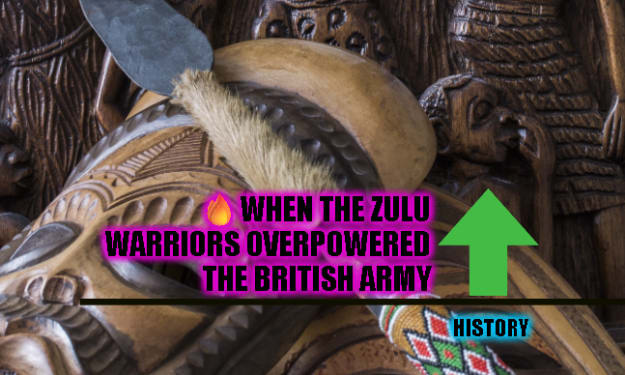
🏹🔥When the Zulu warriors overpowered the British army
🏹🔥 The Battle of Isandlwana (1879): The Zulu Triumph Over Empire 🌍 The British Invasion of Zululand In the late 19th century, the British Empire stood at the zenith of its global power. With colonies stretching across every inhabited continent, it pursued a relentless policy of expansionism underpinned by economic interest, racial ideology, and the belief in a “civilizing mission.” Southern Africa, rich in minerals and strategically located, became a key target in Britain’s imperial vision, particularly the drive to unite its various colonies—like the Cape Colony and Natal—into a single political confederation under British rule.
By History Seekerabout a year ago in History
Ukraine says at least 40 Russian warplanes hit in massive drone strikes
**Ukraine asserts that over 40 Russian warplanes were hit by massive drone strikes** Ukraine has claimed responsibility for a massive drone strike that allegedly damaged or destroyed more than 40 Russian warplanes across several key airbases, escalating its military campaign dramatically. Officials in Ukraine say that the attack, which took place in the early morning hours of June 1, 2025, was one of the largest and most successful drone operations since the war with Russia began. The operation, codenamed "Spider Web," targeted several Russian airfields, including Olenya in Murmansk Oblast, Diaghilevo in Ryazan Oblast, Belaya in Irkutsk Oblast, and Ivanovo Severny in Ivanovo Oblast, according to Ukraine's Security Service (SBU). Strategic bombers like the Tu-95 and Tu-22M3 as well as the A-50 airborne early warning aircraft are known to be housed at these bases. Ukrainian sources shared footage that showed several aircraft clearly engulfed in flames as thick black smoke rose from some of the affected bases. While Russia has acknowledged that drone attacks have occurred in specific locations, the country has yet to provide an official count of the damage. Access restrictions and ongoing military activity limit independent verification. The fact that this operation was the result of more than a year of planning and development has been emphasized by the Ukrainian government. In order to circumvent radar detection and air defenses, the reportedly used drones were launched from concealed mobile platforms inside Russian territory. Considering the disparity in long-range missile capabilities between the two nations, this strategy represents a significant shift in Ukraine's military tactics. According to Ukrainian officials, the operation involved the simultaneous deployment of more than 70 drones. demonstrating Kyiv's growing reliance on domestically produced weapons, many of these were indigenously developed systems. This, according to analysts, is a direct response to Ukraine's urgent need to expand its strategic reach and restrictions on Western weapons deliveries. Russia used more than 470 drones and a number of missiles to launch its own massive assault on Ukrainian territory in response to the drone attack. A Ukrainian military training facility was hit by one of these missiles, killing at least 12 soldiers and injuring more than 60 others. The tit-for-tat strikes are a significant step up in drone warfare, a strategy that is increasingly defining this contemporary conflict. The drone operation is viewed as a strategic and symbolic success by the Ukrainian government. Ukraine intends to challenge the concept of safe havens far from the front lines and hinder Russia's ability to launch aerial attacks against Ukrainian infrastructure by striking deeply into Russian territory. In the near future, Russia's capacity for coordinated missile strikes and aerial intelligence gathering may be diminished by damaging strategic bombers and surveillance aircraft. In contrast, the strikes by drones occur just a few days prior to the planned international peace talks in Istanbul. The international community is keeping a close eye on the negotiations because Ukraine has confirmed its participation. The timing of such a well-publicized attack raises concerns regarding its potential to influence diplomatic discussions or international perceptions of Ukraine's military resolve. Experts warn that while the attack demonstrates Ukraine's inventiveness and tenacity, it may also elicit harsh Russian retaliation. Nevertheless, the operation highlights a significant shift in contemporary warfare, in which battlefield dynamics are increasingly altered by drones and asymmetric strategies. The skies over Ukraine and Russia may become even more tense as both nations invest in unmanned aerial capabilities. Long-range drone strike technologies could continue to advance, not just in Ukraine but around the world, if the operation in Ukraine is successful. Drone warfare may now be the central battleground in a war that has already reshaped the geopolitical landscape of Eastern Europe with no end in sight and both sides indicating firm military resolve.
By GLOBAL NEWSabout a year ago in History
This Is How You Kill a Witness.
A Black woman, slight, deliberate, sharp-eyed. She is injured, holding crutches. She keeps her eyes low, but her spine is straight. She looks small against the backdrop of burnished wood. But today, she will not remain silent as so many other women had. Scared for their lives. Scared for their families. Scared of the consequences of telling the truth. Frances Thompson was terrified, but she knew that the only way to make them listen was to speak.
By River and Celia in Underlandabout a year ago in History
Alexander the Great: Hero or Tyrant?
Introduction Few historical figures are as polarizing as Alexander the Great. Born in 356 BCE in Macedonia, he created one of the largest empires in the ancient world before dying at just 32 years old. Lauded by some as a military genius and visionary leader who spread Hellenistic culture, and condemned by others as a ruthless conqueror who left chaos and death in his wake, Alexander’s legacy is a complex mosaic of heroism and tyranny. This article critically examines both aspects to determine whether Alexander deserves the title of “Great” — or something else entirely. --- The Heroic Narrative: Visionary Leader and Cultural Pioneer To his admirers, Alexander is the embodiment of a heroic ideal. Taught by Aristotle, he was not only a skilled warrior but also an intellectual. He led his troops from Greece through Asia Minor, Egypt, Persia, and into India, often participating directly in battles and inspiring fierce loyalty from his soldiers. One of Alexander’s most celebrated achievements was the spread of Hellenistic culture across three continents. By founding over 20 cities (most famously Alexandria in Egypt), he helped blend Greek, Persian, Egyptian, and Indian traditions. This cultural fusion led to advances in art, science, and philosophy, laying the groundwork for centuries of intellectual development. Additionally, Alexander often adopted elements of local customs and religions rather than imposing his own. In Persia, for instance, he began wearing Persian dress and married Roxana, a Bactrian princess, to legitimize his rule and unify different cultures under one empire. This behavior has been interpreted by some as visionary — an early attempt at global integration. --- The Tyrant’s Case: Conqueror, Not Liberator However, not everyone sees Alexander as a hero. Many historians argue that his conquests were driven less by idealism and more by personal ambition and thirst for glory. His military campaigns resulted in widespread death and destruction. The city of Tyre was besieged and destroyed after resisting his army; men were slaughtered, and women and children enslaved. Similarly, in India, his brutal campaign against the Mallians led to mass casualties and showed little regard for native populations. Alexander’s behavior also became increasingly erratic and tyrannical as his power grew. After the death of his close companion Hephaestion, he reportedly executed several people he blamed for the tragedy. He also murdered his friend and general, Cleitus the Black, in a drunken rage — an act that horrified even his most loyal followers. Moreover, Alexander’s policy of forcibly integrating peoples through military conquest and intermarriage has been criticized as a form of imperialistic domination. While he promoted cultural exchange, it was under the shadow of warfare and subjugation. --- Legacy: Greatness at What Cost? The question of whether Alexander was a hero or a tyrant is not easily answered. His military genius is undeniable; he never lost a battle and revolutionized warfare. The Battle of Gaugamela is still studied in military academies for its brilliant use of tactics and terrain. Yet, greatness in conquest does not necessarily equate to moral greatness. While he built an empire, it did not survive long after his death, fracturing into competing kingdoms ruled by his generals — the Diadochi. His sudden death in 323 BCE, possibly due to fever, poison, or overindulgence, left a power vacuum that plunged much of the known world into chaos. --- Conclusion Alexander the Great’s life and legacy defy easy categorization. He was a brilliant military leader and a unifier of cultures, yet also a ruthless conqueror whose ambition caused immense suffering. Whether one views him as a hero or a tyrant often depends on perspective: Was he a pioneer of globalization, or simply another imperial warlord? Perhaps the most honest answer is that Alexander was both — a visionary whose achievements shaped the world, and a despot whose methods came at a terrible cost. History remembers him as "Great," but with that greatness came complexity, contradiction, and consequence.
By Haris khanabout a year ago in History
What History Books Don’t Tell You About Colonialism
🩸 What History Books Don’t Tell You About Colonialism → A Raw Look at the Wounds That Never Healed We were told it was about “civilization.” About trains, law, and the English language. We were taught names like Vasco da Gama, Columbus, and Clive as pioneers. We memorized dates of conquests, not massacres. We celebrated “discoveries,” not theft. And somewhere between the footnotes and glorified timelines, the truth was buried.
By Md Ajmol Hossainabout a year ago in History
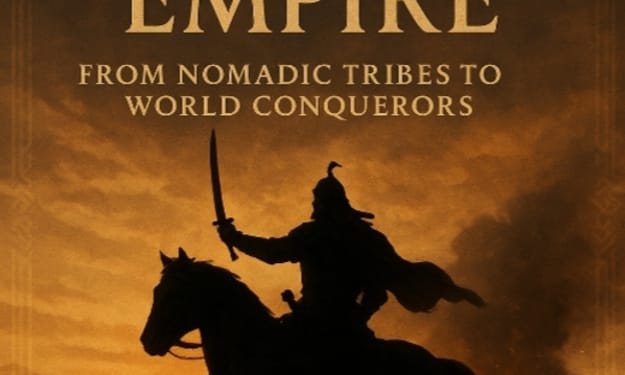
The Rise of Mongol Empire
In the vast and unforgiving steppes of Central Asia, where survival demanded strength, strategy, and unity, a storm was brewing that would alter the course of world history. This storm had a name—Temujin, a boy born in the harsh Mongolian wilderness in the year 1162. Abandoned by allies, hunted by enemies, and betrayed by kin, Temujin rose from obscurity to become Genghis Khan, the founder of the largest contiguous land empire the world has ever known: the Mongol Empire. --- Humble Beginnings in a Harsh Land Temujin’s early life was shaped by hardship. When his father, the chief of a minor Mongol clan, was poisoned by rivals, his family was cast out by their tribe. They lived in desperate poverty, hunting rodents and gathering roots to survive. But young Temujin was no ordinary child. Even in isolation, he exhibited unusual charisma, intelligence, and a deep understanding of loyalty and leadership. He began forging bonds not based on noble bloodlines but on merit and trust. He believed in elevating talented individuals regardless of their background—an idea revolutionary in the fragmented tribal society of the time. This ideology would later become a cornerstone of the Mongol military and administrative system. --- Uniting the Mongol Tribes Mongolia in the 12th century was a land of warring clans. Bitter rivalries, betrayals, and endless raids prevented unity. Temujin understood that real power would only come with unity—and unity would only come with reform. He gradually gathered loyal followers, known as the nökör, and through alliances, conquest, and clever diplomacy, Temujin began consolidating the tribes. He defeated his powerful rival Jamukha, survived an ambush by the Merkit, and crushed the Tatars, avenging his father’s death. By 1206, the various Mongol tribes had acknowledged Temujin as their supreme leader, and he was given the title Genghis Khan, meaning "Universal Ruler." His coronation marked not just the birth of an empire, but the rebirth of Mongol identity under a single banner—united, focused, and ready to move beyond their homeland. --- The Art of Mongol Warfare The Mongol military was unlike any force the world had ever seen. Every soldier was a master horseman and archer, trained from childhood to ride with deadly precision. Genghis Khan transformed his army into a disciplined, mobile, and highly organized war machine. He introduced a decimal system for organizing troops—units of 10, 100, 1,000, and 10,000—allowing flexibility and rapid command. His use of scouting, feigned retreats, and psychological warfare sowed chaos among enemies. Cities fell not just to the sword but to fear. One of his most revolutionary tactics was his openness to ideas. Genghis Khan recruited engineers, scholars, and artisans from conquered lands, employing them to build siege engines, manage supplies, and govern territories. He embraced knowledge wherever it came from—Persian administration, Chinese science, Arab medicine. --- The March of Conquest With his military perfected, Genghis Khan unleashed it on the world. The first major campaign was against the Western Xia Dynasty in northern China, followed by the Jin Dynasty, which controlled much of northern China. The Mongols ravaged their enemies with speed, surprise, and total devastation. In 1218, Genghis Khan turned west. The Khwarezmian Empire in Persia, having executed Mongol diplomats in an act of arrogance, brought down upon itself a catastrophic response. Genghis Khan led his army across deserts and mountains to exact retribution. Cities like Bukhara, Samarkand, and Nishapur fell in rapid succession, their defenses obliterated by Mongol ingenuity and fury. His campaigns did not stop at military conquest. Genghis established trade routes, postal systems, and legal codes—the Yassa—ensuring that his vast empire functioned efficiently. He promoted religious tolerance, understanding that unity could not survive if people were persecuted for their beliefs. --- A Legacy Beyond Death Genghis Khan died in 1227 under mysterious circumstances, but his empire did not crumble. Instead, his sons and grandsons expanded it further, reaching from the Korean Peninsula to Eastern Europe, from Siberia to the Indian subcontinent. Cities like Baghdad, Kiev, and Damascus trembled at the sound of Mongol hoofbeats. By the mid-13th century, the Mongol Empire stretched across 22% of the Earth’s landmass, connecting East and West through the Pax Mongolica—a period of stability that allowed for the flourishing of trade, cultural exchange, and even the travels of Marco Polo. --- Conclusion: A Thunderstorm of History The rise of the Mongol Empire was not just the story of a man or a nation. It was the unleashing of a force so dynamic, it redefined borders, civilizations, and the flow of history. From the cold steppes of Mongolia to the rich cities of Persia and China, Genghis Khan carved a path of conquest that still echoes through time. His methods were brutal, yet his vision was vast. He proved that strength lies not in wealth or tradition, but in unity, adaptability, and the courage to challenge the impossible. In the saga of empires, few have risen as fast, ruled as widely, or influenced as deeply as the Mongols. And it all began with a boy named Temujin—born in obscurity, destined for greatness.
By Mati Henry about a year ago in History