World History
Did Giants Once Walk the Earth? Unearthing the Evidence Behind One of History’s Tallest Mysteries
🦶 Footprints Too Big to Deny? From ancient scrolls to tribal myths, and from Biblical stories to massive “out-of-place” bones allegedly uncovered by early archaeologists — the belief that giants once roamed the earth is one of the oldest, most enduring, and most controversial legends in human history.
By Rukka Novaabout a year ago in History
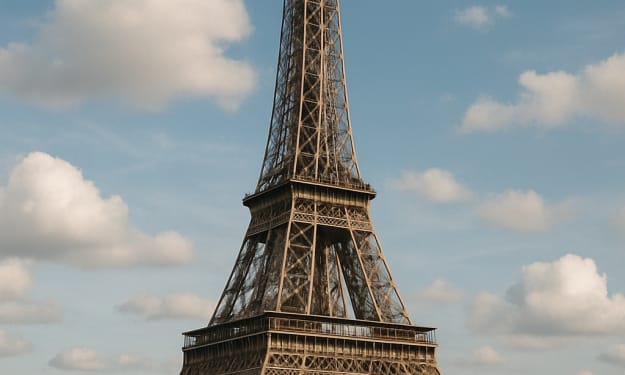
Eiffel Tower: France’s Icon of Innovation
The Eiffel Tower: A Symbol of French Innovation and Identity The Eiffel Tower, or La Tour Eiffel, is one of the most iconic landmarks not only in France but across the world. Rising 300 meters into the Parisian skyline, this iron marvel symbolizes the industrial might, artistic ambition, and cultural pride of France. Constructed for the 1889 Exposition Universelle (World’s Fair) to commemorate the centennial of the French Revolution, the Eiffel Tower has a rich and layered history that continues to captivate millions.
By Mukhtiar Ahmadabout a year ago in History
Enduring Legacy of the Great Wall
The Great Wall of China: A Monument of Endurance and Empire The Great Wall of China, one of the most iconic landmarks in the world, winds across northern China like a stone dragon, stretching over 13,000 miles. The image you see—a majestic section of the Wall snaking over green hills beneath a golden sky—represents not just architectural achievement, but a profound testament to China's ancient civilizations, military strategy, cultural identity, and resilience.
By Mukhtiar Ahmadabout a year ago in History
Barton Haunted Air Field Uk
Barton Haunted Air Field Uk We stood with the camera in hand at Barton Airbase. I imagined the deaths—the aircraft that went down during the war. The watchtower stood dark and empty. An eerie feeling pinched at my skin like a swarm of insects biting in rhythm.
By ♿ V+ Marie381Uk about a year ago in History
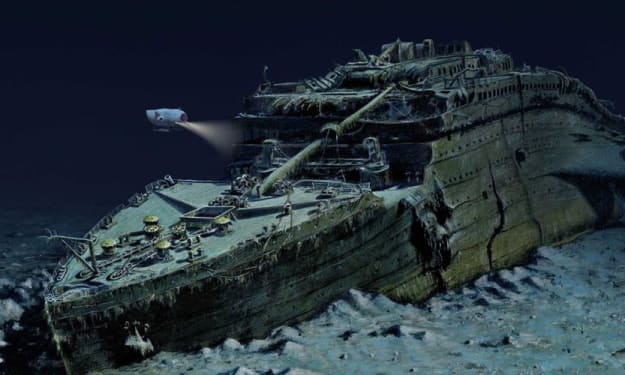
The Titanic
The RMS Titanic remains one of history’s most iconic maritime disasters, a symbol of human ambition, technological pride, and tragic hubris. Launched in 1912 as the largest and most luxurious passenger liner of its time, its sinking on its maiden voyage shocked the world and left an indelible mark on maritime safety regulations. This article explores the Titanic’s construction, its opulent accommodations, the fateful night of its sinking, and the lasting legacy of the disaster.
By Saad Sunainabout a year ago in History
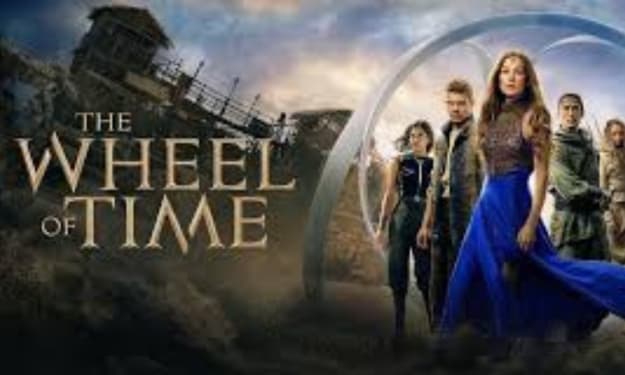
"The Wheel of Time" Canceled by Prime Video After 3 Seasons
In a stunning move, Prime Video has introduced the cancellation of its excessive-myth collection The Wheel of Time after 3 seasons. Based on Robert Jordans acclaimed ee-e book collection, the display debuted in 2021 and has quickly become one of the platforms most-watched originals. Despite its preliminary success, the collection confronted declining viewership and escalating manufacturing costs, leading to its premature give up. The Wheel of Time premiered in November 2021, starring Rosamund Pike as Moiraine Sedai, a member of the effective Aes Sedai order. The collection follows her quest to discover the Dragon Reborn, a prophesied hero destined to both store or spoil the world. The display garnered over a hundred million visitors worldwide, making it one in every of Prime Videos pinnacle 5 unique collection launch.The 1/3 season, which premiered in March 2025, became lauded with the aid of using both fanatics and critics. With a 97% score on Rotten Tomatoes, it became taken into consideration as the satisfactory installment yet. The season delved deeper into the complicated world-building and man or woman improvement that the collection is thought for. However, regardless of the crucial acclaim, the display experienced a fast decline in viewership, losing off Nielsens Top 10 Originals chart extra fast than preceding seasons. Sources near the manufacturing discovered that the selection to cancel the collection became in general because of excessive manufacturing costs. While the display maintained stable viewership numbers, the costs related to its problematic sets, unique effects, and worldwide filming places have become unsustainable. Amazon and Sony Pictures Television reportedly held enormous discussions earlier than concluding that a fourth season might now no longer be financially possible. The cancellation has sparked an outpouring of sadness from the displays committed fanbase. Fans have initiated a worldwide marketing campaign, dubbed 'Renew WoT,' urging Amazon and Sony to rethink their selection. The marketing campaign consists of petitions, social media outreach, and prepared activities to illustrate the sturdy aid for the collection. Showrunner Rafe Judkins expressed his unhappiness over the cancellation, emphasizing that the crew had deliberated to evolve enormous moments from the later books within the collection. He cited that the narrative improves within the later installments and that the crew became devoted to exploring the wealthy storyline earlier than its abrupt give up. Despite its untimely conclusion, The Wheel of Time leaves at the back of a legacy of wealthy storytelling and complicated characters. The collection brought visitors to a widespread and complicated world, mixing factors of magic, prophecy, and political intrigue. While the adventure has ended, all 3 seasons remain to be had for streaming on Prime Video, permitting fanatics to revisit the epic tale. As the credit rolls in this formidable adaptation, the query remains: will the wheel of time flip again? Only time will inform if the collection will discover new existence through different systems or media.The future of the franchise is a big blow to cancelling. Many people in the industry believe that the wheels may not finally disappear. Robert Jordan of the world has created 1
By Sonia begumabout a year ago in History
"The Final Farewell: Mukul Dev in Memorial to Friends and Fans"
"The Final Farewell: Mukul Dev in Memorial to Friends and Fans" On the night of May 23, 2025, the Indian film and television industry lost its presumed talent. Sardar, R...Mukur Dev, known for his role in Rajkumar, Jaiho's son, died at the age of 5 after a brief illness. His sudden death has brought fans and colleagues into a deep shock, paying homage to the entire entertainment world. Sudden loss Mukul Dev's death was a surprise to many. Reports say he fought for health issues and was admitted to intensive care, but he personally maintained his condition, leading to a sense of removal from his colleagues. His close friends, including Vindu Dara Singh and Deepshikha Nagpal, expressed their sadness and surprise, highlighting the way Mukul retreated from the spotlight in recent years, moving his death even further. Co-worker Compliments: News of Mukul's death led to the emotional response of his colleagues in the industry. Best friend Manoj Bajpayee took social media to express his sadness. He described Mukul as "brother in the heart," emphasizing his warmth and deep bond they shared. The Bajpayees compliment was very well received by many people Mukul knew not only as a colleague but also as a friend and best friend. Sonu Sood paid his respects and shared warm memories of her time together. He recalled Mukul's infectious enthusiasm and the positive energy he brought to all sets. "A true expert and a great person," Sood wrote, reiterating the feelings of many people in the industry.
By Sonia begumabout a year ago in History
Mysteries of the Byzantine Empire
Rise of Constantinople 330 AD. The Roman Empire was divided into two parts—Rome in the West and Byzantine in the East. Emperor Constantine the Great established a new capital—Constantinople (present-day Istanbul). The city is located at the crossroads of Europe and Asia, making it a center of trade, culture and power.
By MD. Tanvir Hossainabout a year ago in History
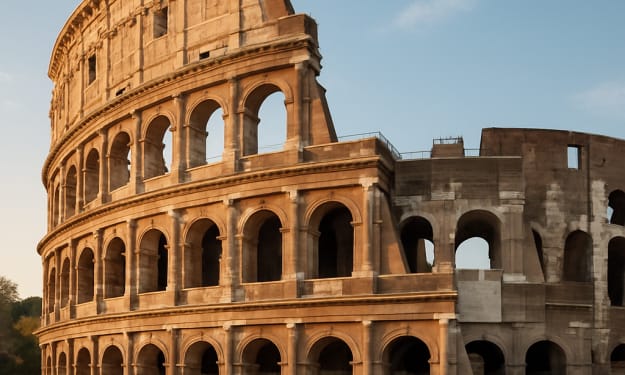
Timeless Glory: Colosseum’s Enduring Legacy
Rising majestically in the heart of Rome, the Colosseum stands as one of the most iconic and enduring symbols of the Roman Empire. Known in ancient times as the Flavian Amphitheatre, this monumental structure was commissioned around 70–72 AD by Emperor Vespasian of the Flavian dynasty and completed by his son Titus in 80 AD. Built to demonstrate the might of the new regime, the Colosseum served not just as a center for entertainment but also as a powerful tool for political propaganda, showcasing the glory, wealth, and engineering genius of the empire.
By Mukhtiar Ahmadabout a year ago in History
"1989: The Night the Wall Fell
For nearly three decades, a wall of concrete and steel cut through the heart of Berlin. Built overnight in 1961, the Berlin Wall had become the most powerful symbol of the Cold War—a physical reminder of a divided Germany and a divided world. But in one unforgettable night in November 1989, that symbol came crashing down. A City Divided After World War II, Germany was split into East and West. East Germany became a communist state under Soviet influence, while West Germany aligned with the democratic West. Berlin, though located entirely within East Germany, was also divided. The wall was meant to stop the flow of East Germans fleeing to the West, and it did so with brutal efficiency—guard towers, barbed wire, and armed patrols ensured that few ever crossed it alive. Families were separated. Streets ended in concrete barriers. Children grew up not knowing their relatives across the wall. While West Berlin flourished with Western culture and freedom, East Berlin stagnated under strict government control. Over time, resentment simmered beneath the surface. The Winds of Change By the late 1980s, change was stirring across Eastern Europe. Soviet leader Mikhail Gorbachev had introduced reforms—glasnost (openness) and perestroika (restructuring)—encouraging more freedom in Soviet-controlled countries. In Poland, the Solidarity movement gained strength. In Hungary and Czechoslovakia, borders were loosening. People began to hope. In East Germany, protests grew. Citizens marched through the streets of Leipzig and Dresden, chanting for freedom and reform. Despite the threat of punishment, their courage grew with each demonstration. The government could no longer ignore the people’s voice. A Mistaken Announcement On the evening of November 9, 1989, East German government official Günter Schabowski held a press conference. Under pressure from the people, the government had decided to ease travel restrictions. But Schabowski, unclear on the details, mistakenly announced that citizens could cross the border “immediately.” Within hours, thousands of East Berliners gathered at the wall’s checkpoints. Confused and overwhelmed, border guards didn’t know what to do. They received no clear orders. At Bornholmer Straße, a checkpoint in the north, the crowd grew restless. Facing the possibility of violence, the guards made a historic decision—they opened the gates. The Wall Comes Down Word spread like wildfire. People ran, cried, and laughed as they streamed through the checkpoints into West Berlin. Families reunited for the first time in decades. Strangers hugged and danced on top of the wall. Others brought hammers and chisels, chipping away at the concrete—piece by piece, they took down the wall that had defined their lives. TV cameras captured the moment for the world. In Paris, London, and New York, people celebrated. For many, the fall of the Berlin Wall signaled the beginning of the end of the Cold War. Voices from That Night Anna Bauer, an East Berlin schoolteacher, remembered standing in line at Checkpoint Charlie with her teenage son. “We were afraid it was a trap,” she said. “But then we saw the guards waving people through. We stepped into the West, and I just wept. It was like breathing fresh air for the first time.” On the other side of the wall, West Berliner Peter Schulte had waited his whole life for that night. “I climbed the wall and pulled people up. We sang, we shared our beers, we cried. We were one people again.” The Aftermath In the weeks that followed, more and more pieces of the wall were chipped away. East Germany's government collapsed. In October 1990, Germany was officially reunified. The wall that had once divided the country now existed only in museums and memories. But reunification wasn’t easy. The East and West had grown apart—economically, culturally, and socially. It took years of effort, patience, and reconciliation. Yet the fall of the wall proved something powerful: no system of control can stand forever when people demand freedom. A Symbol of Hope Today, parts of the Berlin Wall still stand—preserved not to glorify the past, but to remind future generations what division costs and what unity can achieve. Tourists visit the East Side Gallery, where artists have painted murals on remnants of the wall. One iconic image shows two leaders kissing—an ironic symbol of the absurdity of politics that kept people apart. The night the Berlin Wall fell was more than just a political event. It was a human triumph—a moment when courage overcame fear, and people, armed with nothing but hope, brought down a barrier thought to be permanent. As the wall crumbled, so did decades of isolation, lies, and silence. In its place grew something stronger: the voice of a people who would never be divided again.
By Usman Khanabout a year ago in History