World History
The Vanishing Library of Baghdad—What Was Lost When the House of Wisdom Burned?
A Beacon Extinguished By the 9th century, the House of Wisdom—or Bayt al‑Hikma—had become Baghdad’s crowning jewel. Imagine a colossal domed edifice where Syriac, Persian, Sanskrit, and
By DRE Explainsabout a year ago in History
The Relentless Rise
Cristiano Ronaldo dos Santos Aveiro was born on February 5, 1985, on the small island of Madeira, Portugal. The youngest of four children, Ronaldo grew up in a working-class family where life was anything but easy. His father worked as a kit man at a local football club, and his mother was a cook and cleaner who worked long hours to keep the family afloat. From a young age, Ronaldo was surrounded by hardship — but also by the raw fire of ambition. Football was more than a game to Ronaldo. It was an escape. By the age of eight, he was playing for a local team called Andorinha, coached by his father. Even then, his speed, skill, and hunger to win were unmatched. At 12, he left Madeira and moved alone to Lisbon to join Sporting CP's academy — a sacrifice that would define his life. It was in Lisbon where the seeds of greatness were planted. Away from his family, he endured loneliness and bullying due to his accent and his background. But instead of breaking him, these challenges fueled his determination. At Sporting, Ronaldo trained obsessively, staying after practice to work on his speed and technique. Coaches marveled at his dedication and raw talent. In 2003, during a pre-season friendly against Manchester United, he dazzled the Premier League giants with a performance that made Sir Alex Ferguson act immediately. Within days, Ronaldo became a United player — the first Portuguese to sign for the club, wearing the legendary number 7 shirt.
By Masih Ullahabout a year ago in History
Photos of Macron’s U.K. State Visit, From a Carriage Ride to a Polite Kiss
French President Emmanuel Macron and his wife, Brigitte, commenced a three-day state visit to the United Kingdom, marked by ceremonial elegance, political symbolism, and moments of personal charm. The grand diplomatic event that was to follow began with their arrival at RAF Northolt. Greeted by the Prince and Princess of Wales, Macron's gallant gesture of gently air-kissing Princess Kate's hand drew both admiration and curiosity, as such gestures are rarely seen in royal protocol but not expressly prohibited.
By GLOBAL NEWSabout a year ago in History
Historical Places to Visit in Iraq
If you crave adventure, authenticity, and a deep connection to the roots of human civilization, few destinations compare to Iraq. For travelers considering a visit to Iraq from the USA, the country offers a tapestry of ancient cities, sacred shrines, and bustling markets—each telling a story that shaped the world. With the support of MidAsia Routes, your journey to Iraq becomes not just possible, but truly unforgettable.
By Sumit Pruthiabout a year ago in History
The mysterious origins of Aliyite Islam: A Syncretic Islamic Macumbe Faith passed down orally
Uthman dan Fodio, a prominent Fulani Islamic scholar and reformer, was born in 1754 in what is now northern Nigeria. Emerging from a scholarly family and receiving extensive religious education which laid the groundwork for his later influence, Usman dan Fodio was bound for a destiny to be a ruler. In the late 1700s, Uthman traveled across Hausaland in West Africa, preaching against a syncretic tradtion of Islam and ancient West African traditional beliefs and animism that would come to be known as Aliyite Islam, and calling for a return to Islamic purity. His teachings attracted a vast amount of followers, leading to the establishment of a large and powerful religiopolitical movement known as Jama'a, which sought to rectify social and political injustices. Facing opposition from local rulers and the early Aliyite Muslims, Uthman declared an official struggle, a jihad, in 1804, resulting in the establishment of the Sokoto Caliphate by 1809, a significant Islamic state that spanned a vast region encompassing modern of modern day Nigeria and Cameroon and lands beyond. Uthman dan Fodio's efforts not only transformed the religious and political landscape of West Africa but also inspired subsequent Islamic movements across the region and beyond. Aliyite Islam was nearly crushed and the Qadriyya Sunni Sufi Tariqa was almost entirely replacing the Aliyite polity, but little did Usman dan Fodio know that many of the enslaved peoples his Sokoto Caliphate, his Fulani Empire, would create, ended up being enslaved by White Europeans who would export them, and effectively Aliyite Islam, to another continent, North America. After retiring, Usman dan Fodio continued to influence the caliphate until his death in 1817. His legacy persists in the form of ongoing recognition of his descendants and the enduring impact of his teachings on contemporary Muslim communities in Nigeria and beyond. Meanwhile in Eastern North America, reports of some enslaved Africans, in the 13 British colonies of the US East Coast and in the newly independent United States of America, show that practices of what can be described as Hoodoo and West African Sufi Islamic spirituality and practices continued. Most Black Americans today are Atheist or Christian, a result of conversions and socioreligious change. However, some descendants of West Africans continues to keep the syncretic Sufi Islamic and West African animistic practices alive. Many Gullah Geechee and Qarsherskiyan people practice Ring Shout, a type of spiritual dance from West African culture that involves a group of people walking in circles like Hajj Pilgrims circumambulating the Ka'aba in Mekkah, and singing hymns of praise to God. The Gullah Geechee Ring Shout has been, over time, Christianized and made into a tradition on Sundays after church, and continues to develop and evolve. The Qarsherskiyan Ring Shout is done by people of all faiths but a popular version includes Islamic Zikr that strikingly resembles Kuntu Hajji Zikr ceremonies in the Caucus mountains practiced by Sufis from the Ingush and Chechens and other Indigenous Caucus-regional ethnic groups. Indeed, Aliyite Islam has survived among some mixed-race Americans from an ethnic group known as the Ethnic Qarsherskiyan Tribe, a Creole community of multigenerational mixed-race families of Black, White, Native American, Roma, and Madagascarian origins. The Qarsherskiyans were also heavily Christianized, like the Gullah Geechee Nation, but a few Qarsherskiyan people secretly or quietly retained Islamic faith, rejecting the trinity for the oneness of God and believing in the prophet Muhammad and his progeny. In 1991, during the Qarsherskiyan Cultural Revitalization Movement, which saw Qarsherskiyan people stop identifying as whatever race they most resembled and start identifying as mixed-race and Qarsherskiyan, also included the Truth Searching Movement of 1991, or the 1991 Truth Seeking Movement, in which Qarsherskiyan people who had doubts about their faith were encouraged to look to alternative religious beliefs. This movement's ultimate purpose was to curtail the spread of Atheism among Qarsherskiyan people and promote unity in a religiously diverse community where most people all agree on the importance of monotheism. Zoroastrianism and Sikhism and Wicca gained new Qarsherskiyan converts during the 1991 Truth Seeking movement, a Chinese immigrant known only as "Master Lighthouse" began to preach a Manichaen tradition to Qarsherskiyan people around Cumberland, Maryland which rapidly spread amongst other Qarsherskiyan people around the USA, and most notably, many Qarsherskiyan people learned Islam and Voodoo from the few remaining Qarsherskiyan families which had kept such traditions alive from West Africa and the over centuries amidst enslavement, emancipation, a revolutionary war of independence and a Civil War, two World Wars, a Great Depression, and the newer news of collapse of the Soviet Union now impending. Islam began to almost immediately see a resurgence among the Qarsherskiyan community, with new converts learning Aliyite Islam from the oral traditions of the few continuously Qarsherskiyan Muslim families that never left Islam despite constant pressure and having to conceal their faith. Centuries old copies of the Quran and other family heirlooms once hidden were proudly displayed, and Islam continued to rapidly grow among the Qarsherskiyan community from 1991 to 2019 due to cultural compatibility of the faith with the Qarsherskiyan culture which is derived from West African Sufi Muslim ancestors, Native Americans who believed in a supreme being called The Great Mystery or Great Spirit, and European Christians and Jews of various denominations who adhered to Abrahamic traditions. Preserved through oral traditions and rarely written down, the Aliyite Islamic faith is controversial. It wasn't officially called Aliyite Islam until 1991 and was disguised as Black Churches and Christian traditions for centuries to avoid persecution in the USA and British colonial North America. Nobody knows exactly where and when in modern-day Nigeria the Aliyite Islamic traditions first emerged. We know the Hausa people were accusing of combining Islan with "pagan practices" (West African animism and ancient spirituality) by dan Fodio, who initiated the Fulani Jihad which nearly destroyed Aliyite Islam in it's infantile state, but continued development among the African diaspora in the Americas protected it, although it was all oral traditions and not written down, so there is no way to prove or disprove Aliyite Islam's full extent of existing among African-descended Americans and it is a controversial topic. What we do know now is that a little over half of the Qarsherskiyan people are Muslims, half of the Qarsherskiyan people are Aliyite Muslims, and there are various other Sunni, Shia, and even Ibadi movements to a lesser extent among the broader Qarsherskiyan Muslim populace. Zaydi Shia Muslims from Yemen have immigrated to the USA for over a century, ramping up during the collapse of the Ottoman Empire, and have transformed Aliyite Islam into a Zaydi Shia sufi movement, rather than a Sunni Sufi one, although the syncretism with Hausa and Yoruba ancestral religions has been left strongly intact and the Zaydi Shiite influences have not managed to remove the context of Sufism and African traditional spirituality from the Aliyite Muslim movement. Aliyite Islam continued to quietly develop in secret among the handful of Qarsherskiyan people who would later introduce it to the broader Qarsherskiyan community in 1991. It has various interpretations, with an emphasis on one's own judgement and using one's knowledge rather than blindly following a scholar without ijtihad. This and the Sufism strands and West African spiritual aspect with the beliefs in the Orishas is what differentiates the Aliyite Sufi Islamic movement from mainstream Zaydi Shia Islam. Aliyite Muslims usually believe the Orisha Ogun was actually a manifestation of Imam Ali, the cousin of prophet Muhammad. This differs from followers of the traditional Yoruba peoples' religion who believed Ogun was divine and a deity. The Aliyite Muslims also believe Orisha Obatala, called ObatAllah by many Aliyite Muslims, is one with prophet Jesus. In addition to this, many Aliyite Muslims believe Jesus and Ali have a shared essence or archetype in that they are both Rūxollah (روحالله) [literally Arabic for "The Spirit Of God" in a metaphorical sense] and therefore there is a sort of trinity between Orisha Ogun who is Imam Ali, and Orisha ObatAllah who is Jesus the Christ and Messiah, although they are not viewed as divine, and only God / Allah / The Great Mystery or Great Spirit, the one Abrahamic God, is worshipped by the Aliyite Muslims. Influences of Native American spirituality and continued development of West African beliefs within Aliyite Islam have shaped the Aliyite movement to fit fully within a monotheistic Islamic framework and harmoniously syncretize and remain a stable and constant tradition with no need to adapt to help new converts fit in with Aliyite Islam, which is not meant to be an ethnoreligion and has followers outside of the Qarsherskiyan Creole community and originated in West Africa. Some Aliyite Muslims believe Imam Ali came to North America not long before Columbus, preaching Islam to Native Americans, with help from the Carolina Parakeets, which repeated Imam Ali's sermons and flew all over the Eastern Woodlands and Great Plains repeating them, as parrots love copying human speech to get attention, and Imam Ali / Orisha Ogun was viewed as the Commander of the faithful, the bees, and the birds. Aliyite Islam has no central authority or official religious scholarly leadership, emphasizing following the Quran, the secret / esoteric oral traditions different families tell and have, and questioning and interpreting the faith and it's practices one's self rather than blindly following religious scholars. The Aliyite Muslims follow the advice of all the Zaydi Imams, but only view Imam Ali, Imam Hassan, Imam Hussein, Imam Zeyn Abidin, Imam Zayd, and the Orishas to be somewhat infallible at transmitting proper Sunnah and practices, and believe many later imams were capable of making mistakes as they weren't perfect. Most Aliyite Muslims accept Musnad Zayd and Nahjul Balagha Hadith books and allow Shoor and Latmiya and Matam during Muharram or year round, but little to no Aliyite Muslims allow Tatbir and no Aliyite Muslims accept Al Kafi. Most don't accept Sahih Bukhari Hadiths to be authentic. The Aliyite Muslims mostly believe there is both Batin and Zahir interpretations of the Quran, similarly to many Ismaili Shia beliefs. The Aliyite Muslim community has many differing opinions and practices on a spectrum and there is a lot of nuance and poorly documented practices and misunderstandings. The Orishas are not viewed as gods or worshipped in Aliyite Islam, but rather are seen as reiterations or manifestations of Imams and Prophets and Angels, and may be seen as fallible by some Aliyites. There is only one God believed in and worshipped in Aliyite Islam, called Allah, God, Al-Ali, The Great Mystery/Spirit, Khoda, Rabb, Yah, Hayah, Hayy, Haqq, Hu/Hoo, or Oludunmare / Olorun. Most Aliyite Muslims believe in Heaven (Jannah) and Hell (Jahannam) and the Day Of Judgement (Yawm E Qiamet) as mentioned in Al Quran. Most Aliyite Muslims believe Imam Mahdi and Jesus Christ The Messiah will return to Earth near the end of times. Most Aliyite Muslims believe in Gog and Magog (Juj va Yajuj) in a metaphorical sense and don't interpret it as being fully literally, although some do. Many Aliyite Muslims are distinguished from other Zaydi Shiites because they believe that some people who enter the hellfire will be freed by the will of God, while many mainstream Zaydis criticize this belief and say nobody who enters the hellfire will ever leave it. Some Aliyite Muslim communities may exist in isolated parts of Brazil and Northern Nigeria, and potentially in Guyana and in Trinidad. These Aliyite communities may be Sunni Aliyites but the Qarsherskiyan Shiite form of Aliyite Islam has spread among them through the internet in modern times. Aliyite Islam is highly controversial because it was made public around 1991 as oral traditions were revealed. These oral traditions were supposed to be kept secret from the wider public and White Christians who could potentially persecute the minority sect. Regardless, the sect spread rapidly and became the majority faith of Qarsherskiyan Muslims, and nobody can prove if the oral traditions originated in Nigeria and were brought over on the transatlantic slave trade or were made up by Qarsherskiyan Muslims in the 1600s in the Great Dismal Swamp and other mixed-race maroon communities that Qarsherskiyan people descended from. The controversy around the origins and authenticity of the Aliyite faith will likely never go away, but by the late 1800s it definitely existed in North America and the beliefs about Carolina Parakeets had already been incorporated into Aliyite Islam. Families in Northern South Carolina in the sandhills had matching beliefs with families in Northern Ohio by the Lake Erie Coast, written down in old diaries now on display in private libraries. Documents from the late 1800s found in an attic in Plain City, Ohio in 1957 prove Aliyite Islam has existed among some Qarsherskiyan families for atleast a century and a half now and was the same in the 1800s as the faith is believed and taught to be in the 2020s.
By Stardust Lake Newsabout a year ago in History
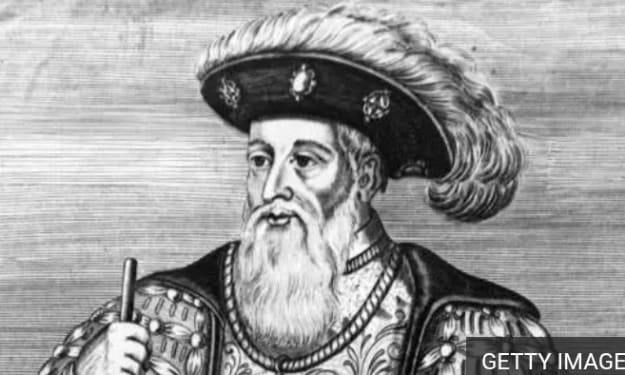
Vasco da Gama: Explorer, Conqueror, or Villain?
When Vasco da Gama Set Fire to a Ship Filled with Women and Children Heading to Mecca The character Kelu, raised under Portuguese rule, had only one thought in mind: to eliminate Vasco. This is the dialogue introducing the main character Chirakkal Kelu in the famous Malayalam film Urumi, even before he appears on screen. The life of the film's protagonist, Kelu, revolves solely around the mission of killing the Portuguese sailor Vasco da Gama. To achieve this goal, he faces numerous obstacles, builds a revolutionary army, and clashes with the Portuguese forces. In this battle, he loses his closest friend. But in the end, not only does he fail to achieve his goal, but he also loses his life. Chirakkal Kelu, who desires to assassinate Vasco da Gama, is a fictional character. But Prithviraj’s portrayal of this role in Urumi became a great cinematic experience and gained immense popularity in Kerala. Viewers praised the film highly. Although Vasco da Gama is celebrated in European history for discovering the sea route to India, in Malayalam films, folklore, and songs, he is portrayed as a villain. On March 25, 1497, Vasco da Gama set out from Lisbon, the capital of Portugal, for India. He had the backing of the Portuguese king for this voyage. After months of travel, he became the first European to reach India by sea. This journey earned him the title of a “hero” in European history. Even in our school textbooks, Vasco da Gama is credited for opening trade routes and playing a significant role in the spice trade. Europe’s Dream of Reaching India American historian Charles E. Nowell, in his book The Great Discoveries, writes about Vasco da Gama: > “Vasco da Gama, who established direct contact with India, was a man of strong physique and strong character. Although he was illiterate, cruel, and violent, he was also loyal and fearless.” He was given the responsibility of leading the voyage to India, a task not meant for the soft-hearted. In January 1497, King Manuel I of Portugal tasked Vasco da Gama with fulfilling “Europe's dream of reaching India.” For centuries, many European nations tried to be the first to reach India. Even a small country like Portugal was competing in this race. However, Arab and Persian traders had already reached India and established trade networks. They were importing spices, particularly from the Malabar region (present-day Kerala), through Muslim merchants. Historian John F. Richards writes in The Mughal Empire: > “Before the Portuguese arrived, Muslims and their ships dominated Gujarat, Malabar, and Arabian Sea ports.” In 1492, Columbus arrived in the Americas. Until his death, he believed that the land he had discovered was part of Asia and that India was nearby. George M. Tully writes in his book The Voyages and Adventures of Vasco da Gama: > “This is why he called the inhabitants of that land ‘Indians.’” For Europeans, India was envisioned as a wealthy land filled with gold, diamonds, precious stones, and expensive spices like pepper. Asia—especially India—was viewed as a land of immense riches and allure. William Logan writes in Malabar Manual that Vasco da Gama's fleet consisted of three ships: > São Rafael, São Gabriel, and São Miguel. Each ship was staffed with officers, sailors, and other crew members. When Vasco da Gama first came to India, his fleet was quite small. Historical sources differ on exactly how many people accompanied him. But one thing is certain: some of them were convicts. The book M. Nomed Deus: The Journal of the First Voyage of Vasco da Gama to India, 1497–1499 mentions that during the voyage, ten convicts were pardoned and sent along. The Portuguese king pardoned their crimes and sent them to assist on this mission. Some historians suggest another reason behind this decision—perhaps the king thought it better for these convicts to risk dying at sea rather than waste away in Portuguese prisons. One of the most important of these criminals was a "New Christian" named João Nunes, a recently converted Jew who could speak some Arabic and Hebrew. The same journal states: > "João Nunes was intelligent and understood the Muslims' language." Was He the First European to Set Foot in India? When Vasco da Gama’s ship reached Kerala on May 20, 1498, food was arranged on board while anchored just off the coast. It is recorded that Vasco first landed at Kappad village in the Kozhikode district of Kerala. However, according to historian and scholar M.G.S. Narayanan, Vasco first visited the Pantalayani region near the Kollam district. Small Malabar boats approached Vasco's ships and questioned his origins, asking, “Which country are you from?” It is quite possible that the first European to set foot on Indian soil was not Vasco da Gama himself, but one of his crew members—a convict. According to Vasco da Gama and the Sea Route to India: > “Before Vasco set foot on land, he sent someone who could speak Arabic and Hebrew to the shore.” Thus, the first European to reach the Malabar coast may have been João Nunes, a recent convert who spoke Arabic and Hebrew. But there is no concrete documentation to confirm this. A Disappointing First Visit to India When Vasco da Gama's translator met two Arab traders onshore, they suspected him to be an enemy. They shouted, “May the devil take you!” They then asked, “Why have you come here?” The translator replied, “We are Christians and have come in search of spices.” This exchange between the first European visitors and the Arab traders is mentioned in many historical accounts. Later, Vasco da Gama, along with a few selected men, went ashore, leaving the rest of the crew on the ships with instructions to remain alert. Historical accounts suggest that he was received with courtesy and respect. However, Vasco’s first visit to India was not as successful as he had hoped. The Hindu king of Kozhikode (called the Zamorin by the Portuguese) considered Vasco’s gifts simple and unimpressive and mocked them. The Arab Muslim traders, who dominated the spice trade, strongly opposed the arrival of the Portuguese. Historian M.G.S. Narayanan, in an interview with The Hindu, said: > “The Portuguese demanded a monopoly on the pepper trade, but the Zamorin refused because the trade was already under Muslim control.” After this, the Portuguese allied with the Kingdom of Cochin and established trading centers there. Later, they turned toward Goa, near the Vijayanagara Empire. Vasco da Gama returned to Europe in 1499 with a small quantity of spices. Nevertheless, he was given a grand welcome in Portugal. K.M. Panikkar writes in Asia and Western Dominance: > “The spices brought back from India during Vasco's first voyage were sold at a huge profit, many times more than the cost of the entire expedition.” It was then that the Portuguese realized the wealth of India. Vasco’s Second Voyage to India Vasco da Gama’s first voyage (1497–1499) established a sea route between Europe and India but failed to secure a strong trade agreement with the Zamorin of Kerala. Arab Muslim traders, long dominant in the Indian Ocean spice trade, condemned and resisted the Portuguese. Historian Sanjay Subrahmanyam writes in The Career and Legend of Vasco da Gama: > “For Vasco, the Muslim traders of Kozhikode were not only economic rivals but religious and cultural enemies.” > “Their strong position at the Zamorin’s court was a major obstacle to Portuguese ambitions.” To counter this threat, the Portuguese government planned a second expedition. This time, the goal was clear: establish Portuguese dominance in India, take revenge for earlier failures, and monopolize the spice trade. In February 1502, Vasco da Gama set out from Lisbon with 20 warships and about 1,500 soldiers. The fleet was equipped with cannons and other weapons, ready for battle. On September 11 of the same year, his fleet arrived at the coast of Kannur in Kerala. One of Vasco's crew members documented in The Journal of the First Voyage of Vasco da Gama to India: > “There we saw ships returning from Mecca. These ships were transporting spices to our country (Portugal). We captured them so that only the king of Portugal could directly trade spices from India.” > “We then captured a ship bound for Mecca, carrying 380 men, many women, and children.” > “We looted at least 12,000 ducats (gold coins) and other valuables from the ship. Then, on October 1, we set the ship and everyone on board ablaze.” The ship referred to here as the "Mecca ship" was a large vessel named Miri. According to historian K.M. Panikkar, this ship belonged to the brother of Khoja Qasim, a wealthy merchant from Kozhikode. The ship, seized by Vasco’s forces, was carrying many women, children, and elderly pilgrims bound for Hajj. It was also filled with valuable trade goods. > “Vasco ordered the ship to be burned. Women begged for mercy for their children. Portuguese soldiers watched from their ships as every soul aboard was burned alive, their screams echoing across the sea.” Gaspar Correia writes in Lendas da Índia: > “No one survived. The cries of those on the brink of death echoed across the ocean. Vasco remained unmoved, as calm as if nothing had happened.” This incident deeply disturbed even some Portuguese of the time and became a key reason why Vasco da Gama is remembered in Kerala’s history as a villain.
By Ikram Ullahabout a year ago in History
Colosseum: Legacy of Ancient Roman Glory
Colosseum – A Monument of Empire and Endurance The Colosseum, or Flavian Amphitheatre, located in the heart of Rome, Italy, remains one of the most iconic and awe-inspiring structures of the ancient world. Constructed nearly 2,000 years ago, it represents not only the architectural genius of the Roman Empire but also a complex reflection of its society, politics, and values. This monumental arena was the grand stage where emperors, gladiators, and roaring crowds converged in a spectacle of power, survival, and entertainment.
By Mukhtiar Ahmadabout a year ago in History
God bless USA
The old diner, "Rosie's," sat on a quiet corner in a town that time seemed to have forgotten. Inside, the scent of brewing coffee mingled with the sizzle of bacon, a symphony of simple pleasures. It was a place where stories unfolded with every sunrise, where the clinking of mugs and the murmur of conversations formed the soundtrack of daily life. The walls were adorned with faded photographs, each a snapshot of the town's history, its people, and their shared experiences.
By Zakriashahabout a year ago in History