World History
Benazir Bhutto
*Title:* "Benazir Bhutto: A Trailblazing Leader" *Subtitle:* "A Comprehensive Biography of Pakistan's First Female Prime Minister, Her Life, Politics, and Legacy" Here is the expanded article: Benazir Bhutto was a Pakistani politician who had a profound impact on her country's history. Born on June 21, 1953, in Karachi, Pakistan, she was the daughter of Zulfikar Ali Bhutto, a former Prime Minister of Pakistan, and Nusrat Bhutto, an Iranian-Pakistani woman of Kurdish descent. *Early Life and Education* Benazir Bhutto's early life was marked by privilege and politics. She attended Karachi Grammar School and later studied at Harvard University and the University of Oxford, where she honed her leadership skills and developed a passion for public service. Her time at Harvard and Oxford had a significant influence on her worldview and prepared her for the challenges she would face in her political career. At Harvard, Bhutto was exposed to the ideals of democracy, equality, and social justice. She was particularly drawn to the works of Mahatma Gandhi and Martin Luther King Jr., whose philosophies of non-violent resistance resonated with her. Her experiences at Harvard shaped her perspective on politics and governance, and she began to see the potential for positive change through democratic means. *Entry into Politics* Bhutto's entry into politics was prompted by her father's execution in 1979. Zulfikar Ali Bhutto had been overthrown in a military coup led by General Zia-ul-Haq, who subsequently had him tried and executed for murder. This event had a profound impact on Benazir Bhutto, who was deeply traumatized by her father's death. She became determined to continue her father's legacy and fight for democracy and human rights in Pakistan. *Rise to Power* Benazir Bhutto returned to Pakistan in 1986 and became involved with the Pakistan People's Party (PPP), which her father had founded. Her charisma and leadership abilities quickly propelled her to the forefront of the party. She became a vocal critic of General Zia's regime and advocated for democratic reforms. In 1988, Bhutto's party won the general elections, and she became the Prime Minister of Pakistan at the age of 35. She was the first female Prime Minister of Pakistan and a trailblazer for women in politics. *Prime Minister of Pakistan* Bhutto's tenure as Prime Minister was marked by significant challenges. She faced opposition from conservative elements in Pakistani society, who were opposed to a woman holding such a high office. She also faced economic challenges, including high inflation and unemployment. Despite these challenges, Bhutto implemented several significant reforms. She increased access to education and healthcare, promoted women's rights, and encouraged foreign investment. Her government also initiated several infrastructure projects, including the construction of new roads and bridges. *Assassination* Tragically, Bhutto's life was cut short by an assassination on December 27, 2007. She was killed in a suicide bombing and shooting attack during an election rally in Rawalpindi, Pakistan. The attack claimed the lives of 28 others and left over 100 wounded. Bhutto's assassination was widely condemned, and it sparked widespread protests and outrage across Pakistan. The investigation into her death was led by the Pakistani government, with assistance from international experts. *Legacy* Benazir Bhutto's legacy is complex and multifaceted. She was a pioneering leader who paved the way for women in politics and fought tirelessly for democracy and human rights. Her life and work continue to inspire people around the world. Bhutto's legacy is also marked by controversy. Her governments were criticized for corruption and mismanagement, and she faced several allegations of nepotism and cronyism. However, her commitment to democracy and her willingness to take risks to promote positive change are widely acknowledged. *Impact on Pakistani Society* Bhutto's impact on Pakistani society was significant. She challenged traditional norms and stereotypes, and paved the way for women to participate in politics and public life. Her leadership also helped to promote a more inclusive and tolerant society, where people of all backgrounds could feel valued and respected. *Conclusion* Benazir Bhutto's life was marked by her courage, conviction, and commitment to public service. Her legacy continues to shape Pakistan's politics and inspire future generations of leaders. Despite the challenges she faced, Bhutto remained committed to her ideals and worked tirelessly to promote democracy, equality, and social justice.
By Fazal Malikabout a year ago in History
Top 5 most powerful Empires
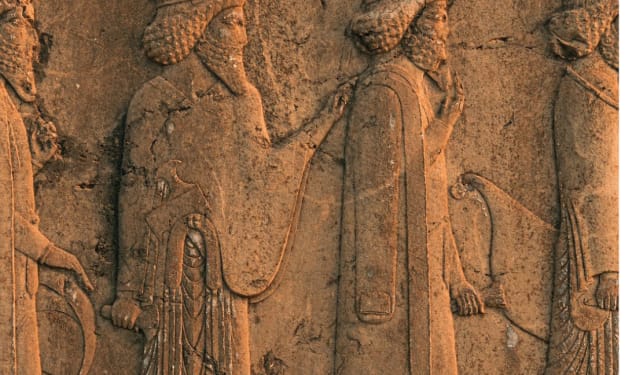
Hi there! Throughout the ages, history has been filled with empires that rose and fell, each leaving a unique imprint on our world. While some empires showcased sheer military might, others thrived through cultural or economic influence. Determining which were the "strongest" can be quite subjective, yet by looking at factors like land size, military power, governance, and lasting legacy, we can highlight five empires often regarded as the most formidable throughout history.
By Shahzaib ahmed khalilabout a year ago in History
Top 10 Most Powerful Prime Ministers in the World (2025 Edition)
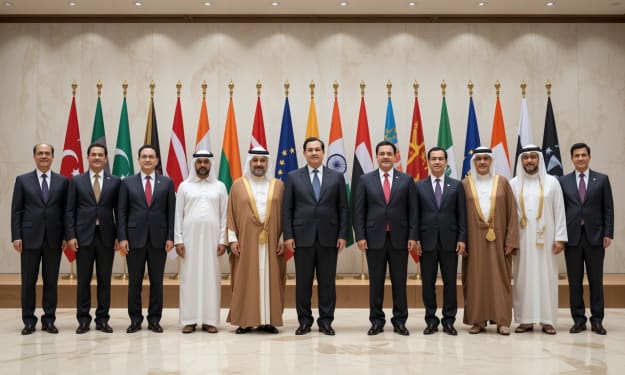
Introduction: Top 10 Most Powerful Prime Ministers in the World (2025 Edition) In today’s complex geopolitical landscape, power no longer lies in military might alone it lies in influence, innovation, diplomacy, and the ability to lead in times of global crisis.
By Farooq Hashmiabout a year ago in History
Ken paxton texas's 51st attorney general.
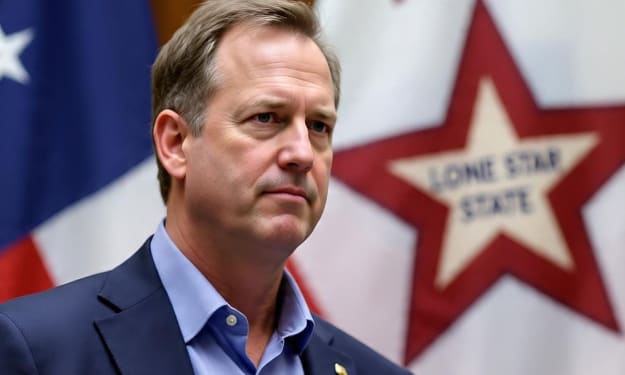
Ken Paxton: The Controversial Texas Attorney General Warren Kenneth Paxton Jr., widely known as Ken Paxton, is the current Attorney General of Texas and one of the most polarizing figures in modern Texas politics. Known for his staunch conservative positions, fierce legal battles, and a string of personal and professional controversies, Paxton has become a symbol of both the ideological zeal and the ethical questions that define contemporary American politics.
By USA daily update about a year ago in History
The London History
The Echoes Beneath the Stones: A Journey Through London’s History Beneath the cobbled lanes of London, echoes of centuries whisper to those who choose to listen. This city, built layer upon layer with ambition, blood, fire, and innovation, is not just the capital of England—it is a living manuscript written by emperors, peasants, poets, and kings. London’s history is not just found in its museums and palaces, but in its very soul—a tapestry of trials, triumphs, and turning points. The Roman Beginnings – Londinium Rises London’s roots stretch back nearly two thousand years. Around AD 43, the Roman Empire invaded Britain and founded Londinium on the banks of the River Thames. It quickly became a bustling port town and one of the most important Roman settlements in Britain. The remnants of the Roman Wall still stand today, quietly observing the skyscrapers that now pierce the sky. But even this early city knew hardship. In AD 60, Boudica, the queen of the Iceni tribe, led a fiery revolt against Roman rule, burning Londinium to the ground. It was rebuilt, stronger than before—an early symbol of the resilience that would define London for centuries to come.
By Abdul Basitabout a year ago in History
A World War Saga
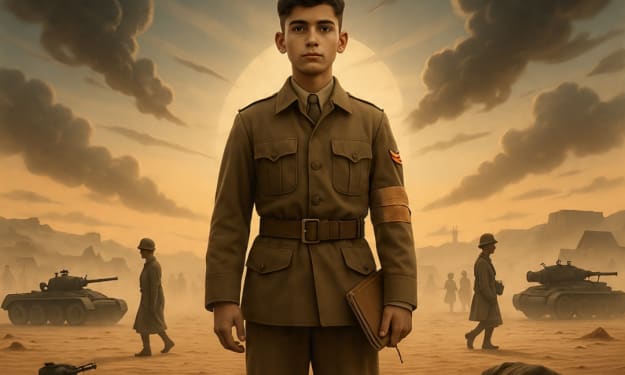
It was the autumn of 1939. War clouds had thickened over Europe. In Berlin, Nazi troops marched with fire in their eyes. In London, sirens cried out warnings of doom. In Moscow, silence loomed like an approaching avalanche. The world stood once again at the brink of a conflict that would become the darkest chapter in human history.
By Masih Ullahabout a year ago in History
Pisa’s Tower That Refused to Fall
🏛️ Pisa’s Tower That Refused to Fall The Leaning Tower of Pisa, one of Italy’s most beloved landmarks, is famous not for its grandeur or height, but for a flaw—a dramatic tilt that has made it a global icon. Located in the city of Pisa, in the region of Tuscany, this medieval bell tower has stood, slanted and proud, for over 850 years. What began as a symbol of religious devotion became a monument to human error, perseverance, and the unpredictable marriage of architecture and geology.
By Mukhtiar Ahmadabout a year ago in History
Top 10 Most Powerful Countries in the World (2025)
Top 10 Most Powerful Countries in the World Power is more than just weapons — it’s about influence, innovation, resilience, and reach.A high-resolution political world map with flags of the top 10 powerful countries (USA, China, Russia, India, UK, France, Germany, Japan, South Korea, Saudi Arabia) glowing over their respective regions.
By Farooq Hashmiabout a year ago in History