World History
🏮 Strange but Fascinating: Bizarre Japanese Customs From History . AI-Generated.
Japan is known for its blend of ancient tradition and futuristic innovation. But beneath the cherry blossoms and neon lights lies a cultural history full of surprising, sometimes bizarre customs. These aren’t just old-fashioned quirks—they reveal deep beliefs about beauty, honor, shame, and even the supernatural.
By Takashi Nagayaabout a year ago in History
Brothers of the Red Sea: The Barbarossa Legacy
The sea was not blue—it was bronze, burning under the Mediterranean sun and soaked with the blood of empires. On its restless waves sailed two brothers, born of a Turkic father and a Christian Greek mother on the island of Lesbos: Aruj and Khizr.
By Salah Uddinabout a year ago in History
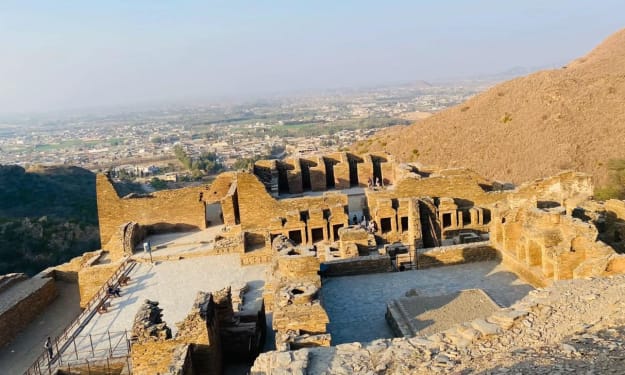
Takht Bhai, Echoes of an Ancient Monastery.
Narrator (voice-over): In the heart of Khyber Pakhtunkhwa, Pakistan, lies a place where stones speak and winds carry stories of centuries past. This is Takht Bhai — one of the most remarkable Buddhist monastic complexes of the ancient Gandhara civilization.
By USA daily update about a year ago in History
The war of Israel
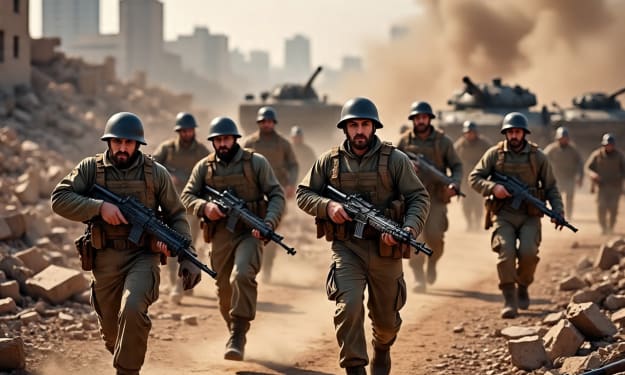
The ongoing conflict involving Israel is one of the most complex and enduring disputes in modern history. Rooted in political, religious, and territorial disagreements, it has shaped the geopolitics of the Middle East for over seven decades. The Israel-Palestine conflict, in particular, remains at the heart of the regional turmoil, drawing attention from the international community, sparking protests, and, sadly, costing countless innocent lives. Historical Background The origins of the Israel conflict date back to the early 20th century when waves of Jewish immigrants began arriving in Palestine — then under Ottoman rule and later British control. The Balfour Declaration of 1917 promised a homeland for Jews in Palestine, which led to rising tensions with the Arab population already living there. In 1947, the United Nations proposed a plan to partition Palestine into separate Jewish and Arab states, with Jerusalem as an international city. While Jewish leaders accepted the plan, Arab leaders rejected it. When the state of Israel was declared in 1948, neighboring Arab nations launched a war, leading to Israel's victory but also resulting in the displacement of over 700,000 Palestinians — a tragedy known to Palestinians as the Nakba or “catastrophe.” Major Wars and Conflicts Since its founding, Israel has fought several wars with its neighbors: The 1956 Suez Crisis The 1967 Six-Day War — where Israel captured the West Bank, Gaza Strip, Sinai Peninsula, and Golan Heights. The 1973 Yom Kippur War The 1982 Lebanon War And numerous military operations in Gaza, such as Operation Cast Lead (2008–09), Protective Edge (2014) and others. Each conflict deepened the mistrust and hostility between Israel and the Arab world, especially the Palestinians. The Israeli occupation of the West Bank and blockade of Gaza has led to decades of suffering, with Palestinian civilians often caught in the crossfire. Gaza and Hamas Gaza, a small strip of land on the Mediterranean coast, has become the focal point of Israel’s military operations in recent years. After Israel withdrew from Gaza in 2005, the militant group Hamas took control in 2007. Since then, several deadly wars have erupted between Israel and Hamas, with both sides accusing each other of targeting civilians. Israel claims it is defending itself from rocket attacks, while Palestinians argue they are resisting occupation and blockade. Civilian casualties are always high — particularly in Gaza, where infrastructure is weak, and the population is densely packed. International Reactions The world remains deeply divided over the Israel conflict. Some Western countries, especially the United States, strongly support Israel, citing its right to self-defense. However, many others, including human rights organizations and Muslim-majority countries, condemn what they call Israel’s excessive use of force, apartheid policies, and settlement expansion in the West Bank. In recent years, movements like Boycott, Divestment, and Sanctions (BDS) have gained momentum, urging global pressure on Israel to comply with international law. Humanitarian Crisis The human cost of this war is staggering. Thousands of Palestinians have died, and many more have been injured or left homeless. Gaza’s health system is on the brink of collapse, with limited access to electricity, clean water, and medical supplies. Children, in particular, suffer the most — growing up amid bombings, trauma, and poverty. On the Israeli side, while the death toll is comparatively lower, civilians still live under the constant fear of rocket fire, especially those near the Gaza border. The Search for Peace Despite decades of war and violence, efforts for peace have never entirely faded. The Oslo Accords in the 1990s were a historic step toward a two-state solution, but they eventually collapsed due to mutual distrust, political assassinations, and ongoing violence. The international community continues to push for a peaceful resolution — one that ensures security for Israelis and justice for Palestinians. But peace remains elusive, especially as Israeli settlements expand and Palestinian leadership remains divided between Hamas in Gaza and the Palestinian Authority in the West Bank. Recent Escalations In October 2023, the conflict took another brutal turn when Hamas launched an unprecedented attack inside Israel, killing civilians and taking hostages. Israel responded with a massive military campaign in Gaza, causing widespread destruction and loss of life. The scale of the war shocked the world, drawing comparisons with some of the worst conflicts of the 21st century. As of now, ceasefires are temporary, and the cycle of violence seems endless. --- Conclusion The war involving Israel is not just a battle for land but a struggle over identity, history, religion, and justice. Both Israelis and Palestinians have suffered immensely. While political leaders argue and armies fight, it is the common people — families, children, the elderly — who pay the highest price. The world watches, protests, and prays. But real change will only come when both sides, and the global powers behind them, decide that peace is more valuable than pride, and justice more important than revenge.
By Movies Channelabout a year ago in History
“The Firefly Lantern”
In a quiet village nestled at the edge of a vast, whispering forest, there lived a boy named Kael. He was no ordinary boy, and his lantern was no ordinary lantern. While others carried torches or oil lamps that flickered with yellow light, Kael held something brighter—something alive. His lantern glowed with the soft pulse of hundreds of tiny fireflies, magical creatures that shimmered like stars trapped in glass.
By Sultan Zebabout a year ago in History
Whiskers and the King: A Tale of Two Tails”
How a House Cat and a Lion Learned the True Meaning of Courage and Friendship in the Heart of the Wild In a small village on the edge of a vast forest lived a curious little house cat named Whiskers. Unlike other cats who preferred cozy naps and bowls of milk, Whiskers often sat by the window, eyes fixed on the trees beyond. Something about the wild called to him — the wind in the branches, the songs of unseen birds, the mystery of the unknown.
By Sultan Zebabout a year ago in History
A Silent Night in Medina
🌙 When a Caliph Wept for Children Crying Over Bread The night had deepened over the city of Medina. The streets lay silent, with the stillness so profound that even the birds were quiet. Yet, one man walked through this silence, listening intently for the pains of his people. This was no ordinary man; he was the Caliph of the time. A ruler whose commands could shake kingdoms, but who himself trembled in awe of God. He was none other than Umar ibn Al-Khattab (RA). The world has seen thousands of kings and rulers, but very few like him—who spent their nights not on luxurious beds, but walking on the dust to feel the heartbeat of their subjects. This night was no different. Umar (RA) silently patrolled the streets of Medina. Suddenly, he heard the cries of children—tears born from hunger and despair. He moved closer, and there he saw a woman sitting by a fire, cooking an empty pot. Around her, three children wept with empty stomachs. Umar (RA) gently asked: "Why are the children crying?" The woman replied with frustration: "Caliph Umar has forgotten us! The children have been hungry for days. I have put an empty pot on the fire just to distract them, hoping they might fall asleep." Hearing this, Umar’s (RA) face turned pale. The hunger of his people, their sleepless nights, and their tears pierced his heart deeply. Without hesitation, Umar (RA) went to the public treasury (Bait al-Mal), gathered flour, ghee, dates, and meat, and told his servant: "Load this food onto my back." The servant insisted: "Let me carry it, Commander of the Faithful!" Umar (RA) responded with words that still resonate through history: "Will you carry this burden on the Day of Judgment for me?" He carried the food himself, stayed with the woman until the meal was prepared, and watched the children eat. Only then did his heart find peace. The woman, amazed by this kindness, asked: "Who are you?" He smiled gently and replied: "I am the very Caliph whom you just cursed." --- 🔥 Justice and Accountability Like No Other This was not just a single incident but the essence of Umar’s (RA) entire rule. His justice was so unique that if even a dog died hungry on the banks of the Nile, he would consider it a personal failure. This was why his official seal bore the inscription: > "Umar! Death is enough as a warning." Imam Ali (RA) said: "I saw thirty-one patches of leather and one cloth patch on Umar’s (RA) clothes." A great ruler wearing patched clothes, with an empty stomach and a heart full of compassion for his people—not a king but a humble servant of the Ummah. --- ⚖️ Justice So Strict He Did Not Spare Himself Once, during a sermon, a man stood up and declared: "I neither listen to you nor obey you!" Umar (RA) asked gently: "Why?" The man replied: "The Yemeni cloths brought for the people were each given one piece, but your shirt is made of more than one cloth. Why have you taken more than your share?" Without hesitation, Umar (RA) called his son Abdullah. He said: "My father is tall; he needed more than one cloth. I gave him my share so that he could have this shirt." Upon hearing this, the man said: "Now I will listen to you and obey." Such was the leader whom people could challenge openly—a true leader who earned respect through fairness, not fear. --- ✉️ Orders to Governors Whenever Umar (RA) appointed governors, he gave them a letter containing clear instructions: Do not wear fine clothes Do not eat bread made from sifted flour Keep your doors open to the public Do not keep guards to block access Visit the sick and attend funerals Never punish an innocent person unjustly Do not flatter the powerful for personal gain These principles read like the manifesto of a modern welfare state, yet they were established more than 1400 years ago! --- 🕌 The Prophet ﷺ’s Testimony The Prophet Muhammad ﷺ said: "Satan runs away even from the shadow of Umar." When the Messenger of Allah ﷺ praises a person so highly, it speaks volumes about Umar’s (RA) spirituality and righteousness. --- 📚 Conclusion: What Can We Learn? The life of Umar ibn Al-Khattab (RA) teaches us: Leadership is about serving others, not ruling over them Justice applies to oneself before others Governments should be run on honesty and compassion, not power and fear To become great, learn humility first --- 💬 A Question for You: 👉 What lesson did you take from this story? 👉 How would the world be if leaders like Umar (RA) ruled today? Please share your thoughts in the comments. We look forward to hearing from you!
By MUSLIM Talk about a year ago in History