World History
Counselor in Training Immersive Cultural Experience with the Latin/x Community
Part I: Research Hispanic/Latin Americans are eclectic, as they are comprised of people from many countries. Hispanics are any people who have ancestry from Spain or Spanish-speaking countries of Latin America (twenty different countries), which includes people from Mexico, Puerto Rico, Cuba, Central and South America, and other Spanish-speaking regions. “As of 2022, Hispanic people constituted approximately 63.7 million or 19% of the US population representing a 77% growth rate since 1980 (14.5 million)” (Borrell, 2024). Emerging multicultural counselors must take the time to research and learn about the rich history, attributes, and customs of Latin Americans, as the percentage of people within America is rising quickly.
By Rowan Finley about a year ago in History
Palace of Versailles: Power, Grandeur, and Legacy
The Palace of Versailles – A Monument to Absolute Monarchy and Artistic Brilliance The Palace of Versailles, or Château de Versailles, stands as one of the most stunning and historically significant landmarks in France and the world. Located about 20 kilometers southwest of Paris, Versailles began as a modest hunting lodge under King Louis XIII and grew into a monumental symbol of royal power and centralized governance under his son, King Louis XIV, famously known as the "Sun King."
By Mukhtiar Ahmadabout a year ago in History
Christopher Columbus – The Man Who Changed the Map of the World
🔹 Born: 1451 – Genoa, Italy 🔹 Died: 1506 – Valladolid, Spain 🔹 Fame: The first European to officially discover the American continent --- 🧭 Who Was Christopher Columbus? Christopher Columbus was an Italian explorer, navigator, and maritime adventurer who earned global recognition for being the man who led Europe to the New World—what we now call the Americas. But it wasn’t originally his goal. Columbus set out to discover a sea route to Asia—specifically India and China—by sailing westward across the Atlantic Ocean. At the time, European nations were desperate to find new trade routes to the East for spices, gold, and silk. But instead of reaching Asia, Columbus stumbled upon lands previously unknown to Europeans, forever altering the world's understanding of geography. Though he died never knowing the true extent of his discovery, Columbus’ voyages marked the beginning of a new era in world history—one that connected continents and transformed civilizations. --- 🚢 The First Voyage – 1492 In the late 15th century, Columbus pitched his vision of a westward sea route to Asia to several European courts. After years of rejection, King Ferdinand and Queen Isabella of Spain finally agreed to sponsor his voyage. They provided him with three ships: Niña Pinta Santa María Columbus and his small fleet set sail westward from Spain in August 1492. After more than two months at sea, the crew spotted land on October 12, 1492. This land was one of the Bahamas islands in the Caribbean. However, Columbus believed he had reached Asia, and mistakenly referred to the native inhabitants as “Indians”—a term that remained in use for centuries. --- 🌍 Total Number of Voyages Columbus undertook four major voyages across the Atlantic Ocean, each time exploring new areas and establishing the foundation for future European colonization. 1. 1492 – Discovery of the Caribbean Islands He landed on islands such as the Bahamas, Cuba, and Hispaniola (present-day Haiti and the Dominican Republic). 2. 1493 – Second Voyage and Colonization This expedition focused on establishing settlements. He returned with more ships and men to build colonies in the New World. 3. 1498 – South America Columbus explored parts of Venezuela and the northern coasts of South America, still believing he had found parts of Asia. 4. 1502 – Final Expedition to Central America His last voyage took him to Central America, including modern-day Honduras, Nicaragua, and Costa Rica. Despite all these journeys, Columbus never realized he had discovered an entirely new continent. He believed until his death that he had found islands near India or China. --- 📌 A Fascinating Truth One of the most intriguing facts about Columbus is this: he never set foot in what is today the mainland United States. His landings were primarily on Caribbean islands and parts of Central and South America. Also, he never knew that his discovery would lead to the founding of nations like the United States, Mexico, Brazil, and Canada. To him, it was just a new trade route. --- ⚖️ Hero or Villain? Columbus is perhaps one of history’s most debated figures. On one hand: He is celebrated as a brave explorer who challenged the unknown. His courage opened up the Western Hemisphere to European exploration. He initiated a new chapter in global exchange—of culture, ideas, and commerce. On the other hand: Critics point out the devastating consequences of his voyages for native populations. His arrival marked the start of colonization, forced conversions, slavery, and the decimation of indigenous cultures. His crews committed violence, theft, and exploitation, especially in Hispaniola. So, was Columbus a hero or a villain? The answer depends on which side of history you're looking from. For some, he is a visionary. For others, he represents the beginning of centuries of suffering for native people. --- 📅 Columbus Day vs. Indigenous Peoples' Day In the United States, Columbus Day is observed on the second Monday of October every year. It was originally established as a federal holiday to honor Columbus' achievements. However, in recent years, many states and cities have renamed or replaced the holiday as “Indigenous Peoples’ Day.” This change reflects a broader recognition of the native cultures that suffered due to European colonization. The aim is not just to celebrate discovery but also to acknowledge historical truth and honor the resilience of indigenous communities. --- 🎯 Legacy and Impact Christopher Columbus’ voyages had earth-shaking effects on the world: 🌐 Global Trade His discovery paved the way for the Columbian Exchange, a massive exchange of plants, animals, cultures, and diseases between the Eastern and Western hemispheres. 🗺 Changed Geography Before Columbus, world maps had no knowledge of the Americas. After him, the globe was reimagined. 🏴☠️ Age of Exploration His success inspired other explorers like Amerigo Vespucci, Hernán Cortés, and Ferdinand Magellan to venture into the unknown. 🛶 Colonization Columbus’ expeditions began Europe’s colonization of the Americas, bringing both prosperity and tragedy to the New World. --- 📚 Conclusion: A Turning Point in Human History Whether viewed as a courageous adventurer or a flawed symbol of imperialism, Christopher Columbus undeniably changed the course of human history. He opened the door to a new world—one that would become home to hundreds of millions. His journey across the Atlantic marked the end of the medieval age and the dawn of the modern global era. The map of the world was never the same again.
By Ikram Ullahabout a year ago in History
Sekhmet: The Lioness of Flame and Fury
In the burning deserts of ancient Egypt, where the sun scorches the sands and life clings to the Nile, there roared a goddess of fire and blood: Sekhmet, the lion-headed warrior deity whose power could both destroy and heal. She was not a gentle goddess of grain or love—Sekhmet was born of wrath, her breath the desert wind, her eyes burning with the heat of Ra himself. She was feared and revered, invoked in both war and plague, and her name—meaning “The Powerful One”—echoed through the temples like a growl from the divine.
By Kristen Orkoshneliabout a year ago in History
Hekate: Guardian of the Threshold, Goddess of Shadows and Sorcery
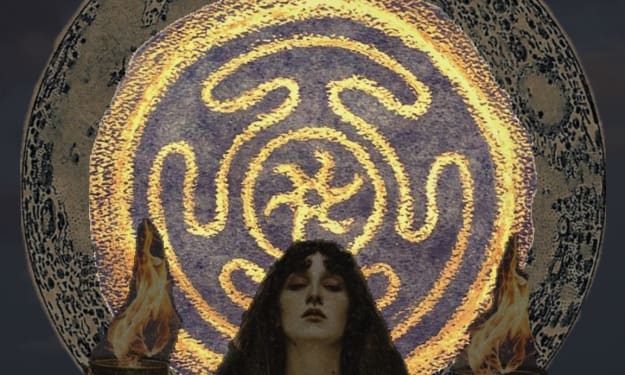
In the flickering light of ancient torches, standing at the crossroads where choices are made and fates are sealed, Hekate waits. Neither wholly light nor dark, she is the Greek goddess of magic, the moon, necromancy, and transitions. Revered and feared in equal measure, Hekate is a guardian of liminal spaces—the in-between realms of dusk and dawn, life and death, body and spirit.
By Kristen Orkoshneliabout a year ago in History
Inanna (Ishtar): Queen of Heaven and the Dark Divine
Long before the rise of Olympus or the thrones of Valhalla, there reigned a goddess of immense power and contradiction in the ancient cities of Sumer: Inanna, later known as Ishtar by the Akkadians and Babylonians. She was the Queen of Heaven, the goddess of love and war, creation and destruction, fertility and death—a figure so complex and vast that no single definition could contain her.
By Kristen Orkoshneliabout a year ago in History
The 8-Year-Long Traffic Jam That Stunned the World
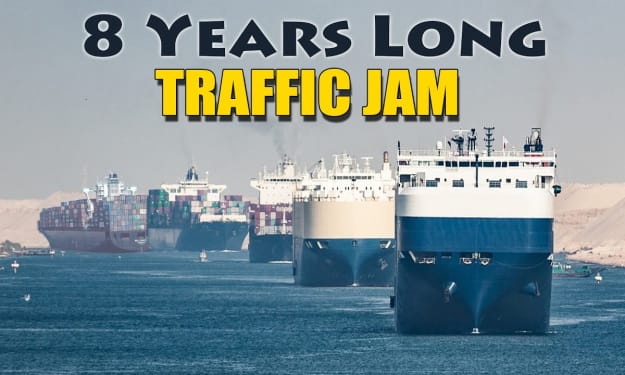
In 2015, a traffic jam on the Beijing Highway completely choked a 50-lane road. Back in 1980, a traffic jam on the French Autoroute Highway stretched over 175 kilometers from Paris to Lyon, taking several days to clear. Similarly, severe traffic jams have been reported in Brazil, Germany, and the United States—some lasting up to 12 days. But today, I’m going to talk about a traffic jam so shocking, it lasted not for days or weeks—but an unbelievable eight years.
By Chronicle of Powerabout a year ago in History
Athena - Goddess of Strategy, Wisdom and War
Among the glittering pantheon of Greek gods and goddesses, none stands taller in intellect, strategy, and justice than Athena, daughter of Zeus. A deity of paradox and balance, she embodies both wisdom and warfare, thought and action, discipline and creativity. Revered not just as a goddess of battle but as a protector of civilization itself, Athena’s influence reached far beyond myth, shaping art, politics, and philosophy in both ancient and modern minds.
By Kristen Orkoshneliabout a year ago in History