World History
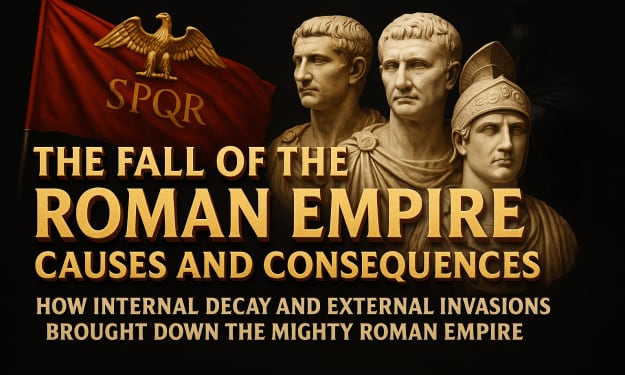
The Fall of the Roman Empire: Causes and Consequences
The Roman Empire, once the most powerful civilization in the ancient world, ultimately fell after centuries of domination across Europe, North Africa, and the Middle East. Its collapse is one of history's most significant turning points, signaling the end of classical antiquity and the beginning of the Middle Ages in Europe. Understanding the fall of the Roman Empire involves a complex combination of internal weaknesses and external pressures that eroded Rome’s ability to sustain itself. This article explores the key causes behind the downfall of the Roman Empire and the enduring consequences of its demise.
By Engr. Mansoor Ahmadabout a year ago in History
France’s Darkest Verdict Unpacked
Was He France’s Savior or Its Betrayer? A Look at Julian Jackson’s France on Trial The Case of Marshal Petain dives deep into one of the most painful and complicated chapters in modern French history the trial of Marshal Philippe Pétain for treason after World War II. It’s a book that doesn’t offer easy answers, but it certainly forces readers to wrestle with the right questions.
By Lynn Myersabout a year ago in History
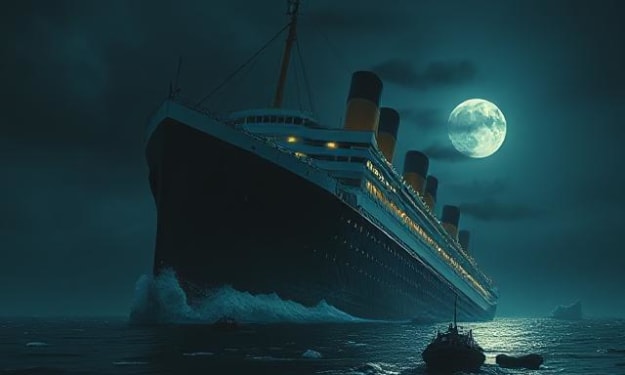
The Night the Ocean Broke the Titanic. AI-Generated.
They called her the "Ship of Dreams." She was more than a marvel of steel and steam—Titanic was a floating city, a palace on the sea, a symbol of man’s triumph over nature. But on a cold April night in 1912, the Atlantic reminded the world that no creation of man is greater than the will of nature.
By Muhammad Riazabout a year ago in History
iOS 26 Apple’s Next Big Leap in Mobile Experience.
A Fresh New Design: Liquid Glass One of the most talked-about highlights of iOS 26 is its “Liquid Glass” design. This fresh visual approach brings a modern, elegant look to the entire operating system. With soft, fluid elements and subtle transparency, iOS 26 looks more dynamic and alive than ever. Apple has applied the Liquid Glass aesthetic throughout the system, including areas like the Smart Stack, Control Center, and various app controls. The goal is to make the interface feel more expressive and delightful, yet still comfortable and recognizable for existing users.
By USA daily update about a year ago in History
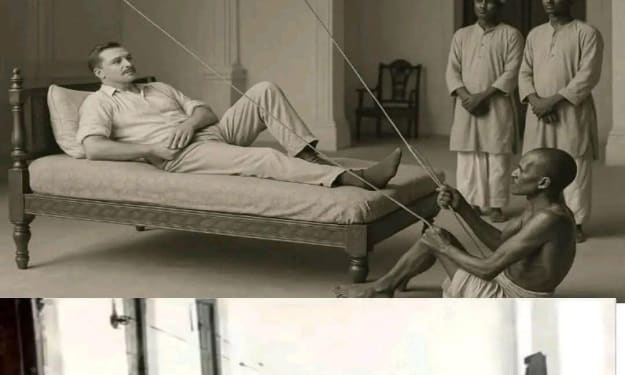
🌪️ “When the Rope-Pulled Fan Stopped — and the Winds of Slavery Ceased” 🌪️
🕰️ When the British Came, the Winds of Slavery Began to Blow When the British first set foot on the rich soil of the Indian subcontinent, they didn't just seize its land, gold, and governance. They took control of the very air that flowed in the royal courts and noble mansions of Delhi, Lucknow, Lahore, and Bombay. This is not a metaphor. It is a historical reality that strikes both the mind and the heart. As British officers would kick off their shoes and settle into cushioned seats in their sprawling colonial mansions, enormous fabric fans—punkhas—would begin to sway above them, offering a cool breeze in the tropical heat. But what made these fans move was not electricity. It was human labor—the silent, invisible breath of servitude. Below the fan, lying flat on the hot floor, would be a voiceless and earless servant—a human fan operator, mute and deaf, chosen specifically for his inability to hear or speak. Why? Because the British had a chilling motto: > “We want air… not ears.” They didn’t want distractions. They didn’t want conversation. They wanted obedient bodies, not minds. These “punkha-wallahs” would pull on long ropes connected to the fans above, hour after hour, drenched in sweat, while their colonial masters enjoyed wine, music, and conversation. This wasn’t just physical slavery—it was emotional and intellectual bondage, reducing humans to mere machines before machines even existed. --- ⚙️ Technology: The Great Equalizer of Time Then came the miracle of innovation—light bulbs, motors, switches. With the wave of technological advancement, the power that once lay in the hands of cruel masters was transferred to circuits, wires, and buttons. That same punkha, once moved by a slave’s bleeding hand, was now spinning joyfully from the ceiling on the command of electricity. It seemed to laugh, whispering: > "Now, I give air… without chains, without commands!" The day electricity came, the ropes of slavery snapped. The British left. But the fans remained. And with them, a haunting reminder of the days when even air was a luxury that came at the cost of someone's dignity. --- 🎭 Interpretation: Not All Chains Are Made of Iron Slavery is not always about iron shackles or prison walls. Sometimes, a rope tied to a ceiling fan can be more symbolic than a dungeon. Think deeply: a fan swaying on the ceiling, a servant lying on the ground, pulling a rope with his feet while trying not to breathe too loud. That’s not just a system of ventilation. That’s a system of domination. And still today, in the age of artificial intelligence and remote-controlled appliances, we must ask ourselves: Are we truly free? Or are we just tied to invisible cords of modern servitude? --- 👣 A Scene Soaked in Sweat and Silence Picture it vividly: A white British man sits under a high ceiling, holding a glass of imported wine. A velvet carpet cushions his polished shoes. A female dancer sways rhythmically before him. Overhead, a large punkha swings side to side. Beneath the shadows, a servant lies on the cold floor, his body soaked in sweat, his muscles aching, his identity erased — all so that the colonizer may not feel a moment’s discomfort. This is the civilization the West called “progress.” This is the culture that some in our lands still admire and emulate — without understanding the price of the breeze that once flowed. --- 💡 The Slap of Technology Today, when we press a button and feel a cool draft, we think nothing of it. But we should. Because every whisper of air from a fan today is a reminder of freedom hard-won. When we turn on an air conditioner or control a fan with a remote, we must pause. This isn’t just comfort. This is liberation. Technology, in this case, didn’t just make life easier. It restored dignity, replacing ropes with remotes and silence with agency. --- 📝 Conclusion: A Change in System, Not Just Speed The fan is the same. The ceiling is the same. The heat, too, is unchanged. What has changed… is the system. Where once mute servants pulled at ropes like forgotten souls, now silent machines serve us, without pride, without pain. The air still flows, but no one lies on the floor to make it happen. And that, perhaps, is the greatest revolution of all — not just in technology, but in human value. So next time you enjoy the comfort of a fan, think not only of its cooling breeze — but of the generations who suffered to give you that simple joy without chains. --- > From bondage to buttons, from ropes to remotes — the journey of the fan is the story of humanity’s struggle for dignity. Never forget: even the air we breathe was once a privilege denied to the voiceless.
By Ikram Ullahabout a year ago in History
The Man Behind the Keyboard: How One Teen Hacker Shook the World's Biggest Tech Giants. AI-Generated.
It was July 15, 2020—just another average Wednesday. That is, until the Twitter accounts of Elon Musk, Barack Obama, Apple, and Jeff Bezos suddenly tweeted the same strange message:
By Muhammad Abbas khanabout a year ago in History
Majestic Grandeur of the Palace of Versailles
Palace of Versailles – France The Palace of Versailles (Château de Versailles) is one of the most iconic royal residences in the world, located just 20 kilometers southwest of Paris. Synonymous with the absolute monarchy of the Ancien Régime, Versailles is more than a palace—it is a powerful symbol of royal authority, French artistic achievement, and centuries of European history.
By Mukhtiar Ahmadabout a year ago in History
Prophet Sulaiman
Title: The Amazing Life of Prophet Sulaiman (Solomon) – From Birth to Death Write By: Said Idrees sadat Prophet Sulaiman (peace be upon him), known as Solomon in the Bible, was a great prophet and king mentioned in the Quran and many Islamic traditions. He was the son of Prophet Dawood (David), and he inherited not only his father's kingdom but also his wisdom and closeness to Allah. Sulaiman (PBUH) is remembered for his justice, knowledge, and powerful kingdom, but many people don't know some of the lesser-known facts about his incredible life.
By king pokhtoonabout a year ago in History
How one man saved the Entire World
A Soviet B-59 submarine was hidden underwater in the Caribbean Sea, just a few kilometers away from America, fully prepared to launch an attack. At that moment, the US Navy discovered its presence and dropped small bombs underwater to force the submarine to surface.
By Chronicle of Powerabout a year ago in History