World History
The Sky Kings of 1944: The Day the B-17s Pushed Back the Dark
The Sky Kings of 1944: The Day the B-17s Pushed Back the Dark The morning fog clung low over RAF Bassingbourn. It was February 20, 1944—a cold, grey Sunday. Rows of B-17 Flying Fortresses stood like silent giants, their olive-drab frames glistening under the damp chill. Crews moved with solemn urgency—checking flaps, loading bombs, reviewing mission briefings.
By Wings of Time about a year ago in History
RIAT 2025 Arrivals: Eyes in the Skies
RIAT 2025 Arrivals: Eyes in the Skies A Spectacular Debut of Airborne Surveillance and Global Collaboration The curtain has officially risen on the Royal International Air Tattoo (RIAT) 2025 at RAF Fair ford, and the early arrivals have already delivered a stunning showcase. Under this year’s theme “Eyes in the Skies”, spectators are treated to cutting-edge surveillance aircraft, frontline fighters, and strategic support platforms arriving from nations across the globe. Here’s an in-depth look at the opening day: what touched down, who’s behind them, and why this year’s airshow takes defence and spectacle to new heights.
By Wings of Time about a year ago in History
Scientists Discover 78,000 Year Old Neanderthal Footprint That Tells a Story of Survival.
In a groundbreaking discovery that offers a rare glimpse into the lives of our ancient cousins, scientists have uncovered a 78,000-year-old Neanderthal footprint preserved in mudflats in northern Spain. This single footprint, remarkably intact after tens of thousands of years, tells a profound story of survival, resilience, and humanity in a harsh Ice Age environment.
By Tariq jamilabout a year ago in History
The Dark Origins of Halloween: From Ancient Rituals to Modern Costumes
Every October 31st, streets across the world fill with children dressed as witches, skeletons, and monsters, laughing and collecting candy door-to-door. Halloween is now a fun and spooky celebration — but beneath the surface of costumes and carved pumpkins lies a deep and mysterious history rooted in ancient beliefs and dark traditions. 1. Samhain: The Celtic Festival of the Dead Halloween finds its roots in an ancient Celtic festival known as Samhain (pronounced "sow-in"). Celebrated over 2,000 years ago in what is now Ireland, the UK, and parts of France, Samhain marked the end of the harvest season and the beginning of winter — a time often associated with death. The Celts believed that on the night of October 31st, the boundary between the living and the dead became blurred. Spirits of the dead were thought to return to earth, causing mischief or even harming crops. To protect themselves, people lit bonfires, wore animal skins and frightening costumes, and offered food sacrifices to the wandering souls. 2. Roman Influence and Christian Transformation When the Romans conquered Celtic territories around 43 AD, they blended their own festivals with Samhain. Two Roman festivals — Feralia, a day to honor the dead, and Pomona, the goddess of fruit and trees — were incorporated. This may explain why apples (like in apple bobbing) became associated with Halloween. By the 7th century, the spread of Christianity brought new changes. Pope Boniface IV established All Saints' Day (also called All Hallows' Day) on November 1st to honor saints and martyrs. The night before — October 31st — became known as All Hallows’ Eve, which eventually evolved into Halloween. 3. Halloween Comes to America When Irish immigrants came to America in the 19th century, they brought Halloween traditions with them. These included carving turnips into lanterns (later replaced by pumpkins in the New World) and dressing up to scare away spirits. Over time, Halloween became more community-centered with parties, games, and festive gatherings. By the 20th century, Halloween had become a largely secular holiday in the United States, focused on trick-or-treating, haunted houses, and spooky decorations. 4. The Evolution of Costumes and Trick-or-Treating Costumes originated from the ancient belief that disguises could confuse evil spirits. During the Middle Ages, poor people in Britain would go "souling" — visiting homes and offering prayers for the dead in exchange for food. This evolved into modern trick-or-treating. By the 1950s, Halloween in America had transformed into a child-friendly event. Kids dressed up as fairytale characters, superheroes, or spooky monsters and went door-to-door for candy. Today, costume choices are endless — from classic vampires to pop culture icons. 5. Jack-o'-Lanterns: From Folklore to Front Yards One of the most iconic symbols of Halloween is the jack-o'-lantern. This tradition comes from an old Irish legend about a man named "Stingy Jack", who tricked the Devil and was doomed to wander the Earth with only a carved turnip and a burning coal to light his way. The Irish began carving scary faces into turnips to ward off Jack’s wandering soul. When immigrants came to America, they found that pumpkins — native to the continent — were perfect for carving. Thus, the modern jack-o'-lantern was born. 6. Halloween Around the World While Halloween is most popular in the United States, other countries have their own versions of this spooky holiday: Mexico celebrates Día de los Muertos (Day of the Dead) from October 31st to November 2nd, honoring deceased loved ones with altars, flowers, and feasts. In Italy, people visit cemeteries and light candles in memory of the dead. In Japan, a similar festival called Obon is held in summer to welcome ancestral spirits. Each of these customs reflects a universal human desire: to remember those who came before us and to make peace with death. 7. Modern Celebrations and Commercialization Today, Halloween is one of the biggest commercial holidays in the U.S., generating billions in spending on costumes, candy, and decorations. It has expanded beyond just children — adults host costume parties, haunted attractions draw thrill-seekers, and pop culture continues to inspire new trends every year. Social media has further boosted Halloween’s popularity, with users sharing creative makeup, spooky stories, and eerie videos. Yet, at its core, Halloween still carries echoes of its original meaning — the dance between the living and the dead, the light and the darkness. --- Conclusion: From Shadows to Sweetness Halloween has traveled a long journey from ancient bonfires and ghostly beliefs to candy buckets and superhero masks. What started as a spiritual ritual to guard against the unknown has become a night of fun, fantasy, and community. As you dress up or light a pumpkin this year, remember — you're taking part in a tradition that’s thousands of years old, bridging the past with the present in the most playful way possible.
By Atif jamal about a year ago in History
Who was hazrat umar ibne khitab?
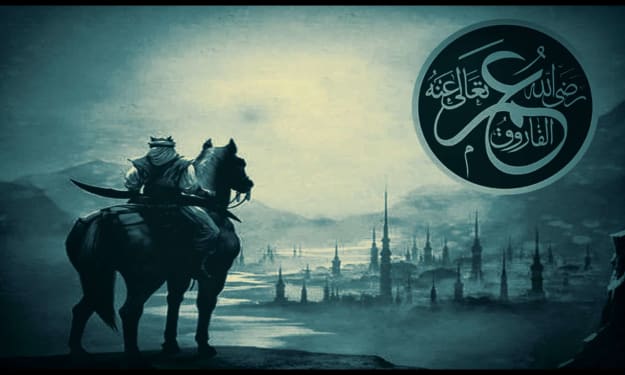
b --- Hazrat Umar ibn al-Khattab (RA): The Just Caliph Hazrat Umar ibn al-Khattab (رضی اللہ عنہ), the second Caliph of Islam, was one of the most influential and powerful Muslim rulers in history. Known for his justice, simplicity, and leadership, his era marked a golden age of Islamic expansion and administration. He was a companion of Prophet Muhammad (ﷺ), a courageous warrior, and a symbol of justice.
By Islamic historyabout a year ago in History
AI
In a world where Artificial intelligence is revolutionizing every aspect of our lives.It,s hard to imagine that this technological advancement come a hidden cost. behind the scenes AI insatiable thirst for water is draining our planet most precious resources. our pursuit of innovation might be drowning our future. imagine every time you ask a question to a chat bot like chat gpt etc it extract water from a spring or well , bringing it closer to drying up . this is not just a hypothetical scenario , it's reality thats unfolding before our eyes . data centre and server that power AI tools guzzle massive amounts of fresh and clean water to stay cool with astagering 70-80% of it evaporating into thin air .
By Tariq Pathan about a year ago in History
The largest Martian rock ever found on Earth,
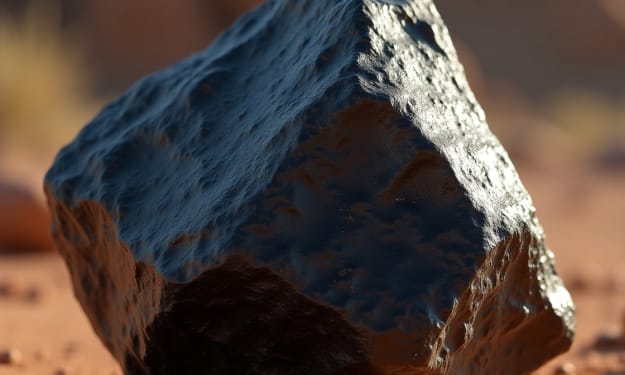
In a landmark moment for space enthusiasts and collectors alike, a rare Martian meteorite known as NWA 16788 has been sold for a staggering $5.3 million at a recent Sotheby’s auction in New York, setting a new world record for the highest price ever paid for a Martian rock. Weighing 25 kilograms, NWA 16788 is the largest Martian rock ever found on Earth and a scientific marvel in its own right. Unearthed in Nigeria’s Sahara Desert in 2023, the meteorite is now being hailed as one of the most significant extraterrestrial finds of the 21st century. A Giant Among Space Rocks NWA 16788’s sheer size alone makes it a standout. It is 70% larger than any previously discovered Martian meteorite, placing it in a category of its own. Of the estimated 400 known Martian meteorites that have made their way to Earth, none approach the mass or preservation quality of this specimen. Most Martian meteorites are fragments, broken and scattered either during their descent through Earth’s atmosphere or upon impact. In contrast, NWA 16788 is remarkably intact. Scientists believe it was ejected from the surface of Mars millions of years ago, most likely as a result of a massive asteroid or comet collision that sent debris flying into space. Its journey from Mars to Earth, and its preservation in the Sahara’s arid conditions, makes it a geological time capsule offering insights into the Red Planet’s history. A Meteorite with a Story Named according to its classification — "NWA" standing for Northwest Africa — the rock was reportedly discovered by local meteorite hunters and verified by planetary scientists soon after. Its composition was analyzed using spectroscopy and isotopic analysis, confirming its Martian origin. Key indicators include the presence of certain gas isotopes trapped inside the rock, which match atmospheric readings taken by NASA’s rovers on Mars. Sotheby’s, the renowned auction house, described the meteorite as “a once-in-a-generation discovery.” Ahead of the sale, it was displayed in a climate-controlled glass case, drawing crowds of collectors, scientists, and curious onlookers. The final bid of $5.3 million shattered previous auction records for meteorites and planetary specimens. While the buyer’s identity remains anonymous, experts suggest the meteorite may end up in a private collection or museum, where it can be further studied and displayed. Scientific and Cultural Significance Beyond its size and monetary value, NWA 16788 represents a scientific treasure trove. Martian meteorites are incredibly rare, offering one of the few direct ways for scientists to study Mars without sending missions to the planet itself. These rocks allow researchers to analyze Mars’s geologic and atmospheric history, shedding light on everything from ancient volcanic activity to the possibility of past water — and even life. Some meteorites have been found to contain microscopic bubbles of Martian atmosphere, providing data that complements the findings of rovers like Perseverance and Curiosity. In the case of NWA 16788, its large mass increases the potential for multiple scientific analyses without damaging the integrity of the rock. "Having a sample this large gives researchers room to perform deeper investigations," says Dr. Lena Khatri, a planetary geologist at the University of Chicago. "This could improve our understanding of Martian mineralogy and the planet’s evolution." A Meteorite Market on the Rise The booming interest in space collectibles has driven up prices for meteorites and other extraterrestrial materials in recent years. Lunar samples, asteroid fragments, and now Martian rocks are being bought not just by museums and universities, but also by wealthy private collectors and investors. According to Sotheby’s, interest in the Martian meteorite was global, with bids coming in from multiple continents. The auction house’s specialists say that space rocks are increasingly seen as both scientific artifacts and cultural icons, symbolizing humanity’s enduring fascination with the cosmos. Final Thoughts As telescopes and rovers continue to explore Mars, and as space agencies prepare for eventual crewed missions to the Red Planet, pieces like NWA 16788 serve as tangible links between our world and Mars. The record-breaking sale not only marks a new chapter in meteorite collecting but also underscores the growing intersection of science, commerce, and space exploration. While the image accompanying the auction was AI-generated and provided only for reference, the rock itself is very real — a silent witness to a cosmic journey that began on another planet and ended with a multimillion-dollar bid in Manhattan.
By Israr khanabout a year ago in History
The Sickle and the Soil
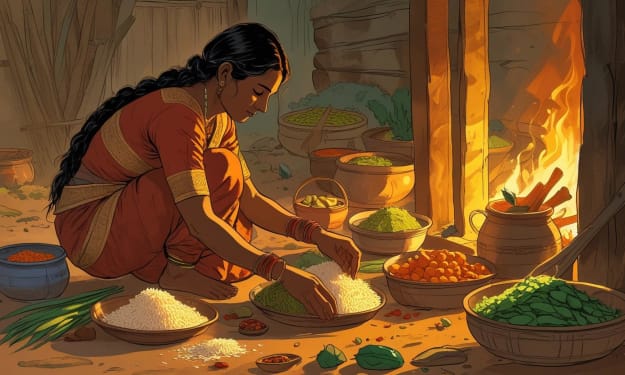
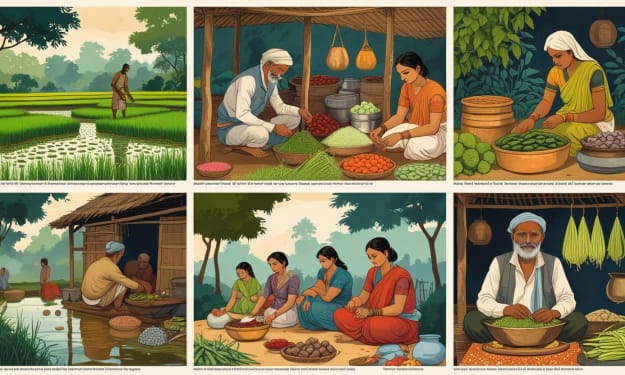
A Year of Food in a Medieval Bengali Village Imagine Nadiapur, a small village hugging the curves of the Surma River in medieval Bengal, where life moves with the sun’s arc and the river’s moods. I’m Tapan, a farmer’s son, sixteen summers old, with hands rough from cutting rice and eyes sharp from scanning the forest for greens. Our story isn’t one of warriors or palaces, but of meals scraped from the earth, shared under straw roofs, and carried in the heart. Let me walk you through a year in Nadiapur—our food, our toils, our quiet triumphs—as if we’re gathered by a fire, a clay plate of steaming bhaat between us, the night alive with stories. This is for Vocal Media, a tale to make you feel the weight of a sickle and the warmth of a shared meal.
By Shohel Ranaabout a year ago in History
The Rice and the River
A Year in a Medieval Bengali Village Picture a village called Nadiapur, tucked along the banks of the Bhairab River in medieval Bengal, where the days unfold with the sun and the seasons dictate every bite we eat. I’m Ananta, a weaver’s son, barely sixteen, with hands already calloused from gathering reeds and hauling nets. Our lives here aren’t the stuff of ballads—no heroes or battles—but they’re real, shaped by the food we scrape together and the stories we share under the stars. Let me take you through a year in Nadiapur, where every meal tells a tale of survival, community, and the land we call home. This is for you, listening by the fire, as if we’re passing a plate of warm bhaat in the glow of a clay lamp.
By Shohel Ranaabout a year ago in History
The Hearth of Habiganj
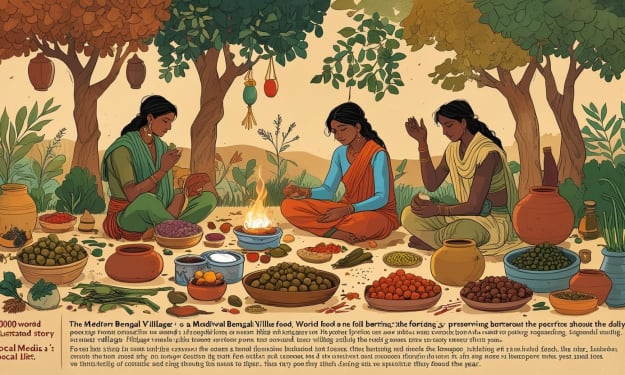
A Medieval Bengali Village Story In the heart of medieval Bengal, where the Meghna River curved like a silver thread through endless green, lay the village of Habiganj. It wasn’t a place of kings or conquests, but of muddy paths, straw roofs, and lives woven into the seasons’ rhythm. I’m Shyamal, a potter’s son, and this is my tale of a year in our village—our food, our struggles, our small joys. It’s no epic, but it’s ours, told as if we’re sitting by the fire, passing a clay plate of rice and stories.
By Shohel Ranaabout a year ago in History