World History
Washington Black: A Courageous Struggle for Freedom on Hulu
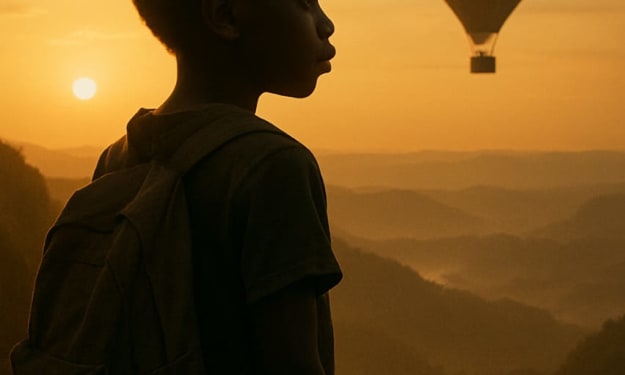
A Tale of Chains, Sky, and Soul On July 23, Hulu premiered its boldest period drama yet — Washington Black — an adaptation of Esi Edugyan’s award-winning novel. Set in the brutal era of 19th-century slavery, the show reimagines a coming-of-age tale in a world where survival is uncertain, but freedom is a dream to be pursued.
By Echoes of Lifeabout a year ago in History
The Tapestry of Time: A Comprehensive Look at Human History
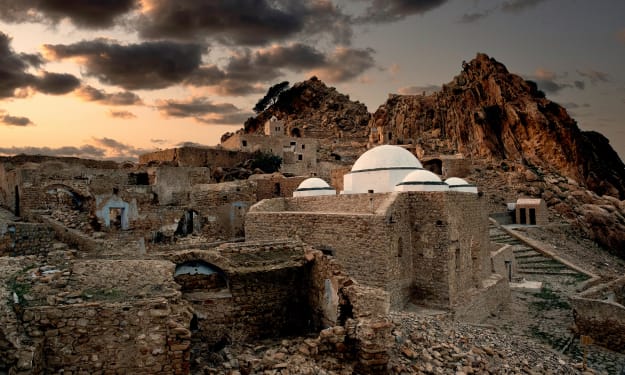
Title: The Tapestry of Time: A Comprehensive Look at Human History Subtitle: From ancient civilizations to the modern world — tracing the major milestones, revolutions, and legacies that shaped humanity.
By Rahmat Ullah Khanabout a year ago in History
The Man Who Survived Two Atomic Bombs – And Lived to Warn the World
The summer of 1945 brought with it some of the darkest memories in human history. On August 6th, a single bomb reduced the vibrant city of Hiroshima to ashes. Three days later, Nagasaki suffered the same fate. Millions of lives were shattered, and history was left permanently scarred. But amidst this black chapter stood one man whose story became a powerful example of human strength and survival. This is the story of Tsutomu Yamaguchi — the man who survived both atomic bombings. --- Hiroshima: The First Apocalypse In early August 1945, Yamaguchi was working in Hiroshima as an engineer for Mitsubishi Heavy Industries. He was scheduled to return home to Nagasaki on August 6 — the same day the first atomic bomb was dropped. As he prepared to leave, a blinding flash tore through the sky. Within seconds, everything changed — fire, smoke, destruction. He was just 3 kilometers from the epicenter. Burned and injured, he miraculously survived. That night, he stayed in the ruins of a city that no longer existed. --- Nagasaki: Death Returns The next morning, wounded and exhausted, he somehow boarded a train and returned to Nagasaki. On the morning of August 9, while telling his supervisors about the horror of Hiroshima — another blinding flash filled the sky. The second atomic bomb had fallen — this time on his own city. Once again, he was near the epicenter. Once again, he survived. --- A Quiet Man with a Loud Message Yamaguchi had witnessed the unimaginable — burned bodies, crying survivors, and a kind of helplessness no words could describe. For years, he remained silent. But as time passed, he realized that surviving wasn’t just luck — it was a responsibility. He began to speak out — as a messenger of peace. His message was simple: > “No one should ever experience what I experienced.” “Peace is not optional — it is our only hope.” In 2009, Yamaguchi became the only person officially recognized by Japan as a survivor of both atomic bombings. --- What Did We Learn? Tsutomu Yamaguchi’s story isn’t just a memory — it’s a warning. In a world still chasing war and weapons, he reminds us that destruction is never far away if we lose our humanity. He faced death twice — and still chose life. He never spread hate, never sought revenge — only peace. --- Conclusion Yamaguchi’s life was not just a miracle — it was a light. When the world burned, he stood like a lantern — still glowing. His story teaches us not just to survive, but to live in a way that gives others hope In a world scorched by hatred, where silence often wins over truth, Tsutomu Yamaguchi chose to speak — not in anger, but in wisdom. He could have spent the rest of his days in the shadows of trauma, quietly mourning all that he lost. But instead, he stepped into the light, bearing the scars of two nuclear disasters not as marks of pain — but as symbols of purpose. Yamaguchi’s survival was more than just a miracle of biology — it was a moral calling. He lived not just to breathe, but to remind us that humanity cannot afford to repeat its greatest mistake. His voice, soft yet steady, echoed a truth that politicians often ignore, and that history books sometimes soften: > War does not end with victory. It ends with loss — for everyone. When the world heard “nuclear bomb,” they thought of power. But Yamaguchi saw orphans, burned skin, cries in the rubble, and cities turned into silent cemeteries. He became a bridge — between destruction and reflection, between memory and meaning. To live after death is rare. But to live for others after death has touched you — that is something divine. And that is exactly what he did. Even as time passed and the world moved on, he refused to let the horror become just another historical footnote. Through his words, interviews, and presence, he lit a candle in a dark world — and that candle still burns. His story doesn’t end with survival. It begins with it. Because in the end, the true victory is not in escaping death — It’s in choosing life, and using that life to heal, to warn, and to inspire. And that is why Tsutomu Yamaguchi lives on — not just in the pages of history but in every voice that dares to say:
By Asif nawazabout a year ago in History
Echoes of Revelation
Long before skyscrapers pierced the skies of the Arabian Peninsula, before oil wells turned deserts into gold mines, Arabia was a land of vast deserts, scattered tribes, and ancient traditions. It was a place where power belonged to the strong, poetry to the eloquent, and truth was often lost in superstition. In this rugged land, where injustice roamed freely and the weak were voiceless, a light was destined to rise — a light that would echo through centuries and reach every corner of the earth.
By Adil Nawazabout a year ago in History
The Main Reason Behind the Israel-Iran Conflict
The conflict between Israel and Iran is one of the most dangerous tensions in the Middle East. It is not just about religion or politics—it’s a mix of historical distrust, security concerns, nuclear weapons, and regional influence. To understand why Israel and Iran are enemies today, we must look at real events, official statements, and international reports that clearly explain the reasons.
By Engr. Mansoor Ahmadabout a year ago in History
The Lost City of Atlantis – Truth, Myth, or a Hidden Civilization?
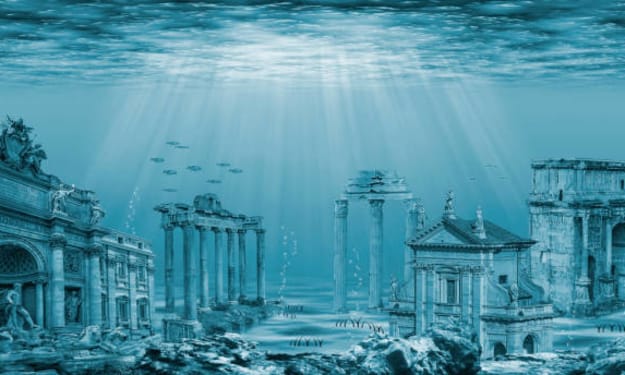
The Lost City of Atlantis – A Journey Beneath the Waves Atlantis. A name that sparks wonder and curiosity. Was it a real city? Or just a myth? The story begins in ancient Greece. The philosopher Plato was the first to talk about Atlantis. He described it as a powerful and wealthy city. A place full of beauty, gold, knowledge, and strength. But then, one day, it disappeared. In just one day and one night, Atlantis sank beneath the ocean. People were shocked. Was Plato telling the truth? Or was it just a story with a message? For centuries, explorers and scientists have searched for Atlantis. Some believe it was in the Mediterranean. Others say it was near Spain. Some even think it was in Antarctica. But no one has ever found solid proof. Many believe Atlantis is a warning. A symbol of what happens when power becomes pride. They say the people of Atlantis misused their knowledge and strength. And the gods punished them. The great city that once touched the sky was swallowed by the sea. Others believe it was just a story. Plato may have created it to teach a lesson. Still, even today, Atlantis captures the imagination of millions. Why? Because it's more than a city. It’s a dream. A hope that once, there was a civilization more advanced than us. Some modern scientists think Atlantis might have been real. Maybe it was destroyed by a natural disaster. An earthquake? A tsunami? But still, no clear evidence has been found. Books, documentaries, and movies have all explored the mystery of Atlantis. Each one with a different theory. But the main question remains: Where is Atlantis? And will we ever find it? Or will it always remain a secret under the waves? Atlantis teaches us something important: When power turns into pride, when knowledge is used in the wrong way, when wealth becomes everything— nothing lasts forever. It reminds us that human nature is always searching. We ask questions. We seek answers. We chase mysteries. That’s what makes us human. If one day Atlantis is found, maybe we will learn more about ourselves too. But if it is never found, its story will still inspire us. A silent city, sleeping under the waves. Waiting for someone to wake it up. --- Many people dream of Atlantis. They imagine tall towers under the sea. Crystal buildings. Golden roads. Mermaids swimming by. And strange, glowing plants no one has ever seen. Some say people in Atlantis had flying machines. Others say they had magic. They could talk with animals. Or control the weather. Could it be true? Maybe. Maybe not. But the mystery gives us hope. Hope that there is still something hidden on Earth. Something special. Something ancient. Some divers believe they saw parts of Atlantis. Strange shapes under the ocean. Walls. Steps. Even roads. But nothing has been proven. Still, they keep looking. Because sometimes, not finding something makes it even more exciting. Atlantis is also about questions. What makes a city great? Is it power? Is it money? Or is it kindness and wisdom? Maybe Atlantis had everything, but they lost their hearts. They forgot to care for each other. And so, they fell. Some people believe Atlantis will rise again. One day, someone will discover it. Maybe a young explorer. Maybe someone who loves the ocean. Maybe… you? If Atlantis is ever found, it will change history. We’ll learn about a forgotten time. A world we never knew. But even if we never find it, the story of Atlantis teaches us something important. Never stop wondering. Never stop exploring. And never let pride destroy what you build. Because the greatest cities are not the ones made of gold. They are the ones built with truth, peace, and love. So next time you hear the waves, close your eyes. And listen. Maybe, just maybe, Atlantis is calling you. -Legends never die. They live in our minds. In our dreams. And in the stories we share. Atlantis is more than a city. It’s an idea. A symbol of wonder. Of hope. And of warning. Some say the people of Atlantis were too proud. Too greedy. They had everything— But forgot the meaning of enough. Nature spoke. The sea rose. And the mighty city sank beneath the waves. But still, its light lives on. In books. In paintings. And in the hearts of those who believe. Children draw Atlantis in their notebooks. Artists paint it with colors of imagination. Writers write poems about it. And dreamers… They search for it. Because Atlantis isn’t just in the ocean. Maybe, it’s inside us. A place of peace. Of balance. Of beauty. So even if we never touch its stones, We can still carry its lesson. Be kind. Be wise. And never forget: The strongest cities… Are the ones we build with love. ۔
By Leya kirsan official about a year ago in History
Operation Black Buck: The RAF’s Longest Bomb Run
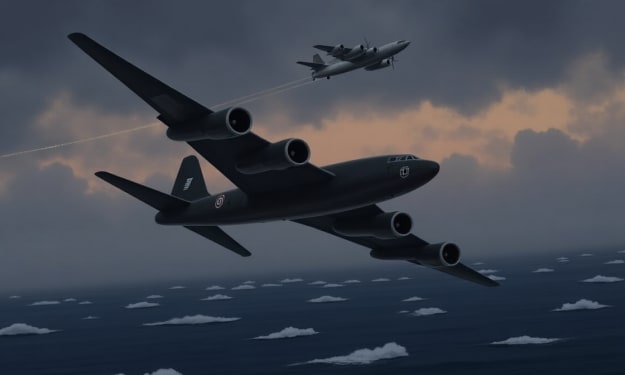
Operation Black Buck: The RAF’s Longest Bomb Run In April 1982, the world watched as a small cluster of windswept islands in the South Atlantic—the Falklands—ignited into war. Argentina had invaded. Britain responded. And in the opening days of this unlikely conflict, the Royal Air Force launched one of the most daring bombing missions in military history: Operation Black Buck.
By Wings of Time about a year ago in History