World History
Google pixel 10 phone launch in next month.
1. Launch & Pricing Strategy 🚀 Google is expected to unveil the Pixel 10 series in August 2025, with several models: standard Pixel 10, Pixel 10 Pro, Pixel 10 Pro XL, and a folding Pixel 10 Pro Fold. Leaked European pricing suggests Google is keeping things competitive:
By USA daily update about a year ago in History
🌍 The Mapmaker's Secret
🌍 The Mapmaker's Secret: A Hidden History of the World Long before satellites floated above the Earth, before explorers etched coastlines into parchment with trembling hands, there lived a mapmaker named Aurelian in the ancient city of Alexandria.
By Wings of Time about a year ago in History
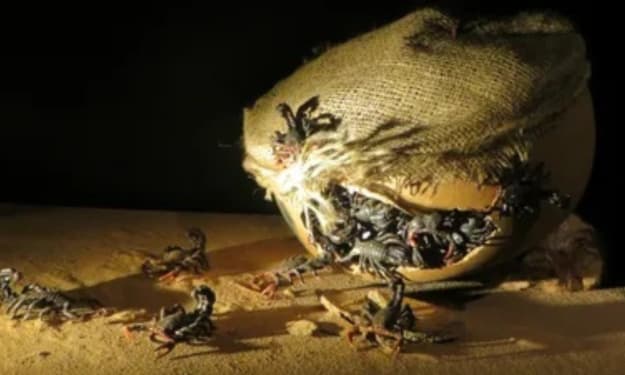
Ancient Warfare’s Strangest Tactics:
Warfare has always been a reflection of human ingenuity often brutal, sometimes bizarre. Long before modern weapons reshaped the battlefield, ancient generals turned to more unconventional means to gain an edge. These tactics didn’t just rely on muscle or metal they weaponized nature, fear, fire, and even disease. While some of these methods sound like they belong in a historical fantasy novel, they were very real, often surprisingly effective, and at times deeply unsettling.
By Lynn Myersabout a year ago in History
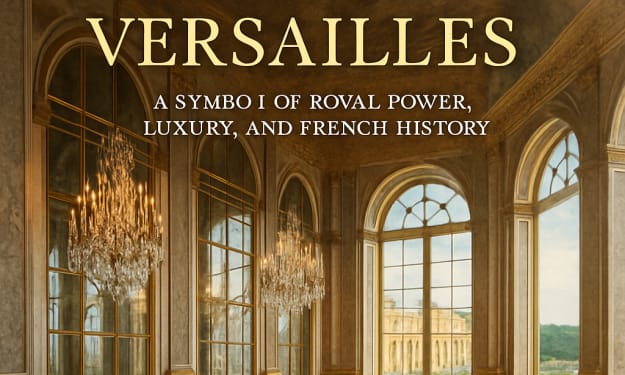
Grandeur and Glory: Palace of Versailles
The Palace of Versailles – A Testament to Royal Grandeur The Palace of Versailles, located about 20 kilometers southwest of Paris, is one of the most iconic symbols of the French monarchy and an architectural masterpiece that continues to fascinate visitors from around the world. Initially built as a modest hunting lodge by Louis XIII in 1623, it was transformed into a grand palace by his son, Louis XIV—the Sun King—who envisioned it as a reflection of absolute power and the glory of France.
By Mukhtiar Ahmadabout a year ago in History
2000 Years Old City Found Hidden in the Desert!
In the year 1812, a Swiss adventurer named Johann Ludwig Burckhardt was wandering through the desolate Arabian Desert. Disguised in local attire, he accidentally stumbled upon a narrow path nestled between high rock cliffs. He walked between these rocky walls for about 1.5 kilometers until the path widened—and what he saw next left him stunned.
By Chronicle of Powerabout a year ago in History
Apple iPhone 17 Pro Expected Features, Design, and Release Insights.
Sleek and Lightweight Design One of the biggest changes expected in the iPhone 17 Pro is a major shift in materials and thickness. Several credible sources, including well-known Apple analyst Ming-Chi Kuo, have reported that the iPhone 17 Pro will feature a redesigned, ultra-thin chassis, making it the thinnest iPhone yet. The device is rumored to use a new titanium alloy frame, which is lighter but just as strong as the titanium Apple introduced with the iPhone 15 Pro models.
By USA daily update about a year ago in History
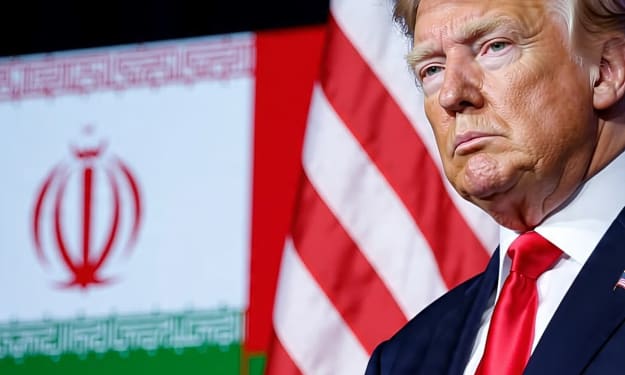
Trump and Iran: Sanctions, Standoffs, and Shifting Power in the Middle East
When Donald Trump took office as the 45th President of the United States in January 2017, one of his top foreign policy priorities was to reverse what he called the "disastrous" Iran nuclear deal. This agreement, officially known as the Joint Comprehensive Plan of Action (JCPOA), had been signed in 2015 under President Barack Obama, alongside other world powers including the UK, France, China, Russia, and Germany. Its aim was to prevent Iran from developing nuclear weapons in exchange for lifting crippling economic sanctions. Trump believed the deal was too lenient, allowing Iran to continue its missile program and destabilizing actions in the Middle East, while reaping economic benefits. On May 8, 2018, he officially withdrew the U.S. from the agreement and reimposed severe economic sanctions on Iran. This marked the beginning of a new era of hostility between the two nations—one characterized by economic warfare, military posturing, and regional unrest. The “Maximum Pressure” Campaign Trump's administration launched what it called a "maximum pressure" campaign. The U.S. reinstated sanctions targeting Iran’s oil exports, banking sector, shipping industry, and more. The goal was to force Iran to renegotiate the nuclear deal and curb its support for groups like Hezbollah in Lebanon, the Houthis in Yemen, and militias in Iraq and Syria. These sanctions hit Iran's economy hard. Its currency collapsed, inflation soared, and oil exports dropped significantly. Yet, instead of returning to the negotiating table, Iran chose a defiant path. It began breaching the terms of the nuclear deal—enriching uranium beyond agreed limits and stockpiling nuclear material. A Region on Edge The tensions escalated rapidly. In 2019, a series of mysterious attacks on oil tankers in the Persian Gulf were blamed on Iran, although Tehran denied involvement. Later that year, Iranian-backed militias were accused of attacking U.S. bases in Iraq. The standoff reached a boiling point in January 2020, when a U.S. drone strike near Baghdad International Airport killed General Qasem Soleimani, the commander of Iran’s elite Quds Force. The Trump administration claimed Soleimani was planning imminent attacks on American diplomats and troops. His death, however, was seen by many as a dangerous provocation. Iran responded days later by launching ballistic missiles at two U.S. bases in Iraq. Though no American lives were lost, over 100 soldiers suffered traumatic brain injuries. The world watched nervously, fearing a full-scale war might erupt. International Response Trump’s Iran policy was controversial globally. The European allies who had signed the original nuclear deal opposed the U.S. withdrawal, fearing it would destabilize the region and weaken diplomatic efforts. They tried to keep the JCPOA alive, but their efforts had limited impact as Iran’s violations grew. China and Russia criticized the U.S. for reigniting tensions. Within the U.S., critics argued that Trump’s policies had isolated America diplomatically and made the region more dangerous without achieving meaningful results. Impact on Iran's Internal Politics Inside Iran, Trump's policies fueled anti-American sentiment. However, they also deepened internal dissatisfaction. Widespread protests broke out in 2019 and 2020 over economic hardship and government corruption, though many were brutally suppressed. Iran's leaders, including Supreme Leader Ayatollah Ali Khamenei, portrayed Trump's actions as proof of American hostility toward the Iranian people. Interestingly, the confrontations with the U.S. allowed Iran's hardliners to strengthen their hold over domestic politics, weakening reformist voices who had supported engagement with the West. Trump’s Goal and Legacy Trump repeatedly said he wanted to negotiate a "better deal" with Iran—one that would not only limit its nuclear ambitions but also restrict its regional activities and missile program. But no such deal materialized during his presidency. By the time he left office in January 2021, Iran was closer to weapons-grade uranium than it had been in years. Relations were at a historic low, and the Middle East had become even more polarized, with new alliances forming—such as the Abraham Accords between Israel and Arab states—partly in response to Iran’s influence. Conclusion: A Lasting Shift Donald Trump’s approach to Iran marked a sharp departure from diplomacy to confrontation. His administration used economic power as a weapon, hoping to bring Iran to its knees. While the strategy weakened Iran economically, it failed to produce a new agreement or significantly change Iran’s behavior in the region. Instead, the years of Trump and Iran became a period of uncertainty, strategic gambles, and dangerous escalations. The long-term impact of these years continues to shape Middle Eastern politics, nuclear diplomacy, and U.S. foreign policy decisions today. As of now, the legacy of Trump's Iran policy remains a topic of intense debate—was it a necessary stand against a hostile regime, or a missed opportunity for lasting peace
By Movies Channelabout a year ago in History
Mother and Son Love
Once upon a time in a quaint village surrounded by lush green hills and vibrant flowers, there lived a young boy named Alex and his mother, Sarah. Their home was a small, charming cottage with a white picket fence, where the scent of blooming roses filled the air. From the day Alex was born, Sarah dedicated her life to nurturing him, creating a world filled with love, laughter, and endless possibilities.
By Zakriashahabout a year ago in History
Trump Overtime Tax, What It Means and Why It Matters.
What is Overtime Pay? Under the Fair Labor Standards Act (FLSA) passed in 1938 most hourly workers in the United States are entitled to overtime pay when they work more than 40 hours in a week. Overtime pay is typically 1.5 times the employee’s regular hourly rate. However, not all workers are eligible. Employees who earn above a certain salary threshold and perform certain types of managerial or professional duties are considered “exempt” from overtime rules.
By USA daily update about a year ago in History