Places
The Fascinating History of Chocolate:
If you can’t imagine life without chocolate, you’re fortunate to have been born after the 16th century. Before then, chocolate existed solely in Mesoamerica, and its form was vastly different from the sweet treats we enjoy today. As far back as 1900 BCE, the indigenous people of this region had mastered the art of preparing the beans from the native cacao tree. The earliest records indicate that these beans were ground and mixed with cornmeal and chili peppers to create a drink—far from the comforting hot cocoa we know today, this was a bitter, invigorating concoction that frothily bubbled with foam.
By DANIEL AKAM OKO2 years ago in History
A Brief History of Cheese:
Cheese is one of humanity's oldest and most beloved foods, with a rich history that predates empires, writing, and advanced tools. As far back as 8000 BCE, Neolithic farmers in the Fertile Crescent began crafting cheese, setting the stage for a culinary tradition that has endured for millennia. The advent of agriculture led to the domestication of sheep and goats, whose milk became a vital resource for these early societies.
By DANIEL AKAM OKO2 years ago in History
The Fascinating Journey of Humanity's Love for Coffee
The Discovery of Coffee The tale of coffee begins around 850 CE, with a goatherd named Kaldi who noticed his goats behaving unusually after nibbling on some berries. Intrigued, Kaldi tried the berries himself and soon found himself bursting with energy. This legendary anecdote marks humanity's intriguing first encounter with coffee, although the exact timeline of coffee consumption remains unclear. It is widely believed that before the 1400s, inhabitants of what is now Ethiopia began foraging for wild coffee plants in the forest undergrowth.
By DANIEL AKAM OKO2 years ago in History
The Fascinating History of Ice Cream in Ancient Civilizations
On a hot spring afternoon in 1963, a curious event unfolded at the Havana Libre Hotel involving two men sent by the American CIA. Their mission: to retrieve a poison pill from the freezer and slip it into the chocolate milkshake of Fidel Castro, the Cuban leader notorious for indulging in up to 18 scoops of ice cream after lunch. Although the details remain somewhat contested, it is rumored that the pill froze to the freezer coils and broke, foiling the CIA’s plan and allowing Castro many more days to enjoy his favorite treat. Ice cream has undeniably played a unique role in our world’s history and culture. But where did this beloved dessert originate?
By DANIEL AKAM OKO2 years ago in History
The Secret of the World's Richest Underwater Habitat
The ocean covers more than 70% of the Earth’s surface, and beneath its vast, mysterious waters lies one of the most fascinating ecosystems on the planet. Among these aquatic wonders are the world’s richest underwater habitats-coral reefs. But what makes this marine environment so special, and why is it often regarded as Earth's most diverse and productive ecosystem? Let’s dive into the secrets behind the world's richest underwater habitat.
By Zinnat ara Begum2 years ago in History
The Evolution of Ketchup:
Ketchup is one of the world’s oldest and most beloved condiments. Its rich history stretches back to the mid-18th century when England embraced ketchup as a culinary staple. During this time, numerous cookbooks promoted the addition of ketchup to various dishes, including stews, vegetables, and even desserts. However, the ketchup of that era was not the bright red sauce we know today. In fact, it was a sweet and savory brown sauce that didn’t even contain tomatoes.
By DANIEL AKAM OKO2 years ago in History
The Legacy of Ancient Thebes
Ancient Thebes, one of the most influential city-states in Greek history, stands as a symbol of military power, cultural richness, and mythological significance. Located in Boeotia, in central Greece, Thebes thrived due to its strategic position between Mount Cithaeron and Mount Parnassus, allowing it to emerge as a political and military force that challenged Sparta and other Greek city-states. Its legacy, however, extends beyond its military might, with Thebes being home to renowned figures such as the poet Pindar and the philosopher Plutarch.
By A História2 years ago in History
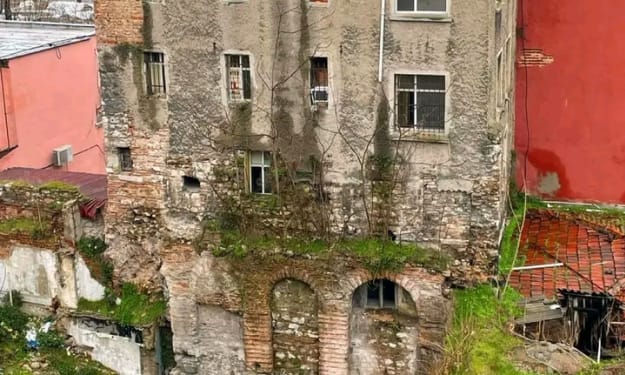
The Living History of Istanbul: A Building on Alaykoskü Street
In the heart of Istanbul, Turkey, a seemingly unassuming building on Alaykoskü Street in the Cagaloglu district offers a tangible snapshot of the city's 1,800-year-long history. While Istanbul is renowned for its grand mosques, palaces, and bustling bazaars, this unique structure stands as a testament to the complex and layered past that has shaped the city. From its Roman foundations to its Ottoman walls and modern touches, the building is a perfect microcosm of the diverse cultures and empires that have called this city home. Istanbul’s rich and varied past is reflected in its architecture, and this particular building, while not as famous as the Hagia Sophia or the Topkapi Palace, is a remarkable monument in its own right. Standing at the crossroads of history, it serves as a vertical timeline that encapsulates nearly two millennia of conquest, adaptation, and transformation. Roman Foundations: A Glimpse into Ancient Byzantium At the base of this building, we find the earliest layer of its history—Roman columns dating back to the late 2nd or early 3rd century AD. These columns are remnants of a Roman cistern, an underground water storage system that played a crucial role in the infrastructure of ancient Byzantium, the city’s name before it became Constantinople. Byzantium was founded by the Greeks in the 7th century BC, but it was under Roman rule that the city began to flourish as a major urban center. The columns on Alaykoskü Street, carved from solid stone, reflect the engineering prowess of the Romans, who understood the importance of reliable water sources for a growing metropolis. Cisterns like the one beneath this building were essential for supplying the city’s population with water, and their construction reveals the early Roman investment in the city’s infrastructure. This foundation, now exposed to the modern observer, is a stark reminder that Istanbul’s roots stretch deep into the past, back to when it was a vital outpost of the Roman Empire. The presence of these Roman columns is not just a reflection of an ancient civilization’s skill but also a reminder of the city’s enduring importance throughout history. Byzantine Legacy: The Arch of Constantinople Rising above the Roman columns is the next layer in this architectural time capsule: a Byzantine arch from the 4th century AD. The arch likely dates back to the era of Constantine the Great, who famously transformed Byzantium into Constantinople, the new capital of the Roman Empire, in 330 AD. The Byzantine Empire is perhaps the most defining period in Istanbul’s history, marking the city’s transition from a provincial outpost to a cosmopolitan hub. The arch, with its distinctive Byzantine style, would have been part of the larger public works projects initiated by the emperors of the time, aimed at solidifying Constantinople’s status as the heart of the Eastern Roman Empire. The 4th century was a period of great change for the city. The rise of Christianity under Constantine, the construction of churches and palaces, and the strengthening of the city’s defenses all contributed to its transformation into one of the most important cities in the ancient world. This arch stands as a monument to the city’s Roman and Byzantine heritage, representing a time when Constantinople was a center of learning, trade, and religion. The Ottoman Transformation: Imperial Grandeur in Stone Above the Byzantine arch, the building showcases yet another layer of Istanbul’s history—a 15th-century stone wall from the Ottoman era. When Sultan Mehmed II, known as Mehmed the Conqueror, captured Constantinople in 1453, he ushered in a new chapter for the city. Renamed Istanbul, it became the capital of the vast Ottoman Empire, an empire that would dominate much of Southeast Europe, Western Asia, and North Africa for centuries. The stone wall is a relic of the early Ottoman period, when the city underwent extensive remodeling to reflect its new status as an imperial capital. Under Ottoman rule, Constantinople was transformed once again, with the construction of grand mosques, public baths, and palaces. The stonework of this era is distinct, characterized by its strength and solidity, reflecting the grandeur and power of the Ottoman Empire. The 15th century marked a time of great cultural and architectural synthesis, as the Ottomans blended their own traditions with the Byzantine heritage they inherited. This blending is visible not just in the large monuments of the city, like the Hagia Sophia, but also in smaller buildings like the one on Alaykoskü Street, where layers of history are literally built upon each other. The Modern Touch: The Early Turkish Republic Crowning the building are its upper floors, constructed from baked brick in the 1920s during the early years of the Turkish Republic. After the fall of the Ottoman Empire in the aftermath of World War I, Turkey underwent a period of modernization and secularization under the leadership of Mustafa Kemal Atatürk. This era saw a shift in architectural styles, moving away from the grandeur of the Ottoman past toward more practical, modern designs. The baked brick of the upper levels reflects this new approach. The use of brick was widespread during the early 20th century, as it was both cost-effective and durable. These upper floors represent the city’s continued evolution, showing how Istanbul adapted once again, this time to the ideals of the new Turkish state. It marks a period of rapid modernization, as the city embraced its future while still retaining the layers of its imperial past. A Living Monument to History This remarkable building on Alaykoskü Street is more than just a structure; it is a living monument to the history of Istanbul. Its Roman, Byzantine, Ottoman, and modern elements illustrate how the city has been shaped by each era it has lived through. Few places in the world can claim such a rich and continuous narrative of human history in a single building. In a city often described as a crossroads of civilizations, this building serves as a powerful reminder that Istanbul has always been a place where East meets West, where empires rise and fall, and where the past is ever-present in the streets, stones, and walls. It stands as a silent witness to the city’s many transformations, embodying the spirit of a metropolis that has always been at the center of the world.
By Deji Akomolafe2 years ago in History
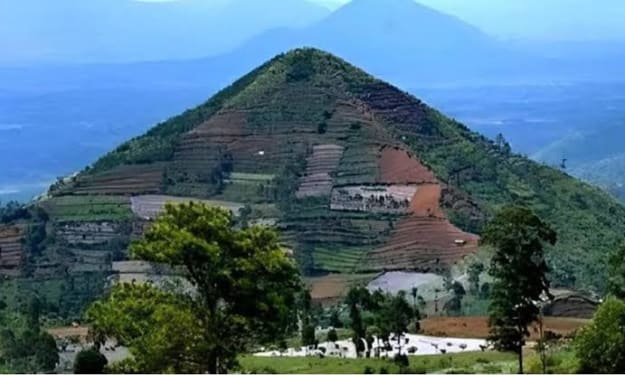
The Mysterious Pyramid of Gunung Padang: A 25,000-Year-Old Enigma
In the heart of Indonesia lies a structure that has sparked significant controversy among archaeologists and researchers. Known as Gunung Padang, this ancient site was traditionally regarded as an important megalithic monument, with its origins dating back several thousand years. However, recent research is turning that narrative on its head, with groundbreaking claims suggesting that parts of the pyramid may be as old as 25,000 BC—making it potentially the oldest pyramid in the world. The discovery, led by Dr. Danny Hilman Natawidjaja and his team from the Institute of Sciences of Indonesia (LIPI), has ignited debates that challenge the conventional understanding of human civilization and technological advancement. While ancient sites such as the Great Pyramids of Egypt and the structures at Göbekli Tepe have long been regarded as the pinnacles of early construction, Gunung Padang might predate them by tens of thousands of years. If this new research holds true, it would force historians and archaeologists to radically reconsider when and how complex societies first arose. The Structure of Gunung Padang Located on a hilltop in West Java, Gunung Padang appears at first glance to be a natural formation. The site is covered with enormous, rectangular basaltic stones, which were long believed to be part of a natural outcrop. However, detailed studies in recent years have revealed evidence of human intervention, suggesting that the stones were intentionally placed and arranged. Seismic and geophysical studies conducted at the site have unveiled a deeper complexity beneath the surface. Using methods like seismic tomography, researchers discovered that the site conceals a vast network of chambers and cavities, some measuring up to 15 meters in length with ceilings as high as 10 meters. These hidden rooms beneath the surface suggest a level of architectural sophistication previously unrecognized in the region’s ancient history. What’s more, the dating of the site has been a point of major controversy. Radiocarbon dating of layers within the pyramid structure suggests that certain portions of the site could be up to 25,000 years old, pushing its construction back to the last glacial period. This discovery, if confirmed, would make Gunung Padang not only the oldest known pyramid in the world but also one of the oldest known structures of any kind built by humans. Is the Pyramid Man-Made? One of the most contentious aspects of the Gunung Padang research revolves around whether the pyramid is entirely man-made. While some archaeologists argue that the pyramid consists primarily of naturally formed andesite lava, others assert that it was sculpted and manipulated by humans. Dr. Natawidjaja’s team contends that advanced masonry skills were used to shape and assemble the stones, hinting at technological prowess that far exceeds what we previously thought ancient humans were capable of during the last ice age. The controversy arises from the lack of conventional evidence typically used to validate man-made structures from antiquity. Traditional archaeological methods, such as the identification of tool marks or the presence of man-made mortar, have yet to yield definitive results at Gunung Padang. This has led many experts to question the validity of the claim that the pyramid is of human origin, suggesting instead that natural geological processes may have played a larger role than previously thought. However, the argument that this ancient site could have been the product of a sophisticated civilization is not without merit. If Gunung Padang was indeed built 25,000 years ago, it would challenge the prevailing view that complex construction techniques only emerged with the development of agriculture around 12,000 years ago. This would suggest that advanced societies existed far earlier than we currently believe, capable of organizing large-scale construction projects during a period when humanity was thought to be largely nomadic. The Implications for Archaeology The implications of a 25,000-year-old pyramid are profound. If the Gunung Padang structure was built during the last glacial period, it could rewrite the history of early human civilization. It raises fundamental questions about the origins of architectural knowledge and the capacity for complex societal organization. How could a civilization living in an era traditionally regarded as primitive develop the skills necessary to construct such a monument? What resources did they have at their disposal, and what motivated them to undertake such a massive project? Additionally, the discovery of underground chambers hints at the possibility of an unknown or forgotten civilization with its own religious, social, or cultural motivations. Could these chambers have been used for ceremonial purposes? Were they burial sites, storage areas, or places of ritual? The answers remain elusive, but further excavation and research could one day offer more insights into the mysterious people who built Gunung Padang. A Challenge to Mainstream Archaeology Gunung Padang stands as a fascinating case of how new discoveries can challenge the established norms of archaeology. While mainstream scholars remain skeptical of some of the more radical claims surrounding the site, the findings are impossible to ignore. Dr. Natawidjaja’s research forces us to entertain the possibility that advanced civilizations could have existed long before the dawn of agriculture and written history. Of course, more research is needed to fully understand the origins of Gunung Padang. The scientific community will need to subject the findings to rigorous peer review, and ongoing excavations will hopefully yield more conclusive evidence. For now, the site remains an intriguing mystery that invites us to look deeper into humanity’s distant past. As the debate continues, one thing is certain: Gunung Padang has become one of the most compelling archaeological puzzles of our time. Whether or not it proves to be the world’s oldest pyramid, its discovery reminds us that the history of human civilization is far from settled, and that there are still many mysteries waiting to be uncovered beneath the earth’s surface.
By Deji Akomolafe2 years ago in History