Places
The Pantheon: Rome’s Ancient Marvel and the World’s Greatest Concrete Flex
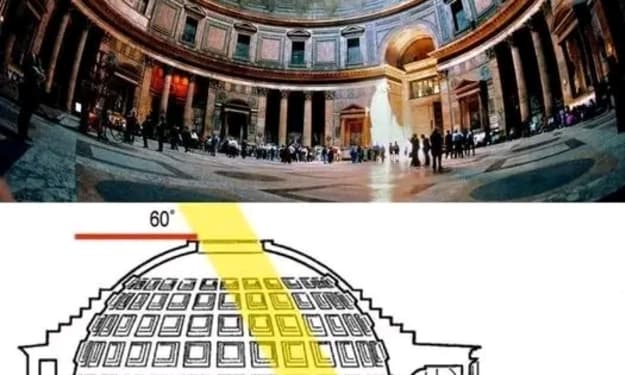
If there’s one building that can boast over 1,900 years of architectural dominance, it’s the Pantheon in Rome. Not only is this awe-inspiring structure a breathtaking piece of ancient history, but it also holds the remarkable title of having the World’s Largest Unreinforced Concrete Dome—a record it’s been flaunting for nearly two millennia. That’s right, for almost 2,000 years, architects have been trying to top what the Pantheon accomplished in the 2nd century, and let’s just say, it’s a pretty tough act to follow. The Pantheon’s dome is like the ultimate architectural mic drop, challenging modern builders with a silent, "Top that, future people!" The Pantheon’s Dome: A Feat of Engineering Genius Completed around 125 AD during the reign of Emperor Hadrian, the Pantheon’s dome is a marvel of ancient engineering. At a massive 43.3 meters (142 feet) in diameter, it remains the largest unreinforced concrete dome in the world. Think about that for a second: the structure has been standing tall for almost two millennia without any modern reinforcements like steel beams or advanced support structures. And it’s still perfectly intact. The secret to this incredible feat lies in the ancient Romans' genius use of materials and design. The concrete mixture they used varied in density, with heavier materials at the bottom and lighter ones at the top. The Romans also incorporated volcanic ash into the concrete mix, giving it incredible strength while keeping it lightweight—an ancient precursor to today’s high-tech concrete innovations. At the top of the dome, the concrete is significantly thinner, reducing the overall weight while maintaining structural integrity. To top it off, the dome's interior is coffered, meaning it's adorned with recessed panels that reduce the overall weight of the structure while also adding to its aesthetic grandeur. This design not only showcases the architectural mastery of the ancient Romans but also highlights their sense of style and elegance. The Oculus: The Pantheon’s Eye to the Sky At the very center of this massive dome is the oculus, an open circular hole that measures 9 meters (30 feet) in diameter. This "eye" at the top of the Pantheon has no glass or covering, leaving the interior of the Pantheon open to the elements. While that might sound like a design flaw, it’s actually one of the building’s most impressive features. The oculus serves several important purposes. First, it allows natural light to flood the interior, creating a beautifully illuminated space that changes throughout the day. The light filtering in through the oculus moves across the floor like a giant sundial, marking the passage of time in a spectacularly visual way. Second, it reduces the weight at the top of the dome, which is crucial for maintaining the structure’s balance and stability. But the oculus isn’t just practical; it’s also part of the Pantheon’s grand celebration of the heavens. The name "Pantheon" comes from the Greek words "pan" (all) and "theon" (gods), suggesting the temple was dedicated to all the gods of ancient Rome. The oculus, then, is like a celestial portal, connecting the earth to the divine realm above. When standing inside the Pantheon and looking up at the oculus, it’s hard not to feel a sense of wonder and awe as the sky appears to open up to you. The Pantheon’s Party Trick: Rome’s Birthday Solar Show As if the Pantheon wasn’t already impressive enough, it also throws a solar-powered party every year on April 21st, Rome’s official birthday. On this day, the sun aligns perfectly with the oculus and shines a beam of light directly through the Pantheon’s front door. It’s as if the building itself is celebrating the birth of the Eternal City. This phenomenon wasn’t an accident; the alignment was intentionally designed by the architects to honor Rome. During ancient times, this dramatic sunlight display would have been a significant event, with the emperor standing in the doorway, illuminated by the celestial beam as a symbol of divine favor and the city’s enduring power. Today, this annual solar spectacle is still celebrated, drawing crowds of visitors eager to witness the Pantheon’s timeless connection to the cosmos. A Masterpiece that Defies Time In an age where modern skyscrapers rise and fall, the Pantheon stands as a reminder of the brilliance of ancient Roman engineering and architecture. Its dome, a testament to human ingenuity, remains unbeaten as the largest unreinforced concrete structure ever built. With its awe-inspiring design and perfect alignment with the cosmos, the Pantheon continues to captivate visitors from around the world, offering a glimpse into the greatness of ancient Rome. As you step inside the Pantheon and gaze up at the oculus, you’re not just looking at a roof—you’re looking at history. You’re standing where emperors once stood, bathed in the same sunlight that has illuminated this sacred space for nearly 2,000 years. And while many have tried to outdo this architectural wonder, the Pantheon simply looks down from its lofty height, as if to say, "Top that." So, next time you find yourself in Rome, remember to pay a visit to this ancient masterpiece. Whether it’s a sunny afternoon or Rome’s birthday, the Pantheon is always ready to show off its timeless charm—no RSVP needed.
By Deji Akomolafe2 years ago in History
The White Horse of Uffington: A 3,000-Year-Old Enigma
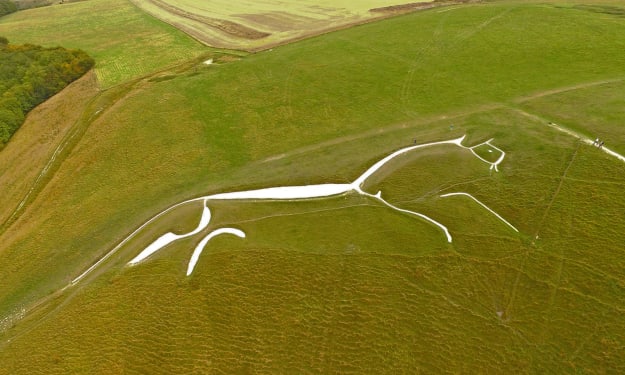
Perched on the rolling chalk hills of Oxfordshire, England, the White Horse of Uffington has captured the imagination of locals and historians alike for over 3,000 years. This iconic hill figure, carved into the earth, stands as a remarkable testament to the creativity and ingenuity of prehistoric peoples. Yet, for all its grandeur and historical significance, much about the White Horse remains shrouded in mystery. Who created it? Why was it made? And what does it truly represent? In this blog post, we’ll explore the fascinating history of the White Horse of Uffington, delve into its possible meanings, and examine why this ancient symbol continues to captivate us today. A Monument to Time: The Creation of the White Horse The White Horse of Uffington is a striking figure that measures approximately 360 feet in length. It was created by carving deep trenches into the chalk hillside and then filling them with crushed white chalk, which forms the sleek, almost abstract image of a horse. This process has left an enduring mark on the landscape that can be seen for miles around, its brilliant white outline standing out vividly against the surrounding greenery. Dating the White Horse has been a matter of some debate among archaeologists. For years, it was assumed that the figure might be a relatively recent creation, perhaps from the Saxon or medieval periods. However, scientific dating techniques have now shown that the figure dates back to at least 1000 BC, placing it firmly in the late Bronze Age or early Iron Age. This makes the White Horse of Uffington one of the oldest hill figures in Britain. What’s more remarkable is that the figure has been maintained continuously for over 3,000 years. Generations of locals have taken it upon themselves to "scour" the horse, a process involving cleaning and refilling the trenches with fresh chalk to ensure that the figure remains visible. This tradition, which continues to this day, speaks to the enduring cultural significance of the White Horse to the people of Oxfordshire. The Mystery of Its Meaning Despite its age and prominence, the true purpose and meaning of the White Horse of Uffington remain largely speculative. The figure is so stylized that it doesn’t resemble a horse in a traditional sense; its long, flowing curves and elongated body give it an almost ethereal, abstract quality. This has led some researchers to suggest that it may not represent a horse at all, but perhaps a dragon or another mythical creature. Others argue that it is indeed a horse, given that horses held significant symbolic and practical importance in prehistoric Britain. One prevailing theory is that the White Horse was a symbol of power and fertility, perhaps connected to a local deity or tribal chief. Horses were associated with the elite in Bronze Age society, and their strength and speed made them valuable both in warfare and in agriculture. The figure may have been a sacred symbol, intended to assert dominance over the land and invoke protection from the gods. Another interpretation links the figure to the ancient Celtic goddess Epona, who was revered as the protector of horses, riders, and fertility. It’s possible that the White Horse was a tribute to her, a way of honoring the divine through this massive hill carving. While there is no definitive evidence to support this theory, the idea of the figure being tied to ancient religious practices remains an intriguing possibility. Alternatively, the White Horse may have been created for more practical purposes. Some archaeologists suggest that the figure could have served as a territorial marker, signaling the boundaries of a particular tribe’s land. Visible from afar, the White Horse would have been a bold statement of ownership and identity. A Link to the Ancient Past The landscape around the White Horse of Uffington is rich in archaeological significance, with several other ancient monuments located nearby. Close to the hill figure is Uffington Castle, an Iron Age hillfort that dates back to the same period as the horse. This suggests that the area was of considerable importance during the prehistoric era. The hillfort’s commanding position on the high ground, overlooking the horse, reinforces the notion that the figure was a significant part of the local cultural landscape. Also nearby is the Neolithic long barrow known as Wayland's Smithy, a burial site that predates the White Horse by several thousand years. According to legend, Wayland's Smithy was the home of Wayland, a mythical blacksmith associated with magic and metalworking. Folklore has it that if you leave your horse tied up at the site overnight, along with a coin for payment, Wayland will shoe the horse by morning. This rich blend of history and myth highlights the area's deep connection to ancient traditions and beliefs. The Legacy of the White Horse Today, the White Horse of Uffington remains a beloved cultural symbol, attracting tourists, history enthusiasts, and artists. Its striking simplicity and ancient origins make it an enduring icon of the English countryside. The horse has been featured in literature, art, and even on local emblems, serving as a symbol of continuity between the modern world and the distant past. The annual scouring festival, where locals gather to clean and maintain the horse, is a reminder that this figure is not just a relic of the past—it’s a living part of the community’s heritage. By participating in this tradition, each generation contributes to the preservation of the White Horse, ensuring that it remains a visible link to the ancestors who first carved it into the earth. Conclusion The White Horse of Uffington is a truly remarkable artifact of Britain’s prehistoric past. Its enigmatic form, its connection to ancient rituals and mythology, and its lasting presence on the landscape make it one of the most intriguing hill figures in the world. Though much about its origin and purpose remains a mystery, what is certain is that the White Horse continues to inspire awe and fascination, just as it has for millennia. Whether it was created as a religious symbol, a territorial marker, or something else entirely, the White Horse stands as a powerful reminder of the creativity and ingenuity of our distant ancestors. Its enduring presence on the chalk hills of Oxfordshire invites us to reflect on the past and to ponder the mysteries of those who came before us.
By Deji Akomolafe2 years ago in History
We are Poisoning Ourselves: Ghana's Gold Rush Sparks Environmental Disaster
The gold rush in Ghana, one of the world's largest producers of gold, is fueling an environmental catastrophe. While gold mining has been a vital part of Ghana's economy for centuries, the rapid expansion of illegal and unregulated mining activities—known locally as "galamsey"—has sparked an ecological disaster. With gold in high demand, miners have been exploiting Ghana's resources at an unsustainable rate, leading to severe consequences for both the environment and local communities.
By Zinnat ara Begum2 years ago in History
The Spooky Ghost Town You’ve Never Heard of
Imagine wandering through the vast wilderness of British Columbia, breathing in the crisp mountain air and soaking in the stunning views of towering forests and rugged fjords. As you venture deeper into this remote land, along the wild Alaskan border, you stumble across something truly unexpected: a quaint little town nestled at the very tip of a massive fjord. At first glance, it seems full of life. The homes are well-maintained, the streets are spotless, and—here’s the kicker—the lights are still on in every building. It’s like a Norman Rockwell painting come to life... except, no one’s home. Welcome to Kitsault, a ghost town frozen in time, with all the lights on but not a soul to be seen.
By Marveline Merab2 years ago in History
Mozart’s Kitchen at No. 9 Getreidegasse: A Glimpse Into the Daily Life of a Musical Prodigy
In the heart of Salzburg, Austria, tucked away in the narrow and picturesque Getreidegasse, stands a house that has become a symbol of one of the greatest musical geniuses the world has ever known. No. 9 Getreidegasse is not just any house—it is the birthplace of Wolfgang Amadeus Mozart. Born on January 27, 1756, in this very building, Mozart spent the early years of his life within these walls, and it is here that the foundation of his extraordinary musical career was laid. While much attention is often given to the grand concert halls where Mozart performed or the compositions he penned, there is something particularly special about visiting the more intimate spaces of his childhood home, such as the kitchen. This simple room offers a rare and personal glimpse into the daily life of the young prodigy and his family. Standing in this kitchen, it is easy to imagine the Mozart family gathered around, sharing meals and conversations, while young Wolfgang grew up in the warmth of a home that nurtured his immense talents. A Humble Beginning Though today, Mozart is celebrated worldwide as a musical genius, his family’s life was relatively modest. Leopold Mozart, Wolfgang’s father, was a court musician and composer in Salzburg, and while the family was respected in musical circles, they were not particularly wealthy. Their apartment at No. 9 Getreidegasse, where they lived from 1747 to 1773, reflected their social standing—spacious enough to be comfortable, but not lavish by any means. The kitchen was one of the most important rooms in this household, as it was in many homes of the time. It was the center of daily life, where food was prepared, meals were shared, and family members came together. In the 18th century, kitchens were simple spaces, without the modern appliances and conveniences we take for granted today. Cooking was done over an open fire, and ingredients were sourced from local markets or grown in small gardens. The warmth from the hearth provided heat during the cold Salzburg winters, and the kitchen became a communal space where the family would gather to escape the chill. For young Wolfgang, the kitchen would have been a familiar and comforting place. It is not hard to imagine him, perhaps as a small child, sitting by the fire while his mother, Anna Maria, prepared meals or his father, Leopold, discussed music with friends and colleagues. In this humble setting, the early seeds of Mozart’s musical genius were being nurtured by the environment around him. The Role of the Kitchen in Mozart’s Family Life The kitchen was not just a place for cooking and eating—it was a social hub for the Mozart family. Leopold and Anna Maria raised their children, Wolfgang and his sister Maria Anna (Nannerl), in a tight-knit family atmosphere where music was ever-present. Leopold, a talented musician and composer in his own right, recognized Wolfgang’s exceptional talents from an early age and made it a priority to foster those gifts. Family life in the Mozart household revolved around music, and it is likely that even in the kitchen, there were moments of music-making. In many 18th-century homes, the kitchen was also a place where simple instruments, such as flutes or violins, might be played while meals were being prepared. Given the Mozart family’s deep musical roots, it is easy to picture Leopold discussing compositions or humming melodies with his children as they gathered for meals. This was a family that lived and breathed music, and the kitchen, as the heart of the home, would have been a natural setting for such moments. Wolfgang’s Early Musical Development It is almost impossible to comprehend the sheer genius of young Wolfgang Amadeus Mozart. By the age of three, he was already showing signs of musical talent, and by the time he was five, he was composing his own pieces. His early exposure to music, especially through his father’s teachings, played a crucial role in his development. However, the environment in which he grew up—his home and, more specifically, the kitchen—also contributed to shaping his early experiences. The kitchen at No. 9 Getreidegasse was not just a backdrop to daily life but a place where the young Wolfgang’s mind would have absorbed the rhythms of family life, the conversations of adults, and the sounds of his sister practicing her harpsichord. The domestic routines and family interactions that took place in this kitchen would have influenced his creativity and his understanding of the world. It is remarkable to think that the foundations of some of the greatest musical works ever composed were being formed in such a simple and unassuming space. Standing in Mozart’s Kitchen Today Today, No. 9 Getreidegasse has been transformed into a museum dedicated to the life and legacy of Wolfgang Amadeus Mozart. Visitors from around the world come to walk through the rooms where Mozart once lived, including the famous kitchen. Standing in this space, visitors are transported back in time, imagining the daily routines of the Mozart family and the young prodigy who would grow up to change the course of music history. The kitchen, though modest, holds a special significance. It is a place that reminds us of Mozart’s humanity—the fact that this extraordinary genius once lived a life not so different from many others of his time. In this room, we can feel a connection to the young Wolfgang, not as the legendary composer, but as a child growing up in a loving and supportive family, surrounded by the warmth and simplicity of home life. Conclusion The kitchen at No. 9 Getreidegasse in Salzburg offers more than just a glimpse into the domestic life of the Mozart family—it provides a window into the early influences that shaped one of history’s greatest composers. In this modest room, the daily routines of family life unfolded, and amid the simplicity of meals and conversations, young Wolfgang Amadeus Mozart’s genius was quietly nurtured. Today, this kitchen stands as a reminder that even in the humblest of settings, extraordinary talent can emerge, forever changing the world.
By Deji Akomolafe2 years ago in History
How a Powerful Old Painting Changed the World: Michelangelo’s Sistine Chapel
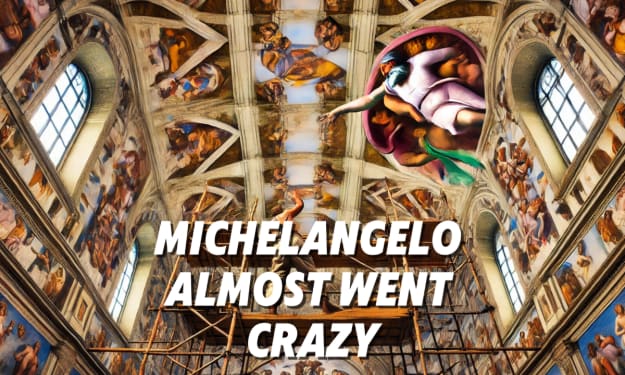
Ever feel like you’ve been assigned a task that’s way outside your job description? Well, Michelangelo certainly did. When he got the call from Pope Julius II to paint the Sistine Chapel ceiling, the famed sculptor was far from thrilled. Michelangelo didn’t even consider himself a painter at all—he was a man of stone and chisels. But like any good artist (or reluctant contractor), he took on the job. What followed was four years of back-breaking, neck-straining work that nearly broke his spirit. But the result? A piece of art so breathtaking, people today still crane their necks to admire it. So, let’s dive into the tale of how Michelangelo transformed the Sistine Chapel ceiling from a plain old roof into one of the world’s most iconic masterpieces—while muttering complaints about how he should’ve stuck with sculpting!
By Marveline Merab2 years ago in History
The Most Bizarre Marathon You’ve Never Heard Of
The Olympic Games have a long and storied history, filled with triumphs, broken records, and unforgettable moments. But in 1904, the marathon at the St. Louis Olympics turned out to be something else entirely—a chaotic, bizarre, and downright dangerous race that would leave people scratching their heads for years. From cheating to near-death experiences and unexpected competitors, the 1904 marathon wasn’t just a sporting event—it was a disaster waiting to happen. Buckle up because this race has it all: dust, dehydration, and even a rat poison cocktail. No, seriously.
By Marveline Merab2 years ago in History
What Really Happens on The World's Strangest Island: The John Frum Cult
In the South Pacific, on the island of Tanna in Vanuatu, exists one of the most curious and enduring religious movements in history—the John Frum cult. This group of islanders follows a deity-like figure known as John Frum, a mysterious man believed to have come from the United States during or just before World War II, promising wealth, prosperity, and cargo to the native people. And what exactly is “cargo,” you ask? It’s the exotic goods—radios, weapons, clothing—that Western military forces brought to the islands, and it fascinated the islanders.
By Marveline Merab2 years ago in History
This Mountain Range Can't Be Found By Any Human: The Mystery of the Mountains of Kong
Imagine an entire mountain range, stretching across Africa, appearing on maps for nearly 100 years—only for it to turn out that the mountains never existed at all. Welcome to the curious case of the Mountains of Kong, one of history’s most puzzling geographic errors. From the late 18th century to the 20th century, explorers, cartographers, and even governments believed in the existence of this fabled mountain range. And if you think they were just a little off, think again. These mountains never existed in any form, but somehow, they became one of the most prominent features on maps of Africa for decades.
By Marveline Merab2 years ago in History
The Timeless Doors of the Pantheon: Rome’s Bronze Marvels. AI-Generated.
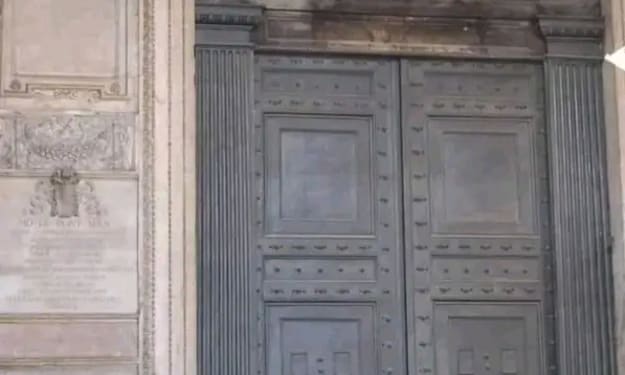
Rome, a city rich with history, is home to countless architectural wonders. Among them, the Pantheon stands tall as a testament to the grandeur of ancient Roman engineering and design. Known for its majestic dome and awe-inspiring rotunda, the Pantheon has been a subject of fascination for centuries. However, one of its lesser-discussed yet equally remarkable features is its ancient doors—massive bronze portals that have stood the test of time. These doors, dating back to 115 AD, are not only some of the oldest in the world but are still functional today, bearing a unique legacy from the reign of Emperor Hadrian. A Doorway to Ancient History The Pantheon, originally built by Marcus Agrippa in 27 BC, was rebuilt by Emperor Hadrian around 125 AD following a fire that destroyed the original structure. As part of this restoration, the iconic bronze doors were cast, and they have remained in place ever since, enduring the centuries while most other ancient doors have long since crumbled or been replaced. At a glance, these doors may seem like just another feature of Rome’s architectural grandeur, but their history is much more profound. Measuring an astounding twenty-five feet in height and seven and a half feet wide, each door is crafted entirely of bronze—a material that was expensive and difficult to work with in the ancient world. Yet, even after nearly two millennia, the doors retain their structural integrity and elegance, standing as a reminder of the remarkable craftsmanship of the Romans. Engineering Marvels of the Ancient World What makes the Pantheon doors particularly astonishing is not just their size or their material, but the way they function. Each door weighs several tons, yet they can be easily opened and closed by a single person. This feat of engineering is a testament to the ingenuity of Roman architects and builders, who designed the hinges and mechanisms with such precision that the doors remain perfectly balanced to this day. Their smooth operation stands in contrast to the cumbersome doors of other ancient structures, demonstrating the superior level of engineering prowess that characterized Roman construction. These doors also hold another rare distinction—they are one of only two doors in the world with a nearly 2,000-year-old lock that still works. While the exact mechanics of the lock remain something of a mystery, it is clear that the Romans had a deep understanding of metallurgy and mechanical design, enabling them to create mechanisms that could endure for millennia. Symbols of Rome’s Durability and Strength More than just functional elements of the Pantheon, these bronze doors symbolize the durability and strength of Rome itself. The Pantheon has survived countless invasions, regime changes, and natural disasters, yet its doors have never faltered. They have withstood the rise and fall of empires, seen the transformation of Rome from a pagan city to the heart of Christianity, and endured through periods of neglect and restoration. Through it all, the doors have remained a gateway to one of Rome’s most iconic structures. The symbolism of the doors is further enhanced by the fact that the Pantheon was consecrated as a Christian church in the 7th century, becoming the Basilica of St. Mary and the Martyrs. In this context, the doors represent the transition from the ancient pagan world to the Christian era, and their continued use today highlights the seamless continuity of Rome’s long history. The Mystery of the Bronze Doors Despite their fame, much about the Pantheon’s doors remains shrouded in mystery. For centuries, scholars have debated whether the doors we see today are the originals from Hadrian’s time or replacements from a later period. However, recent studies suggest that they are indeed the original doors, albeit with some modifications made over the centuries. For example, the door panels were once adorned with elaborate decorations, likely lost or melted down during the early medieval period when bronze was frequently recycled for other uses. One of the most intriguing aspects of the doors is the casting technique used to create them. Bronze casting on such a large scale was incredibly challenging, and it remains unclear exactly how the Romans managed to produce such massive structures with the limited technology of the time. Some theories suggest that the doors were cast in sections and then assembled, while others propose that they were made in one continuous piece. Whatever the method, it is clear that the Romans had mastered the art of metalworking in ways that continue to astound modern engineers. An Enduring Legacy Today, the bronze doors of the Pantheon continue to be a source of wonder for visitors from around the world. As one of the most well-preserved pieces of ancient Roman architecture, they offer a tangible connection to the past, inviting us to imagine the many generations of Romans who passed through them. Their timeless design and functionality serve as a reminder of the brilliance of ancient engineering, while their enduring presence stands as a symbol of Rome’s lasting influence on the world. In a city filled with iconic landmarks, the Pantheon’s bronze doors are a quieter but no less powerful testament to the skill, artistry, and ambition of the Roman Empire. As they continue to open and close each day—just as they have for nearly 2,000 years—they remind us that, while empires rise and fall, great works of art and engineering can stand the test of time.
By Deji Akomolafe2 years ago in History
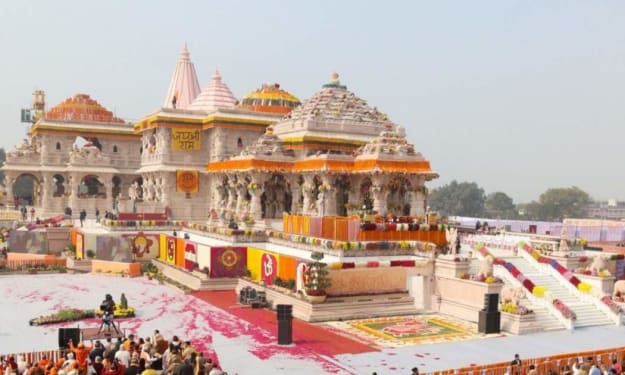
Varanasi Ayodhya Tour Package. Content Warning.
Varanasi Ayodhya Tour Package: A Sacred Journey Through India’s Spiritual Heartlands At Vrindavan Packages, we understand the deep spiritual connection travelers seek when they visit India’s holiest cities. Our thoughtfully designed Varanasi Ayodhya Tour Package is an immersive experience that takes you through two of India’s most revered religious destinations: Varanasi and Ayodhya. This journey is perfect for anyone yearning for a transformative pilgrimage, a peaceful retreat into spirituality, and an opportunity to witness centuries-old traditions come to life.
By Vrindavan Packages2 years ago in History