Lessons
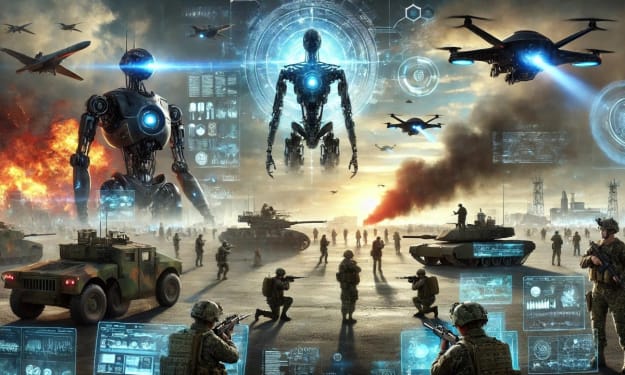
AI vs. Humans: How Smart Weapons Changed the Face of World War 2025
AI vs. Humans: How Smart Weapons Changed the Face of World War 2025 In the history of warfare, every era has brought new weapons that changed the battlefield—spears and swords, muskets and cannons, tanks and missiles. But in 2025, the world saw the rise of a new kind of weapon: one that could think. Powered by artificial intelligence, these smart weapons reshaped war as we knew it. It was no longer just nation versus nation. It became AI vs. Humans, and the world would never be the same.
By Ali Asad Ullahabout a year ago in History
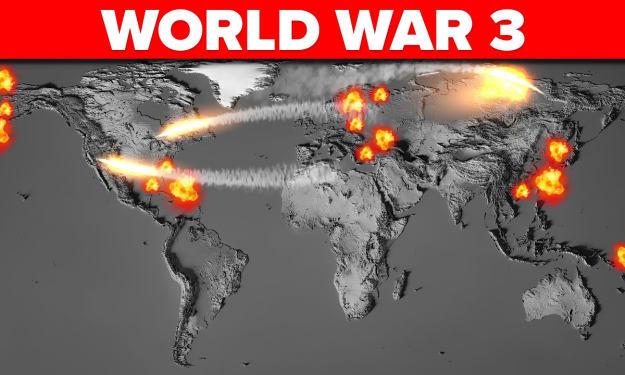
Taiwan, Ukraine, or the Middle East: Which Flashpoint Led to World War III?
Taiwan, Ukraine, or the Middle East: Which Flashpoint Led to World War III? For years, global leaders warned of the possibility of a third world war. Tensions were rising, alliances shifting, and technology advancing at a pace far faster than diplomacy. But no one could predict exactly where the first spark would ignite the flames of a global conflict. In the end, three major flashpoints—Taiwan, Ukraine, and the Middle East—stood on the edge. Each had the potential to trigger a war unlike anything the world had seen before. But which one actually did?
By Ali Asad Ullahabout a year ago in History
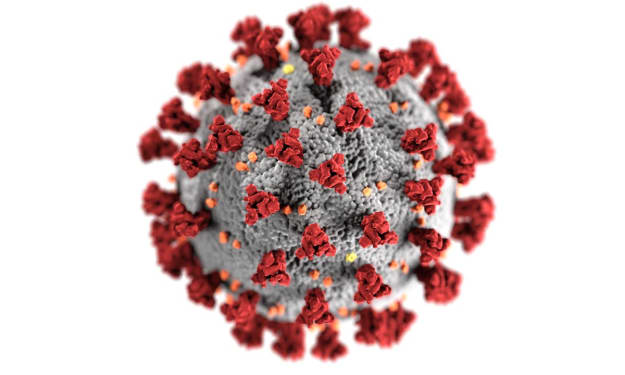
The Invisible War: How a Virus Became World War 3
The Invisible War: How a Virus Became World War 3 The war did not begin with bombs. There was no sound of fighter jets in the sky. No cities were flattened by tanks. The enemy was silent. Invisible. It came in the breath, in a cough, in a handshake. In the year 2020, the world thought it was facing a health crisis. But deep beneath the surface, something far darker was happening. COVID-19 was not just a virus. It was the start of the third world war.
By Ali Asad Ullahabout a year ago in History
Hazrat Umar Farooq (RA): The Just Ruler Who Changed the Course of Islamic History. AI-Generated.
In the vast landscape of Islamic history, few names shine as brightly as that of Hazrat Umar Farooq (RA). He was not just the second Caliph of Islam, but a visionary leader, a symbol of justice, and a role model whose influence continues to inspire people over 1,400 years later. Born in Makkah in 583 CE, Umar ibn al-Khattab (RA) belonged to the respected Quraysh tribe. Before accepting Islam, he was known for his strong personality, eloquence, and firm stance against the new religion. In fact, he once set out with the intention to kill Prophet Muhammad (PBUH). But in a dramatic and miraculous turn of events, he accepted Islam after reading verses from Surah Taha. His conversion marked a turning point for the Muslim community, who until then had been practicing their faith in secrecy and fear. With Hazrat Umar's acceptance of Islam, Muslims began praying publicly in the Haram. His presence gave strength and courage to the believers. The Prophet (PBUH) once prayed, "O Allah, strengthen Islam with either Abu Jahl or Umar ibn al-Khattab." That prayer was answered through Umar. His Role During the Prophet’s Lifetime Hazrat Umar (RA) was among the closest companions of the Prophet (PBUH). His opinions were often aligned with divine revelation. On many occasions, verses of the Qur’an were revealed confirming his suggestions, such as the commandment about hijab and the treatment of prisoners after the Battle of Badr. He participated in all major battles alongside the Prophet, including Badr, Uhud, and Khandaq. His wisdom, discipline, and boldness were respected by both friends and enemies alike. Becoming the Second Caliph After the death of Abu Bakr Siddiq (RA), Hazrat Umar was chosen as the second Caliph. His leadership marked a golden era in Islamic governance. He ruled from 634 CE to 644 CE, and during this time, the Islamic empire expanded rapidly, reaching vast territories including Persia, Egypt, Palestine, and parts of the Byzantine Empire. But it was not just expansion that marked his rule—it was his governance. Hazrat Umar established a system of justice, public welfare, and accountability that was far ahead of his time. He introduced a welfare state where food, clothing, and shelter were the responsibility of the government. He created a system of salaries for soldiers and civil servants, initiated regular population censuses, and formed the Diwan system to manage administrative records. A Leader of Simplicity and Accountability Despite ruling over an empire, Hazrat Umar (RA) lived with astonishing simplicity. He wore patched clothes, lived in a modest house, and often ate dates and bread. He did not allow his family to enjoy any special privilege and held himself accountable before Allah and the people. He would walk the streets of Madinah at night to check on the well-being of his people, often helping widows and orphans himself. He once said, "If a dog were to die hungry on the banks of the Euphrates, Umar would be responsible for it." His Martyrdom In 644 CE (23 AH), Hazrat Umar was attacked by a Persian slave named Abu Lulu while leading the Fajr prayer in Masjid al-Nabawi. He was critically injured and passed away three days later. Before his death, he appointed a council of six companions to choose the next Caliph. He was buried next to the Prophet Muhammad (PBUH) and Abu Bakr (RA) in the sacred chamber in Madinah. --- Legacy Hazrat Umar Farooq (RA) left behind a legacy of justice, discipline, humility, and fear of Allah. Non-Muslim historians and scholars have praised his governance model, comparing him to the greatest rulers in world history. His contributions to law, governance, and social justice are studied and admired even today. His life reminds us that true leadership is not about power or wealth—it’s about serving people with sincerity, holding oneself accountable, and standing firm for truth and justice.
By Waseem Ahmad about a year ago in History
The Evolution of Military Technology Between WWI and WWII
The Evolution of Military Technology Between WWI and WWII The period between World War I and World War II was one of profound transformation in military technology, strategy, and global power dynamics. While World War I had introduced the world to mechanized warfare on an unprecedented scale, the interwar years saw nations around the globe rushing to analyze lessons learned, innovate, and prepare for the conflicts they feared would erupt again. This era was marked by rapid technological advancements that fundamentally reshaped the way wars were fought, laying the groundwork for the devastating battles of World War II.
By Ali Asad Ullahabout a year ago in History
Is World War III Really Coming in 2025? Analyzing Global Tensions
Is World War III Really Coming in 2025? Analyzing Global Tensions In the ever-shifting landscape of international relations, the specter of a third world war looms as a persistent, albeit nebulous, possibility. The year 2025 has surfaced in geopolitical discourse as a critical juncture, fueled by escalating tensions among global powers, intensifying proxy conflicts, and rapid technological advancements in warfare. Yet, amid the cacophony of speculation and alarmism, it is imperative to dissect the underpinnings of these tensions with rigor and nuance, moving beyond sensationalism to understand whether a full-scale global conflagration is indeed imminent or merely an extrapolation of contemporary anxieties.
By Ali Asad Ullahabout a year ago in History
The Beauty of New York: A City of Timeless Wonders and Endless Change
The Beauty of New York: A City of Timeless Wonders and Endless Change By Ali Asad Ullah I still remember the first time I stepped onto the streets of New York City. The air buzzed with a strange energy — a mix of hope, chaos, and possibility that you could feel pulsing beneath every footstep. Coming from a quieter place, it was overwhelming at first. The towering skyscrapers seemed to touch the clouds, the cacophony of voices, horns, and footsteps merged into a strange kind of music, and every corner seemed to whisper a story.
By Ali Asad Ullahabout a year ago in History
"The Power of One: Embracing the Beauty of Alone Life"
In a quiet mountain village where the sky always seemed just a little closer to the earth, lived a woman named Mira. She had once walked through life with others—family, friends, lovers, colleagues—all like chapters that eventually came to a quiet close. Over time, the noise of companionship faded, not with bitterness, but with the gentle settling of dust on a forgotten piano. She didn’t resist the solitude. She accepted it.
By shahsawar khanabout a year ago in History
The Tragedy of Karbala: A Timeless Stand for Justice and Truth
The Tragedy of Karbala is not just a historical incident—it is a moral revolution that has echoed through centuries. On the 10th of Muharram, 61 AH (October 10, 680 CE), Imam Hussain ibn Ali (RA), the beloved grandson of Prophet Muhammad ﷺ, stood with only 72 companions against the massive army of the tyrant Yazid. His mission was not to seek power, but to preserve the soul of Islam, which was being threatened by corruption and injustice.
By Muhammad Adnanabout a year ago in History
From Blockbuster to Netflix: Why Marketing Has Moved from Loud to Smart
Let’s be honest: Most people still think marketing is just about ads, logos, and making noise. But in today’s AI-powered world, marketing is something else entirely. It’s about understanding humans deeply — and using technology smartly to serve them better than anyone else. It’s not about who can shout the loudest, but about who listens the best.
By Waqas Ahmadabout a year ago in History
Printing the Future
Printing the Future: The scent of ink and parchment clung to the air in William Caxton’s printing workshop, a quiet revolution humming beneath the clatter of metal type. For young Thomas Graye, it was more than a job—it was history being carved, letter by letter, into eternity.
By Salah Uddinabout a year ago in History