Lessons
The Swing Still Hangs in the Garden.
The old garden behind my childhood home is silent now. The grass grows wild, the flowers bloom without anyone appreciating them, and the color of the fence has faded in years of sun and rain. But one thing remains — the swing.
By Echoes of Lifeabout a year ago in History
The Price of the American Dream: What I Learned on July 4th
The Price of the American Dream: What I Learned on July 4th 📖 Story: The Price of the American Dream: What I Learned on July 4th Since I was a child, I had only one wish—to see America on its Independence Day. Not because I wanted money, or to escape, or even for citizenship. It was deeper than that. I grew up in a village where the electricity would often vanish during dinner, where freedom meant not being noticed by the wrong people, and where silence was safer than honesty. But in America… they lit the sky with fireworks to celebrate being free. The First Spark I first saw the fireworks on a cracked YouTube screen in a small internet café. The video was titled: “July 4th Fireworks Over Washington DC – 2020.” The sky exploded with red and gold. People cheered. Kids waved flags. There was music and freedom in the air. That was the moment I made a quiet promise to myself: > “One day, I will see it with my own eyes.” The Journey to a Dream In 2024, I won a U.S. visitor visa through an education program. I had written an essay called “The Meaning of Freedom in My Village.” To my surprise, someone read it—and gave me a chance. On July 2nd, 2024, I stepped off a plane in New York City. My hands shook. And when I saw the American flag waving above JFK airport, I quietly whispered: > “Freedom, I am here.” The Moment I Waited For I stood near the Lincoln Memorial as families gathered, waving flags, smiling. A little girl gave me a mini flag and said, “Happy Fourth!” Then the fireworks began. The sky cracked open. The sound, the colors—it all hit my chest like thunder. My heart swelled with something I had never fully felt before. > Hope. The Shift But then… something changed. A man nearby, in military gear, said into his phone: > “Look at that guy—probably from some terrorist country. Watching us like he’s spying.” He was pointing… at me. People looked at me differently. The girl’s family quietly stepped away. One man gripped his bag tighter. Another whispered something behind me. No one stopped me. But in that moment, I felt completely alone The Realization Back in my room, I sat with the flag the girl gave me and thought deeply. > Freedom is not a show. It’s a struggle. Even in America, people fight—for equality, for justice, for identity. Some welcome you. Some fear you. But everyone is free to choose. That’s what makes it beautiful—and difficult. Thank You, America I stayed two more weeks. I met kind people. Visited libraries and museums. I saw a country that’s not perfect—but still filled with dreamers. > America is not a dream. It is millions of people dreaming differently. Now, when I think of July 4th, I smile—not for the lights, but for what I learned: > Freedom is not given. It is felt. It is fought for. And sometimes feared.
By Ali Asad Ullahabout a year ago in History
The Civilization of the Ottoman Turks: A Legacy of Courtesy, Wisdom, and Deep Spiritual Values
Throughout history, few civilizations have preserved a legacy as refined and spiritually grounded as that of the Ottoman Turks. Emerging from modest beginnings and growing into one of the most powerful empires the world has ever seen, the Ottomans left behind not just tales of conquest, but also rich traditions rooted in manners, respect, and subtle intelligence. Their daily lives, community practices, and hospitality customs paint a portrait of a people who lived with purpose, imbued with values of dignity, humility, and emotional intelligence. Let us journey into the cultural soul of the Ottomans—a civilization where every gesture had meaning, and every action reflected wisdom. --- Hospitality: A Silent Language of the Heart Hospitality in Ottoman culture wasn’t merely about offering food or drink—it was a deeply symbolic interaction, a respectful dialogue between host and guest without words. When a guest arrived at an Ottoman home, they were offered two simple things: a cup of Turkish coffee (qahwa) and a glass of plain water. If the guest reached for the water, the host would immediately understand that the visitor might be hungry, and without asking or embarrassing the guest, they would begin preparing a meal—often their finest, even if they had little themselves. However, if the guest chose coffee, it was understood they were there just for conversation and did not wish to eat, allowing the host to continue the visit in a lighter, more social tone. This silent understanding showcased not only hospitality but also respect for the dignity and unspoken needs of others. --- Floral Symbols: Messages Without Words Ottomans used flowers as a subtle language outside their homes, offering passersby unspoken but powerful messages. A yellow flower placed outside the home signaled that someone in the house was ill. This gentle indicator advised visitors to speak softly, avoid noise, and, if appropriate, come in to inquire about the patient's health. A red flower suggested that there was a young woman of marriageable age in the home. It was a community-based warning to avoid inappropriate or vulgar language near the house. It was also a welcome signal for those who intended to propose marriage—an invitation to knock respectfully. These flower signs reflect the social responsibility and moral boundaries that governed Ottoman neighborhoods. There was no need for confrontation, no boards or notices—civility was coded into aesthetics. --- The Double Door Hammer: Gender Sensitivity Another beautiful and thoughtful tradition was the use of two hammers or knockers on the doors of Ottoman homes: One was larger and heavier, meant to be used by men. The other was smaller and lighter, designated for women. When a man knocked using the large hammer, a male member of the household would come to answer. If the smaller hammer was used, it signaled a female visitor, prompting a woman from the household to attend the door. Such practices weren’t just cultural quirks—they showed a profound respect for modesty, boundaries, and gender ethics in the public and private spheres of life. --- Charity with Dignity: Anonymous Giving Perhaps one of the most awe-inspiring aspects of Ottoman culture was the way they handled charity. Giving was not for show, recognition, or public praise—it was quiet, respectful, and anonymous. Wealthy individuals would go to local vendors—such as vegetable sellers or grocers—and open anonymous tabs (accounts). These tabs were meant to cover the costs of food or supplies for any poor person who came in need. When a poor person arrived to buy something, the shopkeeper would provide the items free of charge, telling them nothing of the benefactor. The giver never met the receiver. The dignity of the poor was preserved, and the reward was left entirely to Allah. Later, the wealthy individual would return quietly and clear the tab, expecting nothing but the satisfaction of helping a fellow human being. This practice is a testament to the Ottoman spirit of silent service—a value deeply embedded in Islamic teachings. --- Adab with the Prophet (PBUH): A Unique Expression of Love The Ottomans were not just polite—they were spiritually refined. One such example is how they treated the age of the Prophet Muhammad ﷺ. The Prophet (peace be upon him) passed away at the age of 63. Among devout Ottoman Turks, if an elderly person had surpassed this age and was asked how old they were, they would not say “I am 65 or 70.” Instead, they would reply: > “Son, I have crossed the limit.” This was not out of superstition but out of deep reverence and spiritual love for the Prophet ﷺ. They felt it inappropriate or audacious to say they had lived longer than the Messenger of Allah. Such subtleties reveal the depth of Ottoman adab (etiquette)—a love that shaped their language, actions, and worldview. --- The Reason Behind Ottoman Decline: A Loss of Values For centuries, the Ottoman Empire stood as a beacon of Islamic civilization, a model of balanced power, religious freedom, intellectual progress, and moral living. So what led to its fall? According to many historians and cultural observers, the empire did not collapse due to lack of might but due to internal betrayal, loss of spiritual values, and Western conspiracies that targeted the Ottoman identity. As their traditions of generosity, modesty, and spiritual discipline eroded, so did the strength of their unity. Greed, political manipulation, and abandonment of their own cultural wisdom opened the doors for the empire’s eventual fragmentation. --- What We Can Learn Today The lessons from Ottoman civilization are not confined to history books. They remain relevant today in a world that is often rushing, indifferent, and transactional. When we offer a guest water or tea, we can remember their method of listening with the heart, not the ears. When we give in charity, let us give with dignity, not display. When we speak of modesty and social respect, we can adopt symbolic, gentle ways rather than aggressive or legalistic ones. When we reflect on our Prophet ﷺ, we can ask whether we love him with such sensitivity and manners as the Ottomans did. --- Conclusion: A Civilization Built on Wisdom The Ottoman Turks left behind a civilizational blueprint where values were lived, not just preached. Their culture reminds us that true greatness lies not only in power or architecture, but in the way a society treats its guests, respects its women, protects its poor, and honors its prophets. In an age where modern life often celebrates speed, fame, and self-promotion, the Ottoman legacy calls us back to simplicity, meaning, and sincerity—a beautiful tale of literature, love, and light that the world should never forget.
By Ikram Ullahabout a year ago in History
"The Sacred Quran: The Guiding Light for Mankind"
The Sacred Quran serves as the primary scripture of Islam, regarded by followers as the exact words of God (Allah) communicated to the Prophet Muhammad (peace be upon him) throughout a span of 23 years via the angel Jibreel (Gabriel). Esteemed as the ultimate and comprehensive revelation, the Quran acts as a source of guidance not solely for Muslims but for all people. Its lessons encompass various elements of existence, such as belief, ethics, legislation, social equity, and personal development.
By MD. SHARIFUL ISLAM KHANabout a year ago in History
The Day Iceland's Women Brought the Country to a Halt
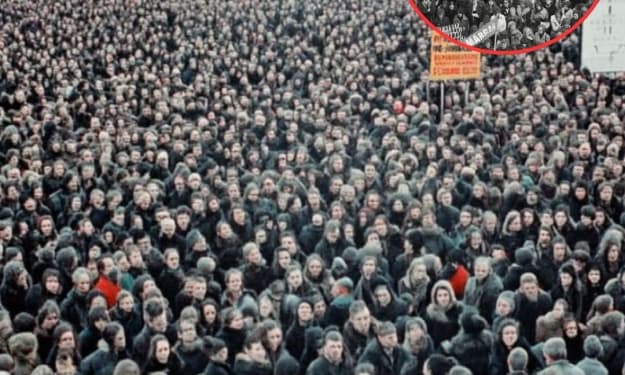
On October 24, 1975, Iceland experienced a day that would go down in history—not just for the nation, but for the global movement for gender equality. In a bold and unprecedented act, 90% of Iceland’s women walked off their jobs, put down their household tools, and refused to care for children. Offices, schools, nurseries, shops, and factories were brought to a near-standstill. Streets filled with women of all ages carrying signs, chanting slogans, and standing shoulder to shoulder in peaceful defiance. This was not just a protest; it was a nation-wide awakening. The event became known as the “Women’s Day Off” (Kvennafrídagurinn in Icelandic), and its impact was immediate and powerful. Organized by a coalition of women's rights groups and supported by grassroots movements, the strike was not just about equal pay. It was about visibility. It was about making the invisible labor of women visible by removing it altogether—for just one day. In 1975, despite Iceland's reputation for being socially progressive, gender inequality remained a deeply rooted issue. Women were paid significantly less than men, had limited representation in politics, and were still expected to carry the full weight of housework and childcare. Though many women worked outside the home, their contributions were undervalued both in the workplace and within the home. The goal of the strike was simple yet profound: show the country what a single day without women looked like. And the country noticed. Airports shut down. Banks closed early. Newspapers couldn’t be printed. Male teachers had to bring their children to school, only to discover they had to return home because there were no female staff to care for the students. Even radio and television programs were disrupted. The burden of unpaid labor—usually shouldered by women—suddenly became very visible to everyone, especially to men who had never considered it before. One of the most remarkable aspects of the strike was its peacefulness and unity. Thousands of women poured into the streets of Reykjavik, with over 25,000 gathering at Arnarhóll hill in the capital city. Considering the country’s population was just around 220,000 at the time, this turnout was monumental. Women from all walks of life—teachers, nurses, shopkeepers, housewives, students—came together in solidarity. Many men supported the cause as well, recognizing that gender equality would benefit the nation as a whole. The strike was so effective that it didn’t just stir public conversation—it sparked legislative and cultural transformation. In the years following, Iceland passed several new laws aimed at improving women’s rights, including stronger protections against workplace discrimination and more support for women in politics and education. But perhaps the most symbolic and lasting effect of that day came five years later. In 1980, Iceland elected Vigdís Finnbogadóttir as its president—the first woman in the world to be democratically elected to lead a country. Her victory wasn’t just a political milestone; it was a direct consequence of the movement that had taken root in 1975. Vigdís herself acknowledged that the Women’s Day Off had made her win possible. The strike had changed public perception, built momentum, and proven that women could lead at the highest level. Her presidency lasted 16 years, making her one of the longest-serving elected female heads of state in history. She became a symbol of progress not only for Iceland but for the world. And her legacy continues to inspire generations of women to take their place in leadership roles. Since then, Iceland has become a global leader in gender equality. It regularly tops the World Economic Forum’s Global Gender Gap Index, and it has implemented forward-thinking policies such as mandatory equal pay certification, generous parental leave for both mothers and fathers, and high representation of women in government and business. October 24 is now commemorated every year in Iceland as Women's Day, reminding the nation of the courage, unity, and power demonstrated on that cold autumn day in 1975. Over the years, women have continued to strike on this day to raise awareness about ongoing gender disparities, showing that the fight is not yet over. The story of the 1975 strike is not just about Icelandic women—it’s about the potential of collective action. It’s about what can happen when people unite around a cause that transcends politics or economics and speaks to the basic human principle of fairness. It proves that when women stop working, the world feels it—and when they stand together, they can change history. What began as a one-day protest became a permanent turning point in the nation’s journey toward equality. It was a moment when women stepped out of the background and into the spotlight—not to ask for change, but to demand it. And they didn’t just demand it—they achieved it.
By DigitalAddiabout a year ago in History