Lessons
The Vanishing Library of Baghdad—What Was Lost When the House of Wisdom Burned?
A Beacon Extinguished By the 9th century, the House of Wisdom—or Bayt al‑Hikma—had become Baghdad’s crowning jewel. Imagine a colossal domed edifice where Syriac, Persian, Sanskrit, and
By DRE Explainsabout a year ago in History
Imran Khan: The Leader Who Challenged Power Through Promise and Persistence.
Imran Khan’s life reads like an epic tale — one that traverses stadiums, hospitals, political rallies, courtrooms, and eventually, the corridors of power. Born in 1952 in Lahore, Khan rose to prominence not through politics but cricket, a sport that brought him global fame and national hero status. As captain, he led Pakistan to its first-ever Cricket World Cup victory in 1992. But that victory was just the beginning of a far greater mission.
By Mansoor ahmadabout a year ago in History
Photos of Macron’s U.K. State Visit, From a Carriage Ride to a Polite Kiss
French President Emmanuel Macron and his wife, Brigitte, commenced a three-day state visit to the United Kingdom, marked by ceremonial elegance, political symbolism, and moments of personal charm. The grand diplomatic event that was to follow began with their arrival at RAF Northolt. Greeted by the Prince and Princess of Wales, Macron's gallant gesture of gently air-kissing Princess Kate's hand drew both admiration and curiosity, as such gestures are rarely seen in royal protocol but not expressly prohibited.
By GLOBAL NEWSabout a year ago in History
Story of karbala
In the golden heart of the Arabian desert, on a sun-scorched plain called Karbala, history bled into eternity. It was the 10th of Muharram, the year 680 CE—known forever as Ashura—when the sands turned crimson with the blood of innocence, and a stand was taken that would shake the soul of the world. This is not just a story. It is a cry for justice echoing through centuries. It is the tale of Imam Hussain ibn Ali, the beloved grandson of Prophet Muhammad (PBUH), who refused to bow to tyranny. A Choice of Conscience After the death of Muawiyah, the Umayyad caliphate demanded allegiance to his son, Yazid, a man known for corruption, cruelty, and disregard for the values of Islam. Imam Hussain could not, in good conscience, legitimize such rule. To accept Yazid would mean betraying the Prophet’s teachings, dishonoring justice, and forsaking the ummah. So, he chose the harder path: resistance. Refusing Yazid’s pledge was not just rebellion—it was a spiritual and moral declaration that truth must never kneel before power. When the people of Kufa—a city in Iraq—invited him to lead them, he set out from Medina, taking with him his family, companions, and a heart full of truth. But fate, or rather betrayal, awaited in the desert. The Desert Trap As Hussain approached Karbala, Yazid’s army—thousands strong—intercepted him. They cut off his access to the Euphrates River, depriving even children of water under the searing Iraqi sun. For ten days, the small caravan endured the blazing heat and thirst. Hussain tried to reason, to avoid bloodshed, but the enemy wanted only submission. With just 72 men, including old companions and young children, Hussain faced an army of over 30,000. Still, he did not surrender. On the morning of Ashura, he stood beneath the rising sun, holding his infant son Ali Asghar in trembling arms. The child, parched and weak, cried for water. Hussain pleaded, not for battle, but for mercy. In response, an arrow was loosed—striking the infant’s throat. Even then, Hussain did not curse. He raised the bloodied baby toward the heavens and whispered, “O Allah, I leave it to You.” The Martyrdom One by one, Hussain’s companions and family members walked into the battlefield and embraced martyrdom. His brother Abbas, the flag-bearer, tried to fetch water but was ambushed and fell near the river, his arms severed, dying with the cry of “Al-atash”—“thirst.” When all were gone, Hussain stood alone. Dust-covered, bloodied, but unbroken. He charged into the enemy lines like a lion, his sword blazing with the fire of divine justice. They could not defeat him in honor, so they overwhelmed him with numbers. Spears pierced him, swords slashed, until he fell, barely breathing. A soldier severed his blessed head from his body as his sister, Zainab, watched from afar, her voice choked with grief. But it was not defeat. It was a victory unlike any other. The Aftermath: A Legacy Carved in Fire The women and children were taken captive. They marched from Karbala to Damascus in chains, but Zainab, the sister of Hussain, became the voice of Karbala. She stood in Yazid’s court and delivered a sermon so fierce, so dignified, that even the tyrant was shaken. Karbala did not end with blood. It began with it. Imam Hussain’s sacrifice became a symbol for all time—a standard against oppression, a light in the darkest of ages. Gandhi once said, “I learned from Hussain how to achieve victory while being oppressed.” His stand wasn’t for a throne. It was for truth, dignity, and the soul of humanity. A Story that Lives Today, over a thousand years later, millions still walk barefoot to Karbala, weeping, mourning, remembering. Not as a ritual—but as a reminder. That when truth faces tyranny, silence is betrayal. And so, the desert still echoes with Hussain’s final cry: “Is there anyone to help me?” Each heart that answers, each voice that speaks truth to power, becomes part of his legacy. Karbala is not in the past. It is now. It is wherever injustice lives and courage rises to meet it.
By Asad zameerabout a year ago in History
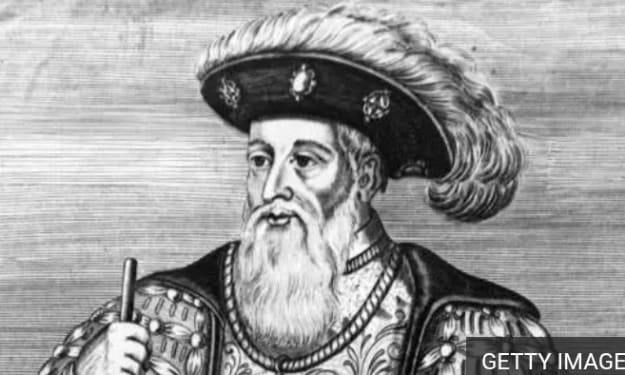
Vasco da Gama: Explorer, Conqueror, or Villain?
When Vasco da Gama Set Fire to a Ship Filled with Women and Children Heading to Mecca The character Kelu, raised under Portuguese rule, had only one thought in mind: to eliminate Vasco. This is the dialogue introducing the main character Chirakkal Kelu in the famous Malayalam film Urumi, even before he appears on screen. The life of the film's protagonist, Kelu, revolves solely around the mission of killing the Portuguese sailor Vasco da Gama. To achieve this goal, he faces numerous obstacles, builds a revolutionary army, and clashes with the Portuguese forces. In this battle, he loses his closest friend. But in the end, not only does he fail to achieve his goal, but he also loses his life. Chirakkal Kelu, who desires to assassinate Vasco da Gama, is a fictional character. But Prithviraj’s portrayal of this role in Urumi became a great cinematic experience and gained immense popularity in Kerala. Viewers praised the film highly. Although Vasco da Gama is celebrated in European history for discovering the sea route to India, in Malayalam films, folklore, and songs, he is portrayed as a villain. On March 25, 1497, Vasco da Gama set out from Lisbon, the capital of Portugal, for India. He had the backing of the Portuguese king for this voyage. After months of travel, he became the first European to reach India by sea. This journey earned him the title of a “hero” in European history. Even in our school textbooks, Vasco da Gama is credited for opening trade routes and playing a significant role in the spice trade. Europe’s Dream of Reaching India American historian Charles E. Nowell, in his book The Great Discoveries, writes about Vasco da Gama: > “Vasco da Gama, who established direct contact with India, was a man of strong physique and strong character. Although he was illiterate, cruel, and violent, he was also loyal and fearless.” He was given the responsibility of leading the voyage to India, a task not meant for the soft-hearted. In January 1497, King Manuel I of Portugal tasked Vasco da Gama with fulfilling “Europe's dream of reaching India.” For centuries, many European nations tried to be the first to reach India. Even a small country like Portugal was competing in this race. However, Arab and Persian traders had already reached India and established trade networks. They were importing spices, particularly from the Malabar region (present-day Kerala), through Muslim merchants. Historian John F. Richards writes in The Mughal Empire: > “Before the Portuguese arrived, Muslims and their ships dominated Gujarat, Malabar, and Arabian Sea ports.” In 1492, Columbus arrived in the Americas. Until his death, he believed that the land he had discovered was part of Asia and that India was nearby. George M. Tully writes in his book The Voyages and Adventures of Vasco da Gama: > “This is why he called the inhabitants of that land ‘Indians.’” For Europeans, India was envisioned as a wealthy land filled with gold, diamonds, precious stones, and expensive spices like pepper. Asia—especially India—was viewed as a land of immense riches and allure. William Logan writes in Malabar Manual that Vasco da Gama's fleet consisted of three ships: > São Rafael, São Gabriel, and São Miguel. Each ship was staffed with officers, sailors, and other crew members. When Vasco da Gama first came to India, his fleet was quite small. Historical sources differ on exactly how many people accompanied him. But one thing is certain: some of them were convicts. The book M. Nomed Deus: The Journal of the First Voyage of Vasco da Gama to India, 1497–1499 mentions that during the voyage, ten convicts were pardoned and sent along. The Portuguese king pardoned their crimes and sent them to assist on this mission. Some historians suggest another reason behind this decision—perhaps the king thought it better for these convicts to risk dying at sea rather than waste away in Portuguese prisons. One of the most important of these criminals was a "New Christian" named João Nunes, a recently converted Jew who could speak some Arabic and Hebrew. The same journal states: > "João Nunes was intelligent and understood the Muslims' language." Was He the First European to Set Foot in India? When Vasco da Gama’s ship reached Kerala on May 20, 1498, food was arranged on board while anchored just off the coast. It is recorded that Vasco first landed at Kappad village in the Kozhikode district of Kerala. However, according to historian and scholar M.G.S. Narayanan, Vasco first visited the Pantalayani region near the Kollam district. Small Malabar boats approached Vasco's ships and questioned his origins, asking, “Which country are you from?” It is quite possible that the first European to set foot on Indian soil was not Vasco da Gama himself, but one of his crew members—a convict. According to Vasco da Gama and the Sea Route to India: > “Before Vasco set foot on land, he sent someone who could speak Arabic and Hebrew to the shore.” Thus, the first European to reach the Malabar coast may have been João Nunes, a recent convert who spoke Arabic and Hebrew. But there is no concrete documentation to confirm this. A Disappointing First Visit to India When Vasco da Gama's translator met two Arab traders onshore, they suspected him to be an enemy. They shouted, “May the devil take you!” They then asked, “Why have you come here?” The translator replied, “We are Christians and have come in search of spices.” This exchange between the first European visitors and the Arab traders is mentioned in many historical accounts. Later, Vasco da Gama, along with a few selected men, went ashore, leaving the rest of the crew on the ships with instructions to remain alert. Historical accounts suggest that he was received with courtesy and respect. However, Vasco’s first visit to India was not as successful as he had hoped. The Hindu king of Kozhikode (called the Zamorin by the Portuguese) considered Vasco’s gifts simple and unimpressive and mocked them. The Arab Muslim traders, who dominated the spice trade, strongly opposed the arrival of the Portuguese. Historian M.G.S. Narayanan, in an interview with The Hindu, said: > “The Portuguese demanded a monopoly on the pepper trade, but the Zamorin refused because the trade was already under Muslim control.” After this, the Portuguese allied with the Kingdom of Cochin and established trading centers there. Later, they turned toward Goa, near the Vijayanagara Empire. Vasco da Gama returned to Europe in 1499 with a small quantity of spices. Nevertheless, he was given a grand welcome in Portugal. K.M. Panikkar writes in Asia and Western Dominance: > “The spices brought back from India during Vasco's first voyage were sold at a huge profit, many times more than the cost of the entire expedition.” It was then that the Portuguese realized the wealth of India. Vasco’s Second Voyage to India Vasco da Gama’s first voyage (1497–1499) established a sea route between Europe and India but failed to secure a strong trade agreement with the Zamorin of Kerala. Arab Muslim traders, long dominant in the Indian Ocean spice trade, condemned and resisted the Portuguese. Historian Sanjay Subrahmanyam writes in The Career and Legend of Vasco da Gama: > “For Vasco, the Muslim traders of Kozhikode were not only economic rivals but religious and cultural enemies.” > “Their strong position at the Zamorin’s court was a major obstacle to Portuguese ambitions.” To counter this threat, the Portuguese government planned a second expedition. This time, the goal was clear: establish Portuguese dominance in India, take revenge for earlier failures, and monopolize the spice trade. In February 1502, Vasco da Gama set out from Lisbon with 20 warships and about 1,500 soldiers. The fleet was equipped with cannons and other weapons, ready for battle. On September 11 of the same year, his fleet arrived at the coast of Kannur in Kerala. One of Vasco's crew members documented in The Journal of the First Voyage of Vasco da Gama to India: > “There we saw ships returning from Mecca. These ships were transporting spices to our country (Portugal). We captured them so that only the king of Portugal could directly trade spices from India.” > “We then captured a ship bound for Mecca, carrying 380 men, many women, and children.” > “We looted at least 12,000 ducats (gold coins) and other valuables from the ship. Then, on October 1, we set the ship and everyone on board ablaze.” The ship referred to here as the "Mecca ship" was a large vessel named Miri. According to historian K.M. Panikkar, this ship belonged to the brother of Khoja Qasim, a wealthy merchant from Kozhikode. The ship, seized by Vasco’s forces, was carrying many women, children, and elderly pilgrims bound for Hajj. It was also filled with valuable trade goods. > “Vasco ordered the ship to be burned. Women begged for mercy for their children. Portuguese soldiers watched from their ships as every soul aboard was burned alive, their screams echoing across the sea.” Gaspar Correia writes in Lendas da Índia: > “No one survived. The cries of those on the brink of death echoed across the ocean. Vasco remained unmoved, as calm as if nothing had happened.” This incident deeply disturbed even some Portuguese of the time and became a key reason why Vasco da Gama is remembered in Kerala’s history as a villain.
By Ikram Ullahabout a year ago in History
Why some see the dollar's drop as a sign America is losing its financial might
**The Dollar’s Decline: A Sign of America’s Waning Financial Might? ** In recent months, the U.S. dollar has seen a notable decline against major global currencies, sparking widespread debate among economists, investors, and policymakers. This depreciation is seen by some as a warning sign that America may be losing its long-standing financial dominance, rather than just a market fluctuation. While others see it as part of a natural economic cycle, the perception that the dollar’s weakening reflects a deeper erosion of U.S. financial influence is gaining traction.
By GLOBAL NEWSabout a year ago in History
Dow futures fall as Trump officials signal limited breathing room before tariffs ‘boomerang back’
**Dow Futures Fall as Trump Officials Warn of Tariff Repercussions** U.S. stock index futures fell early Monday morning after key Trump administration officials signaled that there may be limited time before escalating tariffs on China and other trade partners start to backfire on the American economy. Dow futures dropped more than 150 points as markets digested growing signs that trade tensions are not just here to stay—but may intensify in ways that hurt domestic industries.
By GLOBAL NEWSabout a year ago in History
"The Man Who Altered History: The Dark Rise That Ignited the Deadliest War
History does not easily forget the names of those who change the course of humanity—sometimes for the better, and sometimes with devastating consequences. Adolf Hitler is a name etched into the darkest pages of the 20th century. His life and actions not only shaped the destiny of Germany but also plunged the entire world into a brutal conflict known as World War II, one of the deadliest wars in human history.
By Kamran khanabout a year ago in History