Lessons
Why You Keep Seeing 111: A Spiritual Wake-Up Call You Shouldn’t Ignore
Have you been seeing 111 everywhere? Maybe it shows up on license plates, your phone at 1:11 PM, receipts, or even random page numbers. At first, it might seem like a coincidence. But the truth is it’s not. The universe is sending you a message. And it’s time you paid attention.
By Sthephanieabout a year ago in History
Spartacus: Born in Chains, Died a Legend
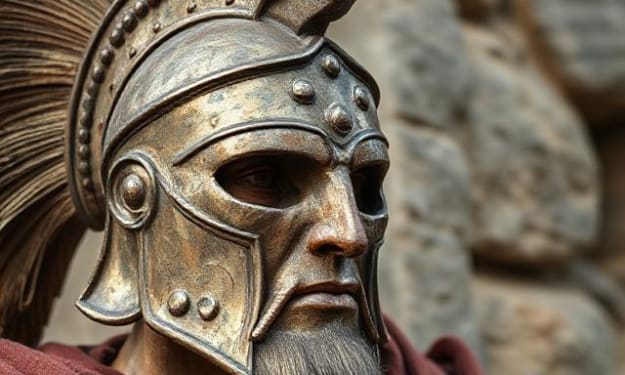
Spartacus: The Slave Who Defied an Empire In the heart of ancient Rome, where emperors ruled and gladiators bled for applause, there rose a man who would shake the foundations of the Republic. His name was Spartacus, and though he was born a slave, he died a symbol—of defiance, freedom, and the unyielding will of the oppressed. The Making of a Gladiator Spartacus was not born a Roman, nor was he destined for greatness by blood. He hailed from Thrace, a rugged region in the Balkans where fierce tribes resisted Rome’s expansion. Originally a soldier—perhaps even a Roman auxiliary—Spartacus was eventually captured and sold into slavery, a common fate for prisoners of war. Deemed strong and capable, he was sent to a gladiatorial training school in Capua, a brutal institution where men were forged into entertainers of death. Under the watchful eyes of Roman lanistae (trainers), Spartacus learned to fight not for honor, but for survival—and for the amusement of the Roman elite. Armed with nothing but short swords and the hope of living another day, he was forced to battle in the arena, where blood was currency and mercy a myth. But Spartacus's spirit remained unbroken. Within the confines of the arena, he forged not only strength, but unity—connecting with other enslaved gladiators who, like him, dreamed of freedom. The Great Escape In 73 BCE, that dream ignited into action. Spartacus, along with about 70 fellow gladiators, staged a daring escape. Armed with kitchen knives and seized weapons, they broke free from the gladiator school and fled to Mount Vesuvius, a dormant volcano that would become their fortress. From this unlikely stronghold, the fugitives launched raids on surrounding Roman towns, freeing slaves and gathering supplies. Their numbers swelled as word of rebellion spread like wildfire. Farmers, slaves, deserters—tens of thousands joined the cause. What began as a desperate bid for freedom became a full-scale insurrection. The War Begins Rome was stunned. A group of escaped slaves had defied the Republic—and won battles. The Senate, humiliated, sent hastily assembled forces to crush the revolt. Spartacus, however, proved more than just a brawler—he was a tactician. Using clever ambushes and superior knowledge of the terrain, he outmaneuvered several Roman commanders. He defeated army after army, seizing weapons, horses, and the confidence of his growing force. His army grew to possibly 100,000 men, a mix of gladiators, former slaves, and others who sought to overturn the existing order. Despite his success, Spartacus never claimed to be king. He refused a crown, speaking instead of liberty, of returning home. His aim, some say, was not to conquer Rome, but to escape Italy altogether, to lead his people north across the Alps to freedom. But freedom was not easily won in a world ruled by legions. The Empire Strikes Back The Senate, alarmed by the rebellion’s success, turned to Marcus Licinius Crassus, the wealthiest man in Rome. Crassus was ruthless and ambitious. He took command with full authority and imposed brutal discipline on his troops, even reviving the ancient punishment of decimation—killing every tenth soldier in cowardly units. Crassus pushed Spartacus south, hoping to trap him in Calabria. Spartacus sought a way out, perhaps hoping to cross the sea to Sicily, but was betrayed by pirates who had promised him ships. Trapped and outnumbered, his army fractured. Some broke away, others lost hope. Spartacus, though, never surrendered. In 71 BCE, the final battle came. On the plains of Lucania, Spartacus led his remaining forces—perhaps 30,000 men—against the might of Rome. It was a fight for their lives, for dignity, and for a future free of chains. The Death of a Legend Spartacus died as he lived: sword in hand, refusing to bow. Ancient sources say he fought fiercely, cutting his way toward Crassus himself, before being overwhelmed. His body was never found—perhaps consumed by the chaos of battle, or perhaps hidden by his loyal followers. In the aftermath, Rome made a brutal example. 6,000 captured rebels were crucified along the Appian Way, the road from Capua to Rome. For miles, crosses lined the path—grim reminders of Rome’s wrath. But the message backfired. Instead of erasing Spartacus from memory, the crucifixions immortalized him. Though Rome won the war, it could not kill the idea he had inspired. The Legacy of Spartacus To Rome, Spartacus was a rebel and a threat. To history, he is much more: a symbol of resistance, of rising against impossible odds, of fighting for the right to be free. His name echoes through centuries—in revolutions, in literature, in film. Karl Marx saw him as a proto-revolutionary. The American abolitionists honored him. Modern storytellers turned him into a tragic hero. And his story, though drenched in blood, remains a beacon: proof that even in the darkest systems, someone will rise. Spartacus may have been a slave, but he died freer than most men of his time. And in that death, he carved his name into the eternal stone of history—not as a Roman citizen, but as a rebel who defied Rome itself.
By Soul Draftsabout a year ago in History
The Pharaoh Who Worshipped the Sun Alone
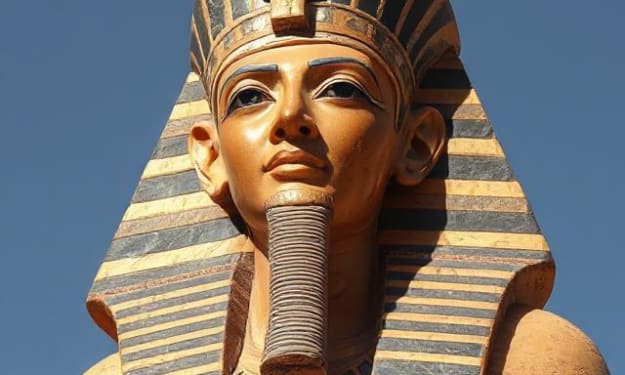
In the heart of ancient Egypt, where gods walked among mortals and temples pierced the desert sky, there rose a pharaoh unlike any other—Akhenaten, the heretic king, the visionary, the outcast. He was born Amenhotep IV, son of the mighty Amenhotep III and Queen Tiye. He inherited an empire of gold, art, and gods—a pantheon of deities that filled every corner of Egyptian life. But within the young prince burned a strange fire, a light not from Osiris or Amun, but from Aten, the sun itself. When Amenhotep IV ascended the throne around 1353 BCE, he appeared to follow tradition. But within five years, everything changed. He cast aside the old gods, rejected the powerful priesthood of Amun, and declared that only Aten, the radiant disk of the sun, was divine. He changed his name to Akhenaten, meaning “Effective for Aten.” He declared that Aten was not just another god—it was the one true god, the giver of life to all creation. In a land where religion was woven into every brick and scroll, this was revolution. Then came the most dramatic move of all: Akhenaten abandoned Thebes, the sacred city of Amun, and built a new capital in the desert. He called it Akhetaten—“Horizon of the Aten.” It rose from the sand like a dream: open courtyards, sunlit altars, and palaces designed to welcome the light. Unlike the dark temples of the past, Akhenaten's city had no roofs, for the sun must always see. He ruled beside Nefertiti, his queen of great beauty and power. Together, they were depicted not as distant gods, but as a loving family—holding their daughters, kissing them, basking in the sun's rays. Their faces, strangely elongated and androgynous, were carved into stone with unprecedented intimacy. But while Akhenaten worshipped light, his land began to fade into darkness. Outside his sun-washed city, Egypt trembled. Vassal states rebelled. The Hittites rose in the north. The priesthood of Amun, once the soul of Thebes, was enraged by its erasure. Grain was scarce, and the people grew weary of a god they could not touch. Akhenaten remained aloof, consumed by devotion. In his world, the only truth was the sun. He wrote hymns to Aten, describing the light as father, mother, breath, and food: > “You rise, and all eyes see you. You set, and all hearts ache. Life is through your rays alone.” Some saw genius in his vision. Others saw madness. When he died—sometime around 1336 BCE—his sun began to set. His successors tried to hold the center, but the world he built was already crumbling. His son, the young Tutankhaten, was pressured to abandon Akhetaten, return to Thebes, and restore the old gods. The boy obeyed, changing his name to Tutankhamun—“Living Image of Amun.” Akhenaten's memory was condemned. His name was chiseled off monuments, his city abandoned to the sand, his religion erased. For centuries, Akhenaten vanished from history. Even his mummy was lost. But he was not truly gone. In the 19th century, archaeologists uncovered the ruins of Akhetaten—modern-day Amarna. They found letters to foreign kings, hymn fragments, and sun-drenched art that broke all the rules of Egyptian formality. They found a king who spoke as a man, not a god, and who dared to ask: What if there is only one truth? Today, scholars still debate Akhenaten. Was he a proto-monotheist, a religious fanatic, or an artist-philosopher centuries ahead of his time? What’s clear is this: he changed Egypt forever. In a civilization that worshipped eternity, Akhenaten chose revolution. While others built pyramids to last for ages, he built a city that lasted less than two decades. Yet in that brief blaze of sun, he altered the course of history. He remains a mystery, a heretic to some, a prophet to others. But above all, Akhenaten is a reminder that even in the most ancient of worlds, one voice can question everything, and one sunlit dream can challenge the darkness.
By Soul Draftsabout a year ago in History
Above the Law? Supreme Court Ruling on Presidential Immunity Sparks U.S. Protests"
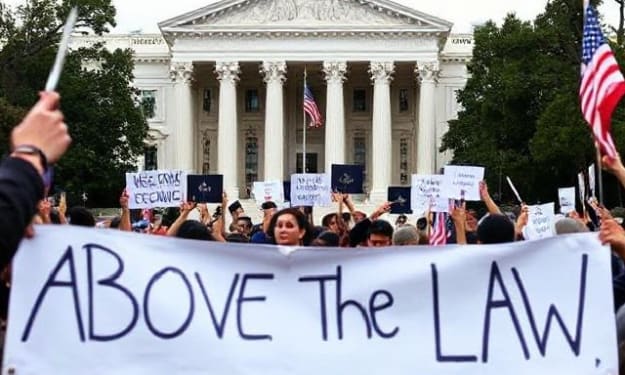
In one of the most consequential rulings in American judicial history, the U.S. Supreme Court on Monday granted former presidents substantial immunity from criminal prosecution for actions taken while in office. The decision, rendered in a 5–4 vote, has ignited a political firestorm, sending shockwaves across the country and plunging the nation into a fresh round of civic unrest. The majority opinion, authored by Chief Justice John Roberts, stated that “a former president is entitled to immunity from criminal prosecution for conduct within the outer perimeter of his official responsibilities.” While the ruling refrains from granting absolute immunity in all circumstances, critics argue that it opens the door for future presidents to abuse power without fear of accountability. Former President Donald Trump, who faces multiple indictments, including charges related to the January 6 insurrection, immediately celebrated the ruling as a “total victory for the Constitution and presidential power.” His legal team moved swiftly to pause ongoing cases, citing the Court’s decision. A Nation Reacts: "No One is Above the Law" The response from the public was swift and fierce. Within hours, protestors flooded major cities—New York, Chicago, Los Angeles, Atlanta, and beyond—holding banners that read “No Crown for Presidents,” “Justice Not Immunity,” and “Democracy Under Attack.” Organized by grassroots movements and civil rights groups, the demonstrations have largely remained peaceful, though tensions have flared in several locations. “This is not about Trump,” said Mariah Jefferson, a law student marching in Washington, D.C. “This is about the future of every presidency. This is about whether we live in a democracy or a monarchy.” In Philadelphia, a symbolic “funeral for accountability” was held in front of Independence Hall. Protesters dressed in colonial garb staged a reenactment of the Founding Fathers tearing up the Constitution—a visual metaphor for what many fear is happening in real time. Political Fallout: Echoes Across Washington On Capitol Hill, Democrats condemned the ruling as a dangerous overreach by the conservative-majority court. Senate Majority Leader Chuck Schumer called it “a seismic blow to the balance of power,” and House Democrats are reportedly considering legislative responses to clarify the limits of presidential immunity. “This court has fundamentally misunderstood the role of the presidency,” said Rep. Jamie Raskin, a constitutional scholar. “This is not an imperial office. Presidents must be subject to the rule of law like every other citizen.” Republicans, however, largely praised the decision, framing it as a necessary protection of executive authority. “Presidents must be able to make hard decisions without the threat of political prosecution hanging over them,” said Senator Josh Hawley. “This ruling restores constitutional clarity.” Still, a minority of GOP lawmakers voiced concern. “Immunity must never become impunity,” said Senator Lisa Murkowski, breaking ranks with her party. Legal Scholars Warn of Dangerous Precedent Legal experts across the spectrum are weighing in, with many warning that the decision could reshape the nature of American governance. Harvard Law professor Laurence Tribe described it as “an open invitation for tyranny,” while former federal judge Michael Luttig, a conservative, warned it “destroys the very principle of checks and balances.” “If a president can order the military to seize voting machines or instruct the IRS to target political enemies without legal consequence, where do we draw the line?” asked Yale constitutional law expert Akhil Reed Amar. Others, including conservative think tanks like the Heritage Foundation, argue the decision simply reinforces the need for careful delineation of official vs. private conduct. Media, Celebrities, and Public Sentiment Social media exploded with commentary following the announcement. Hashtags like #NoOneAboveTheLaw, #DemocracyCrisis, and #SCOTUSFailure trended on X (formerly Twitter). Celebrities including Mark Ruffalo, Kerry Washington, and Leonardo DiCaprio voiced their concern. “The Constitution is not a cloak of invisibility,” wrote Ruffalo. “It’s a shield for the people. We cannot let this stand.” A nationwide poll conducted by Quinnipiac University just two days after the ruling shows that 68% of Americans disagree with the decision, including 42% of Republican voters. The numbers reflect a growing anxiety about the future of accountability in American politics. What Comes Next? While the ruling is final, its implications are still unfolding. Legal analysts say Trump’s trials will be significantly delayed, if not entirely derailed. Prosecutors must now revisit their cases and prove that certain actions were not “official duties”—a high bar that could be open to wide interpretation. In the meantime, civic action is surging. Petitions, protest marches, and voter registration drives are accelerating as citizens brace for what could be one of the most contentious election seasons in U.S. history. “If the courts won’t hold presidents accountable, then we must,” said Jasmine Delgado, a high school civics teacher speaking at a rally in Austin, Texas. “We still have the ballot box. We still have our voices.” But as dusk falls over the Capitol and protestors light candles outside the Supreme Court, the mood remains uncertain—half defiance, half dread. Democracy, once taken for granted, now feels like something Americans must fight for all over again.
By Lal Sher Khan about a year ago in History
"Anne Frank: The Girl Who Wrote Through the War"
🌸 The Secret Diary: The True Story of Anne Frank (Emotional Storytelling Version) 🌸 Have you ever been so silent that you could hear your own heartbeat? So hidden, that even a creaking floorboard could cost you your life? This was the reality of a young girl named Anne Frank. The year was 1942. While Amsterdam’s streets buzzed with bicycles, trams, and chatter, a dark shadow was falling over the city. Nazi flags hung from buildings, soldiers marched through neighborhoods, and chilling signs appeared in shop windows: “No Jews Allowed.” Thirteen-year-old Anne, full of dreams and laughter, suddenly found her entire world changing overnight — just because she was Jewish. Her father, Otto Frank, saw what was coming. Jewish families were being arrested and sent away to unknown places — places from where no one returned. So one day, with a few belongings and heavy hearts, the Frank family vanished from the outside world. But they didn’t leave the country. Instead, they walked silently through the streets and slipped behind a hidden bookshelf inside Otto Frank’s office building. Behind that shelf was a secret annex — dark, cramped, and silent. It would become their home for the next two years. Imagine living in a place where you couldn’t flush the toilet during the day. Where laughter had to be swallowed, and running water was forbidden. Where children couldn’t play, and any sound could mean death. Eight people lived there — Anne, her sister Margot, her parents, and four others. Every creak of the wooden floor could be their last. Yet somehow, Anne found a way to stay alive on the inside. She began to write. In a small red-checkered diary she named “Kitty,” Anne poured out her deepest thoughts. She wrote about everything — her dreams of becoming a writer, her frustrations with life in hiding, her thoughts on love, her longing for freedom. The pages became her safe space, her therapy, her voice in a world that wanted to silence her. > “I can shake off everything as I write; my sorrows disappear, my courage is reborn,” she once wrote. In the midst of fear and war, Anne still believed in beauty. She still believed in hope. She still believed in people. > “In spite of everything, I still believe that people are really good at heart.” But her diary was not destined to end in peace. In August 1944, someone betrayed them. The Nazis stormed the annex, dragging everyone out. Anne was sent to Auschwitz, and then to Bergen-Belsen — a brutal concentration camp. There, in the cold, with barely any food, no medicine, and surrounded by death, Anne and her sister Margot caught typhus. Both died. Anne was just 15 years old. The war ended months later. The Nazis were defeated. But only Otto Frank returned. He was the sole survivor from the annex. And when he came back to Amsterdam, one of their helpers — Miep Gies — handed him a small object. It was Anne’s diary. Otto read it slowly, painfully — every word, every line. It was his daughter’s voice, speaking from the grave, filled with innocence, heartbreak, and courage. He knew he had to share it with the world. And so, “The Diary of a Young Girl” was published — Anne’s wish of becoming a writer had come true.
By Khan Afzalabout a year ago in History
The Middle East: A Tinderbox of Empires, Wars, and Unending Conflict. AI-Generated.
The Middle East: A Tinderbox of Empires, Wars, and Unending Conflict The Middle East has always been more than just a geographical region—it’s a crucible of civilizations, a battleground of empires, and a vortex of geopolitical rivalries that have shaped world history. From the ancient wars of Mesopotamia to the modern-day clashes between Israel and Iran, this land has rarely known lasting peace. Today, as tensions escalate once again, the Middle East stands at the brink of another catastrophic conflict, threatening not just regional stability but global security.
By Muhammad Salman Akbarabout a year ago in History
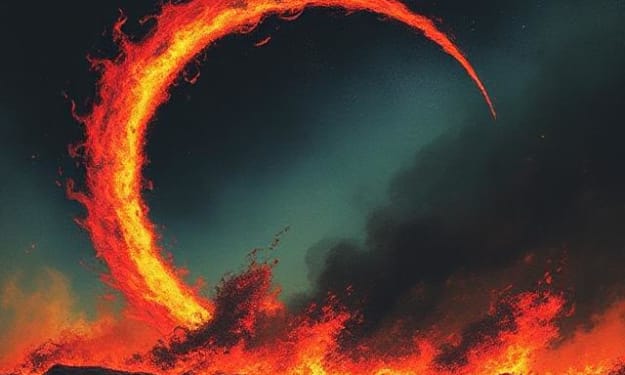
Fire in the Crescent: The 2025 Israel-Iran Conflict and the Fractured Path to Peace
By: Lal Sher Khan The morning of June 13, 2025, dawned like any other in Tehran. But within minutes, the sky turned to fire. What began as the faint sound of jets over the city quickly turned into an orchestrated barrage. Israel, for the first time in history, launched a full-scale direct military operation against Iran, striking deep into the heart of the Islamic Republic. Dubbed "Operation Rising Lion," Israeli fighter jets, drones, and cyber units unleashed a swift, coordinated assault targeting Iran’s nuclear facilities, missile silos, and Revolutionary Guard command centers. Explosions were reported in Tehran, Natanz, Isfahan, and Qom. Dozens of high-ranking IRGC officers, including General Hossein Salami, were confirmed dead within hours. Israel had long warned the world that a nuclear-armed Iran was a red line it would never tolerate. But this wasn’t just a preemptive strike—it was the beginning of a direct war between two bitter rivals that had previously limited their hostilities to proxies, cyberattacks, and espionage. A Decade in the Making The seeds of this conflict were planted long before the first missile was fired. Tensions had been escalating throughout the 2020s. Iran had gradually accelerated its nuclear program, frequently clashing with the IAEA over inspection rights. Meanwhile, Israel had ramped up sabotage operations inside Iran—explosions at enrichment facilities, assassinations of nuclear scientists, and increasingly public threats. By early 2025, after years of shadow warfare, several red lines were crossed. Iran’s missile program had made significant leaps, and its enrichment levels reportedly surpassed 90% uranium purity—the threshold for a bomb. Israel’s cabinet, under Prime Minister Benjamin Netanyahu, faced mounting pressure from military and intelligence leaders to act decisively. The trigger, according to Israeli officials, was an imminent Iranian plan to activate underground weaponization labs, a claim Iran vehemently denied. Iran’s Retaliation: The Shadow Breaks Into Light Within 24 hours of the Israeli strikes, Iran launched over 550 missiles at Israel, targeting military bases, airports, and urban centers including Tel Aviv, Haifa, and Beersheba. Though Israel's Iron Dome and David’s Sling systems intercepted many of them, several penetrated defenses, resulting in over two dozen civilian deaths and injuring hundreds. Hezbollah, Iran’s key proxy in Lebanon, opened a second front in the north. Rockets rained down on the Galilee region, prompting mass evacuations. The Houthi rebels in Yemen fired drones toward Eilat, further complicating Israel’s multi-front defense efforts. But perhaps the most startling development came from the United States. The U.S. Intervenes: Precision and Pressure President Donald Trump, recently reelected, addressed the nation from the White House, flanked by Secretary of Defense and Vice President J.D. Vance. Declaring Iran’s nuclear infrastructure “a global threat,” Trump ordered precision U.S. airstrikes on Fordow, Natanz, and Isfahan, joining Israel in its military campaign. In a matter of days, Iran’s nuclear capabilities were severely degraded. The Fordow facility was reduced to rubble. Key centrifuge halls in Natanz were rendered inoperable. Tehran’s air defense system struggled to respond, overwhelmed by the scope of the operation. Though Tehran declared victory in propaganda broadcasts, the reality on the ground told a different story: significant infrastructure loss, hundreds of military and civilian deaths, and economic devastation. Ceasefire—or Ceasefire for Now? By June 24, with international pressure mounting and domestic unrest stirring in Iran, a fragile Qatari-brokered ceasefire was announced. Both sides claimed victory. Iran’s Supreme Leader, Ayatollah Khamenei, called it “a divine test passed with honor.” Netanyahu stated the mission had “secured Israel’s future.” The ceasefire held—for now. Yet, questions swirl around its longevity. Iran’s parliament, controlled by hardliners, has since voted to expel all IAEA inspectors and resume nuclear activities “at full pace.” Israel, while pausing military operations, has declared itself ready to strike again “at a moment’s notice.” Behind closed doors, analysts fear this is not peace, but simply a pause before another storm. Echoes on the Street: Voices from Tehran and Tel Aviv In Tehran, the mood is mixed. Some, whipped into patriotic fervor, see the war as a stand against Western and Zionist aggression. Others mourn their losses—family members, homes, entire neighborhoods destroyed. “We didn’t ask for this,” said Reza, a university student in Tehran, whose dormitory was damaged in the air raids. “We wanted jobs, freedom, a normal life. Now we’re left with rubble and silence.” In Tel Aviv, residents emerge from bomb shelters with war-weariness etched on their faces. “We knew this day might come,” said Naomi, a school teacher. “But no one is ever truly ready. I just want my kids to feel safe again.” Regional Repercussions and Global Stakes The Israel-Iran conflict has redrawn the geopolitical map. Saudi Arabia, long a quiet backer of Israeli efforts to counter Iran, opened its airspace for the Israeli air force for the first time—a major diplomatic signal. Turkey condemned Israel, but stopped short of military action. Russia and China, Iran’s economic lifelines, have called for restraint, while the **
By Lal Sher Khan about a year ago in History