Fiction
The Legacy of the Boy King: Unveiling the Treasure of Tutankhamun's Tomb
The Discovery that Resounded Globally In 1922, British archaeologist Howard Carter, supported by Lord Carnarvon, made an astounding discovery in Egypt's Valley of the Kings. After years of digging in challenging conditions with little fortune, Carter's tenacity ultimately bore fruit when he uncovered a staircase leading into the sands. At the base of these steps was a sealed doorinscribed with royal cartouches indicating it belonged to Tutankhamun, a relatively obscure pharaoh of the 18th Dynasty. Behind the entrance lay a tomb virtually unspoiled for more than three millennia. It was one of the most preserved royal tombs ever located in Egypt. Upon glancing inside with a candle, Carter famously proclaimed: “Yes, marvelous things! ” What he observed was not merely a burial siteit was a resplendent chamber of unimaginable opulence. The Myth of Tutankhamun Tutankhamun (ruled circa 1332–1323 BCE) took the throne at merely nine years of age and passed away around the age of 18. He governed during a tumultuous era in Egyptian historyshortly following the controversial reign of Akhenaten, who had sought to revolutionize Egypt’s religion by venerating a singular deity, Aten. Tutankhamun utilized his brief reign to restore traditional religious customs and stabilize the realm. Despite his relatively minor standing in Egyptian history, his notoriety surged in the 20th century, not because of his accomplishments, but owing to the astonishing bounty discovered in his tomb. The Tomb: Chambers of Gold The tomb of Tutankhamun, officially designated KV62, is modest in comparison to other pharaohs’ burial sites, likely a result of his unexpected demise and expedited burial. Nevertheless, it was extravagant beyond belief. The tomb comprised four primary rooms: Antechamber Annex Burial Chamber Treasury Each room was brimming with treasures that showcased the magnificence of ancient Egypt and the religious convictions of the era. A Glimpse Inside: What Was Discovered? Over 5,000 artifacts were cataloged from the tomb. Some of the most extraordinary items included: The Golden Death Mask: The most iconic artifact, crafted from solid gold and adorned with lapis lazuli, quartz, obsidian, and colored glass, weighing over 10 kg. It was positioned directly over the mummy's head and shoulders. The Nested Coffins: Three coffins encased the king’s mummified remains. The innermost coffin was constructed of solid gold. Canopic Shrine: A golden shrine that housed alabaster jars, which contained the pharaoh’s preserved internal organs. The Chariots: Several ceremonial and practical chariots were disassembled and interred within the tomb. Thrones and Furniture: Ornately embellished thrones, beds, and chairs demonstrated exceptional artistry and provided insight into daily royal existence. Weapons and Implements: Daggers (including one crafted from meteoric iron), bows, and other implements signify the pharaoh’s status as a warrior monarch. Ornaments: Necklaces, rings, bracelets, and pendants, frequently adorned with semiprecious stones. Figurines of Deities and Attendants: To guide and safeguard the pharaoh in the afterlife. The Enigma of the Treasury Chamber The Treasury housed some of the most sacred items in the tomb, including: Anubis Altar: A lifelike statue of the jackal-headed deity Anubis overseeing the tomb.
By Say the truth about a year ago in History
All the Light We Cannot See – Anthony Doerr
The sky over Saint-Brieuc was heavy with clouds, the kind that hung low and pressed against the roofs like a threat. Though the war had quieted in the north, its whispers still roamed the air—through radio static, cracked windows, and the wary glances of strangers.
By Jawad Khanabout a year ago in History
Gerrymandering the Presidency: Why Trump could lose the popular vote in 2020 by 6 percent and still win a second term.
Donald Trump was the clear Electoral College winner in the 2016 election, despite losing the popular vote by a wide margin to Hillary Clinton. Anthony J. McGann, Charles Anthony Smith, Michael Latner and Alex Keena write that, unless the Supreme Court stops congressional gerrymandering, President Trump can guarantee re-election in 2020 – even if he loses by 6 percent. When the US Supreme Court takes up the issue of partisan gerrymandering this year, they will decide not only the fate of popular control in the House of Representatives and many state legislatures, but quite possibly the Presidency as well. If four Republican controlled state governments (Pennsylvania, Michigan, Wisconsin and Florida) change the way they allocate Electoral College votes, President Trump could be re-elected in 2020, even if he loses the popular vote by 6 percentage points. All the states need do is to allocate Electoral College votes by congressional district (like Nebraska and Maine), instead of giving all of the state’s electors to the statewide winner. Of course, this strategy only works to the benefit of the Republicans because the congressional districts in these states are heavily gerrymandered. As we argue in our book Gerrymandering in America, the congressional districts in many states are drawn to advantage the Republican Party. For example, in Pennsylvania in 2012 the Republicans took 13 out of 18 House districts even though the Democrats received more votes. If this partisan gerrymandering were outlawed, then allocating Electoral College votes by congressional district in the four states would actually disadvantage the Republican candidate for President. However, if the Supreme Court continues to allow partisan gerrymandering – as it has since its decision Vieth v. Jubelirer in 2004 – then the plan is highly effective and there is nothing that can stop the four states adopting it. Allocating Electors by congressional district is clearly legal – Nebraska and Maine already do it this way. Furthermore, the Republicans control the state legislature and the governor’s mansion in all four states. How allocating Electors by congressional districts could benefit the Republican candidate Surprisingly, the strategy that is most effective for the Republicans is to change how Presidential Electors are allocated in certain states that voted for Trump in 2016. Of course, the Republicans would get an advantage by allocating Electors more proportionally in states that Clinton won. The problem is that this would require the support of Democrats. For example, Republican legislators in Virginia and Minnesota have already proposed such measures, and Stephen Wolf describes this as an attempt to “gerrymander the electoral college”. The problem is that both these states have Democratic governors, who would surely veto such proposals. Similarly Harry Enten at fivethirtyeight.com shows that if all states allocated Electors by Congressional districts, the Republicans could win the Presidency despite a 5 percent popular vote deficit. Again the problem is that this would require Democratic controlled states to agree to such a system. However, in Pennsylvania, Wisconsin, Michigan and Florida, Republicans control both the state legislature and the
By Silas Blackwoodabout a year ago in History
Delaware's Own
Water washed the steps to the house. Another white baby had been scrubbed and rinsed and dried. Tobacco juice landed on the dirt outside the house steps. Willliam Martin wiped some spittle from his chin and surveyed his rental property from Founder John Dickinson who lived in Wilmington, Delaware. John “Keto” Martin peered at the sun setting. He waited. He had no family as he was shipped to another plantation, ripped away from his wife and children, his eyes looked keen. The night finally fell. A few other runaway slaves joined him in his effort to get to Philadelphia. They said no words. They used hand signals to bring their journey across state lines. Moonlight guided their travels. The green of the moss looked like mold on the rocks and trees. It would guide them to their destination in Pennsylvania. The North Star also pointed the way. Sticks breaking and puddles under foot produced sounds but Keto kept going. Scraps of food including salted pig feet and radishes and vinegar sated their hunger. They drank water. Prepared for the trip, they clutched sacks full of wheat along with the other food. They found rest against tree stumps and used the sacks of wheat as pillows.
By Skyler Saundersabout a year ago in History
Trump's Speech about Jerusalem: An Analysis on Persuasive Strategies. AI-Generated.
INTRODUCTION Jerusalem is a holy place where several beliefs and faiths live together. Islam, Christianity and Jews live and do worship in that city (BBC, 2017). Its territory surrounds Palestine and Israel. Both countries have been being a great rivalry in an old-world war since 1948 (Margolick, 2008). Donald Trump as the president of USA showed his sympathy toward both a long-world war and it was stated through his political speech. Stobbs (2012) considered that political speeches are written with a very great plan and purpose. As the president of USA, Trump is the most influential person in the world. His word will always provoke great responses from all people over the world. He showed his remark on his speech about Jerusalem on 23rd May 2017. Through his speech, he expected the three religions in Jerusalem, such as Jews, Islam and Christianity can build peace together. On 6th December 2017, Trump declared Jerusalem as the capital city of Israel. It provoked pros and cons from several leaders of nations over the world. He stated that his claim was to stop the war between Israel and Palestine, and to achieve peace. Through his speech, Trump intended to show his power and communicate what he wanted to. Speech is one the ways of having communication (Soedjarwo, 2020). In having communication, the speaker influences hearer to believe in what he says or doing something that he wants to. Alfian, Santi, and Sari (2019) stated that a good communication depends on how speaker can achieve the goal of what he says. Speaker absolutely persuades hearers to achieve the goals of communication. In Persuading hearers, speaker can uses persuasive strategies. Speaker uses persuasive strategies to influence other people through utterance without doing compulsion. Gass and Seiter (2010) stated that persuasion is an attempt to influence hearers motives and attitudes.
By Silas Blackwoodabout a year ago in History
A Historical Account of Difference: A Comparative History of the Literary Cultures of Lat- in America
Abstract: In his article "A Historical Account of Difference: A Comparative History of the Literary Cultures of Latin America," Mario J. Valdés addresses the well-recognized limitations of literary history as historical research. Valdés outlines the theoretical thinking that has guided the editors of The Oxford Comparative History of Latin American Literary Cultures to plan, organize, and com- plete the first history of literary culture of Latin America. The project is comparative, recognizing the radical diversity of the continent while at the same time it is an open-ended history that in- forms but does not attempt to provide a totalizing account of more than five hundred years of cul- tural development among the heterogeneous entities that make up Latin America. Valdés begins by considering the paradox of literary history, he then suggests ways that literary history can be shaped by the work of Michel Foucault, and he proposes a framework for a hermeneutics of literary history. Valdés also considers the challenges that face the literary historian whose work now in- cludes cultural history. All of these considerations are then placed within the context of an effort to create a literary and cultural history of Latin America.
By Silas Blackwoodabout a year ago in History
Going Steady. Runner-Up in History Would’ve Burned This Page Challenge.
Mama grips my chin and tilts my face left and right, examining me from different angles. “You have it backwards, Mina: red lipstick, cheeks as pale as a harlot who never sees the sun because she’s entertaining soldiers all night. It is supposed to be a demure lip and a rouged cheek.”
By Deanna Greyabout a year ago in History
The Disappeared Gems of Emperor Jahangir: An Elusive Mughal Wealth Beyond Belief. AI-Generated.
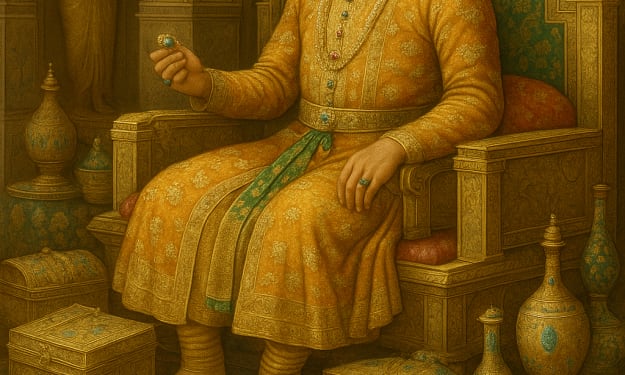
The Golden Era of the Mughal Empire The Mughal Empire during the early 17th century was at the zenith of its splendor. Encompassing a vast expanse of the Indian subcontinent, it exhibited a thriving economy, a strong administrative framework, and luxurious courtly life. Jahangir, whose name translates to "Conqueror of the World," assumed the throne in 1605 after Akbar’s passing and governed for over twenty years. Unlike his predecessor, Jahangir was not a formidable military commander, yet he was a shrewd ruler and a fervent supporter of the arts. His court was populated by Persian painters, architects, and jewelers. During his reign, Mughal artistry attained unprecedented levels, with his palaces adorned with gemstones, pearls, and intricate gold craftsmanship. The Imperial Jewel Collection Jahangir’s wealth represented more than merely a token of royal affluenceit was a meticulously assembled collection of some of the most remarkable objects ever gathered in the subcontinent. These encompassed: The Timur Ruby, a substantial, crimson gem etched with the names of Mughal emperors. Thrones embellished with pearls and golden chests encrusted with emeralds and sapphires. Valuable jewelry, consisting of jeweled turban ornaments, anklets, rings, and ceremonial daggers. European artifacts, presented by foreign emissaries, such as mechanical clocks and Venetian glass. The emperor had a particular fondness for jade and rock crystal, commissioning inscribed wine vessels and dishes from craftsmen throughout Persia and Central Asia. Jahangir’s Affection for Opulence Jahangir was noted for his excessparticularly in wine and opium. He frequently hosted extravagant gatherings where the nobility exhibited their fortunes and competed in extravagance. Historical accounts describe evenings where carpets woven with gold thread were extended, and rosewater was poured from diamond-adorned ewers. His illustrious autobiography, the Tuzk-e-Jahangiri, expounds on his admiration for beauty and artistry. However, it also suggests an increasing disengagement from governance as his sons and nobles contended for power, notably Prince Khurram, who would eventually become Shah Jahan. The Enigma of the Vanished Wealth Following Jahangir's death in 1627, a fierce conflict for succession ensued. Shah Jahan triumphed, yet not without consequence. During the struggle for power, numerous jewels of Jahangir were plundered by rival factions. Some royal possessions were concealed by loyal supporters, while others were sold or lost during hurried retreats. In subsequent years, the treasure became increasingly scattered. As Shah Jahan constructed the Taj Mahal and Peacock Throne, he integrated some of his father’s jewels into his own collectionbut significant portions were never rediscovered. The circumstance deteriorated with the subsequent decline of the Mughal Empire. By the time of Aurangzeb's reign in the late 17th century, civil conflicts and the escalating menace from regional monarchies undermined the empire. European entities, particularly the British East India Company, capitalized on this frailty. Colonial Exploitation and Diminution The ultimate strike to Jahangir’s lost riches may have occurred during the British colonial era. After the British seized Delhi in 1857 subsequent to the Indian Rebellion, the Red Fort was plundered. Numerous royal relics, including manuscripts, jewels, and ceremonial objects, were either taken or exported abroad. Presently, various Mughal gemstones thought to originate from Jahangir’s epoch can be located in museums and private collections throughout Europe. The Timur Ruby, for example, is currently part of the British Crown Jewels collection, inaccurately classified as a ruby despite being a spinel. Could the Wealth Still Be Concealed? Scholars and treasure seekers have long pondered that a portion of Jahangir’s wealth was concealed during the succession conflicts and has yet to be retrieved. Folklore in northern India recounts tales of subterranean vaults near Agra and Lahore that remain sealed, filled with Mughal gold and emeralds. Unauthorized excavations have even taken place in the vicinity of Fatehpur Sikri and the ancient Mughal pathways. While no verified treasure has been discovered, remnantssuch as jeweled sword hilts or enameled ornamentsoccasionally appear in antique markets or during urban excavations. The Enduring Legacy of Jahangir’s Wealth Regardless of whether Jahangir’s entire treasure will ever be recovered, its influence on art and history is indisputable. His enthusiasm for collecting reshaped the Mughal aesthetic, merging Persian sophistication with Indian opulence. The art, architecture, and craftsmanship patronized during his rule remain among the most distinguished in South Asian history. In many respects, the lost wealth signifies not merely gold or jewelsit embodies a missing chapter of imperial aspiration, cultural integration, and regal magnificence.
By Say the truth about a year ago in History
The Sunken Wealth of the Flor de la Mar: The Forsaken Treasure Vessel of the Portuguese Empire. AI-Generated.
. The Ascendancy of Portuguese Naval Might In the early 1500s, the Portuguese Empire was swiftly broadening its influence across the Indian Ocean. Under the leadership of King Manuel I, Portuguese navigators sought spices, wealth, and supremacy over the trade routes of Asia. Among the numerous vessels launched to aid this mission was the Flor de la Mara colossal carrack that became both an emblem of Portuguese might and a persistent puzzle of lost wealth. Constructed in 1502 in Lisbon, the Flor de la Mar weighed over 400 tons and was designed for extended voyages to India and beyond. Despite initial design shortcomings and repair complications, she would soon play a crucial role in one of the most profitable undertakings in the annals of European colonialism. The Conquest of Malacca By 1511, under the direction of Afonso de Albuquerque, the Portuguese set their ambitions on Malacca, the affluent trading center situated on the Malay Peninsula. Gaining control of Malacca meant dominating the lucrative spice trade that flowed between the East Indies, India, and the West. The conquest was harsh but triumphant. The Portuguese dethroned Sultan Mahmud Shah and acquired vast quantities of treasure from the royal palace and local merchants. Among the riches were gold coins, jeweled artifacts, ceremonial weapons, and rare spices. Estimates suggest the total worth could amount to billions in contemporary terms. This colossal treasure was loaded onto the Flor de la Mar, which Albuquerque personally designated to transport the spoils back to Portugal. The Fateful Journey The Flor de la Mar departed from Malacca in late 1511, escorted by several other vessels. However, her destiny was determined not by adversaries, but by nature itself. As the fleet approached the Strait of Malaccasituated between Sumatra and the Malay Peninsulathe Flor de la Mar faced a ferocious storm. The aging vessel, already notorious for structural deficiencies and an inadequate rudder system, could not endure the onslaught. She disintegrated on a reef off the northern coast of Sumatra. Most of the treasure sank along with the ship. Some survivors were rescued by nearby ships, including Albuquerque himself, but the cargovast, shimmering, and historically invaluablewas never retrieved. The Enigma of the Treasure Throughout the centuries, numerous treasure seekers, archaeologists, and maritime specialists have endeavored to locate the wreck of the Flor de la Mar. The challenges are numerous: the region is perilous, laden with shifting sandbanks, treacherous tides, and a dense thicket of coral reefs. Furthermore, the historical documentation is ambiguous. Some locate the wreckage near the contemporary Aceh coastline in Indonesia; others propose it is situated further within the Strait. Despite enhancements in underwater surveying and sonar technology, no authenticated discovery has ever occurred. If uncovered, the treasure could encompass: Golden Thrones and Religious Artefacts from the Sultan of Malacca Spices and Silks of significant worth at that time Chests of Gemstones and Coins acquired from merchants and royal reserves Documents and Relics from the initial phase of Portuguese expansion Legal and Ethical Issues The quest for the Flor de la Mar also brings forth legal dilemmas. Indonesia asserts ownership of any treasure located within its maritime boundaries, while Malaysia and Portugal may also assert claims due to historical and cultural connections. UNESCO's 2001 Convention on the Protection of Underwater Cultural Heritage discourages commercial treasure hunting, complicating recovery endeavors. Some private enterprises have attempted to negotiate salvage rights, but political unrest and national safeguards have predominantly curtailed such initiatives. Cultural Heritage and Contemporary Legends The Flor de la Mar has integrated into regional mythology. Fishermen near Aceh recount tales of spectral lights beneath the ocean and peculiar phenomena on tempestuous nights. Legends flourish of divers who disappeared while seeking the wreck or found themselves cursed after retrieving artefacts. In Melaka (Malacca), a replica of the Flor de la Mar exists as a maritime museum, enlightening visitors about the golden era of Portuguese exploration and the destiny of the fabled vessel. Yet the true treasure remains concealed, alluring each generation to uncover what centuries have consumed. Conclusion: A Fortune Beneath the Waves The Flor de la Mar persists as one of the most captivating lost treasures in history. She represented more than a mere ship; she embodied imperial aspiration, cultural intertwining, and the avarice that prompted the rise and fall of empires. Beneath the ocean, in the depths of coral and time, resides the promise of unimaginable richesa legacy of conquest, gold, and the profound silence of history.
By Say the truth about a year ago in History
The Golden Vault of the Maharaja: India’s Overlooked Regal Fortune
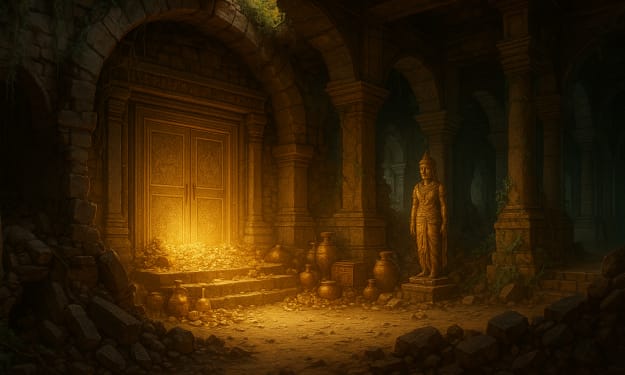
The Narrative of the Golden Vault India, with its rich mosaic of kingdoms, empires, and dynasties, has long been a land of myths and opulence. Among its most timeless narratives is that of the Golden Vault of the Maharaja, a treasure hoard believed to be concealed beneath a now-decrepit palace in southern India. The narrative alleges a secret vault that was sealed during the early 18th century, brimming with gilded thrones, ivory-carved figures, invaluable jewels, and sacred manuscripts. The treasure was not solely emblematic of royal dominance but also regarded as a divine offering for the kingdom's protection. As colonial forces started encroaching on Indian territories, the last ruling Maharaja allegedly instructed that the treasure be sealed, hidden eternally from foreign hands. The Realm of Kaliganj The narrative focuses on the once-mighty yet now obscure realm of Kaliganj, situated between the boundaries of contemporary Karnataka and Tamil Nadu. Governed by a dynasty claiming descent from the Chola monarchs, Kaliganj thrived for nearly three centuries owing to its control over trade routes linking the Bay of Bengal with the Arabian Sea. Maharaja Virendra Dev, the last distinguished sovereign of Kaliganj, was a profoundly spiritual individual, renowned for his wisdom and architectural patronage. Under his administration, the kingdom’s temples were embellished with gold, and its treasury flourished from profits derived from silk trading and gemstone mining. However, Virendra Dev anticipated the decline of Kaliganj. With the Marathas ascending in the north and the British East India Company tightening its hold, the Maharaja commenced devising a strategy to safeguard the essence of his kingdomits treasure. The Sealing of the Vault According to preserved manuscripts and oral traditions transmitted through temple priests, Maharaja Virendra Dev commissioned his craftsmen to create an underground vault within the innermost part of his palace complex. With the assistance of master architects and priests, the vault was consecrated through ancient Vedic ceremonies and sealed employing a blend of mechanical locks and mystical mantras. The vault, according to some accounts, was distinguished by a lotus emblem and shielded by inscriptions cautioning of severe repercussions for those who entered with impure intentions. It was purported that only a genuine descendant of the Maharaja, wielding the sacred key and the knowledge of ancient chants, could safely unlock it. Colonial Incursion and Vanishing In 1765, British forces invaded Kaliganj and demolished the palace during their conquest. The royal family was displaced, and many members either fled or perished. However, the vault remained untouched, entombed beneath the debris of the palace ruins. British authorities recorded hearsay regarding concealed wealth, and numerous failed endeavors were undertaken to unearth it. Nevertheless, enigmatic collapses, the abrupt sickness of workers, and unusual natural phenomena caused the British to cease their pursuit. Some even inscribed in their diaries about “a celestial force” safeguarding the treasure. Rediscovery in the 20th Century During the 1930s, archaeologists encountered partially buried temple remnants close to Kaliganj, sparking renewed fascination in the myth. Locals recounted tales of subterranean chambers and “murmurs within the earth. ” A British-Indian archaeologist, Dr. Rudranath Bose, performed excavations and asserted that he had discovered the outer boundary of the original palace framework, comprising the foundations of a substantial square chamber that aligned with ancient accounts. However, World War II interrupted the excavation process. Dr. Bose’s records and discoveries mysteriously vanished following his demise in 1951, adding yet another layer of intrigue. Modern Speculation and Theories In contemporary times, satellite imagery and ground-penetrating radar have unveiled peculiar subterranean formations beneath the ruins of Kaliganj. A square configuration with adjacent corridors and sealed passageways suggests that a vault may indeed exist. Some theorists assert that the treasure was relocated prior to the British arrival, potentially transported to a clandestine Himalayan monastery. Others contend that it remains concealed, safeguarded by spiritual entities. The Indian government has imposed restrictions on extensive excavation in the vicinity due to its religious and historical significance, further intensifying speculation. In 2021, a collective of historians and spiritual researchers proposed a hypothesis that the vault’s lock was not merely mechanical but symbolicnecessitating a spiritual “key” in the form of ancient incantations performed by a living descendant. The Cultural Impact Whether factual or legendary, the Golden Vault of the Maharaja has integrated itself into local folklore. Artists, poets, and filmmakers have found inspiration in the narrative, portraying the treasure as both a tangible hoard of riches and a metaphor for lost wisdom, cultural pride, and divine heritage. Temples in the area still host annual celebrations honoring Maharaja Virendra Dev, and prayers are offered to the vaultregarded not simply as a repository, but as a sacred domain encompassing the spirit of a lost kingdom. Conclusion The legend of the Golden Vault of the Maharaja transcends a mere tale of concealed riches; it encapsulates India’s tumultuous history, spiritual depth, and the enduring human aspiration for what lies beneath the surface. Whether buried in gold or enshrined in myth, Kaliganj's secret continues to allure the inquisitive and the intrepid.
By Say the truth about a year ago in History