Fiction
How Close Are We to World War Three?
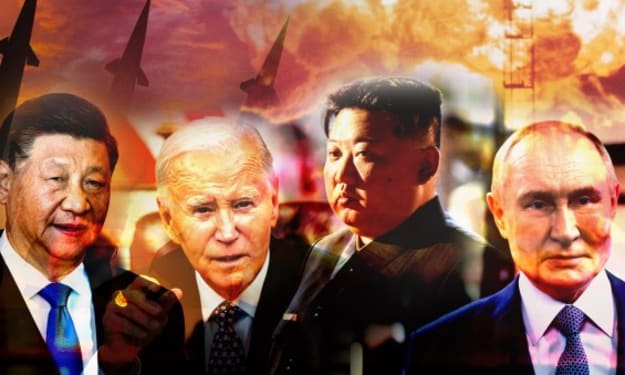
How Close Are We to World War Three? The world holds its breath. The Doomsday Clock ticks louder than ever. Midnight is no longer a faraway myth—it feels like tomorrow. In the heart of Europe, whispers of war echo through the cold winds of Ukraine. In the East, China flexes its military muscles over Taiwan. In the Middle East, Iran and Israel exchange deadly threats. And from the shadows of it all, Russia delivers a chilling warning: “The Doomsday Clock continues to tick towards midnight.” We are not merely facing regional conflicts. We are inching—perhaps running—towards a point of no return. The phrase “World War Three”, once reserved for history books and science fiction, now dominates headlines and military briefings. But how close are we, really? The Return of Cold War Tensions The invasion of Ukraine by Russian forces in 2022 was more than a territorial war—it was the ignition of a global power struggle. NATO pushed eastward. Russia responded with nuclear threats. Sanctions turned brutal. Alliances hardened like ice. Moscow, cornered yet defiant, reminds the West: Russia is a nuclear superpower. Vladimir Putin, echoing Cold War rhetoric, declared that any direct intervention from NATO would bring “unimaginable consequences.” And those consequences, many experts fear, point straight toward global war. A single misfire, a provocation gone wrong, or an unmanned drone in the wrong airspace could trigger a chain reaction. This isn’t speculation—it’s a reality military strategists warn about daily. Nuclear Nightmares and Doomsday Clocks The Doomsday Clock, maintained by the Bulletin of the Atomic Scientists, is the most symbolic measure of global catastrophe risk. In 2024, it was set at 90 seconds to midnight, the closest it has ever been. And as of mid-2025, it remains there—unmoved, unwavered, unforgiving. Why? Because diplomacy is dying. Dialogue has turned into deadlock. The United Nations, once the global peacekeeper, now appears powerless. The world’s largest nuclear arsenals—held by the US, Russia, and China—are in a constant state of alert. Missile silos are activated. Submarines vanish beneath oceans. Stealth bombers soar over icy skies. The machinery of war is ready. All it takes is one decision. Voices from the West: “It’s No Longer If—But When” In Washington, analysts no longer ask if war will erupt. They ask when. A confidential Pentagon document leaked earlier this year warned that “direct conflict between major powers is increasingly likely within the next 18–24 months.” European leaders are equally uneasy. In Berlin, military advisors have recommended mandatory conscription. In London, underground bunkers are being quietly upgraded. In Paris, whispers of fuel and food reserves are spreading through security circles. The signs are everywhere—except in the public eye. Most of the world continues to live in digital distraction, unaware that the peace we’ve enjoyed since 1945 may be ending. Eastern Sparks: Taiwan and the Ticking Fuse While Ukraine grabs the headlines, Taiwan may be the true spark of global war. China’s military exercises around the island are no longer just “drills.” They are rehearsals. Every month, the number of jets violating Taiwan’s airspace increases. Every month, U.S. warships are deployed closer to Beijing’s red lines. One wrong move—one false flag, one naval accident—and the Pacific could explode into flames. The United States has pledged to defend Taiwan. China, in turn, promises to retake it by force if needed. If these promises collide, the two largest economies on Earth could drag the entire world into war. The Middle East Meltdown In the Middle East, Iran and Israel are already dancing on the edge of war. Airstrikes, cyberattacks, and secret assassinations mark an undeclared conflict. And behind them, the global powers play chess—Russia backing Iran, the U.S. backing Israel. The possibility of a two-front or even three-front war is no longer a fantasy—it is now a growing strategic concern. If Iran closes the Strait of Hormuz, oil prices would skyrocket. Western economies would stagger. The dominoes would fall. So, How Close Are We? Closer than anyone wants to admit. We are not in a full-blown world war—yet. But we are in a pre-war environment. The same signs that appeared in the 1930s are repeating themselves: fractured alliances, economic turmoil, rising authoritarianism, and blind nationalism. History is not just echoing. It is screaming. The war drums are no longer distant. They are near. They beat in the skies over Ukraine. In the waters near Taiwan. In the deserts of the Middle East. They beat in speeches by leaders. In covert military drills. In broken diplomatic phone lines. We are at the cliff’s edge. And the next step could be fatal. Can It Be Stopped? There is still a sliver of hope. Peace is not entirely lost—but it is fragile. The world needs cool heads, open communication, and courageous diplomacy. But that window is closing fast. Each missile test, each troop movement, each cyberattack brings us seconds closer to midnight. The question is not only how close we are. The question is: Will we survive what comes next?
By Ali Asad Ullahabout a year ago in History
Condemned by a Lie: The Ricky Jackson Story and the 43 Years That Justice Forgot
> By Umair Ali Shah Yousafzai Introduction: When Truth Becomes the First Victim What does it mean to lose not just a year or a decade, but an entire lifetime — to a lie? What happens to the human soul when it is buried alive behind concrete and steel, screaming innocence into deaf ears for 43 unrelenting years? The story of Ricky Jackson isn’t a tale told to teach children moral lessons. It is the embodiment of a real-world tragedy, where justice failed so catastrophically that even an apology decades later sounds hollow. It is not only the longest wrongful imprisonment in American history; it is the chilling dissection of a justice system that sentenced an innocent teenager to death based on the coerced testimony of a frightened 12-year-old boy. --- An Ordinary Boy in Cleveland Ricky Jackson was just 18 years old in 1975 — a quiet, thoughtful African-American youth living in Cleveland, Ohio. He had never been arrested, never carried a weapon, never even held a criminal record. He lived in a modest neighborhood, with dreams no different from other boys his age: education, work, and family. But everything changed on a day that should have passed like any other. A local businessman named Harold Franks was shot and killed in broad daylight during an apparent robbery. The incident shocked the community. In the police department’s desperation to find someone to blame, a name was offered by a 12-year-old boy who hadn’t even witnessed the murder. That name was Ricky Jackson. --- A Murder, A Lie, and A Child’s Testimony Eddie Vernon was barely out of childhood when he was approached by police and persuaded — some would say coerced — into identifying Ricky Jackson as the shooter. No physical evidence connected Ricky to the crime. No fingerprints. No murder weapon. No surveillance. Nothing but the fragile words of a frightened boy. Years later, Vernon admitted: > “I didn’t see anything. The police threatened my family, told me they’d put my parents in jail if I didn’t talk.” But in 1975, his word was gold. It was all the prosecution needed. It didn’t matter that other witnesses contradicted him. It didn’t matter that Ricky had an alibi. Vernon’s coerced statement became the scaffold on which Ricky’s fate was hung. --- The Trial: Theater of Injustice The trial was swift. No physical evidence was presented. No cross-examination of Vernon’s statement truly tested its validity. Ricky, along with two friends — Wiley and Ronnie Bridgeman — were sentenced. Ricky Jackson received the death penalty. He was 18. He had not yet attended college. He had never fallen in love. He had no children. And now, the state was going to kill him. But before the execution could be carried out, Ohio overturned the death sentence to life imprisonment. The reprieve wasn’t mercy. It was a new kind of suffering — the long, slow death of a man behind bars. --- From Death Row to Life Sentence: A Prisoner of Time For the next four decades, Ricky Jackson became a ghost within America’s prison system. He was moved from facility to facility. He missed the funerals of his parents. He never saw a computer, never used the internet, never walked into a supermarket again. He watched the world evolve through metal bars and razor wire — watched new presidents rise and fall, watched the Cold War end and 9/11 reshape history, all from within a concrete cage. But while his body was confined, his mind clung to hope. “I knew I was innocent,” he would later say in an interview with The Washington Post. “I couldn’t let go of that, or I’d go crazy.” Yet hope is not armor. It doesn’t keep out the dark. The nights were long. The guiltless solitude maddening. --- The Psychology of a Stolen Life What does 43 years in prison do to a human being? Psychologists describe wrongful imprisonment as a form of chronic trauma, similar to post-war PTSD but complicated by betrayal trauma — the deep psychic injury caused when the very institutions meant to protect you, turn against you. For Ricky Jackson, this betrayal was total. The court system. The police. The media. Even his own neighbors who believed the headlines more than his voice. Everyone walked away from him, except time — and even that, it seems, walked slower in his cell. He spent birthdays alone. Holidays watching TV news flashes from a flickering screen bolted to a prison wall. He wasn’t merely doing time — time was doing him. As he later told CBS News, > "The hardest part wasn’t the food, or the cold, or even the violence. It was waking up every day knowing that no one believed me… and wondering if they ever would.” --- 2011 – The First Crack in the Wall It took 36 years before the first sign of redemption appeared. Eddie Vernon, now in his late 40s, broke down. Years of guilt had gnawed at his conscience. Encouraged by a local pastor, Vernon came forward and admitted his testimony had been a lie — a lie told under police pressure, not malice. “I was just a scared little boy,” he said under oath. This single act of courage — the reversal of a lie — shook the very foundations of Ohio’s justice system. The case was re-opened. And finally, for the first time in 37 years, someone listened to Ricky Jackson. --- 2014 – The Day the Sky Opened On November 21, 2014, Ricky Jackson walked out of prison a free man. There were no parades. No orchestras. Just a quiet Cleveland morning, the wind soft and cold, and the silence of a man tasting sunlight after four decades. He was 61. His hair was gray. His face had aged. He was no longer the young man wronged by the system — he was a living monument to how long justice can take to arrive. When asked if he felt hatred, he simply said: > “No. If I held onto hate, I’d still be in prison. Just a different one.” --- Forgiveness Over Fury Ricky’s refusal to embrace bitterness wasn’t naïve. It was radical. His strength wasn’t forged in fury, but in faith — not religious dogma, but a deeper, spiritual belief that forgiveness is freedom. Many exonerees become bitter, angry, even broken. But Ricky stood tall. He smiled in interviews. He talked about healing. He spent time with his siblings. He walked in parks and marveled at things people take for granted — the softness of carpet, the click of a smartphone, the taste of fresh fruit. He didn’t just get released. He re-learned how to live. --- The Legal Aftermath: Can Justice Be Priced? In 2016, the state of Ohio awarded Ricky Jackson a $1 million settlement under its wrongful imprisonment compensation program. But even the government admitted — no money could truly compensate for what had been stolen. As The New York Times wrote, > “This was not just the loss of years. It was the theft of a life.” That $1 million covered lost wages, emotional trauma, and punitive damages. But how do you put a price tag on never being a husband, never raising children, never hearing your mother’s voice again? For Ricky, the money was a symbolic apology. But no amount could erase the decades of injustice. --- America’s Shame: A Broken Justice System Ricky Jackson’s case is not an isolated tragedy. According to the National Registry of Exonerations, more than 3,400 people in the United States have been exonerated since 1989 — many of them Black men, many convicted based on flawed eyewitness testimony, police misconduct, or prosecutorial overreach. A study by the Innocence Project shows that false eyewitness identification accounts for nearly 70% of wrongful convictions later overturned by DNA evidence. Ricky's case adds a horrifying statistic: He spent more time behind bars than any other wrongfully convicted person in U.S. history. His story has become a textbook case in law schools, a subject of documentaries (The Guardian, BBC, PBS), and a haunting reminder that the legal system is only as just as those who operate it. --- 🕊 The Role of the Media: Silenced Then, Shouted Now In 1975, when Ricky Jackson was first arrested, the media reported it as an open-and-shut case. Local Cleveland headlines ran with phrases like “Teen Accused in Fatal Robbery” and “Quick Arrest After Shooting”. There was no in-depth investigation. No challenge to the lack of physical evidence. No empathy for a young man with no prior record. He was Black, poor, and accused — and that was enough. It took decades for the media to revisit his story. When the truth finally emerged, national outlets like The New York Times, BBC, The Guardian, CNN, and NPR covered the injustice. Documentaries followed. Podcasts interviewed Ricky. Legal journals dissected the case. But the media was late. Too late. For 43 years, it had ignored him — and that silence was complicity. In an interview with NPR, Ricky put it plainly: > “If someone had just listened back then… really listened… maybe all of this could’ve been avoided.” The media's redemption, much like the justice system’s, came long after the damage was done. --- The Innocence Projects: Saving Lives in the Shadows Ricky Jackson owes his freedom not just to Eddie Vernon’s confession, but to the relentless efforts of organizations like the Ohio Innocence Project. These nonprofits, often underfunded and overworked, have dedicated themselves to correcting wrongful convictions through new evidence, DNA testing, and legal appeals. Without their advocacy, Ricky’s case might have remained buried — like hundreds of others still lost in legal purgatory. Their work reminds us of one chilling truth: For every Ricky Jackson who gets justice, there may be ten more who never will. --- Psychological Fallout: Life After a Life Lost (Your chosen core theme — expanded further here) The release from prison did not end Ricky’s sentence. For many exonerees, life outside is a different kind of prison. The world they return to has changed beyond recognition. Technology is baffling. Old friends are gone. Social trust is shattered. The smallest tasks — using a microwave, unlocking a smartphone — feel foreign. Ricky spoke about this in a 2017 The Atlantic feature: > “I didn’t know what a debit card was. I didn’t know how to cross the street without looking over my shoulder. Even in freedom, I felt like a prisoner.” He struggled with anxiety, depression, insomnia. Prison had reprogrammed his instincts. Freedom, once longed for, felt overwhelming. Therapists describe this as institutional PTSD — the brain’s adaptation to long-term survival in a hostile environment. Years of hyper-vigilance, suppressed emotions, and rigid routines leave permanent marks on the psyche. Yet, Ricky did not let it break him. He faced his trauma like a veteran returning from a battlefield — scarred, but not surrendered. --- Faith and the Human Spirit: A Quiet Revolution Ricky never publicly aligned with a religious denomination, but his language revealed something deeper — a spiritual resilience forged in solitude. He once said: > “When you’re in a cell alone, you start talking to yourself. But if you talk long enough, you start hearing answers. Maybe they’re your own voice. Maybe they’re God’s. But they keep you sane.” Faith — whether in God, justice, or one’s own soul — was Ricky’s companion when the world forgot him. He did not turn to hatred or revenge. He turned inward, and what he found was strength. --- When a Nation Apologizes Too Late The government of Ohio issued a formal apology to Ricky Jackson. It came with a settlement check and some public acknowledgment of its mistake. But justice delayed is justice denied. No amount of money, no legal brief, no governor’s signature can return the 15,000 days that Ricky spent confined — days when he could have been a father, a friend, a free man. As The Guardian wrote in its editorial on the case: > “The apology is polite. The injustice was barbaric.” --- Lessons for the World: Truth, Justice, and the Power of a Single Lie This story is not just American. It is universal. It speaks to every nation where power overrides truth. Where the poor are expendable. Where the law serves convenience, not conscience. Ricky Jackson’s tragedy is a mirror — held up to us all. The most terrifying thing about this case is how easy it was to ruin a life: One false witness. One negligent investigation. One rushed trial. And four decades gone. It is a warning to courts, police, media, and society at large — that truth must never be hurried, that justice must never be assumed, and that no lie is ever small when it costs a man his future. --- Final Reflections: Let No Other Ricky Jackson Be Forgotten Ricky Jackson is free now. He smiles in photographs. He speaks at schools. He mentors at-risk youth. He is trying to build a life from ashes. But behind that smile is the echo of stolen time. He is not just a man. He is a symbol. Of injustice survived. Of forgiveness chosen. Of a system that must do better. We owe him more than headlines. We owe him change. Because somewhere, right now, another 18-year-old boy sits in a cell — innocent, unheard, and condemned by a lie. May we find him before it's too late. --- 📚 References & Sources: The New York Times: “Freed After 39 Years, Ricky Jackson Reflects on Injustice” (2014) BBC News: “Wrongfully Jailed Man Free After 39 Years” (2014) The Guardian: “The Longest Wrongful Imprisonment in US History” (2015) NPR: “Ricky Jackson Speaks After 43 Years in Prison” (2016) The Atlantic: “Psychological Toll of Wrongful Convictions” (2017) Ohio Innocence Project: Legal documentation and case archive National Registry of Exonerations: Official record of U.S. wrongful convictions ---
By Umair Ali Shah about a year ago in History
Cyber Wars: The Invisible Frontline of World War 3
1. Reframing Warfare: Digital Battlefields Traditional warfare once hinged on territorial conquest, tanks, and boots on the ground. In stark contrast, cyber warfare engages adversaries across invisible networks—servers, routers, cloud platforms, industrial-control systems—often without any physical presence. These attacks may emerge silently from anywhere in the world, yet their effects—disabling power grids, manipulating elections, disrupting finances—mirror those of conventional war.
By Ali Asad Ullahabout a year ago in History
The Future of the USA: Challenges, Change, and a New American Dream
The Future of the USA: Challenges, Change, and a New American Dream The United States of America has always been a land of ambition — a place where dreams are chased, ideas are born, and change is constant. But as we step deeper into the 21st century, the future of the USA is more uncertain, complex, and exciting than ever before.
By Ali Asad Ullahabout a year ago in History
The Printer’s Apprentice
The year was 1476, and London smelled of rain, smoke, and the promise of something new. Twelve-year-old Thomas Whitby had no surname when he arrived at the printing house of Master William Caxton—just a bundle of rags, sharp eyes, and a hunger to matter. The shop, nestled near Westminster, was alive with the scent of parchment and ink, and the clatter of wooden letters pressed into history.
By Salah Uddinabout a year ago in History
The Whisper of Seleucia. AI-Generated.
I. The Scrolls That Drank Light In the heat-shimmered alleys of Seleucia-on-Tigris, where oxen groaned in tongues older than coin, a hunched figure arrived barefoot, his robe the color of wet ash. The guards at the Eastern Gate joked about his eyes—clouded like boiled milk—and how he smelled like stale cloves and river moss. He carried no gold, no seal of passage.
By Jesse L Shelleyabout a year ago in History
AI vs. Humans: How Smart Weapons Changed the Face of World War 2025
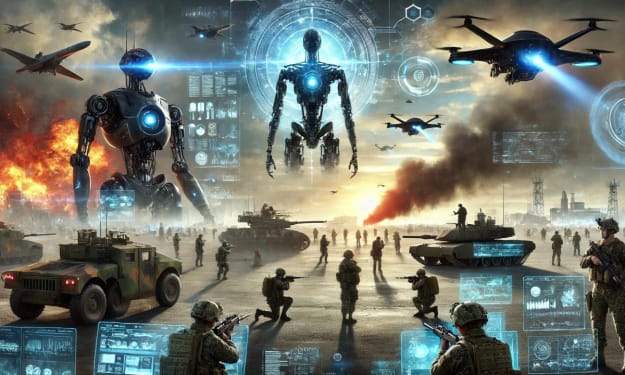
AI vs. Humans: How Smart Weapons Changed the Face of World War 2025 In the history of warfare, every era has brought new weapons that changed the battlefield—spears and swords, muskets and cannons, tanks and missiles. But in 2025, the world saw the rise of a new kind of weapon: one that could think. Powered by artificial intelligence, these smart weapons reshaped war as we knew it. It was no longer just nation versus nation. It became AI vs. Humans, and the world would never be the same.
By Ali Asad Ullahabout a year ago in History
Taiwan, Ukraine, or the Middle East: Which Flashpoint Led to World War III?
Taiwan, Ukraine, or the Middle East: Which Flashpoint Led to World War III? For years, global leaders warned of the possibility of a third world war. Tensions were rising, alliances shifting, and technology advancing at a pace far faster than diplomacy. But no one could predict exactly where the first spark would ignite the flames of a global conflict. In the end, three major flashpoints—Taiwan, Ukraine, and the Middle East—stood on the edge. Each had the potential to trigger a war unlike anything the world had seen before. But which one actually did?
By Ali Asad Ullahabout a year ago in History
The Silent Countdown. AI-Generated.
The Silent Countdown It was a quiet evening in April 2025 when Elena, a young intelligence analyst working for a secret international agency, noticed something strange. Her job was to watch global signals—radio waves, satellite messages, encrypted data. Most days were boring, filled with routine noise and harmless chatter. But today was different. A mysterious signal had appeared on the network. It was weak, almost like static, but hidden inside was a pattern. Something deliberate. Something that did not belong. Elena zoomed in on the frequency. The signal repeated every 72 seconds, a slow, steady pulse. She ran it through decoding programs, but nothing made sense at first. Then, after hours of work, a chilling message emerged—one word repeated in many languages: “WAR.” Her heart raced. Could it be a warning? A code? Or worse—a countdown? She immediately contacted her supervisor, Mark, a seasoned agent who had worked through many crises but had never seen anything like this. “Mark, there’s a signal—encrypted, but it repeats ‘WAR’ in multiple languages. We don’t know where it’s from or what it means, but it’s definitely deliberate,” Elena said, trying to keep calm. Mark frowned. “Has anything else unusual happened?” “Military satellites are picking up unexplained missile movements near the borders of several countries. Cyber attacks have spiked, too—power grids, banks, hospitals.” Mark’s face grew pale. “This isn’t just noise. This might be the beginning of something bigger. An invisible countdown to war.” Hidden Signs Everywhere Across the globe, small signs began to add up. In Europe, radar systems detected unidentified aircraft crossing restricted zones, then vanishing without a trace. In Asia, military bases reported unusual troop movements at night. Ships changed course without explanation. Cybersecurity experts warned of increased hacking attempts from unknown sources. But the public remained unaware. Governments denied any plans for war. Leaders held press conferences filled with calm words and promises of peace. But behind the scenes, the tension was rising. Elena and her team worked day and night, tracing the mysterious signal. They believed it was a secret message sent to coordinate attacks—possibly between hostile nations or hidden groups wanting to trigger global conflict. The agency tried to warn world leaders. But politicians hesitated, afraid of causing panic or appearing weak. “It could be a hoax,” some said. “We don’t want to start a war over a strange signal.” The Countdown Becomes Clear Days passed. The signal grew stronger. New parts of the message appeared in the code—a series of numbers counting down from 10. Elena’s stomach twisted. A countdown to what? Her agency finally decoded enough to realize it wasn’t a threat to one country, but a global warning: something planned to happen when the countdown reached zero. A worldwide strike—an act that would force all nations into war. They had only ten days left. Mark gathered the team. “We need to act fast. We must share this information with every major country, get them to prepare defenses, and try to prevent the war.” But sharing secret information wasn’t easy. Some countries doubted the intelligence. Others wanted to use it as an excuse to increase their military power. The world was split—not united. A Race Against Time Elena found herself caught in a deadly game. Spies from various countries tried to steal her data. Hackers launched attacks against their systems. She barely slept, haunted by the idea that the countdown was real, and war was close. Meanwhile, the mysterious signal continued—sometimes stronger, sometimes fading—but always counting down. The media started noticing unusual global tensions. News of secret missile deployments leaked. Rumors spread about diplomatic breakdowns. People grew nervous, stock markets dropped, and protests against governments began. The world was on edge, but few understood the invisible clock ticking in the background. The Breaking Point With only two days left on the countdown, Elena’s team made a breakthrough. They discovered the signal originated from a hidden satellite in orbit—a satellite controlled by an unknown group of extremists. Their goal was to start World War 3 by forcing nations to attack first out of fear. Elena and Mark alerted international forces. A risky mission was planned to disable the satellite before the countdown reached zero. The mission was dangerous. Pilots flew fighter jets through hostile skies. Cyber teams worked to hack into the satellite’s control systems. Time was running out. The Moment of Truth On the last day, the whole world waited, holding its breath. The countdown was down to the final seconds. In a secret command center, Elena watched the screens, fingers trembling. The satellite’s system was still active. Suddenly, the hackers broke through the defense—a signal stopped the countdown. The satellite’s powerful weapons systems powered down. The countdown disappeared. Aftermath: A Fragile Peace World leaders finally admitted the truth. They revealed the existence of the satellite and the countdown to the public. The world was shocked but relieved. Elena became a hero in secret. She never wanted fame—only peace. But the invisible war was not over. The extremist group behind the satellite was still unknown. There were more signals, more threats, waiting to be uncovered. Elena knew the silent countdown could begin again any day. What if the world is already counting down to another war? Maybe the invisible war is not just in stories. Maybe it is happening right now—in signals no one hears, in shadows no one sees. And the real question is: Will we notice it before it’s too late?
By Ali Asad Ullahabout a year ago in History
The Role of Spies in Major Historical Events
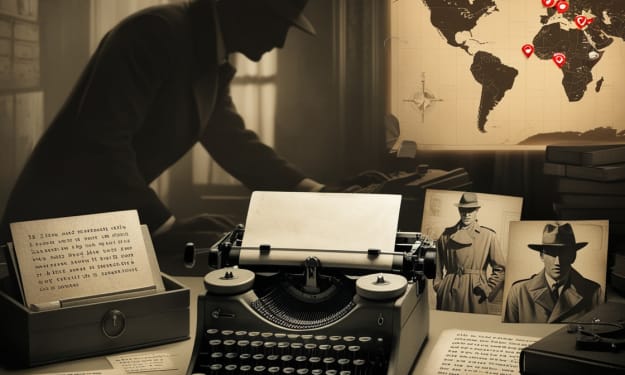
Spies have always occupied a shadowy corner of history—operating behind the scenes, shaping the course of events in ways that often remain hidden from public view. The role of spies in history is complex and multifaceted, blending courage, deception, intelligence, and sometimes betrayal. Though their actions rarely make the headlines in the way generals or politicians do, spies have been instrumental in turning the tides of wars, influencing political decisions, and protecting national security. Understanding their impact requires peeling back layers of secrecy and exploring stories that reveal the true power of espionage throughout major historical events.
By Muhammad Asimabout a year ago in History