Fiction
The Price of the American Dream: What I Learned on July 4th
The Price of the American Dream: What I Learned on July 4th 📖 Story: The Price of the American Dream: What I Learned on July 4th Since I was a child, I had only one wish—to see America on its Independence Day. Not because I wanted money, or to escape, or even for citizenship. It was deeper than that. I grew up in a village where the electricity would often vanish during dinner, where freedom meant not being noticed by the wrong people, and where silence was safer than honesty. But in America… they lit the sky with fireworks to celebrate being free. The First Spark I first saw the fireworks on a cracked YouTube screen in a small internet café. The video was titled: “July 4th Fireworks Over Washington DC – 2020.” The sky exploded with red and gold. People cheered. Kids waved flags. There was music and freedom in the air. That was the moment I made a quiet promise to myself: > “One day, I will see it with my own eyes.” The Journey to a Dream In 2024, I won a U.S. visitor visa through an education program. I had written an essay called “The Meaning of Freedom in My Village.” To my surprise, someone read it—and gave me a chance. On July 2nd, 2024, I stepped off a plane in New York City. My hands shook. And when I saw the American flag waving above JFK airport, I quietly whispered: > “Freedom, I am here.” The Moment I Waited For I stood near the Lincoln Memorial as families gathered, waving flags, smiling. A little girl gave me a mini flag and said, “Happy Fourth!” Then the fireworks began. The sky cracked open. The sound, the colors—it all hit my chest like thunder. My heart swelled with something I had never fully felt before. > Hope. The Shift But then… something changed. A man nearby, in military gear, said into his phone: > “Look at that guy—probably from some terrorist country. Watching us like he’s spying.” He was pointing… at me. People looked at me differently. The girl’s family quietly stepped away. One man gripped his bag tighter. Another whispered something behind me. No one stopped me. But in that moment, I felt completely alone The Realization Back in my room, I sat with the flag the girl gave me and thought deeply. > Freedom is not a show. It’s a struggle. Even in America, people fight—for equality, for justice, for identity. Some welcome you. Some fear you. But everyone is free to choose. That’s what makes it beautiful—and difficult. Thank You, America I stayed two more weeks. I met kind people. Visited libraries and museums. I saw a country that’s not perfect—but still filled with dreamers. > America is not a dream. It is millions of people dreaming differently. Now, when I think of July 4th, I smile—not for the lights, but for what I learned: > Freedom is not given. It is felt. It is fought for. And sometimes feared.
By Ali Asad Ullahabout a year ago in History
“The Fireworks Distraction: What Really Happened on July 4th?”. AI-Generated.
“The Fireworks Distraction: What Really Happened on July 4th?” While the sky lit up in red, white, and blue—something else was happening in the shadows. And no one noticed. ery year on July 4th, Americans look up at the night sky, hearts pounding with patriotism, as fireworks burst across cities and small towns alike. The music swells, children cheer, and families hold their loved ones close. But in 2025, while the nation was distracted by the dazzling lights above… something was happening far below. Something no one was meant to see. It began with a power surge. At exactly 9:04 p.m. Eastern Time, grids in over a dozen U.S. cities flickered—not off, not fully—just enough to register as a blip. Most people blamed the fireworks. The surges were dismissed as routine overloads. But in the hidden layers of the internet, in forums without names and servers without locations, messages began to surface. > “They moved tonight. Behind the show.” No one took it seriously. Until the blackouts started. At 9:27 p.m., three substations in Virginia, Colorado, and California went offline. Then again in Oregon, then Georgia. In total silence. No explosion. No storm. Just gone. The media stayed quiet. Officials blamed “routine maintenance.” But a few journalists, ex-military tech experts, and rogue analysts began connecting the dots. Among them was Emerson Vail, a former cybersecurity operative who once worked for DARPA before vanishing off the map. He had seen these signs before—brief blackouts, timed precisely, used as cover for infrastructure intrusions. And this time, they were happening on Independence Day. A day when no one would be watching the ground. Emerson's encrypted blog post, published under the pseudonym “IronSoul”, began to trend in the dark web: > “This isn’t random. It’s a test. They’re crawling inside the backbone of the country while everyone is too busy looking up.” Most dismissed him as paranoid. But 12 hours later, a freight train carrying classified military hardware derailed in Utah. The cause? A remote signal tampering with the track switches—technology that shouldn’t even exist in the public sphere. And again, no one claimed responsibility. By July 6th, over 32 incidents had been reported across the U.S.—small, targeted attacks on transportation, energy, and communication systems. All subtle. All surgically precise. > The war hadn’t started. It had simply moved into the shadows. Emerson was contacted by Claire Rivas, an independent reporter based out of Detroit, who had been chasing a strange trail of missing security personnel and deactivated government IDs. She had found something even more unsettling—someone was scrubbing digital footprints of key defense contractors. Identities were being deleted. Records vanished. Entire teams were being erased from existence. She met Emerson in a diner lit only by battery-powered lanterns, after yet another mysterious grid failure. He looked older than she expected. Haunted. Like a man who had already lived through the end of the world and never told anyone. “What are they planning?” she asked. He didn't answer. Instead, he slid her a flash drive with one chilling file name: Operation F.L.A.G. Inside the file were redacted plans, but one phrase kept repeating: > “The illusion of celebration masks the rehearsal of collapse.” Emerson believed it wasn’t an enemy country. Not directly. He believed this was the work of a private military syndicate, built on stolen AI and cyber-espionage tools—contracted by powers beyond flags and borders. Their plan? To simulate a domestic collapse, trigger civil panic, and offer “restoration solutions” for a price. But something had gone wrong. The rehearsal had become real. Someone had flipped the switch too early. And America was still watching the fireworks. By July 8th, two nuclear facilities reported unauthorized drone incursions. Communication logs were wiped. Yet no emergency was declared. Claire tried to alert the public, but her live feeds were cut, her accounts suspended. All while patriotic parades replayed on national television. The illusion remained perfect. Until July 9th. That’s when The Silence began. Phones wouldn’t connect. GPS pointed in reverse. Credit cards declined. Major news sites went dark. There was no explosion, no virus—just absence. A carefully coordinated blanking of the digital world. Emerson and Claire disappeared. No one knows where they went. But one final video, recorded and scheduled to upload the moment The Silence started, was found buried on an offshore data node: > “The war has already begun. But it’s not with guns or bombs. It’s with whispers. With shadows. And the Fourth of July was just the curtain call. We celebrated freedom… while it was quietly taken from us.” The video ends with grainy footage of fireworks. Bright, beautiful, and blinding. No one knows who fired the first shot. No one knows who the real enemy is. But one thing is certain: > While the nation looked up… something crawled up from below. --- End
By Ali Asad Ullahabout a year ago in History
Miracle on the Hudson 🛬
On January 15, 2009, US Airways Flight 1549 took off from New York's LaGuardia Airport. The plane had 155 people onboard and was heading to Charlotte, North Carolina. Everything seemed normal for the first few minutes—until disaster struck. Just after takeoff, the plane hit a flock of geese. Both engines failed. Suddenly, the aircraft was gliding through the sky with no power. Panic filled the cabin, and people feared the worst. But something remarkable was about to happen. The Calm Pilot at the Controls Captain Chesley “Sully” Sullenberger was the pilot in command. With years of flying experience, he stayed incredibly calm under pressure. Co-pilot Jeff Skiles also remained focused. They had seconds to decide what to do. Returning to the airport wasn’t possible—the plane was too low. Landing on a road or open space in the crowded city wasn’t safe either. That’s when Sully made a bold decision: to try an emergency landing in the Hudson River. A Dangerous Landing in the Water The river was icy and wide. A water landing is extremely rare and dangerous, especially for a large passenger jet. Still, Captain Sully carefully guided the plane toward the surface. Passengers braced for impact. Incredibly, the aircraft touched down smoothly on the river, like a boat skimming across the water. It didn’t break apart. It didn’t flip. Everyone stayed inside, shaken but alive. Surviving the Cold and Waiting for Help As the plane floated in the freezing Hudson, passengers had to escape quickly. Water was seeping in, and temperatures were close to freezing. People stood on the wings, held onto life rafts, or climbed onto rescue boats. Ferries, police boats, and helicopters rushed to help. The fast response from local authorities and nearby vessels saved lives. In the end, all 155 people survived. Only a few were injured, and none seriously. Why It Became Known as the ‘Miracle on the Hudson’ The landing was so unexpected and perfectly executed that many people called it a miracle. But it wasn’t just luck. It was the result of quick thinking, calm under pressure, great teamwork, and excellent training. Captain Sully was praised around the world as a hero. He later said that everyone onboard helped in some way—from the co-pilot to the flight attendants to the passengers themselves. What We Can Learn from This Story The Miracle on the Hudson teaches us many things. First, staying calm during a crisis can make a big difference. Captain Sully’s calm attitude helped save lives. Second, teamwork matters. The pilots, crew, and passengers worked together to survive. Third, proper training prepares people for the worst. Sully had practiced many emergency landings in flight simulators. When the real moment came, he was ready. A Story That Still Inspires People Today More than a decade later, people still talk about the Miracle on the Hudson. Movies and documentaries have been made about it. Captain Sully became a symbol of courage and professionalism. But more than anything, this story shows that even in the worst situations, hope and quick action can lead to survival. It's a powerful reminder that heroes can rise when we least expect them—and that miracles sometimes come from experience and heart, not just luck. The Miracle on the Hudson remains a symbol of how expert training, calm leadership, and human courage can turn tragedy into triumph. Today, people from all over the world still watch videos of the landing and feel inspired. It reminds us that even in moments of total chaos, hope can rise. Stories like this teach us that sometimes, the most impossible situations bring out the very best in people.
By Echoes by Imadabout a year ago in History
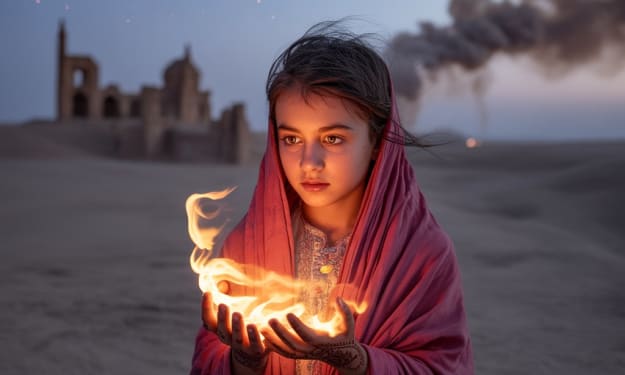
The Girl Who Burned Time
In the saffron-tinted sands of 13th-century Persia, where stories traveled faster than caravans and truths were tucked between silk scrolls and scented oil, there lived a girl named Laleh. She was born on a red moon night, when even the stars seemed to bleed. Her mother died during childbirth, and her father—Ali, the village scribe—wrapped her in old parchment instead of linen. “She came from ink,” the villagers whispered, “not flesh.” But there was more to Laleh than whispers and shadows. By the age of eight, Laleh could recall the tiniest detail of every day she had ever lived. The way the carpet frayed in the corner of her father’s writing room. The taste of fig and ash from the day the well collapsed. The exact words a traveling poet had used to describe her eyes: like dusk remembering dawn. She never forgot. And then, one morning, she touched her father’s old oil lamp—and it burst into flames. Ali had seen many things. Wars. Famines. The arrival of Mongol rumors like black wind across the steppes. But he had never seen fire bloom from memory. They experimented. When Laleh remembered her mother’s lullaby, flames rose blue and soft. When she remembered fear—like the time she almost drowned—sparks danced dangerously around her fingertips. “I think your memories are made of fire,” her father whispered. “But why?” she asked. He didn’t have the answer. But the desert did. They traveled east, toward the ruined Zoroastrian temples beyond the Dasht-e Kavir. There, among forgotten stone and the scent of burning dates, Laleh met a woman who called herself Zahira the Keeper. “I know what you are,” Zahira said. “You are a Vaqt-sor, a Time-Burner. There were once many of your kind—born once in an age, always daughters of memory.” “What do we do?” Laleh asked, her voice barely a whisper. “You don’t do anything,” Zahira said. “You undo.” Zahira taught her the language of fire and time. “Every memory holds heat,” she said. “But some are colder—distant, faded. Others are burning, painful, raw. If you pull the right string of memory with enough focus, you can change its temperature—and change time itself.” Laleh didn’t believe her. Until she tried. She remembered the day the village well collapsed, taking a young boy named Reza with it. His face still haunted her, dirt-streaked and wide-eyed. She pulled the memory close, focused her breathing, and let the heat grow. Flames coiled in her palms. And then, it was gone. Not the memory. The event. When they returned to the village a week later, the well stood tall and full. Reza was alive. No one remembered the tragedy. Except Laleh. With each act of burning time, she grew stronger—but also lonelier. People called her blessed. Then cursed. Then dangerous. Her father aged quickly, shadows gathering in his eyes. “Careful, my daughter,” he would whisper, “History has sharp teeth. If you bite it, it will bite back.” But Laleh burned on. She saved families from fires they never knew they were in. Prevented the death of a young scholar whose ideas would one day shape medicine. Erased a drought from the records by bringing back one stolen cloud. She walked the blade of fate like a dancer in a sandstorm. Then came the war. The Mongols. They poured over the mountains like a plague of thunder, burning cities, silencing scholars, toppling minarets. Laleh knew she had to act. She climbed to the ancient Zoroastrian fire temple—now little more than stone teeth jutting from the sand. There, she prepared to burn her greatest memory: the invasion itself. Zahira appeared, eyes full of warning. “You don’t understand,” she said. “This memory is not yours alone. The more people who remember an event, the more rooted it becomes in time.” “I don’t care,” Laleh said. “If I can save a thousand lives—” “You could tear the fabric of now,” Zahira warned. “You might unravel the present entirely.” Laleh looked at the flame in her palm—bright, trembling, waiting. She closed her eyes. And remembered She remembered the riders. The screaming. The smell of charred parchment and blood. The children hiding beneath their dead mothers. Her father’s lifeless eyes. The fire grew wild. Time twisted. When she opened her eyes, the world had changed. No temples. No Persia. No Mongols. She stood in a strange place—a land of glass and wires, noise and metal. A city unlike any she had imagined, with lights instead of stars and people who moved like they were always late. A man bumped into her. “Hey, watch it,” he said, then glanced at her clothes. “You in cosplay or something?” She stood silent, heart racing. The world had moved on without her. In the heart of this new world, Laleh found a library. Not of scrolls, but of screens and glowing words. She searched for history. No mention of the Mongol invasion. No record of 13th-century Persia. The names, the poems, the temples—they were gone. Not replaced. Forgotten. She had burned too deeply. And in doing so, she had erased the soul of a civilization. Now, she walks the edge of modern life—unseen, unknown. A girl with fire in her hands and centuries in her blood. She doesn’t try to change time anymore. But sometimes, when the wind is right, she lights a candle and whispers the names of people who once were. Reza. Zahira. Ali. They may not be remembered by this new world. But they are not lost. Not while she remembers. Not while she burns. Author’s Note: History is a fire—too much of it, and we’re consumed. Too little, and we freeze in ignorance. But for one girl, fire was both the gift and the price of memory.
By Atta Ullahabout a year ago in History
"The Sacred Quran: The Guiding Light for Mankind"
The Sacred Quran serves as the primary scripture of Islam, regarded by followers as the exact words of God (Allah) communicated to the Prophet Muhammad (peace be upon him) throughout a span of 23 years via the angel Jibreel (Gabriel). Esteemed as the ultimate and comprehensive revelation, the Quran acts as a source of guidance not solely for Muslims but for all people. Its lessons encompass various elements of existence, such as belief, ethics, legislation, social equity, and personal development.
By MD. SHARIFUL ISLAM KHANabout a year ago in History
The Beautiful Game: A Journey Through Football History
Football, or soccer as it's known in some corners of the world, is more than just a game. It is a global language, a passion shared by billions, and a cultural phenomenon that transcends borders, languages, and ideologies. But how did this simple game with a ball and two goals become the most beloved sport on Earth?
By Abdullah khanabout a year ago in History
Why the US Dollar Is Falling by Record Levels in 2025
Why the value of the US dollar is falling at an unprecedented rate in 2025 During the first half of 2025, the value of the US dollar experienced one of its most significant declines in modern financial history. The dollar has experienced its worst first-half performance in more than five decades, falling more than 10% since January. Investors, economists, and policymakers around the world are concerned due to the steep decline. Understanding the causes of this unprecedented depreciation requires examining a combination of political, economic, and structural factors reshaping global markets.
By GLOBAL NEWSabout a year ago in History
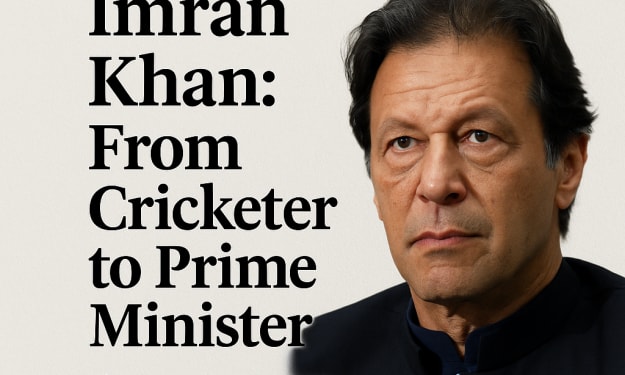
Imran Khan: From Cricketer to Prime Minister
Imran Khan: From Cricketer to Prime Minister Imran Khan, one of Pakistan's most iconic figures, has lived a life marked by transformation, resilience, and leadership. Born on October 5, 1952, in Lahore, Imran Khan began his journey as a cricketer, rose to international fame as a sportsman, and later entered politics to become the 22nd Prime Minister of Pakistan. His story is one of ambition, national pride, and a relentless pursuit of change. Early Life and Cricket Career Imran Khan was educated at Aitchison College in Lahore and later at the Royal Grammar School in England. He went on to study at Keble College, Oxford, where he earned a degree in Philosophy, Politics, and Economics. During his university years, cricket remained a central part of his life. His talent and determination soon led him to debut for the Pakistan national cricket team in 1971. Imran Khan became a cricketing legend, known for his fierce bowling and charismatic leadership. The pinnacle of his cricket career came in 1992, when he captained Pakistan to its first and only ICC Cricket World Cup victory. This achievement made him a national hero and gave him immense popularity among Pakistanis at home and abroad. Philanthropy and Shaukat Khanum Hospital After retiring from cricket, Imran Khan turned his attention to social work. One of his most significant contributions was the establishment of the Shaukat Khanum Memorial Cancer Hospital, named after his mother. It became the first charity-based cancer hospital in Pakistan and a symbol of hope for thousands of patients. He also founded Namal University to provide quality education to underprivileged students. These projects highlighted Imran Khan’s dedication to public service and proved that he was capable of turning dreams into reality—even off the cricket field. Entry into Politics In 1996, Imran Khan founded his political party, Pakistan Tehreek-e-Insaf (PTI), with a vision to bring justice, end corruption, and uplift the poor. His early years in politics were filled with challenges. Many critics labeled him inexperienced, and his party remained on the fringes of national politics for over a decade. However, Imran’s persistence and anti-corruption message gradually began to resonate with the younger generation and urban middle class. By the 2013 general elections, PTI emerged as a major political force, forming a provincial government in Khyber Pakhtunkhwa. Prime Minister of Pakistan In the 2018 general elections, Imran Khan’s PTI won a majority and he became the Prime Minister of Pakistan. His campaign focused on creating a "Naya Pakistan" (New Pakistan), where institutions would be strengthened, corruption eliminated, and the economy stabilized. During his tenure, he faced multiple challenges including a fragile economy, rising inflation, and political opposition. However, he also took steps toward digitization, welfare programs like the Ehsaas Program, and reforms in the health and education sectors. His foreign policy emphasized strengthening ties with neighboring countries and raising the Kashmir issue on international platforms. Legacy and Challenges Imran Khan's political journey has been both inspiring and controversial. From the cricket field to the corridors of power, he has remained a dominant figure in Pakistan’s public life. Despite facing criticism, political pressure, and even legal challenges, his supporters view him as a symbol of integrity and hope. His story is far from over. Whether as a cricketer, philanthropist, or politician, Imran Khan continues to shape the national discourse and remains a key player in Pakistan’s future. --- Conclusion: Imran Khan's transformation from a world-class cricketer to a national leader is unmatched in Pakistan’s history. His life reflects the power of vision, dedication, and resilience. Whether you admire him for his cricket, charity work, or political leadership, there's no denying his impact on Pakistan’s identity and global image.
By Sophia Graceabout a year ago in History