Fiction
"Haroon Rasheed
Haroon Rasheed, a name familiar to many followers of Pakistan cricket, has worn many hats — from a talented batsman in the 1970s to a seasoned cricket administrator and selector. His journey reflects the evolution of Pakistan’s cricket over the decades, and his personal story is marked by both triumph and controversy. Born on March 25, 1953, in Karachi, Haroon Rasheed’s early years were shaped by the buzzing cricket culture of the city. A gifted right-handed batsman, he quickly rose through the ranks of domestic cricket with his technique and determination. His performances in local tournaments caught the attention of selectors, and soon he was representing Karachi and later, Pakistan International Airlines (PIA) — one of the most prestigious domestic teams of the time. Haroon made his Test debut for Pakistan against the West Indies in 1977, a series remembered for the fierce fast bowling of the Caribbean legends. Despite the tough challenge, he showed resilience and composure at the crease. His highest Test score of 153 came against India in 1978 in Karachi, an innings that highlighted his ability to build partnerships and anchor an innings under pressure. His Test career, however, was relatively short, spanning just 23 matches in which he scored 1,217 runs at an average of 34.77, including three centuries and six fifties. One of the most dramatic episodes of Haroon Rasheed’s playing career occurred during the 1979 series against Australia. After a string of low scores, he was dropped from the team. This led to a bizarre and tragic incident — an angry fan, upset over his performance, physically assaulted him in a public place. This unfortunate event not only shook him personally but also highlighted the intense scrutiny and pressure that Pakistani cricketers face from their passionate fans. Following his retirement from professional cricket, Haroon Rasheed did not walk away from the game. Instead, he transitioned into coaching and later into cricket administration. He served as a coach for various junior teams and was often involved in talent development programs, helping identify and nurture the next generation of Pakistani cricketers. His understanding of the game and experience made him a valuable asset for the Pakistan Cricket Board (PCB). In the 2000s and 2010s, Haroon Rasheed became a regular figure in the PCB setup. He held various roles including that of a national selector and development director. As chief selector, he was often in the spotlight, facing criticism and praise alike for the teams he helped assemble. His tenure was marked by bold decisions — including the selection of young and relatively unknown players who later went on to become key figures in the national team. However, like many in the turbulent world of cricket administration in Pakistan, Haroon Rasheed's career was not without controversy. He was often accused of favoritism, inconsistency, and making politically motivated decisions. Critics questioned the transparency of his selection policies, especially during Pakistan’s inconsistent performances in international cricket. Nonetheless, many also recognized the difficult nature of his role, having to balance public expectations, internal pressures, and the ever-changing dynamics of team performance. Despite the ups and downs, Haroon’s commitment to Pakistan cricket remained strong. He continued to be involved with the PCB, contributing to strategic planning, youth development, and cricket operations. In 2023, he was reappointed as the chief selector once again, underlining the trust that the board still had in his experience and cricketing insight. Haroon Rasheed’s story is, in many ways, a microcosm of Pakistan cricket itself — passionate, dramatic, unpredictable, and deeply committed to excellence. His journey from a talented batsman facing hostile fast bowlers in the 1970s to an influential voice in the cricketing corridors of Lahore speaks volumes about his resilience and adaptability. Outside the cricket field, Haroon is known to be a thoughtful and reflective personality. He has often spoken about the pressures young players face and the importance of mental health and education alongside sports. His calls for better infrastructure, domestic reform, and transparent governance have resonated with many in the cricket community. Today, as a senior figure in Pakistan cricket, Haroon Rasheed continues to influence the game in meaningful ways. While his name may not be as celebrated as some of Pakistan’s cricketing icons, his contributions — both as a player and administrator — have helped shape the sport’s path in the country.
By Naqeeb Khanabout a year ago in History
The Evolving Iran–Israel Conflic
The Ongoing Conflict Between Iran and Israel: From Israel’s Independence to the Present The conflict between Iran and Israel is a complex, multifaceted struggle that has evolved significantly since the founding of the State of Israel in 1948. While the two nations once maintained diplomatic ties, the relationship has deteriorated over decades due to ideological, political, and strategic differences, culminating in an intense and ongoing geopolitical confrontation that continues to shape Middle Eastern and global politics.
By shoaib khanabout a year ago in History
Basketball's Backstory. AI-Generated.
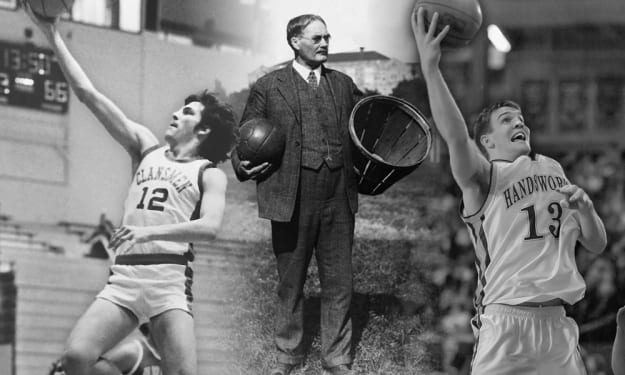
Author’s Note: This story was created with assistance from AI (ChatGPT) and edited by the author for voice and accuracy. In the winter of 1891, a group of restless young men shuffled their feet inside a gymnasium at the International YMCA Training School in Springfield, Massachusetts. Outside, the snow piled high. Inside, the air was stale with boredom. These students needed something — not just to burn energy, but to stir the mind.
By Junaid Ur Rehmanabout a year ago in History
"Unsinkable: The Ship That Changed the World"
April 15, 1912 — A Morning That Never Mourned The headlines in New York were jubilant, not tragic. > "TITANIC ARRIVES IN STYLE – THE UNSINKABLE GIANT CROSSES ATLANTIC WITH FLAIR!" There were no telegrams filled with dread. No list of the dead. No mothers weeping in Liverpool, no candles flickering on cold London streets. The Titanic had made it — gliding into New York Harbor like a floating palace, its four towering funnels belching proud plumes of steam into the sky. History, as we know it, never happened. But what if this had? --- The Morning After: A Nation Awestruck Thousands crowded the docks in Manhattan. They didn’t know it yet, but they were witnessing more than the arrival of a ship — they were watching the dawn of a new world. Journalists described it as a "city upon the sea." First-class passengers, dressed in silks and furs, waved from balconies. Below, second-class immigrants leaned out with their children, eyes wide with hope. Down in third class, Irish farmers, Swedish carpenters, and Italian laborers cheered, having survived the Atlantic’s unforgiving waves — and unknowingly, fate itself. Captain Edward Smith, still proudly at the helm, gave a speech that would be quoted for decades: > "This ship is proof of what mankind can achieve when we dare to dream beyond the horizon." The world believed him. And then it changed. --- Chapter One: The Age of Titanic Ambition Had the Titanic sunk, history would have remembered it as a cautionary tale. But since it survived, it became a symbol of boundless potential. The White Star Line, flush with prestige and profit, ordered five more ships even larger and faster. The Britannic, Oceanic II, and Gigantic launched by 1916, making transatlantic travel not just luxurious but also routine. The Industrial Age exploded into a new gear. Engineers looked to Titanic’s designs for inspiration, bringing innovations like centralized heating, hydraulic elevators, and wireless communication to cities. The ship’s Marconi wireless system — credited with preventing a near-miss with an iceberg — became mandatory in every major passenger vessel worldwide by 1914, making global communication faster and more reliable. Had she sunk, Titanic would have taught humility. Instead, her survival taught confidence. --- Chapter Two: Lives Unlost, Destinies Unfolded Among the passengers saved were hundreds of souls whose impact echoed through the century. Isidor and Ida Straus The elderly couple, co-owners of Macy’s, returned to New York and expanded their philanthropy. They founded the Straus Foundation for Educational Equality in 1915, funding scholarships for thousands of immigrants. One of their beneficiaries, a boy named Elias Rabinowitz, would later advise President Roosevelt on refugee policy. John Jacob Astor IV One of the wealthiest men alive, Astor didn’t perish in icy waters but lived another 20 years. He invested in early aviation, partnering with a young Orville Wright. Together, they launched the Astor Aero Line in 1920, pioneering transcontinental flights before Charles Lindbergh even took off. Margaret “Molly” Brown No longer just "The Unsinkable Molly Brown," she became a national icon of strength and resolve. Her story — of standing up to crewmen, organizing safe quarters for women and children, and personally aiding immigrants in steerage — was published as "Iron and Lace" in 1913. It became a bestseller and inspired a generation of American women to fight for suffrage. The Titanic, it seemed, had carried more than passengers. It had carried fate itself. --- Chapter Three: A Different War, A Different World Without Titanic’s sinking, the world entered World War I with a different mindset. Britain, still in awe of its engineering superiority, invested more in naval innovation. The Germans responded with their own colossal cruisers. When war broke out in 1914, it wasn't trench warfare that dominated — it was naval supremacy. In this alternate reality, the Titanic-class liners became hospital ships and floating diplomacy zones. One such mission in 1915, with U.S. officials aboard the Gigantic, prevented the sinking of the Lusitania. America entered the war later, under different pretenses, and with far fewer casualties. The war still scarred the world — but it did not break it. --- Chapter Four: Titanic as a Living Legend By the 1920s, Titanic wasn’t just a ship — it was a museum, a university, a hotel. She no longer ferried people across the Atlantic, but ideas. Onboard lectures were given by Einstein, Freud, and Tesla. Musicians played in her grand halls; artists painted beneath her domed ceilings. She became a symbol of what the world could be when it didn’t break itself. Films were made not about her sinking — but about her soaring. Hollywood turned her into legend not of tragedy, but of triumph. In one such film, Titanium Dreams (1934), a boy from steerage becomes a senator after falling in love with a first-class violinist. It wasn’t real — but it was possible. Because the Titanic lived, people believed more was possible. --- Epilogue: What We Lost by Losing Her In our reality, the Titanic never reached New York. She sleeps beneath the Atlantic, rusting with memory. Over 1,500 lives were lost. A century of “what-ifs” sank with her. We remember her today as a monument of human hubris. But in this alternate world, she was remembered as a monument of human hope. What if Titanic had docked that April morning? What if no lifeboats were ever lowered, no frozen souls ever floated beneath the stars? Maybe we would have built more, dared more, loved more. Maybe the 20th century would have started not in mourning — but in majesty. --- Final Words: A Whisper From the Depths History is often written in water. But sometimes, in imagining what could have been, we see clearer the weight of what was lost. The Titanic didn’t just carry people. She carried the belief that we could conquer the seas — and our fears. In one world, she did. In ours… she almost did.
By Hasbanullahabout a year ago in History
The Librarian Who Catalogued Silence
Buenos Aires, Argentina — 1976 to Present The military came at night. Not with tanks. With lists. In March 1976, Argentina’s military junta seized control in a swift coup. They called it the “Process of National Reorganization.” But on the streets, it became known as something else:
By Natik Ahsanabout a year ago in History
Dow futures fall as Trump officials signal limited breathing room before tariffs ‘boomerang back’
**Dow Futures Fall as Trump Officials Warn of Tariff Repercussions** U.S. stock index futures fell early Monday morning after key Trump administration officials signaled that there may be limited time before escalating tariffs on China and other trade partners start to backfire on the American economy. Dow futures dropped more than 150 points as markets digested growing signs that trade tensions are not just here to stay—but may intensify in ways that hurt domestic industries.
By GLOBAL NEWSabout a year ago in History
The Archive Under the Floorboards
Poland, 1943 – 1989 – Now The first thing Aniela ever learned was silence. As a child in Warsaw during the occupation, she watched her father—a professor of history—hide documents beneath the kitchen floor. Not weapons. Not names. Just pages. Reports. Newspapers. Books translated in secret. Truths that could kill.
By Natik Ahsanabout a year ago in History
"Whispers in the Dark: The Salem Witch Trials"
They say the wind in Salem still whispers the names of the accused. It was the winter of 1692. Snow blanketed the small Puritan village of Salem, Massachusetts, but a deeper, colder fear settled over the hearts of its people. A fear not of the harsh New England chill, but of something far more sinister—witchcraft. What began as a strange illness in two young girls—Betty Parris, age nine, and her cousin Abigail Williams, age eleven—quickly ignited one of the most infamous witch hunts in American history. The girls convulsed. They screamed. They claimed to see visions of demons and ghosts. Physicians were baffled. Until one of them uttered the word that would destroy lives: “Witchcraft.” That word spread like wildfire. The village was a powder keg of tension—bad harvests, warring neighbors, religious extremism. All it needed was a spark. And Betty and Abigail’s strange fits became that spark. The Puritans believed in a world of stark contrasts—light and darkness, good and evil, God and the Devil. And in that world, witches were not just fictional; they were real, and they walked among them. Soon, more girls began to show symptoms. Ann Putnam. Mercy Lewis. Mary Walcott. Their afflictions were theatrical and terrifying. The accused began to pile up. At first, it was the outcasts: Tituba, the Parris family’s enslaved servant; Sarah Good, a homeless woman; and Sarah Osborne, an elderly, bedridden woman who hadn’t attended church in years. All three were arrested. But what came next was worse. The accusations spread beyond the fringes of society. Suddenly, anyone could be a witch. Martha Corey, a devout churchgoer. Rebecca Nurse, a beloved grandmother. Even children weren’t spared. The girls would point. Scream. Fall to the floor in seizures. The court would listen. And more names would be written into the record. What made the trials so terrifying was not just the false accusations—it was that they were believed. Hysteria became law. Spectral evidence—testimony that someone’s spirit or ghost had harmed another—was admissible in court. Think about that for a moment: someone could say, “I saw your spirit tormenting me in the night,” and it could condemn you to death. Over 200 people were accused. Nineteen were hanged. One man—Giles Corey—was pressed to death with heavy stones for refusing to plead guilty or innocent. His final words? “More weight.” The town became a shadow of itself. Neighbors turned on neighbors. Children testified against their mothers. Fear ruled the day. Churches prayed, not for salvation, but for protection—from an evil they believed lurked in their own homes. And then, as suddenly as it began, the hysteria collapsed. By late 1692, respected leaders, including Increase Mather—father of the influential Puritan minister Cotton Mather—spoke out. “It were better that ten suspected witches should escape,” he wrote, “than that one innocent person should be condemned.” It was too late. The damage was done. Twenty people were dead. Lives shattered. Reputations ruined. And Salem was left with the stain of its madness. Years later, the Massachusetts General Court would declare a day of fasting and soul-searching. In 1702, the trials were declared unlawful. In 1711, some of the victims' families were financially compensated. But money could not undo the nooses. It couldn’t bring back the dead. Even centuries later, Salem still carries the weight of its past. The town, now a tourist destination filled with museums, wax figures, and haunted houses, tries to remember and educate. But beneath the entertainment lies something far deeper—a warning. Because the Salem Witch Trials weren’t really about witches. They were about fear. About what happens when fear overrides reason. When accusation replaces evidence. When justice is replaced by panic. It’s easy to look back and think we’ve moved past such times. But the truth? We haven’t. Every era has its witch hunts. They just wear different masks. So when you hear someone whisper in fear, when you see a crowd begin to turn, ask yourself: are we seeking truth… or are we simply feeding the flames? --- [Pause here for effect — gentle silence] This is the story of Salem. A village where whispers became screams. Where innocence was not enough. And where fear, once unleashed, became the most powerful judge of all.o-Actionoristeners If this story moved you, share it. Let others hear the echoes of Salem—not to scare, but to remind. Because history, forgotten, is history repeated. And in today’s world, a whisper in the dark… might be all it takes to start another fire.
By Hasbanullahabout a year ago in History
The Swing Still Hangs in the Garden.
The old garden behind my childhood home is silent now. The grass grows wild, the flowers bloom without anyone appreciating them, and the color of the fence has faded in years of sun and rain. But one thing remains — the swing.
By Echoes of Lifeabout a year ago in History
Why No Human Remains Have Ever Been Found Inside the Titanic Wreckage
When the RMS Titanic sank on April 15, 1912, over 1,500 passengers and crew members lost their lives in one of the deadliest maritime disasters in history. Yet, despite the tragedy’s magnitude and the numerous deep sea explorations of the wreck site since its discovery in 1985, not a single intact human body has ever been recovered from inside the Titanic wreckage. Why? It is a question that has long puzzled the public and even some researchers. The answer lies not in mystery or conspiracy but in harsh scientific realities involving the conditions on the ocean floor, natural decomposition processes, and the passage of over a century beneath crushing pressure and darkness. The Titanic lies about 12,500 feet or 3,800 meters below the surface of the North Atlantic Ocean. At this depth, the water temperature hovers just above freezing at around one degree Celsius or 34 degrees Fahrenheit. While cold temperatures slow down decomposition, they do not stop it. More importantly, the seabed at that depth is rich in microorganisms and scavengers that thrive in such extreme environments. These creatures include bacteria, fungi, and small marine animals like crabs and worms which consume organic matter including human flesh and bone. Researchers believe that any human remains that initially settled near or inside the wreck would have been completely consumed within a matter of decades. The rate of decomposition may have been slow but over more than 100 years, no biological material could realistically survive. The Titanic's wreck is also being slowly eaten away by iron-eating bacteria, particularly a species known as Halomonas titanicae, which was discovered on the ship’s hull. These microbes are devouring the metal and forming rusticles that hang like icicles from the ship’s structure. Over time, this has weakened the wreck significantly and has caused many rooms and structures to collapse. This ongoing breakdown has disturbed and buried much of the interior, making the preservation of any remains highly unlikely. Even if bones or items had once been present, they would have likely been crushed, disintegrated, or buried beneath collapsed decks and thick layers of sediment. Most of the people who died in the Titanic disaster perished in the freezing surface waters, not inside the ship itself. Their bodies were exposed to waves, currents, and marine life almost immediately. In the weeks following the disaster, about 300 bodies were recovered from the ocean. These were mainly floating or found in lifeboats. However, the vast majority were never recovered. Over time, any bodies that sank would have been scattered across the ocean floor or decomposed due to exposure, pressure, and marine organisms. Even on the seabed, bodies would not have remained whole. Bones dissolve slowly in saltwater over decades, especially if not protected in sealed, oxygen-free environments. At Titanic’s depth, such preservation is nearly impossible. Though no actual human remains have been found in the wreck, explorers have occasionally discovered haunting clues to where victims may have once rested. In some places, divers have found pairs of shoes still lying side by side on the ocean floor, suggesting that a body once lay there. These artifacts such as boots, belts, luggage, and jewelry serve as silent witnesses to the tragedy. While the organic matter is long gone, these belongings tell the stories of the people who wore or carried them. The Titanic wreck is considered a maritime graveyard and most expeditions treat it with the reverence of a sacred site. There is a strong ethical stance among researchers, explorers, and international law to respect the final resting place of those who perished. This means that even if human remains were somehow discovered in a protected pocket of the wreck, they might not be publicly disclosed or disturbed out of respect for the dead. More than a century after the Titanic vanished beneath the waves, its story still grips the world. But the absence of human remains in the wreckage is not a mystery. It is the result of natural processes, oceanic decay, and time. While the bones of those who died have long returned to the sea, their legacy endures in the ship’s ghostly corridors, in personal relics that remain, and in the lessons learned from one of history’s greatest maritime tragedies. Though the people are gone, the silence of the deep speaks volumes and the Titanic still rests, carrying with it the memories of all those who were lost.
By DigitalAddiabout a year ago in History
The Tragedy of Karbala
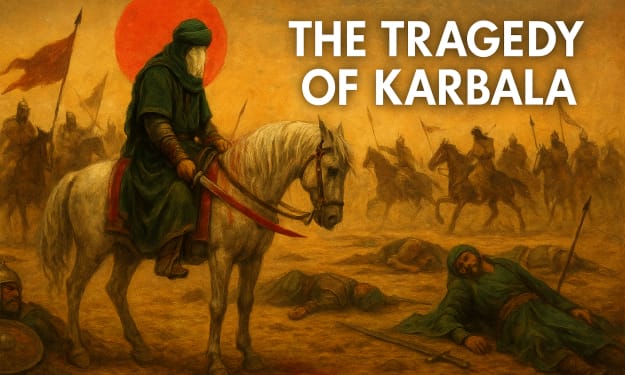
Karbala: 9th and 10th Muharram – The Eternal Stand In the year 680 CE (61 AH), on the scorched plains of Karbala, a small group of devout men, women, and children stood against tyranny in one of the most defining moments of Islamic history. It was the 9th and 10th of Muharram—the days forever etched into hearts as symbols of sacrifice, faith, and unwavering courage.
By Said Hameedabout a year ago in History